Monthly Archives: November 2025

WINGSPREAD Zine for Nov./Dec., 2025

Please forward and share this ezine with others. Thank you.

  • Writer’s Corner
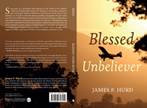
  • Blessed Unbeliever 
  • This month’s story: Plumbers and Electricians
  • This month’s puzzler: Who done it?
  • WINGSPREAD Ezine subscription information
  • Wisdom

Dedicated to people who love words. Words are miracles that brand humans as sentient creatures, creative, inventive, exploring. Taste the words as they roll around on your tongue; let them fill you with a sense of wonder.

NEW BOOK!  I have begun assembling a new book of stories and essays gleaned from the last ten years of my blogs. Maybe I’ll group these under the sections: Spring, Summer, Autumn and Winter. Spoiler alert: I’m in the “Winter” phase now, and looking back to those other seasons. I’ll keep you posted.
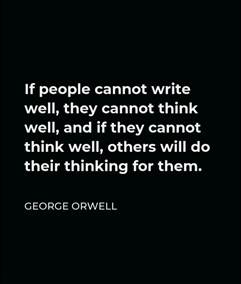
Why it’s important to write

Want to browse archived WINGSPREAD stories? Click here, then click under “archives”     https://jimhurd.com/    These stories include memoirs, stories about bush flying, personal essays and other topics. They’re searchable for key words.

Here are a few examples:

The joys of my annual physical exam: https://jimhurd.com/2024/10/25/the-annual-physical/

Why did it take so long to discover that I’m not weird? https://jimhurd.com/2024/02/06/a-letter-to-my-fourteen-year-old-self-you-are-not-weird/

Writer’s tip: Transgress. You seize the reader’s interest if you write something unexpected. Examples: “I’ve given up on Jesus.” “Morality is so 19th century.” Of course, your piece will sort out these shocking statements and explain what you mean. But use counterintuitive and contrary statements: contradictions, hyperbole, even forbidden words (used carefully). The object? Transgressing grabs the reader’s attention.

Words and metaphors

“a unicorn of a girl” (unique type)

“he shat his pants” (quite vivid)

haplotype (a sequence of polymorphic genes that tend to be inherited together). This is the way Ancestry.com discovers your ancestry.

Digital resources:

I still own my Strunk and White, Elements of Style, but you can ask AI (Artificial Intelligence) anything. Try typing into your browser: “chatgpt.” For instance: “What’s the difference between insure and ensure?” “When must you use a comma before a conjunction?” or “Please critique the attached story and give me suggestions on how to improve it.” What I do not do is ask AI to write the story for me.

Word of the month. FAIN (obsolescent): Gladly, willingly

Task for you: Write about how joyful you are without saying how joyful you are. (That is, show; don’t tell.)

Available in paper or Kindle version at Wipf and Stock Publishers, Amazon https://a.co/d/9su5F3o or wherever good books are sold.

Hashtags for the book: #california #author #christianwriter #babyloss #southerncalifornia #oc #planes #socal #aviationdaily #humanist #pilotlife #blessedunbeliever #religion #travel #christianauthor #aviationgeek #orangecounty #godless

Retirement is deceptive. You’re lulled into thinking that things will pretty much go on as they always have. They usually do. But then, life happens.

I’m working in my college office when the phone rings. “Jim, I don’t know what to do. I’m just sitting here on the sofa sewing and three times I’ve felt faint—like I’m about to pass out.”

My mind races. Is this just in Barbara’s head? In the past, I’ve joked with her that I’ve decided on her epitaph: “I told you I was sick!” But what if something’s really going on? She’s never complained about feeling faint before.

“How often is this happening to you?

“About every half hour or so. Oh! I feel like I’m fainting now!”

“Okay—I’m calling 911 and I’ll come home as soon as I can.”

I call 911, run out to my car, and drive home, praying as I go. When people ask me how prayer works, I always have a ready answer: “I don’t know. But the Bible tells us to pray, and Jesus prayed, so I pray.” . . . To read more, click here: https://tinyurl.com/4tshbrbb

Please “rate” the story and “share” it with others. Thanks.

You can also access my articles on Substack:   Plumbers and Electricians – by James P Hurd

This one is clever. You have to look closely at the following paragraph. You should actually not read it; you should have someone else read it to you to get the full experience. But you can read it if you have to. 

Here it is. 

“This paragraph is odd. What is its oddity? You may not find it at first, but this paragraph is not normal. What is wrong? It’s just a small thing, but an oddity that stands out. If you find it, what is it? You must know your days will not go on until you find out what is odd. You will pull your hair out. Your insomnia will push you until your poor brain finally short circuits trying to find an oddity in this paragraph. Good luck.” 

So what is it?

Remember, you have to examine the paragraph really well.

Good luck.

 (Answer will appear in next month’s WINGSPREAD newsletter.)

Answer to last month’s puzzler: 

So, a night watchman hears a person scream “No, Frank!” Then a gunshot. He enters the room and sees a minister, a plumber and a doctor. But how does he know that it was the minister that pulled the trigger?

Easy. 

The doctor and the plumber are women. So he made the likely guess that none of the women were named Frank. 

Subscribe free to this Ezine  

Click here https://jimhurd.com/home/  to subscribe to this WINGSPREAD ezine, sent direct to your email inbox, every month. You will receive a free article for subscribing. Please share this URL with interested friends, “like” it on Facebook, retweet on Twitter, etc.

If you wish to unsubscribe from this Wingspread Ezine, send an email to hurdjames1941@gmail.com  and put in the subject line: “unsubscribe.” (I won’t feel bad, promise!) Thanks.

Q. How do you keep your car from being stolen?
A. Buy a standard shift model

Q. How do you send a message in code?
A. Write in cursive

“Critical thinking without hope is cynicism. Hope without critical thinking is naiveté. Maria Popova

Here are some irreverent trivia questions about college football:

What does the average Alabama football player get on his SATs?
Drool.

How many Michigan State freshmen football players does it take to change a light bulb?
None. That’s a sophomore course.

How did the Auburn football player die from drinking milk?
The cow fell on him.

Two Texas A&M football players were walking in the woods. One of them said, ” Look, a dead bird.”
The other looked up in the sky and said, “Where?”

What do you say to a Florida State University football player dressed in a three-piece suit?
“Will the defendant please rise.”

How can you tell if a Clemson football player has a girlfriend?
There’s tobacco juice on both sides of the pickup truck.

What do you get when you put 32 Kentucky cheerleaders in one room?
A full set of teeth.

University of Michigan Coach Jim Harbaugh is only going to dress half of his players for the game this week. The other half will have to dress themselves.

How is the Kansas football team like an opossum?
They play dead at home and get killed on the road

How do you get a former University of Miami football player off your porch?
Pay him for the pizza.

On the Act of Writing:

  • “The first draft is just telling yourself the story.” – Terry Pratchett
  • “If you don’t have time to read, you don’t have the time—or the tools—to write.”
    – Stephen King
  • “Writing is a way of tasting life twice.” – Anaïs Nin
  • “Write what you know.” – Mark Twain
  • “Write the book you want to read.” – Toni Morrison
  • “Words are our most inexhaustible source of magic.” – J.K. Rowling
  • “Writing is a dog’s life, but the only life for me.” – Gustave Flaubert

Why some people don’t like Daylight Savings Time

Wisdom and Philosophy

  • “The only thing we have to fear is fear itself.”—Franklin D. Roosevelt
  • “Be yourself―everyone else is already taken.”—Oscar Wilde
  • “The mind is everything. What you think you become.”—Buddha 
  • “The journey of a thousand miles begins with one step.”—Lao Tzu
  • “In three words I can sum up everything I’ve learned about life: it goes on.”
    —Robert Frost
  • “The unexamined life is not worth living.”—Socrates

Plumbers and Electricians

I don’t pray because it makes sense to pray. I pray because my life
doesn’t make sense without prayer.   
Noah Benshea[i]

Retirement is deceptive. You’re lulled into thinking that things will pretty much go on as they always have. They usually do. But then, life happens.

I’m working in my college office when the phone rings. “Jim, I don’t know what to do. I’m just sitting here on the sofa sewing and three times I’ve felt faint—like I’m about to pass out.”

My mind races. Is this just in Barbara’s head? In the past, I’ve joked with her that I’ve decided on her epitaph: “I told you I was sick!” But what if something’s really going on? She’s never complained about feeling faint before.

“How often is this happening to you?

“About every half hour or so. Oh! I feel like I’m fainting now!”

“Okay—I’m calling 911 and I’ll come home as soon as I can.”

I call 911, run out to my car, and drive home, praying as I go. When people ask me how prayer works, I always have a ready answer: “I don’t know. But the Bible tells us to pray, and Jesus prayed, so I pray.”

When I wheel into our driveway, there’s a white paramedic van sitting in front of the garage, and they’re rolling Barbara out on a stretcher. She gives me a wan smile as they roll her in. I can almost read her mind—Oh, don’t worry about me. I’ll be fine. They’re just going to take me in to check me out. I’m not reassured. I jump into my car to follow the wailing siren.

The emergency room people admit Barbara immediately and hook her up to an EKG monitor. Sure enough, every eighth beat or so, the little squiggly line gets tired, flattens out, and squiggles more slowly.

After a short wait, Dr. Olinger walks in. “Your heart monitor indicates you’re skipping beats once in a while.” He’s in his early forties with alert, spiky brown hair, no glasses and the requisite white coat. He sits relaxed with crossed legs, talking calmly about life and death issues.

“We’re going to keep you overnight for observation and then we’ll probably give you a monitor to keep an eye on those skipped beats when we send you home.”

But the next morning, Dr. Olinger comes in, “I don’t like those skipping beats. We have ‘plumbers’ and ‘electricians’ here in the heart center. We’re going to send you to our ‘plumbers’ for an angiogram to see if any plaque is plugging your arteries.” I smile and nod my head in agreement.

Not Barbara. “I don’t want an angiogram.” This is vintage Barbara—even in the midst of medical emergencies, she’s still in control, questioning, making her own decisions.

“Well, we can just send you home with a monitor and take our chances, but what if you pass out again? I think you need an angiogram to check for blockage.”

“How do you do that?”

“Well, the doctors will insert a tube through your groin with a tiny camera on it and go hunting through your arteries.”

“What are they looking for?”

“They’re looking for blockages. We’re wondering if a partial blockage might be causing your fainting spells.”

“What if they find one blocked?”

“Then we can immediately put in a stent. It’s a little mesh cylinder that we insert collapsed.” He shows us a picture of the stent. It looks like one of those Chinese finger puzzles that you put your fingers into and then can’t pull them out. “After it’s inserted, we inflate a tiny balloon to push it out against the artery walls. In a few months, it gets ‘adopted’ by the artery and feels right at home there, and it’ll hold the artery nice and open.” I’m nodding my head to encourage Barbara.

“I don’t want a stent.”

But eventually she relents and decides to have the angiogram. I sit outside, wait and pray. After what seems a long time, they emerge and I walk alongside with my hand in hers as they roll her back to her room.

Dr. Olinger comes in and reports, “We did an angiogram and found a 70 percent block in your ‘widow maker’ artery.”

Widow maker? I think, That doesn’t sound good. He shows me the X-ray and I can see a narrowing in the artery that runs across the front of the heart.

“It’s called a widow-maker because if it’s completely blocked, you die. But we put the stent in. Hopefully that’ll take care of it, Barbara. We’ll keep you overnight and send you home tomorrow morning. But we’ll give you a monitor so we can keep an eye on your heart.”

Barbara’s having trouble getting used to the idea of an invasive stent in her body.

In the morning of day three, I’m watching the EKG screen. The squiggle’s mostly behaving itself but sometimes it stops and rests a couple of seconds.

Dr. Olinger says, “Hmmm. I don’t like the way the EKG looks. I don’t think the stent took care of the problem. I think you need to see an electrician.”

“Why? What’s that?”

 “The ‘plumbers’ work with the mechanics of the heart; the ‘electricians’ specialize in the electrical circuits that energize the heart. The heart nerves shock the muscles and contract them. One shock contracts the upper part of the heart; the other contracts the lower part. We’ll check them both out. They’ll stick a thin electric wire down into your heart area to see if the current is flowing normally to your heart.” He talks as if they’re checking your car’s ignition harness or something.

“I don’t want a wire in my heart.”

He gets up, walks over to his butcher-paper flipchart and draws a diagram of the upper and lower heart chambers, the little nerves that deliver shocks to each and the “bundle branch” in between that acts like an electrical switch that causes the lower muscle to contract just after the upper one does.

“We need to see if everything’s working.”

Barbara asks, “What happens if it’s not?”

“Well, since we’ve installed the stent and it hasn’t made any difference in your heart rhythm, we think you have a ‘bundle-branch block.’ This little switch here isn’t always working like it should.” (He points to the flipchart.) “If we find that it’s defective, we’ll install a pacemaker here to regulate the electric pulses.” He reminds me of my mechanic when he told me, “All you need is a new alternator.”

Barbara’s not convinced. “I don’t want a pacemaker.”

“Well, you don’t have to get one. You can just go home and see if you start fainting again. Why don’t you two just talk about it for a bit and I’ll come back in a while.”

Barbara’s looking at me. I’m looking at the green squiggles.  “We’d better let them check out your electric circuits.”

“But I don’t want a pacemaker.”

“They said they’d only install one if your electric circuits aren’t doing the job.”

“Yeah, but they’ll probably say I need one. I don’t want a wire in my heart.”

“But Precious, I don’t want you to have another fainting episode. Why don’t we pray for wisdom here? We need to make a decision.”

We pray. Dr. Olinger comes back in, and looks at Barbara. “You’re mad at me, aren’t you?” he says.

She laughed. “I just don’t want a pacemaker.”

“Well, you can always just go home and hope for the best.”

“Well . . . Jim thinks we should get it checked out, at least.”

“We can do that but if we find it isn’t working, we need to install a pacemaker.”

“Well . . . okay,” Barbara says, brow furrowing. “But I don’t like it.” Pen poised hesitantly, she ponders the permission document that has phrases like, “You might be disabled” or “you might die” or whatever. I can see her mind racing. It’s not that she doesn’t trust doctors—it’s just that she doesn’t trust them very much. She seems more comfortable with chiropractors, herbalists, naturopaths, or nutritionists.

Finally, she signs.

Barbara and I have had many conversations about health. She doesn’t seem to appreciate my personal philosophy—”Everybody needs to believe in something. I believe I’ll eat ice cream.”

If I complain of any health problems, she usually says, “Well, if you’d eat better, you’d probably feel better.”

“Maybe, but I’d rather be happy than healthy.”

(Eye roll) “Well, don’t expect me to take care of you if you get disabled.”

I think, Empty threat! I guess that’s the chance I’ve got to take.

She insists, “Why don’t you ask your doctor if you should change your diet?”

“Well, because I’m afraid he would say yes. Anyway, I think that if my body craves something, that must mean it’s good for me. I’d rather just take pills for any problem. Besides, what if I ate healthy for years but then got hit by a truck—all that sacrificial eating would be wasted.”

(Harder eye roll, furrowed brow. Then silence). I fear she’ll get her revenge when she writes my epitaph: “I tried to tell him but he wouldn’t listen.”

But now I’m concentrated on Barbara’s heart. They roll Barbara away to the procedure room and in an hour roll her back in.

“They put in a pacemaker,” she says. “I’m not too happy about it.” She shows me the purple bulge near her collarbone with the red slit and stitches. (Later she’ll show it off to relatives, friends and strangers.)

The nurses hook her up to the EKG, and I watch the little green squiggle. It’s squiggling perfectly, not missing a beat. “Barb; that means you won’t faint again, and if you should have more problems, the pacemaker will jump in and take over—it’s good insurance.”

Dr. Olinger comes in and explains that she must take Plavix for twelve months to prevent her stent from clogging up. “If your artery blocks again, you will probably die.”

“I don’t want to take lots of medicines.”

I say, “But Barb, you don’t want your stent to get clogged up.”

So she tries Plavix for a week; then we return to see Dr. Olinger. “I can’t take this medicine; it gives me headaches and I can’t sleep.”

“Well, headaches are better than dying.”

“Well, I guess I’ll just have to die.”

I feel like I’m in the middle of a food fight between people from two different cultures.

“Well, we can stop the Plavix and try putting you on Effient, but only if you don’t read the side effects!” (He laughs.) “But you have to take it faithfully every day for a year. Take half a pill in the morning and the other half in the evening.”

Barbara has always considered a prescription more a suggestion than a command. She starts the medicine, but at her own pace.

The next time we see Dr. Olinger, Barbara says, “You’re mad at me, aren’t you?”

He laughs. “Have you been taking your Effient?”

“Yes . . .  I take the half pill every morning but I only take the evening pill on alternate days.” Dr. Olinger groans, holds his head in both hands and drops his head onto the table in mock horror. “Barbara, you’ve got to take this regularly, or your stent might clog up.” Barbara smiles and says she’ll try.

*          *          *

Now it’s a year later, and Barbara’s feeling very good. She wasn’t kidding—she was very ill, and I’m grateful she’s feeling better now. She telephones in every three months so they can remotely check pacemaker function. Her Effient pills are finally done, but the final month she’s cut down to one-half pill per day. Did I mention she makes her own decisions about medicines?

Now we’re at Barbara’s last follow-up visit with Dr. Olinger and he’s smiling. Is it because Barbara’s doing so well, or because he won’t have to deal with her any longer?


[i] Noah Benshea, Jacob the Baker: Gentle Wisdom for a Complicated World. Random House, 1989.