Category Archives: Blessed Unbeliever

Venturing Beyond the Pale

“The President,” sarcastically so called because he was thermometer-thin, unathletic and mute, sat alone on a bench near the Orange High School snack shop. I felt pressure rising in my gut as I sat down to “witness” to him about how all people are sinners and how he needed to “accept Christ” to escape eternal damnation. He said nothing. After about twenty minutes I got up and walked away—and never spoke to him again. My most embarrassing day in high school; I felt like I violated him.

The Comfort of Certainty

Witnessing to The President was an example of what fundamentalists did. Twice on Sunday and most Wednesday nights our family would drive the eight miles to the church that cradled my childhood: Silver Acres. The men would arrive in suits and women in hats, some with veils. Pop McIntosh led the singing, waving his arm to keep the beat. Before I left elementary school, I had memorized the lyrics of “Power in the Blood,” “It is Well with my Soul,” “Abide with Me,” “Blest Be the Tie that Binds,” etc. Earl Ward taught me to play chess and on men’s potluck night, Mr. Ballew always bought cherry pies, baked by his Emma.

Before Brother Cantrell preached his sermon, he would invite people to join the church: “We’re fundamentalist, independent, unaffiliated, Bible-believing, premillennial, pretribulational.” I thought, if you understood that string of big words serves you right if they baptize you. After church Bro. Cantrell and Walter Loitz would talk Bible and football.

At 10 I could recite all the biblical books in order: Genesis, Exodus, Leviticus, Numbers . . .  We would have “sword drills,” using our “sword” to see who could look up verses the fastest. I became a Bible nerd, reading my Scofield Bible, and devouring Bro. Cantrell’s big words: Inerrancy means that the Bible contains no errors of any kind. The world is that territory “beyond the pale,” outside the camp, that place of temptation that lies under control of the Evil One. The rapture, tribulation and millennial kingdom referred to events happening at the end of time. He talked a lot about the end times. Modernist referred to people or churches we shunned, some of which questioned the resurrection, the virgin birth and biblical inerrancy. Some fundamentalists even practiced “secondary separation”—separating from those (e.g., Billy Graham) who themselves fraternized with modernists (e.g., Martin Luther King, Jr.). My friend Jerry was mainline Methodist—I once asked him if his church celebrated Easter! Unlike them, we did not kneel in church or make the sign of the cross. No crosses hung on the wall at Silver Acres, no pictures of Jesus. Instead of liturgy and sacraments we anchored our beliefs in Bible verses.

Growing up, I felt as if knew God’s plans for my life and for the world. And I confess, I carried a teeny bit of pride in my arcane vocabulary. I felt no need to help make the world a better place because the world was under control of the Evil One. So we endeavored to only persuade people to join us as we waited for Jesus to come back.

After WWII, many middle-class Americans valued high morals and a conservative lifestyle but fundamentalists went further. Bro. Cantrell preached against smoking, drinking, dancing, movie theaters and gambling. Of course I grew interested in the church girls. I watched Kay Cantrell sitting broadly on the piano bench in her see-through blouse (pushing the boundaries of fundamentalist norms). One day in the Cantrell parsonage I saw two books lying on the dining room table: What Every Christian Boy Should Know and What Every Christian Girl Should Know. The second sounded more interesting but as I was paging through it, Mrs. Cantrell walked in and warned me, “Jamie, that book is only for girls.”

I was the only one in my grade who did not take square dance classes in middle school. Even into college I never touched a cigarette, never gambled and never drank alcohol. Do I regret these constraints? No. Years later, these same moral values restrained me from jumping into bed with an over-eager girlfriend. I harbor a teeny regret missing the great movies—I never entered a theater until my twenties.

The Scofield Bible, with its authoritative notes, clarified biblical complexities. It erased the ambiguities, melted the mysteries, quieted my questioning and defeated my doubts. It felt good to be certain—you demonstrated your faith by not questioning. I learned that Jesus, son of the transcendent God, died not only for the world but for me.

But we did not merely parrott propositions. It was a social movement created by a faithful band of people who wished to live separate from the world. As a young person I embraced fundamentalist faith and enjoyed being part of the ingroup. It gave me a way to understand the Bible and embrace life-orienting beliefs. It gave me a task—carrying God’s message to the world. I understood why evil existed in the world, understood how to protect myself from it. This buoyed me through the tempests of my early life.

Silver Acres gave me a moral gyroscope that helped me survive the pains of adolescence. It assured me of who I was and what my purpose was in the world. I received precious gifts—a loving community, a dense network of friends and supportive adults. I knew who my people were and who my God was. Silver Acres insulated me from that world of sin and temptation beyond the pale. Later, the church pointed me toward Bible Institute and Christian mission.

Cracks in the Wall

And yet, as I moved into adolescence I began to feel like a social leper—different, conspicuous, isolated. There weren’t many fundamentalists out there. I grew to dislike worldly people, criticized their wrong beliefs, judged their lifestyles. I became more and more socially isolated and confused.

Further, I started doubting the great fundamentalist doctrines. The ordinance of communion bored me. Bro. Cantrell would spend half the service assuring us that “this is only grape juice and crackers; nothing to see here.” Ushers passed crumbled saltines and little plastic cups of grape juice along the rows. If communion food was merely grape juice and crackers, why bother? I longed for something deeper, more connective as I explored how far I could tip the communion cup without spilling the juice.

Since the Bible was inerrant, I was terrified I would find one small mistake that would destroy my whole faith. I worried about conflicts between the gospel accounts and how to reconcile the Old Testament God who commanded the destruction of the Canaanites with the New Testament God-in-Jesus who preached unconditional love?

Fundamentalists argued that the Bible is literally true “in all it affirms.” But how could the book of Revelation be literally true? Locust-shaped horses with women’s hair and stingers in their tails, stars falling to earth, a beast with ten heads . . . Surely these were symbolic?

I had the most trouble when the text touched scientific subjects—the “four corners” of the earth, the sun rising and setting. If you did the genealogies in the Bible, the universe seemed to be only 6,000 years old. How could this square with scientific findings?  Surely the text was pre-scientific? How convince worldly people to accept something I myself had trouble believing?

Opening the Door

When I moved to Cal State Fullerton and joined Intervarsity Christian Fellowship, I encountered a wonderful community that included strong Christians from mainline and Catholic traditions. I enjoyed friendships at Cal State with non-Christians and even atheists. My very questions and doubts gave me a kinship with them. I became more transparent and found they would frequently open up about their own questions. I was expanding my scope, widening my tent, embracing the world beyond the pale. I had found an expression of faith I could believe in and even more important, a faith that I could celebrate and share.

Not long ago, I boarded the Amtrak to travel from Mattoon, Illinois back to Minneapolis. Finding my assigned seat, I discovered a young man stretched out across it, asleep. I cautiously woke him. sat down, and for the next two hours, enjoyed an amazing conversation. Jamil, married and in his early twenties, was Palestinian, a “man without a country.” And Muslim. Formerly, I would have argued with him about the Bible or the deity of Christ. But this day, I found I was talking to a man in transition. His marriage was in trouble and he was looking for a mosque and an imam he could relate to. He was full of questions. I sympathized, talking about my own quest for a church and minister. We parted friends and talked by telephone a couple of times after that.

I treasure my fundamentalist foundations but today I’m happy living “beyond the pale” and learning how to embrace all people in God’s beloved world, happy learning that we all are on a spiritual quest.

WINGSPREAD Ezine for April 2023


Spreading your wings in a perplexing world

April 2023                                                    James P. Hurd

Please forward and share this E-zine with others. Thank you.

Contents

  • Blessed Unbeliever published!
  • Writer’s Corner
  • New story
  • This month’s puzzler
  • Wingspread Ezine subscription information
  • Wisdom

BLESSED UNBELIEVER is on the shelves!

In Blessed Unbeliever, Sean McIntosh lives in a California world of Fundamentalist certainty—until that world unravels. Now he’s shaken by contradictions in the Bible. Plus he’s trying to make sense of losing his girlfriend and losing his dream of becoming a missionary pilot. His despair leads him to commit a blasphemous act while at Torrey Bible Institute, Chicago. But, despite his honest attempt at atheism, grace pursues.

Blessed Unbeliever (paper or Kindle version) can be found at Wipf and Stock Publishers, Amazon https://a.co/d/9su5F3o or wherever good books are sold.

Writer’s Corner

Word of the Month: TYPESET or GALLEY version. The book is laid out, formatted and returned to the author for final corrections. (I found 100 errors in the typeset version of Blessed Unbeliever!)

Tip of the month: It’s helpful to sketch out your whole book. For each chapter or section, briefly list major scenes, major characters and major events, and maybe even the weather! This allows you to see the whole topography of your chronology and plot. Even Charles Dickens did this.

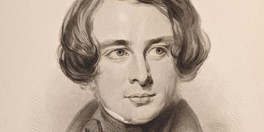
Author of the month: CHARLES DICKENS

Born in Portsmouth in 1812, Dickens saw his whole family sent to debtors’ prison while he himself was apprenticed to hard labor with a bootblack. His difficult life informed several of his novels (Pickwick Papers, David Copperfield, Hard Times, Bleak House).  The epitaph at his tomb in Poets’ Corner, Westminster Abbey reads: “. . . He was a sympathiser with the poor, the suffering, and the oppressed; and by his death, one of England’s greatest writers is lost to the world.”

Book of the month: Dickens based David Copperfield partly on the struggles in his own life. Here, he created one of his most infamous characters: the “‘umble” Uriah Heep.

Your turn: Who is the most interesting character you’ve ever read about, biographical or fictional? Why? (I’ll list some of these in the next ezine.)

New story: Muleticos: A graceful disaster

In Thee we trust, whate’er befall;
Thy sea is great, our boats are small.

—Henry van Dyke, from “O Maker of the Mighty Deep”

I see Muleticos airstrip appear from behind a hill—my last stop for the day. I test the brake pedals—they’re firm. Here in northwest Colombia the tiny grass airstrips dotting the landscape appear more like pastures than runways. Airstrips that most pilots would eschew. Turns out I should have eschewed Muleticos that day.

To read more, click here: Muleticos: A graceful disaster | Wingspread (jimhurd.com)    

(Leave a comment on the website and share with others. Thanks.)

This month’s puzzler: Ralph on a Jet Plane

Adapted from Car Talk Puzzler archives

Ralph, an auto mechanic, has to catch a flight late on a Friday night after a long workday but he’s forgotten to bring his change of clothes. So he changes into a crisp new mechanics uniform that he finds in the shop.

When he walks through security the metal detector alarm sounds. So the guard goes, “Excuse me, sir, would you kindly empty the contents of your pockets?”

So, Ralph empties his pockets. Puts all his stuff in the little tray. Wallet, keys,  everything. He tries to walk through again, but the alarm goes off again. So they ask him to remove any jewelry he has or his belt and try to walk through again. He does that and then walks through a third time. And the alarm goes off, for the third time. 

So finally, the guard looks at him and says, “What do you do for a living?”

And Ralph says, “I’m a mechanic, I fix cars.”

The guard smiles and says, “Oh; that explains it.”

So, what’s happening here? Hint: it wasn’t just auto repair mechanics that were having this issue. And remember, this was a long time ago, so this issue never happens now. But it happened then.

(Answer in next month’s Wingspread ezine.)

Last month’s puzzler. Recall the three candidates for a detective job. The head detective gives them a test, with a clue in one of the town’s libraries “stuck inside a book between pages 165 and 166.” Two of the candidates rushed out the door. The third just sat there—and he got the job. Why?

Answer: Everyone knows this, but not many people think about it. There is nothing between pages 165 and 166, just as there’s nothing between pages one and two of the book. Page one is the right-hand page and page two is printed on the back of that page.

Subscribe free to this Ezine  

Click here https://jimhurd.com/home/  to subscribe to this WINGSPREAD ezine, sent direct to your email inbox, every month. You will receive a free article for subscribing. Please share this URL with interested friends, “like” it on Facebook, retweet on Twitter, etc.

If you wish to unsubscribe from this Wingspread Ezine, send an email to hurd@usfamily.net and put in the subject line: “unsubscribe.” (I won’t feel bad, promise!) Thanks.

Wisdom

Football Wisdom

“Football is NOT a contact sport, it is a collision sport. Dancing IS a contact sport.” 
– Duffy Daugherty / Michigan State 

After USC lost 51-0 to Notre Dame, the coach’s post-game message to his
team was: “All those who need showers, take them.” 
– John McKay / USC 

 If lessons are learned in defeat, our team is getting a great education.” 
– Murray Warmath / Minnesota 

“The only qualifications for a lineman are to be big and dumb. To be a back, you only have to be dumb.” 
– Knute Rockne / Notre Dame

“We live one day at a time and scratch where it itches.” 
– Darrell Royal / Texas 

“We didn’t tackle well today, but we made up for it by not blocking.” 
– John McKay / USC 

“I’ve found that prayers work best when you have big players.” 
– Knute Rockne / Notre Dame

Why do Auburn fans wear orange? So they can dress that way for the game on Saturday, go hunting on Sunday, and pick up trash on Monday. 

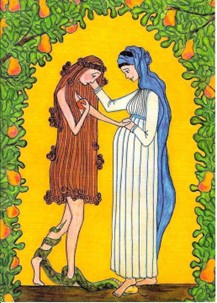
Mary brings good News to Eve