Monthly Archives: April 2024

Trouble in Paradise

Thus, they in mutual accusation spent
The fruitless hours, but neither self-condemning.
And of their vain contest appeared no end. 
                                                            Milton

I remember telling myself, Wow, Eve! The big green snake was scary, but he really talked sense. I ate the fruit and I didn’t die. Anyway, God loves me so much I’m sure one piece of fruit is no big deal for him.

Shortly after we arrived in the park God told us, “Enjoy, celebrate, but don’t eat any fruit from the Tree of the Knowledge of Good and Evil or you’ll die.” (Adam and I referred to the tree as “the TKGE.”)

I remember I was so happy strolling over to the vegetable garden, my bare feet sinking into the most, fresh-smelling soil. I asked Adam, “If God loves us, why would he deny us fruit that looks so good?”

Adam says, “I don’t know; he has his reasons, I guess. Maybe it’s a test. Anyway there’re so many other good trees.”

“Yeah, but I wonder if the TKGE fruit looks different. There must be something special about it.”

“Maybe, but I’m busy here with the garden, so let’s talk about it later.”

I decide I’ll walk over and take a good look at it without telling Adam. He would probably try to keep me from going or at least insist on going with me, but he’s always busy tinkering, doesn’t like to be disturbed—besides he’d probably be bored.

I’m walking among the oak, apple and pear trees, glowing orange and purple maple leaves spiraling down in front of me. Then I spot the TKGE. It seems kind of ordinary, really, but with big red fruit. No fence around it or anything. I think, I’ll just walk over and look at it; I won’t touch it.

Then I see a form gliding through the nearby trees, now revealed, now hidden by the leaves.  Smooth, shiny green skin, dark unblinking eyes, looking steadily at me—I’m fascinated. It’s like the dirty parts in a movie—you try not to look, but you do anyway.

I startle when he speaks —“The fruit trees are great, aren’t they? Did God say you can’t eat from any of these trees?”

“Oh no, actually we can eat from all of them, except we can’t even touch that Knowledge Tree there or we’ll die!”

“You won’t die! It’s just that he knows that if you eat it you’ll have great knowledge like he does. He’d rather keep you in the dark. I’ve been around here for a while; I know how these things work. Anyway, you’re special. If God loves you, he wouldn’t want to deny you anything, would he? What’s the point of creating the big red fruit if he didn’t mean for you to eat any?”

His slender head now looms over my shoulder. He seems so logical, trustworthy, the voice of experience. I’m smelling a pungent perfume, feeling the pull of his eyes, and sensing the sweet fruit. I kind of wish Adam were here with me….

All at once, I reach out my hand, grab the fruit, and eat—it explodes sweet in my mouth. I eat the whole thing but, not wanting to litter, I save the core. The snake has disappeared. And I’m not dead! I can’t wait to tell Adam.

I joyously run back to find Adam tilling the kale and Swiss chard. (In those special days, guys ate green, leafy vegetables.) “Adam—I ate the TKGE fruit and look, I didn’t die! We must have misunderstood what God said. It tastes so sweet!”

“O boy! Who’ve you been talking to? Do I have to go everyplace with you?

“Well, you were busy and I was only going to look at it.”

“But what’re we going to tell God? He said don’t eat it.”

“Why did he put it there if he didn’t want us to eat it?”

His face clouds, he hesitates, then suddenly he grabs the core from my hand and eats it. Just like a guy, I think. But is he really hungry? Or just so dependent on me that, realizing I might be kicked out of the park, he wants to be sure he’s kicked out with me?

Now Adam starts looking me up and down—and up and down. I blush. Strange; I’ve never felt self-conscious before. I find some fig leaves and use fibers to sew them together to make loincloths for us. As an afterthought, I sew two extra small round discs for me. We walk deeper into the forest because, for the first time, we just want to be alone.

After a couple of hours I hear God calling out: “Adam, where are you?” (Why doesn’t God call for both of us?) We walk deeper into the forest, playing hide and seek.

God finally catches up with us and says to Adam, “Why are you hiding?”

So my smart husband comes up with a great excuse: “I was afraid because I was naked, so I hid.”

God asks, “Who told you that you were naked? Did you eat the fruit I told you not to eat?”

Adam gets a pained look on his face, immediately confesses, and then passes the buck: “Yep, I did, but this woman that you gave me insisted that I eat it, and you know her—I just couldn’t say no.”

At this point God rolls his eyes, gives up on Adam, and turns to me. I boldly re-pass the buck: “Well, the serpent told me to eat it, and you know weak little me—no sales resistance. Adam wouldn’t come with me—he didn’t even warn me.”

God finds the serpent and tells him the bad news: “Henceforth you’ll be looking at life from shoelace level. And people will step on your head.” The unblinking eyes slink off to disappear into the greenery.

Then he turns to me: “It will hurt you to bear children, and now your husband will be telling you what to do.”

“You mean Adam? How well do you know this man? He can’t even change his mind without consulting me. Can’t follow instructions, no initiative. How could he be my ‘leader?’”

“Well, Eve, you know he’ll be ticked if he isn’t in charge. And even though you have to pretend he’s the leader in public, you can always influence him at home. Trust me; this’ll work.”

“Well, I guess I’ll just have to try to keep Adam from screwing up.”

Then God turns to Adam: “Failure of leadership! Why didn’t you stop her from going? Why didn’t you tell her not to talk to strangers?”

Adam replies,” I’ve tried that before, but you know how hard it is to tell her anything.”

God says, “You thought life was complicated in the garden. But now you’ll have to dig in harder soil, fight sharp thorns and predatory insects and perform sweaty labor. It isn’t going to be a walk in the park.” Adam hung his head and thought about his easy work—the garden vegetables had almost sprung up by themselves.

God replaced our fig-leaf loincloths with the skins of slain animals, kicked us out of the park and posted a guard against our returning. My face turned red when Adam asked God if he could eat the meat. Then he made a fateful decision that influenced all of his male descendants—he promised himself, I’ll never willingly eat green leafy vegetables again. I remember those early “outside” days. We hung on the heavy lattice fence like banished traitors, looking in at the beautiful park we could never again enter. Brambles had breached the fence and the grass inside was browning. I thought, How ungrateful we were; how much we took for granted.

Adam turned to me, “Eve, why did you wander off like that? Anyway, who ever heard of a talking snake? Why didn’t you ask me before you ate the fruit?

“Well, why didn’t you warn me? Why didn’t you put your foot down? Then I never would have gone. Or at least, you should have insisted on going with me. Failure of leadership.”

 “Eve, Didn’t you even stop to think? You knew God had a good reason to prohibit that tree.”

“Well, maybe, but it’s not my fault you ate the fruit that I gave you.”

And so we passed the hours in fruitless arguing.

How was I to know that my simple decision would affect our grandchildren’s grandchildren? That they would only be able to dream about the shining park? They’ll blame us for eating, but I’ll bet they would’ve done the same thing. The apple doesn’t fall far from the tree.

WINGSPREAD for April, 2024

Please forward and share this WINGSPREAD Ezine with others. Thank you.

Contents

  • Writer’s Corner
  • Blessed Unbeliever now available
  • New story
  • This month’s puzzler
  • Wingspread Ezine subscription information
  • Wisdom

Tip for writers: You can spin a tale that exists only in your head. But if you’re talking about a historic, known place, character or event, you’d better research it and get your facts right. Most of your readers won’t notice or care, but there’s that one that will find the error, then publish your mistake far and wide on Facebook.

Word of the month: PROP BET. Short for “proposition.” Propping is making a bet on something the bookmakers usually don’t take bets on. For instance, betting on the number of free throws in a basketball game.  

Question for you:  Writing a novel takes writing skill and great research. But it also takes imagination. You must seduce your reader into believing in locations, events or situations that are unusual, spun out of thin air. A favorite example: Charles Dickens tries to convince us that the evil groveler, Uriah Heep, is a believable character. How do you fire up your imagination when you write?

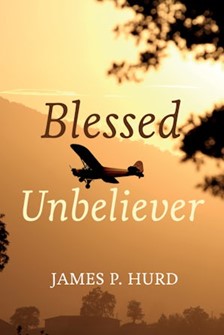
BLESSED UNBELIEVER novel

Blessed Unbeliever (paper or Kindle version) can be found at Wipf and Stock Publishers, Amazon https://a.co/d/9su5F3o or wherever good books are sold.

I can’t control what people mean by “evangelical” any more than I can demand that non-English speakers understand my English. A word means what the hearer thinks it means. Meanings of words change. For instance, “gay” used to mean bright and happy, as in “a gay party.” “Cool” used to refer to air temperature. No more. Thus, I can never guarantee other people will accept my parochial definition of “evangelical.” It used to be that people thought a fundamentalist was an evangelical on steroids and an evangelical was a fundamentalist on Prozac No more.. Today, “evangelical” means something quite different. . . .

To read more, click here:  https://jimhurd.com/2024/04/08/evangelicalism-whats-in-a-word/

Leave a comment on the website and share with others. Thanks.

(Thanks to Car Talk archives) Many years ago, one of our producers lived in New York. And he was a two-timing guy; he had two girlfriends.. 

One of the girlfriends lived in Brooklyn and the other lived in the Bronx. 

He could never decide which one to visit. He liked both of them equally and decided that he would just leave it to fate. He knew that when he went down to get the train, he would descend the stairs into the subway and pretty soon a train would come. And if it was the Bronx train, he’d get on the train and go visit the girl in the Bronx. If it was the Brooklyn train, he’d get on and visit the girlfriend in Brooklyn. And what made it great was that the trains ran equally often, every 10 minutes.

So he decided that he would go down to the train at random times during the day or night. He didn’t know the schedules of these trains, but he did know that every 10 minutes there would be a Brooklyn train, and every 10 minutes there would be a Bronx train. He figured his chances are 50/50, either way. 

However, he finds himself going to Brooklyn 9 out of 10 times. Even though the trains run equally, every 10 minutes to each location, and he chooses random times to go down to the train, he ends up 9 out of 10 times going to Brooklyn. 

Why was this happening?

(Answer will appear in next month’s WINGSPREAD newsletter.)

Answer to last month’s puzzler: 

What word has three sets of double letters? And what word has two H’s back to back? There might be a bunch of answers to this one. 

The first one is the word ‘bookkeeper’! b.o.o.k.k.e.e.p.e.r! Love that word. There may be others out there, but this one is the one we were looking for. 

And for the second word, the answer is, ‘withhold’. Two H’s in that word. And I’m sure there are many more out there, especially if people use Google. But these two were the ones we were looking for.

Subscribe free to this Ezine  

Click here https://jimhurd.com/home/  to subscribe to this WINGSPREAD ezine, sent direct to your email inbox, every month. You will receive a free article for subscribing. Please share this URL with interested friends, “like” it on Facebook, retweet on Twitter, etc.

Strategies of an avid reader

Will Rogers on aging:

First ~ Eventually you will reach a point when you stop lying about your age and start bragging about it.

Second ~ The older we get, the fewer things seem worth waiting in line for.

Third ~ Some people try to turn back their odometers. Not me; I want people to know why I look this way. I’ve traveled a long way, and some of the roads weren’t paved.

Fourth ~ When you are dissatisfied and would like to go back to your youth, think of Algebra.

Fifth ~ You know you are getting old when everything either dries up or leaks.

Sixth ~ I don’t know how I got over the hill without getting to the top.

Seventh ~ One of the many things no one tells you about aging is that it’s such a nice change from being young.

Eighth ~ One must wait until evening to see how splendid the day has been.

Ninth ~ Being young is beautiful, but being old is comfortable and relaxed.

Tenth ~ Long ago, when men cursed and beat the ground with sticks, it was called witchcraft , , , Today it’s called golf.

 Will Rogers, who died in a 1935 plane crash in Alaska with bush pilot Wiley Post, was one of the greatest political country/cowboy sages this country has ever known. Some of his sayings:

1. Never slap a man who’s chewing tobacco.

2. Never kick a cow chip on a hot day.

3. There are two theories to arguing with a woman. Neither works.

4. Never miss a good chance to shut up.

5. Always drink upstream from the herd.

6. If you find yourself in a hole, stop digging.

7. The quickest way to double your money is to fold it and put it back into your pocket.

8. There are three kinds of men:

The ones that learn by reading. The few who learn by observation.

The rest of them have to pee on the electric fence and find out for themselves.

9. Good judgment comes from experience, and a lot of that comes from bad judgment.

10. If you’re riding’ ahead of the herd, take a look back every now and then to make sure it’s still there.

11. Lettin’ the cat outta the bag is a whole lot easier’n puttin’ it back.

12. After eating an entire bull, a mountain lion felt so good he started roaring.

He kept it up until a hunter came along and shot him.

The moral: When you’re full of bull, keep your mouth shut.

If you wish to unsubscribe from this Wingspread Ezine, send an email to hurd@usfamily.net and put in the subject line: “unsubscribe.” (I won’t feel bad, promise!) Thanks.

Evangelical: What’s in a Word?

I can’t control what people mean by “evangelical” any more than I can demand that non-English speakers understand my English. A word means what the hearer thinks it means. Meanings of words change. For instance, “gay” used to mean bright and happy, as in “a gay party.” “Cool” used to refer to air temperature. In the last few decades, “evangelical” has grown to mean something different. It used to be that people thought a fundamentalist was an evangelical on steroids and an evangelical was a fundamentalist on Prozac No more.

I started out fundamentalist, not evangelical. At Silver Acres church Pastor Cantrell would say, “If you wish to join our church, we’re independent, non-denominational, unaffiliated, Bible believing, pre-millennial, and pre-tribulational.” I thought, if you understood all that, you deserved to be baptized! Two things were important: right belief and right lifestyle. Right belief meant belief in an inerrant Bible. At Silver Acres, a wall-to-wall mural showed scenes of the fantastic beasts of Revelation and the elect (us) flying up to heaven before the world’s tribulation and the coming of the millennial reign. I don’t remember studying Jesus’ Beatitudes; fundamentalists thought these were applicable only in the millennial age. We concentrated more on the epistles.

We fundamentalists soldiered through life separated from the corrupt world, trying to recruit others to our small band. We avoided a select list of behaviors—I didn’t go to a dance until I was 22 years old. Ditto for drinking alcohol or attending a public movie theater. I never even tried smoking. My sister and I watched Spade Cooley smoking on a black and white show and knew he wasn’t a Christian. These prohibitions, not the Beatitudes, guided my behavior and made me feel superior to the worldly folks around me. At the same time, I felt myself a weak outsider to their way of life.

After graduating Moody Bible Institute I attended Cal State Fullerton. My fundamentalist identity didn’t work very well there so I started calling myself evangelical. I sought to make friends with “worldly” people and broadened my tolerance for other Christians—even Catholics.

People used to define an evangelical as “somebody who liked Billy Graham” (even though fundamentalists would criticize him for hanging around with the liberal “modernists”) According to British historian David Bebbington, an evangelical Christian believed in four essential doctrines: 1. A person must have a “born again” conversion experience—hence evangelicals were known as “born-again Christians.” 2. Jesus’ death on the cross atones for humankind’s sins. 3. The Bible is the ultimate spiritual authority. (When you ask, “How does God come to you?” an evangelical is more likely to say, “through the Bible.”) 4. Christians ought to actively share their faith through witnessing and good works.

And yet today most people hearing the word “evangelical” don’t think of pious, separated, sober people who take the Bible seriously. “Evangelical” has fuzzy boundaries. A 2022 comparative survey asked the question, Would you describe yourself as a born again evangelical? Between 15 – 25% of Mormons, Muslims and Catholics answered “yes.” (https://www.graphsaboutreligion.com/p/the-rise-of-the-non-christian-evangelical) Today, some of the people in the following groups self-identify as evangelical: People in historic “mainline” churches (Lutheran, Methodist, Presbyterian, Episcopal and also Catholic). People of other religions such as Islam. Even some people who are atheist or agnostic. What do these people mean by “evangelical?”

Today, for many people,“evangelical” means a certain political persuasion. The conservative evangelical block is the most reliable voting block for right-wing political causes. This block is even rehabilitating the term “Christian nationalism.” To help pay his legal bills, the Republican nominee for President is now hawking the “God Bless the USA” King James Bible ($59.99) which also contains the US Constitution and Declaration of Independence, thus lending bible’s advertising campaign his name, likeness and image.

Today, “evangelical” may refer to people who would vote for anti-abortion laws. They would favor restricting trans people from church leadership and would oppose blessing same-sex couples. Many would oppose D.E.I. (diversity, equity and inclusion) being taught in public schools. All of this seems more political than biblical.

Sadly, the term “evangelical” has been contaminated by right-wing politics and thus has lost its traditional meaning to most people outside the church. Thus, if you wish to identify today as an evangelical Christian (in the traditional sense) you must use a different term!

So, do I call myself an evangelical? If I’m talking to evangelical “insiders” who share the old definition, maybe. But in general I avoid the term with people outside the church. I use “Christ follower” or simply “Christian.” Why? Because if you wish to maintain your true identity you must use the language, not of your grandparents, but of contemporary hearers. To maintain the meaning you must change your words.