Category Archives: writing

WINGSPREAD Ezine for May, 2025

Please forward and share this Ezine with others. Thank you.

  • Writer’s Corner
  • Blessed Unbeliever 
  • This month’s story
  • This month’s puzzler
  • WINGSPREAD Ezine subscription information
  • Wisdom

**Alert: WINGSPREAD has a new email address: hurdjames1941@gmail.com. The old usfamily address is dead; do not use.

Writer’s tip: Separate a list of items by commas (e.g., “… pliers, wrenches, hammers, and nails). The last comma is known as an “Oxford” comma. (I, however, avoid, flee from, resist and omit this last comma because I think it is unnecessary.) If a list has an item that itself includes a comma, use semicolons to separate instead of commas. E.g., “. . . pieces of plaster; rusty nails; old, discarded wooden studs; and glassless, paintless window frames.”

Word of the month: EPONYMOUS. Do we really need this word? Or is it just used by nerdy people showing off? It means “named after someone or something.” E.g., “Henry Ford and his famous, eponymous car company.”

Reminds me of William Faulkner’s friendly jab at Ernest Hemingway, “He never uses a word that sends a man to a dictionary.” Probably true of Hemingway. I will occasionally employ a little-used word because it really nails what I wish to express (e.g., disingenuous, effluvium, sclerotic). Not too often, though. Sometimes I’ll use an obsolescent word (saturnine, sartorial). Each word is a world of meaning, a priceless tool in the writer’s toolkit. In your own writing, wield words well.

Task for you: Invent a new word (people do this all the time). For instance, turn a noun into an adjective or a verb, etc. Send me your examples (along with definitions) and I’ll put them in the next Wingspread.

Magazine of the month: CHRISTIANITY TODAY. While you could label this magazine evangelical, I find it covers a broad range of Protestant and Catholic issues and also issues in other world religions, fully engaging the social, political and cultural milieu in which all religion is embedded.

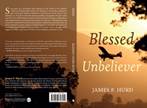
I confess I sometimes more enjoy talking to atheists than Christians. My atheist friends seem honest about their doubts. Although my own doubts have been answered, they have not been quenched. Since I am a doubter, I find much in common with atheists. I believe we are all on a spiritual quest and I wish to know the quest of each person I meet. Blessed Unbeliever (below) is the story of one such quest. Much is autobiographical (I won’t tell you which parts!). But the names have been changed to protect the innocent.

Sean McIntosh left his Fundamentalist childhood and walked the road toward becoming an atheist—while attending Torrey Bible Institute! Spoiler alert: it didn’t work out very well. Blessed Unbeliever (paper or Kindle version) can be found at Wipf and Stock Publishers, Amazon https://a.co/d/9su5F3o or wherever good books are sold.

“Barbara, the snow’s late this year.”

She looks up from her piecrust work. “Yes, it’s only five days ’til Thanksgiving.”

But today, the wind chills. I gaze out the window at the fine flakes falling here in Minnesota, hundreds of miles away from my California childhood. This harbinger snow warns, “Nothing is forever.”

Our first snow is inevitable but still a surprise. We turned the clocks back just two weeks ago (“spring ahead; fall back”), but today, less than a month from winter solstice, the sun appears tardily over the far end of Pleasure Creek pond, rising in its low southern arc, only to set early.

We are the shrouded ones, billeted in carpentered cocoons. Mine is a bookish breed. At home, my fingers rest on computer keys, pretending that the seasons never change. At work, I inhabit an indoor world smelling of classroom chalk, students to-ing and fro-ing in the halls, my days seasoned with specialty coffee and good conversation. . . .

To read more, click here:  https://tinyurl.com/57t9p6n2


Leave a comment on the website and share with others. Thanks.

No fair doing an internet search but if you do, don’t reveal the answer if you find it.

Long before airplanes were invented, some engineers were contemplating building a suspension bridge across the gorge of Niagara Falls. There’s a big gorge there. A gorge is a canyon with a river at the bottom, basically. 

So they were thinking of building this bridge, but there was no way to get the cables from one side to the other, because there was no boat that could fight that current in the raging water below. They didn’t have powered boats back then. This was in the days of steam, and wind for power. When sailors were made of steel and ships were made of wood.

Anyway, they figured out they had to get the cables across somehow. And the builders staged a contest open to the public to solve their problem. The contest was won by a young kid, a boy. Shortly after the contest was completed, they were able to run the cables from one side of the gorge to the other.

The puzzler question is very simple.

How did they do it?

(Answer will appear in next month’s WINGSPREAD newsletter.)

Answer to last month’s puzzler: 

So what movie prominently featured a Ferrari and a Renault?

I’m guessing that the people who tried to Google this one were pretty disappointed. Because this was a trick question!

The Ferrari and Renault in question here are not cars, but character names. There full names were Signor Ferrari and Captain Louis Renault. 

And these are characters from the very famous movie, Casablanca

Now, don’t be mad about the trickery here. We never once said that the Ferrari and the Renault were cars . . . .

Click here https://jimhurd.com/home/  to subscribe to this WINGSPREAD ezine, sent direct to your email inbox, every month. You will receive a free article for subscribing. Please share this URL with interested friends, “like” it on Facebook, retweet on Twitter, etc.

If you wish to unsubscribe from this Wingspread Ezine, send an email to hurdjames1941@gmail.com (**Note the new email address!!) and put in the subject line: “unsubscribe.” (I won’t feel bad, promise!) Thanks.

THOUGHTS FOR THE DAY

  • Autocorrect has become my worst enema.
  • Exquisite insult: “He’s a bubble off plumb.”
  • “When I fed the poor they called me a saint. When I asked why they were poor, they called me a Communist.” —Bishop Dom Helder Camara of Recife, Brazil
  • “They’re like grits in the South, whether you want them or not they show up!”
  • A kleptomaniac is somebody who helps himself because he cannot help himself.
  • A Freudian slip is where you say one thing but mean a mother.
  • Ambition is a poor excuse for not having enough sense to be lazy.
  • Hard work pays off in the future; laziness pays off now.
  • I intend to live forever… So far, so good.
  • If Barbie is so popular, why do you have to buy her friends?
  • Eagles may soar, but weasels don’t get sucked into jet engines.
  • What happens if you get scared half to death twice?
  • My mechanic told me, “I couldn’t repair your brakes, so I made your horn louder.”
  • Why do psychics have to ask you for your name?
  • If at first you don’t succeed, destroy all evidence that you tried.
  • A conclusion is the place where you got tired of thinking.
  • Experience is something you don’t get until just after you need it.
  • The hardness of the butter is proportional to the softness of the bread.
  • To steal ideas from one person is plagiarism; to steal from many is research.
  • The problem with the gene pool is that there’s no lifeguard.
  • The sooner you fall behind, the more time you’ll have to catch up. 
  • The colder the x-ray table, the more of your body is required to be on it.
  • Everyone has a photographic memory; some just don’t have film. 
  • If at first you don’t succeed, skydiving is not for you.
  • If your car could travel at the speed of light, would your headlights work?

WINGSPREAD for July, 2023


Spreading your wings in a perplexing world
July 2023                                                    James P. Hurd

Please forward and share this Ezine with others. Thank you.

Contents

  • Blessed Unbeliever available
  • Writer’s Corner
  • New story
  • This month’s puzzler
  • Wingspread Ezine subscription information
  • Wisdom

BLESSED UNBELIEVER 

Sean McIntosh lives in a California world of Fundamentalist certainty—until his world unravels. He fails to make sense of losing his girlfriend and losing his dream of becoming a missionary pilot. And he’s shaken by contradictions and mistakes he finds in the Bible. His missionary zeal morphs into religious doubt. His despair leads him to commit a blasphemous act and declare himself an atheist—all this while he’s attending Torrey Bible Institute! But Grace pursues.

Blessed Unbeliever (paper or Kindle version) can be found at Wipf and Stock Publishers, Amazon https://a.co/d/9su5F3o or wherever good books are sold.

Writer’s Corner

Tip for writers: Whether writing fiction or nonfiction, try writing in the first-person present tense. Instead of “Sean walked downtown,” write “I am walking downtown.” Makes the action more immediate, personal. It’s harder to write this way, but worth trying.

Word of the Month:  PROBLEMATIZE. I use this word to refer to questioning a convention. Instead of agreeing with the majority, raise questions, challenge conventional statements. This energizes the reader—even if they disagree with you.

Book of the month: HEBRIDEAN ALTARS by Alistair Maclean. A marvelous collection of stories, prayers, poems and saying from the people of the Scottish Hebrides Islands over the centuries. Good for prayer and meditation.

Question for you: Have you written a short story or poem? Send it to me and I may post it on my Wingspread blog.

New story: World Over the Wall

I visualize my Southern California childhood, filled with snowless winters, hot summers and throat-burning Los Angeles smog that dissipates only when the dry Santana winds blow in from the desert. I see myself lying on our backyard grass under our wooden windmill clothesline, gazing up at the clouds and dreaming childish dreams—dreams that Mother feeds. When I tell Mother I’m bored, she says, “Read King Arthur and the Knights of the Round Table,” or “Let’s play cards.” Our Fundamentalist church frowns on playing with regular “Euchre deck” cards, so we play Authors, where each suit has a picture of an author and each card is one of the author’s books . . .

To read more, click here:  https://wordpress.com/post/jimhurd.com/3518

(Leave a comment on the website and share with others. Thanks.)

This month’s puzzler

Adapted from Car Talk Puzzler archives

It was a beautiful sunny summer afternoon in 1958. And I was driving my new car.

I came to an intersection and stopped, and there on the sidewalk stood a pedestrian waiting to cross the street. He noticed that I had stopped.

I remained where I was at the intersection. He stepped off the sidewalk and walked right into the right front fender of my car.

Explain the reason for this curious behavior. 

(Answer in next month’s Wingspread ezine.)

Answer to last month’s puzzler: 

The question was, what is the capital of Liberia and why was the capital given that name?

In the early 1800s, many white people in the United States became concerned over the existence of freed slaves in their country. Some slave owners believed that the existence of freed slaves increased discontent among those still in slavery. Other white people objected to the integration of the black freed slaves into this society. So in 1816, a group of white Americans established the American Colonization Society, ACS, and what the society did was to return free black people to their home continent, Africa. 

So the ACS bought land on the west coast of Africa and started a settlement. They named it Liberia. 

And the capital of Liberia was named Monrovia, after the then President, James Monroe. 

Subscribe free to this Ezine  

Click here https://jimhurd.com/home/  to subscribe to this WINGSPREAD ezine, sent direct to your email inbox, every month. You will receive a free article for subscribing. Please share this URL with interested friends, “like” it on Facebook, retweet on Twitter, etc.

If you wish to unsubscribe from this Wingspread Ezine, send an email to hurd@usfamily.net and put in the subject line: “unsubscribe.” (I won’t feel bad, promise!) Thanks.

Wisdom

An elderly couple found themselves fighting all the time so they made an appointment with a marriage counselor. Because it seemed serious, the counselor asked to meet with each of them separately.

Alone, the wife confessed, “I don’t know. We’ve been married for almost 50 years, but the last few years all we do is argue; we can never agree on anything.”

“So what are you going to do?”

“It’s so bad. I’ve given up. I’m praying that God will take one of us home. . . And when he does, I’m going to go live with my sister.”

Socks that go missing in the laundry come back as Tupperware lids.

Fight like the third monkey on the ramp to Noah’s ark.  Mike Huckabee

The purpose of a writer is to keep civilization from destroying itself. ― Albert Camus

 USER: The word computer professionals use . . .
when they mean idiot.

As soon as the hospital put me in one of those little gowns . . .
I knew the end was in sight.

It is better to live one day as a lion . . .
than 100 years as a sheep.

The lion shall lie down with the lamb . . .
but the lamb won’t get much sleep.

Bigamy is having one wife too many . . .
Monogamy is the same thing.

I have Van Gogh’s ear for music.

The World Over the Wall

How do you like to go up in a swing,
Up in the air so blue?
Oh, I do think it the pleasantest thing
Ever a child can do!
Up in the air and over the wall,
Till I can see so wide,
Rivers and trees and cattle and all
Over the countryside—
Till I look down on the garden green,
Down on the roof so brown—
Up in the air I go flying again,
Up in the air and down!
Robert Louis Stevenson, “The Swing”

While my father taught me to love all modern speed machines, Mother taught me to love reading. A stay-at-home mom (an unexceptional choice in the 1940s), she reared five children in our Cambridge Street home in the orange grove. She created time to read stories to us from the green Thornton W. Burgess books— “Chatterer the Red Squirrel,” “Bobby White,” “Old Man Coyote.” She read from his Mother West Wind “Why” Stories—”The Adventures of Danny Meadow Mouse” and “Why Peter Rabbit Cannot Fold His Hands.” It seems Peter was once able to fold them, but Mother West Wind took away this ability because he was lazy. “I like these stories,” Mother said, “because they all end happy” [except for Timmy Trout, who disobeyed his mother, got hooked and landed in a frying pan]. I consumed these stories first from her lips and then from my own reading.

I visualize my Southern California childhood, filled with snowless winters, hot summers, and throat-burning Los Angeles smog that dissipates only when the dry Santana winds blow in from the desert. I see myself lying on our backyard grass under our wooden windmill clothesline, gazing up at the clouds and dreaming childish dreams—dreams that Mother feeds. When I tell Mother I’m bored, she says, “Read King Arthur and the Knights of the Round Table,” or “Let’s play cards.” Our Fundamentalist church frowns on playing with regular “Euchre deck” cards, so we play Authors, where each suit has a picture of an author and each card is one of the author’s books, such as Louisa May Alcott (Little Women, Eight Cousins) or Robert Louis Stevenson (Treasure Island, A Child’s Garden of Verses). When I call for a card, Mother always insists that I name the author and book title. I learn to love these books long before I read them.

I carry this love of writers and writing into Mrs. Brennan’s first grade class, where I remember the smell of her paper—unlined, manila colored, with tiny flecks of embedded wood pulp—on which we use our #2 pencils to create letters that represent sounds. Mrs. Brennan believes passionately in two things—phonetics and flashcards. She teaches us to read, not by recognizing words, but by sounding out letters. She holds up a card with an “A” on it and the whole class says, “Ahh, ahh.” When the card has a “B,” we say, “Buh, buh.” When she shows us the “Ph” card, she touches her fingertips together and moves her forearm forward and back imitating a long neck and says, “Remember the goose, class.” We all hiss, “Fff, fff,” and then wipe the saliva off our desks.

She reads to us out of oversize Dick and Jane books, with Dick, Jane, little Sally and their dog, Spot. “Dick, Dick, see Jane.” “Jump, Spot, jump, jump.” I think, I don’t know anybody who talks like that. Why do they keep repeating themselves? Yet the stories burn word-symbols into my brain.

When we graduate to our Friends and Neighbors book in second grade, I discover a new universe—the East. Here, all the white children live in tidy houses under huge oak and maple trees and no one is poor. No bullies in this neighborhood—all the kids are friendly. My California neighborhood is different. The Mexicans speak Spanish to each other, bullies (white ones) meet me after school and beat me up, and many of us live in houses where the paint peels from the siding and where the kitchen linoleum shows worn, black spots. In the East, happy boys in knickers sled down snowy hills as squirrels scramble up nearby maple trees. In Orange I never see knickers, squirrels, snow banks or sleds, though Dad assures me that when he was growing up in Minnesota he himself had worn knickers. I still remember that “Friends and Neighbors” town—I imagine I’ve searched for it my whole life.

In third grade I can’t wait for Mrs. Surowick to read to us about Pinky and Blacky, two roguish cats who share great adventures wandering around a museum late at night. I never suspect that these wonderful stories are teaching us world history and the love of reading.

About that same time I discover Robert Louis Stevenson’s “The Swing” (above). He has me at the swing. I long for the world over the wall—distant, unknown and far from the groves of Orange, my hometown.

At twelve I get pimples, a crackly voice, body hair and something else—a black-leather King James Bible that I carry to church like a stubby fifth limb. Mother considers the King James Version (KJV) a lifeboat that will bear me through adolescence, protect me from the fierce fires of a godless world, lead me into a blessed adulthood, and finally to heaven. Approved by King James in 1611, the KJV guided the faithful at the time of the Pilgrims. I smell the leather, finger the onionskin pages, and bury myself in it like a wood tick. The Bible looms large at home. When I say, “Mom; I’m bored,” she responds, “Memorize Bible verses.” The Bible introduces me not only to faith but also to great literature. Later, when I read Shakespeare, I am surprised to find a King James English familiar to me.

I soon learn to speak KJV, but not always with understanding—too many strange words and stranger ideas. Fortunately, Cyrus Ingerson Scofield’s notes come to the rescue, notes that seem clearer than the text itself. He outlines the Tribulation, the Millennium and the seven Dispensations—a complete panorama of salvation history—candy for the mind. These notes answer life’s big questions—where did I come from, what does it all mean, where am I going, who is God, and what does He require? (In those days, God was always a “He,” and was always capitalized.) Early on, these answers form my view of the world.

At our Silver Acres Church Pastor Cantrell preaches from the same Scofield Bible and I become a junior expert in the text. I don’t understand all the King James words—mandrakes, begot, shew (I pronounce it “shoe”)—but, like the Pledge of Allegiance that I learned in first grade, these words gather meaning as I mature. I read for prizes. My Sunday school teacher, Mr. Hayden, sets tiny airplanes on tracks running across a map of the world. I read the most, advance my plane the farthest and eventually win a matching pen and pencil set.

I learn Christianity from my pastor, from other men who preach at summer camps and from faithful women who teach in Daily Vacation Bible School, all of them Bible-wise. They mesmerize me with their stories about God, sin, salvation and especially about the End Times, which holds the promise of heaven or the threat of hellfire. To gain the first and escape the second, I walk down the aisle each time a visiting preacher comes to town with his big white tent and sawdust floor. Besides, I want their little red book—a free Gospel of John with important verses underlined. In all these ways the Bible teaches me the English language, forges my reading habits, shapes my beliefs. The Bible also introduces me to history and geography as well as to human greatness and frailty.

Reading gives me a passport to far countries, introduces me to historic figures, lets me witness great events and dazzles me with strange ideas. Reading fires my curiosity to think, to dream, to venture out into the world. Later, when I travel to genuine eastern “Friends and Neighbors” towns, I stomp in the snow and marvel at the squirrels (but never see a boy in knickers). I pilot a plane over distant lands and see the world over the wall that Stevenson helped me dream about.

But Mother read to me first.

A little rebellion in 100 words

Every weekday I would drive my immaculate metallic gold 1953 Ford—dual chrome pipes, nosed, decked, and hung—into Orange High School’s dusty, potholed, student parking lot. It got dirty. One morning Larry, Ron, and I mounted a protest and all parked over in the paved faculty lot. At noon, Larry and Ron went out to move their cars back. I didn’t. Principal Townsend called me in and said, “Move your car.” I moved it. The next year he paved our student parking lot and awarded me the Outstanding Student Medallion. I never found out why.

On Writing: “How do I revise my story?”

James Hurd, December, 2014

This is second in a series: 1. Starting your memoir-stories, 2. Revising, 3. Editing, 4. Layout, 5. Getting your story out to others. All these articles will (eventually) appear on Wingspread website: jimhurd.com   Message me, or post comments on this, or any other writing, on Wingspread at http://jimhurd.com. Thanks!

Subscribe to the biweekly Ezine, Wingspread at https://jimhurd.com/ and receive a free article as a gift. The Ezine contains stories, quotes, helpful links, and stuff about writing.

New book: Wingspread: Memoirs of Faith and Flying. Review it and buy it at:   http://booklocker.com/books/7785.html     or through Amazon or Barnes & Noble. Please “Like” on Facebook and tell interested friends.

*    *    *

Good news! You’ve written your story. Bad news. Now you must revise and edit it, make it as good as you can. Here are some gleanings from the experts about revising your story.

Revising vs. editing. Revising is about the big picture: about saying what you wish to say. (The next article, on editing, will deal with the more anal-retentive details of polishing your story to make it a thing of beauty.)

Re-Vision. If you want others to read your stuff, you must revise. Revision is “re-vision.” Trying to look at your story in a new way. Testing out different viewpoints. Keep asking yourself, “What’s this about? What’s the big picture, the main point?” Oftentimes, another person can help you see your story in a new light. We are all lit by a light from beyond this world—have confidence in your own work.

 “Kill all your little darlings.” This famous saying (of uncertain origin) is the best advice in revising. You can always tighten your piece, cut it by ten or twenty percent. Every section of your story should do good work. If it doesn’t, cut it. Even if a passage is wonderful, clever, marvelous, life-changing. If it doesn’t contribute directly to your story, kill it without mercy.

Coherence and cohesion. Your story must cohere. It must have a unity, a focus—think trees. Every twig ultimately draws sap from the trunk and root. Your story should be about only one thing. What is it? If it’s about two things, you should write two stories. On the other hand, your story must be cohesive. Think railroad train. Every car is well-connected to what comes before and to what comes after. Connecting your thoughts helps the reader segue smoothly from section to section.

Dialogue. Readers may skip over parts of your story, but they’ll never skip over dialogue, because it’s human nature to be interested in what people are saying to each other. Try putting in more dialogue—real people speaking real sentences. Don’t worry at this point about punctuation. One rule, though—each new speaker gets a new paragraph.

Narrative. One of the few truths across all cultures—everyone loves a narrative story. Take a red pen and underline all the parts of your story that would make a good movie. This is narrative. Description and commentary are wonderful, but if you underlined less than 50% of your story, you need more narrative. The reader is impatient—make sure you move the story along.

Bells and whistles. Does your story present a problem to be solved? A mystery to be explained? A surprise? A conflict? A failure or success? Are you using good metaphors? [One of my favorite metaphors, referring to indecision: “peeing down both legs of your pants”] Can your reader feel the emotions? This is the stuff that attracts people, hooks them in, keeps them reading.

Starting and ending. You don’t have to be tethered to a timeline—you can jump around, as long as your reader knows where you’re going. A good rule: Put the second most interesting thing at the beginning of your story, and the most interesting thing at the end. Don’t write an “Introduction.” Just jump right in. You start with one objective—keep the reader turning the pages.

Tired words? Use as few words as possible—never use two when one will do. Fewer words add punch to powerful sentences. Exorcise most of your adverbs (very, really, kind of, sort of, and most words ending in –ly). Eschew words ending in –ion. Try to eliminate adjectives. Change passive verbs to active (“was found” to “we found him,” or, “were ironed” to “she ironed them,” etc.). Try changing is, are, were, be, been to verbs that you can picture in your mind. Start a list of action verbs. Here are a few of my favorite “picture verbs”: tether, lurch, disembowel, stoke, cauterize, botch. I actually go through my verb list, and see if I can use them anywhere in my stories.

*    *    *

So, have you cast a new vision? Killed your little darlings? Does your piece flow well? Have you used dialogue, and fast-moving narrative? Started and ended with a flourish? Have you chosen words with a punch? If so, you’re done revising, and ready for editing. Soon you’ll have a thing of beauty!

Next edition: “Editing—the spit and polish of a good writer”