Tag Archives: venezuela

WINGSPREAD for January, 2024

Please forward and share this E-zine with others. Thank you.

  • Writer’s Corner
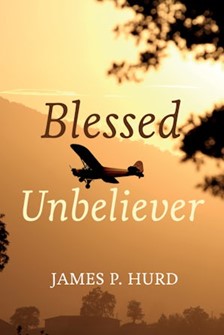
  • Blessed Unbeliever now available
  • New story
  • This month’s puzzler
  • Wingspread Ezine subscription information
  • Wisdom

Tip for writers: If someone hands you a MS and asks you to “look it over and tell me what you think,” never accept it–they may merely be looking for encouragement. Instead, ask them how much and what kind of critique do they want you to give? Developmental ideas? Revision? Copyediting? Plot? Characters? Chronology?

Word of the month:  DOOMSCROLLING: To spend excessive time online scrolling through news or other content that makes one feel sad, anxious, angry, etc. (From Webster’s Dictionary) “I’ve got to stop doomscrolling late at night: I can’t fall asleep.”

Question for you:  What three books would you want with you if you were stranded on a small island? (I assume no cellphone.) I dunno. Maybe, the Bible (good stories, great plot, greatest self-help book), some C.S. Lewis and perhaps Webster’s dictionary.

Blessed Unbeliever (paper or Kindle version) can be found at Wipf and Stock Publishers, Amazon https://a.co/d/9su5F3o or wherever good books are sold. *Note: If you’ve read this, please recommend it to others. Thanks.
Classic self-deception—I talked myself into a lie so that I could fulfill an intense desire that would work against my long-term interests. The experience shook me. Immediately afterward I repented and my resolve stiffened. But why did I even give myself permission?

Self-deception (SD) is so common. People say all the time—“I know I shouldn’t but… It’s only this one time… I’ll quit tomorrow…. Rules are for other people… I can drive over the speed limit because I’m more skillful (or intelligent)… It won’t hurt anybody….”

Even statisticians play the lottery and believe they’ll win, although they know that statistically they’ll lose money. People say, “I’ll stop smoking tomorrow,” and mean it, but no real intention, no plan, and the next day, the conviction fades.. . .

To read more, click here  https://jimhurd.com/2024/01/16/we-tell-ourselves-lies/

Leave a comment on the website and share with others. Thanks.

(Credit to “Car Talk Puzzlers”)

Do you all remember Crusty? He was one of our old mechanics from way back in the day. Crusty used to work for us, before we were accredited… 

From time to time, people would bring cars into the garage and ask us to check them out because they were thinking of buying this particular car. And Crusty had a particular process he would use to pre-screen these cars.

He would do something rather simple. He would open the hood of the car and fiddle around under there. And then he would look up at the owner and say, “Try to start it now.”

The driver would try, but it would not start. 

And then Crusty would duck back under the hood and say, “Okay, try to start it now.”

And the owner would turn the key and it would start right up. 

So at this point, he would say one of two things. It was either, “Leave it and we’ll check it out. But, I think it’s a keeper.” Or it was, “Forget this one. This one is no good. Go look for another car to buy.”

What was Crusty doing under the hood? What was that little test all about?

Good luck.
 (Answer in next month’s Wingspread Ezine.)

Answer to last month’s puzzler: 

The question was what was the disaster some years ago that caused considerable property damage and casualties? And why did people respond by buying pantyhose? 

It was the eruption of Mount St. Helens in Washington State in 1980. The volcanic ash was so fine that it would go right through your car’s air filter and plug up the carburetor, which pretty much all cars had in those days. And pantyhose were fine enough, they had a fine enough weave to them, that if you put them over the air filter, the ash in the air could not get through them. 

Subscribe free to this Ezine  

Click here https://jimhurd.com/home/  to subscribe to this WINGSPREAD ezine, sent direct to your email inbox, every month. You will receive a free article for subscribing. Please share this URL with interested friends, “like” it on Facebook, retweet on Twitter, etc.

If you wish to unsubscribe from this ezine, send an email to hurd@usfamily.net and put in the subject line: “unsubscribe.” (I won’t feel bad, promise!) Thanks.

Be the reason someone sees there is still hope in the world.

If you don’t know where you’re going, any road will take you there.    Lewis Carroll

Lone, Wandering, but Lost?

How can some birds find their way from New York to Chile while I can get lost three blocks from home? I’ve had trouble navigating all my life—missing exits on the freeway, getting lost on cross-country flights, even walking out of a downtown store and turning north instead of south. What’s up? Am I just not paying attention?

Take driving. We have just visited Amish friends near the tiny town of Canton, Minnesota and are driving home, inhaling the smell of our sweet, Amish-baked bread. We’re on the proper road—US 52—but nothing looks familiar. Then Barbara points out the Iowa highway signs. We’re headed south instead of north.

I have driven multiple times to our friends’ house in Roseville. But today I’m not sure: do I take Rice Street or Lexington? What’s the street you turn off on? They’re on the corner of—which streets? Embarrassing to use a GPS to navigate to a friend’s house you’ve visited so many times.

I feel like a failure when I resort to using “Penelope,” our GPS. If Penelope speaks with a beautiful British accent sitting in London, how can she know about the secondary streets in Minneapolis-St. Paul, say nothing about traffic backups and construction zones? She dazzles in her directions but in rare cases she leads us down rabbit trails. One time Penelope points us a different direction than the way I pretty much know. Furthermore, my wife-navigator insists we’ve already gone beyond our destination. I do not sleep with Penelope so I defer to my wife, do a U-turn, and get lost. Penelope gets ticked and goes silent.

And walking. I have frustrating dreams about walking at night lost in the rain. Or I’m walking in a vast city and recognize no landmarks. Or I’m late heading to teach my college class but have forgotten my pants, or my notes, or haven’t prepared anything. Forgotten where the classroom is. Even forgotten where the bathrooms are.

Have you ever been on foot in a large city, crossed the street to enter a store and walked up a couple stories? Then you come down, exit onto the busy sidewalk and walk away in the wrong direction. Anybody? Anybody? I’ve done that multiple times.

I always go to the same ENT doctor. But each time I have to verify: is it the office building near Unity hospital or the one near Mercy? Which floor? The nurse leads me through a labyrinth of antiseptic-smelling hallways to a consultation room. But when I leave she needs to hold my moist hand to get me back to the lobby. Then when I walk out I’m forced to use the panic button on my smart key to find my honking car.

At our apartment in Oak Crest we must navigate a football-field-sized building stretching 50 yards down each wing. Today I walk down the fresh-scented hallway and burst unannounced into Larry and Julie’s apartment. “Hi, Larry and Julie! No, nothing; just dropping by.” Their door is the last door on the right in the east wing. My apartment door is the last door on the right in the west wing. Not only have I done this three times but I don’t know why and don’t know how to avoid it next time.

Even flying small planes. It’s 1965 and I’m flying a twin-engine Cessna 310 from Amarillo to Kansas City. I don’t have instrument charts so I’m forced to fly visual below a rainy cloud layer. I’m too low to receive navigation signals so I follow the compass, aiming far ahead, trying to correct for wind drift. Roads, rivers, railroad lines, small towns and fields flash by so fast and close I can almost smell the corn but I can’t identify anything with certainty. Finally I circle a water tower to read the name of the town and identify it on my chart.

It’s 1970 and I’m flying in Venezuela with an airplane full of missionary kids. They’re screaming as we fly through dark, lightning-filled clouds. I smell sour milk. Suddenly we burst out over the Orinoco river—second only in size to the Amazon. But I’m not sure if my destination is upriver or downriver and I’m low on fuel, flying over the broccoli of the vast jungle where airstrips are spaced out an hour or two apart. I let down to 100 feet and turn upriver, flying through the painful air, peering through a bleary windshield with the river racing backwards under our wings. We finally spot the grass airstrip.

More recently Jeremy and I are flying to Princeton, Minnesota, only fifteen minutes north. We will park there and walk over to the Hi-Way Inn for breakfast. (It’s a “$100 breakfast” if you include cost of the plane rental.) The restaurant lies on US 169, a major highway; can’t miss it. But we fly right past Princeton and have to circle back. I caution Jeremy—“Don’t tell your mom.”

Another anxious dream. I’m flying at high speed along city streets below the building tops. Or I have landed and am taxiing through a grove of pine trees on a rainy night, the propeller throwing up mud onto the windshield. But I’ve forgotten the way to taxi back to the airport.

So what’s going on? Years ago I failed only one portion of my flight program—navigation. I’ve worked really hard but have no evidence I’ve made much improvement so I pay extra attention and do a lot of crosschecking when I fly cross-country. Am I fated to fail? Or will I find some golden key that will perfect my navigational skills? I doubt it..

So when my wife asks me, “Do you know where we’re going?” I just say, “No, but I figure if I get in the general area we can drive around honking until someone finds us and tells us where to go.” She rolls her eyes and then stares straight ahead, mute.

Valentine’s Alligator Hunt

It’s Valentine’s Day in the States, and tonight Barbara and I have ventured deep into the Venezuelan rainforest. Will this be the night we get engaged?

Barbara has come down to Venezuela from Costa Rica for a ten-day visit. I wanted to fly her in the mission plane to see some of the airstrips I fly into, and to meet some of the missionaries. Earlier today we flew into Tama Tama, the remote jungle headquarters of the New Tribes Mission. Tama Tama sits on the Orinoco River, 600 miles up from the river mouth. We were welcomed with biting gnats, and enervating heat and humidity. Now we have flown farther upriver and landed at the Yanomamo Indian village of Coshilowateri.

Earlier this afternoon, Gary Dawson had pointed to his dugout canoe and asked us, “Wanna go alligator hunting and collect some turtle eggs?”

We said “Yes; of course!” What were we thinking?

 The dugout canoe is a cigar-shaped affair made out of a hardwood tree trunk, carefully adzed out and control-burned to leave a hermetic hull of wood with a narrowed prow to help it slip through the water. It weighs several hundred pounds empty. Its thick wooden bottom helps defend against sharp rocks in shallow streams. The Yanomamo propel their dugouts with paddle power, but ours has an outboard motor.

 We start our trip with a little sliver of moon, not enough to illuminate our path. The dugout carries us through the night jungle on the wind-wrinkled waters of the Padamo, a twisting tunnel of a river, with 100-foot trees towering on each side. We see no sign of civilized life—no boat docks, no electric lights, and no people. Just the dark, sinuous river. Gary sits at the rear, managing the outboard motor, his sister beside him. He’s about 18, skinny, sandy-haired, wearing just a tee shirt and an old pair of jeans. No shoes. He speaks Yanomamo better than any non-Yanomamo I know, and acts completely at home here on the river. A young Yanomamo boy, Jose, wearing only a G-string and a bit of body paint, sits in the prow searching the blackness ahead for dangerous rocks floating logs, and sandbars. Barbara and I cuddle near the middle where we’re perched on a narrow board wedged between the gunwales. Barbara seems willing to go anywhere with me—is it love?

The sandbars loom up out of the darkness. José says, “Por alli,” pointing toward a promising sandbar. We stop to find some turtle eggs. The eggs look like tiny dinosaur eggs—perfect ellipses. Gary says, “Don’t take ‘em all; leave a few.”

We get back in the dugout and launch. As José shines a powerful flashlight over the water, Gary tells us, “The ‘alligators’ are really caimans—they can grow ten feet long, and are covered with a nobbly skin tougher than leather. Their jaws can crush a large dog in one bite. They’re lying submerged in the river. Look for their red, beady eyes right above water level. They gleam like red reflectors when the flashlight beam hits them.”

Suddenly Jose points out two red reflectors just above the water—unblinking, motionless. Gary cuts the motor, stands up in the boat, and fires his shotgun. The gator thrashes violently, spraying water for 20 feet, agonizing, out of control, and then after a while it lies limp. We paddle over and pull it into the narrow canoe, crimsoning the boat floor. It’s eight feet long, and the powerful tail quivers under our board seat. An hour later Barbara screams and throws her arms around me when the gator opens its toothy jaws in a dying reflex.

 Mile after mile, Gary stares into the dark wall of trees. Then we see two white, unblinking eyes staring at us—eyes wide apart. What is it? Gary motions for silence and we cut the motor and paddle the canoe up against the bank. I wonder, What if he botches the shot? Will the eyes jump into the boat? Gary loads a slug into his shotgun, but just as he raises his shotgun, the eyes disappear. He says, “Probably a tigre.”

It’s now midnight, and we’re almost down to where the Padamo empties into the mighty Orinoco, second-largest river in South America. I look back upriver and see a pinpoint of light. We kill the motor and hear the high-pitched drone of another outboard motor. As the light grows brighter, Gary shouts, “It’s my dad. He’s worried we’ve been out so long, and is searching for us along the river.”

Joe Dawson says, “We were kind of worried about you. It’s so dark, and it’s late.” We motor back to  Coshilowateri.

Lots of excitement on this Valentines Day, but no engagement—the dugout was too populated and we had no opportunity. The next day Barbara and I will fly to the Parima hills on the Brazilian border where we will overnight in missionary housing, just a few hundred yards from Niayobateri, a Yanomamo village. At 11:00 that evening, Barbara and I will walk out onto the grass airstrip and I will ask her to marry me.