Monthly Archives: August 2025

WINGSPREAD zine for August, 2025

Please forward and share this ezine with others. Thank you.

  • Writer’s Corner
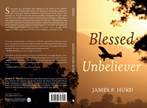
  • Blessed Unbeliever 
  • This month’s story: “Delivering the Orange Daily News”
  • This month’s puzzler: “The Broken Stone”
  • WINGSPREAD ezine subscription information
  • Wisdom

Writer’s tip: You can indent the first line of each paragraph but do not indent the first line of the first paragraph in your article or story, or the first line following a major subheading or break in the story.

Complaint of the month: Autocorrect has become my worst enema.

Task for you: Write a 100-word story using only dialogue. Dialogue grabs the readers’ attention. Remember, each change of speaker needs a new paragraph.

Book of the month: The Complete Tales of Winnie-The-Pooh, A.A. Milne

Button Children’s Books. A delightful story of a chubby, fuzzy little bear and his friends who live in the 100-acre wood. Winnie is a “bear of little brain” but he has a heart of gold. Good stories to reread in these troubled times

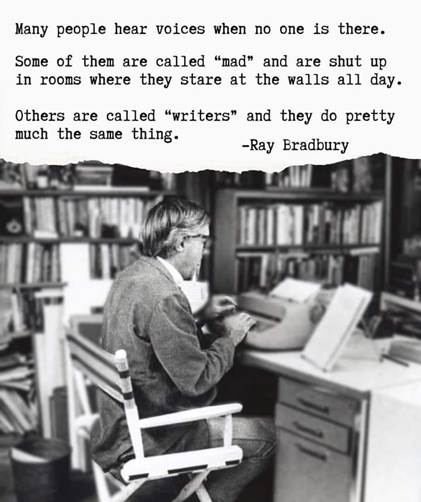
The only kind of writing is rewriting. Ernest Hemingway
Available in paper or Kindle version at Wipf and Stock Publishers, Amazon https://a.co/d/9su5F3o or wherever good books are sold.

I got off my bike, leaned it against the brick wall of the news alley and stared through the barred window at the bubbling pot of molten lead. This was the first day of my first job―delivering newspapers for the Orange Daily News. . . .

The Daily News hired Johnny to be part delivery supervisor and part wet nurse. He worked with the paperboys, handling screw-ups and drying tears. Johnny told us, “You guys are entrepreneurs, independent businessmen.” Turns out that meant less liability for the paper—and we had to eat our losses. He would take us out door-knocking―a bleak task where we tried to sign up new subscribers. But how sell something you weren’t crazy about yourself? We liked Johnny who organized games in the YMCA gym and told a few dirty jokes. He would hold up an orange, army-type hat with “Orange Daily News” printed on the side and say, “You’ll get one of these cool hats and for every five new subscribers you sign up, you’ll get to pin on one of these shiny buttons.” I thought, I’d rather just get more cash. . . . To read more, click here:  https://tinyurl.com/4k73pdcb

Substack access: The article is on Substack but I haven’t yet learned how to grant public assess to it.

Leave a comment on the website and share with others. Thanks.

This is a non-automotive puzzler. Here we go.

Years ago, somewhere far, far away.

A farmer had a 40-pound stone, which he could use to weigh 40 pounds of feed or hay.

He would sell feed in 40-pound bundles and hay in 40-pound bales. He had a balance scale. He put the stone on one side, and he piled the other side with feed or hay. When it balanced, he knew he had enough to sell. 

Then one day, a neighbor borrowed the stone. But he had to apologize when he returned it because he had broken it into four pieces. And he felt really bad about it. 

As it turns out, the farmer who owned the stone later told the neighbor that he actually had done him a favor.

The pieces of the broken stone could now be used to weigh any item, assuming those items were in one-pound increments, from one pound to 40 pounds, so the farmer thought this was a great improvement.

So the puzzler is, what were the weights of the 4 individual stones after the large stone was broken?

And here’s the hint―how would you weigh 2 pounds? 

Good luck!

 (Answer will appear in next month’s WINGSPREAD newsletter.)

Answer to last month’s puzzler: 

Recall you have to decide which of three switches on the first floor turns on a light on the third floor. You’re allowed to go up and check the lightbulb only once.

Here is the answer.

Turn all the switches off.

Then you turn the first switch on and you leave it on for 10 minutes.

Then you turn it off and turn the second switch on.

You leave the third switch in the off position.

Then, you go upstairs to check the light.

When you get upstairs, if the bulb is on, then you know it is switch #2. 

If the bulb is off, and it is cold, then it is switch #3. 

If the bulb is warm, then you know it is switch #1. 

And that is how you do it. 

Oldy but goodie.

Subscribe free to this Ezine  

Click here https://jimhurd.com/home/  to subscribe to this WINGSPREAD ezine, sent direct to your email inbox, every month. You will receive a free article for subscribing. Please share this URL with interested friends, “like” it on Facebook, retweet on Twitter, etc.

If you wish to unsubscribe from this Wingspread Ezine, send an email to hurdjames1941@gmail.com and put in the subject line: “unsubscribe.” (I won’t feel bad, promise!) Thanks.

An historic 1946 picture from Mission Aviation Fellowship archives of Betty Green, one of the founders and first pilot with the mission. In the background is her Grumman J2F Duck―a bi-wing, radial-engine amphibian that she flew in New Guinea. I was privileged to know this godly, gracious woman.

Spelled the same, but different pronunciations and different meanings: 

1) The bandage was wound around the wound.

2) The farm was used to produce produce.

3) The dump was so full that it had to refuse more refuse.

4) We must polish the Polish furniture.

5) He could lead if he would get the lead out.

6) The soldier decided to desert his dessert in the desert.

7) He thought a birthday was a good time to present the present.

8) A bass was painted on the head of the bass drum.

9) When shot at, the dove dove into the bushes.

10) I did not object to the object.

11) The insurance was invalid for the invalid.

12) There was a row among the oarsmen about how to row.

13) They were too close to the door to close it.

14) The buck does funny things when the does are present.

15) A seamstress and a sewer fell down into a sewer line.

16) To help with planting, the farmer taught his sow to sow.

17) The wind was too strong to wind the sail.

18) Upon seeing the tear in the painting, I shed a tear.

19) I had to subject the subject to a series of tests.

20) How can I intimate this to my most intimate friend?
I called Willow Street, Pennsylvania cemetery about a tombstone for Barbara and me. Sticker shock–expensive. I delayed a month but finally called back and ordered one. They’ll put Barbara’s birth and death year on it and my birth year and a dash. Turns out they’ll charge me extra when they have to come back and chisel in my death date. So I think I’ll just ask them to put in “2060” right now. I figure it’ll give me something to shoot for.

I must be getting stronger. Last year I couldn’t even carry $50 of groceries with my two hands.  James P Hurd
Delivering the Orange Daily News

I got off my bike, leaned it against the brick wall of the news alley and stared through the barred window at the bubbling pot of molten lead. This was the first day of my first job―delivering newspapers for the Orange Daily News.

It was a small paper and “daily” was a stretch—we didn’t deliver on weekends. Some of the paperboys called it “The Orange daily butt-wipe.” The year I started, the Daily News certainly printed the big headlines—Emmett Till’s murder, Rosa Parks and the Montgomery bus boycott, Bill Haley’s sensational Rock Around the Clock, the launching of the first nuclear-powered submarine, building the first McDonald’s restaurant, and the spectacular Disneyland opening. But unlike the larger Santa Ana Register, the Daily News mainly covered local issues like road construction, the championship-bound Orange Lionettes softball team. It covered how my friend’s father embezzled money from the First National Bank or published the story of the Fourth of July parade with the barred jail sitting on the plaza where they would lock up local dignitaries. And of course, crossword puzzles and the Dear Abby column.

The Daily News offices sat on the Orange Plaza, an enormous roundabout in the center of Orange with tall palm trees and fountain. You entered the Daily News from the sidewalk, where the front office concealed the room behind with its rattling printing press that spit out thousands of papers each day.

I had two fights in the news alley—won one and lost one. When I hit Hawkins in the belly, he started crying and the fight was pretty much over. I felt strong and powerful―until Shockley did the same to me. I doubled over in pain and started bawling. Johnny, the delivery supervisor, took a dim view of fighting: “Knock it off! You boys can’t work here if you’re going to fight.” So pretty soon we learned our place in the pecking order.

We were never allowed to enter the press room but since the alley ran alongside, you could press your face against the protective window grill to watch the guy at the linotype, a marvelous machine that turns keystrokes into lines of brass molds. He would pour the lead-antimony-tin mixture into the molds to form the letters. The nearby printer swallows a huge roll of newsprint, then spits folded papers out the other end. You could smell the newsprint and almost feel the heat of the molten lead.

After Orange Intermediate would let out, I would bike through the city streets, park my Schwinn bicycle with its white sidewall tires in the news alley and wait with the other boys. Sometimes the papers were late so I would walk down the alley to a small jewelry store that had a cooler. You opened the lid to see where the Coke bottles hung on a rail, put your dime in the slot, then slid out an ice-cold bottle. It tasted marvelous on a hot summer’s day even if it froze your brain and people warned you that you could get instantaneous pneumonia. I bought one every day, reasoning that it was wise to form good habits.

The Daily News hired Johnny to be part delivery supervisor and part wet nurse. He worked with the paperboys, handling screw-ups and drying tears. Johnny told us, “You guys are entrepreneurs, independent businessmen.” Turns out that meant less liability for the paper—and we ate our losses. He would take us out door-knocking, a bleak task where we tried to sign up new subscribers. But how sell something you weren’t crazy about yourself? We liked Johnny who organized games in the YMCA gym and told a few dirty jokes. He would hold up an orange, army-type Daily News hat and say, “You’ll get one of these cool hats and for every five new subscribers you sign up, you’ll get one of these shiny buttons to pin onto it.” I thought, “I’d rather just get a bit more cash.”

An alley ran back about 75 feet alongside the building to the paper-folding room with its dirty brick walls, bleared windows and dark interior. It smelled like a sweathouse out of a Dickens novel. Sheet metal covered the tables where we slipped and folded the papers. “Slipping” meant putting a section or two inside the front section. On rainy days we had to shroud the papers in wax sheets. Folding was a work of art. You would fold the whole paper in half, then turn down a corner triangle, fold again, then tuck the triangle inside to make a little packet. After you finished folding you stuffed them into your white canvas bag labeled “Orange Daily News” and hung the bag over your bicycle handlebars.

I would ride out of the alley with my laden paper bags hitting my knees, head over to my Pine Street route in the northwest part of town. On the way, I swung by the gas station on Glassell Street that had a vending machine where I would buy a Heath bar. Reaching Pnne Street I would start throwing papers onto the porches or at least onto the sidewalk up near the door. The papers sailed and curved so you needed expert technique. We had to memorize the house numbers. Mrs. Weaver wanted me to walk up and leave the paper on her window sill and for my trouble, a shiny dime would appear on the sill on Fridays.

Most of my paper customers were nice people with only occasional complaints about late deliveries or stray papers. We loved the PIAs—“Paid in Advance” but we had to go out each month to collect from the other people. Sometimes they would say, “Come back next week.”

The route didn’t always go smoothly. I played on the Orange Intermediate basketball team and one day we had an away game. My dear mother picked up my papers downtown, folded them, then drove to the school and hung the paperbags on my bike. But when I arrived someone had pulled all the papers out and torn them up. I had to make a tearful, late trip to the office to pick up more papers and deliver them in the dark.

When I entered high school, I graduated to a six-mile, rural paper route. The houses sat far apart but most of them were PIAs so I didn’t have to collect. I didn’t have to bike downtown―they delivered the papers to our front lawn. If the papers were printed late and it was getting dark, my mom would drive me in our 1955 Ford station wagon while I sat on the tailgate throwing the papers.

Eventually I graduated to using my dad’s Cushman motor scooter. The route finished over on Santa Clara Avenue and there wasn’t a north-south street nearby so I would cut through the Fairhaven Cemetery to drive home. But if it got too late, they would close and lock the gates and I would have to make a long detour. One night it was very late and dark, the gates were still open and I had the headlight on when I entered the cemetery. I was traveling fast, eager to get home, riding along a line of Eucalyptus trees. I had to jog left through the trees to pass from the Santa Ana cemetery to the Fairhaven side. I jogged, but with it being late they’d put a chain across the break in the trees. I jammed on the brakes, left a dark skid mark and stopped with my front wheel touching the chain.

I somehow muscled the scooter under the chain and drove past a huge, dark building―the mausoleum that had fascinated us kids since we were in elementary school. We would tiptoe through the marble halls, talking in whispers. Then we’d yell and run, our voices echoing as we raced toward the door. I never would go in there alone. I passed on by, exited the cemetery at Fairhaven Ave., rode the half mile down Cambridge Street to our house and wheeled into the garage.

I wish now that I had told Mom how much I appreciated her helping with the route. And I wish I’d told her that, when I had to make the long ride home after dark, how I loved seeing the welcoming lights of home and smelling the late dinner she’d cooked for me.