Category Archives: personal essay

WINGSPREAD Zine for Nov./Dec., 2025

Please forward and share this ezine with others. Thank you.

  • Writer’s Corner
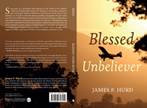
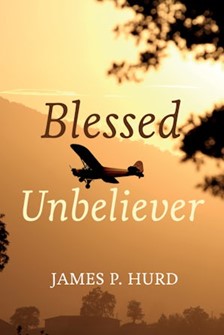
  • Blessed Unbeliever 
  • This month’s story: Plumbers and Electricians
  • This month’s puzzler: Who done it?
  • WINGSPREAD Ezine subscription information
  • Wisdom

Dedicated to people who love words. Words are miracles that brand humans as sentient creatures, creative, inventive, exploring. Taste the words as they roll around on your tongue; let them fill you with a sense of wonder.

NEW BOOK!  I have begun assembling a new book of stories and essays gleaned from the last ten years of my blogs. Maybe I’ll group these under the sections: Spring, Summer, Autumn and Winter. Spoiler alert: I’m in the “Winter” phase now, and looking back to those other seasons. I’ll keep you posted.
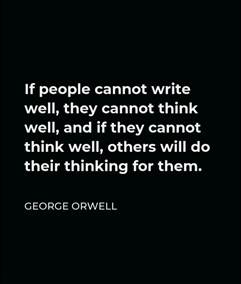
Why it’s important to write

Want to browse archived WINGSPREAD stories? Click here, then click under “archives”     https://jimhurd.com/    These stories include memoirs, stories about bush flying, personal essays and other topics. They’re searchable for key words.

Here are a few examples:

The joys of my annual physical exam: https://jimhurd.com/2024/10/25/the-annual-physical/

Why did it take so long to discover that I’m not weird? https://jimhurd.com/2024/02/06/a-letter-to-my-fourteen-year-old-self-you-are-not-weird/

Writer’s tip: Transgress. You seize the reader’s interest if you write something unexpected. Examples: “I’ve given up on Jesus.” “Morality is so 19th century.” Of course, your piece will sort out these shocking statements and explain what you mean. But use counterintuitive and contrary statements: contradictions, hyperbole, even forbidden words (used carefully). The object? Transgressing grabs the reader’s attention.

Words and metaphors

“a unicorn of a girl” (unique type)

“he shat his pants” (quite vivid)

haplotype (a sequence of polymorphic genes that tend to be inherited together). This is the way Ancestry.com discovers your ancestry.

Digital resources:

I still own my Strunk and White, Elements of Style, but you can ask AI (Artificial Intelligence) anything. Try typing into your browser: “chatgpt.” For instance: “What’s the difference between insure and ensure?” “When must you use a comma before a conjunction?” or “Please critique the attached story and give me suggestions on how to improve it.” What I do not do is ask AI to write the story for me.

Word of the month. FAIN (obsolescent): Gladly, willingly

Task for you: Write about how joyful you are without saying how joyful you are. (That is, show; don’t tell.)

Available in paper or Kindle version at Wipf and Stock Publishers, Amazon https://a.co/d/9su5F3o or wherever good books are sold.

Hashtags for the book: #california #author #christianwriter #babyloss #southerncalifornia #oc #planes #socal #aviationdaily #humanist #pilotlife #blessedunbeliever #religion #travel #christianauthor #aviationgeek #orangecounty #godless

Retirement is deceptive. You’re lulled into thinking that things will pretty much go on as they always have. They usually do. But then, life happens.

I’m working in my college office when the phone rings. “Jim, I don’t know what to do. I’m just sitting here on the sofa sewing and three times I’ve felt faint—like I’m about to pass out.”

My mind races. Is this just in Barbara’s head? In the past, I’ve joked with her that I’ve decided on her epitaph: “I told you I was sick!” But what if something’s really going on? She’s never complained about feeling faint before.

“How often is this happening to you?

“About every half hour or so. Oh! I feel like I’m fainting now!”

“Okay—I’m calling 911 and I’ll come home as soon as I can.”

I call 911, run out to my car, and drive home, praying as I go. When people ask me how prayer works, I always have a ready answer: “I don’t know. But the Bible tells us to pray, and Jesus prayed, so I pray.” . . . To read more, click here: https://tinyurl.com/4tshbrbb

Please “rate” the story and “share” it with others. Thanks.

You can also access my articles on Substack:   Plumbers and Electricians – by James P Hurd

This one is clever. You have to look closely at the following paragraph. You should actually not read it; you should have someone else read it to you to get the full experience. But you can read it if you have to. 

Here it is. 

“This paragraph is odd. What is its oddity? You may not find it at first, but this paragraph is not normal. What is wrong? It’s just a small thing, but an oddity that stands out. If you find it, what is it? You must know your days will not go on until you find out what is odd. You will pull your hair out. Your insomnia will push you until your poor brain finally short circuits trying to find an oddity in this paragraph. Good luck.” 

So what is it?

Remember, you have to examine the paragraph really well.

Good luck.

 (Answer will appear in next month’s WINGSPREAD newsletter.)

Answer to last month’s puzzler: 

So, a night watchman hears a person scream “No, Frank!” Then a gunshot. He enters the room and sees a minister, a plumber and a doctor. But how does he know that it was the minister that pulled the trigger?

Easy. 

The doctor and the plumber are women. So he made the likely guess that none of the women were named Frank. 

Subscribe free to this Ezine  

Click here https://jimhurd.com/home/  to subscribe to this WINGSPREAD ezine, sent direct to your email inbox, every month. You will receive a free article for subscribing. Please share this URL with interested friends, “like” it on Facebook, retweet on Twitter, etc.

If you wish to unsubscribe from this Wingspread Ezine, send an email to hurdjames1941@gmail.com  and put in the subject line: “unsubscribe.” (I won’t feel bad, promise!) Thanks.

Q. How do you keep your car from being stolen?
A. Buy a standard shift model

Q. How do you send a message in code?
A. Write in cursive

“Critical thinking without hope is cynicism. Hope without critical thinking is naiveté. Maria Popova

Here are some irreverent trivia questions about college football:

What does the average Alabama football player get on his SATs?
Drool.

How many Michigan State freshmen football players does it take to change a light bulb?
None. That’s a sophomore course.

How did the Auburn football player die from drinking milk?
The cow fell on him.

Two Texas A&M football players were walking in the woods. One of them said, ” Look, a dead bird.”
The other looked up in the sky and said, “Where?”

What do you say to a Florida State University football player dressed in a three-piece suit?
“Will the defendant please rise.”

How can you tell if a Clemson football player has a girlfriend?
There’s tobacco juice on both sides of the pickup truck.

What do you get when you put 32 Kentucky cheerleaders in one room?
A full set of teeth.

University of Michigan Coach Jim Harbaugh is only going to dress half of his players for the game this week. The other half will have to dress themselves.

How is the Kansas football team like an opossum?
They play dead at home and get killed on the road

How do you get a former University of Miami football player off your porch?
Pay him for the pizza.

On the Act of Writing:

  • “The first draft is just telling yourself the story.” – Terry Pratchett
  • “If you don’t have time to read, you don’t have the time—or the tools—to write.”
    – Stephen King
  • “Writing is a way of tasting life twice.” – Anaïs Nin
  • “Write what you know.” – Mark Twain
  • “Write the book you want to read.” – Toni Morrison
  • “Words are our most inexhaustible source of magic.” – J.K. Rowling
  • “Writing is a dog’s life, but the only life for me.” – Gustave Flaubert

Why some people don’t like Daylight Savings Time

Wisdom and Philosophy

  • “The only thing we have to fear is fear itself.”—Franklin D. Roosevelt
  • “Be yourself―everyone else is already taken.”—Oscar Wilde
  • “The mind is everything. What you think you become.”—Buddha 
  • “The journey of a thousand miles begins with one step.”—Lao Tzu
  • “In three words I can sum up everything I’ve learned about life: it goes on.”
    —Robert Frost
  • “The unexamined life is not worth living.”—Socrates

Delivering the Orange Daily News

I got off my bike, leaned it against the brick wall of the news alley and stared through the barred window at the bubbling pot of molten lead. This was the first day of my first job―delivering newspapers for the Orange Daily News.

It was a small paper and “daily” was a stretch—we didn’t deliver on weekends. Some of the paperboys called it “The Orange daily butt-wipe.” The year I started, the Daily News certainly printed the big headlines—Emmett Till’s murder, Rosa Parks and the Montgomery bus boycott, Bill Haley’s sensational Rock Around the Clock, the launching of the first nuclear-powered submarine, building the first McDonald’s restaurant, and the spectacular Disneyland opening. But unlike the larger Santa Ana Register, the Daily News mainly covered local issues like road construction, the championship-bound Orange Lionettes softball team. It covered how my friend’s father embezzled money from the First National Bank or published the story of the Fourth of July parade with the barred jail sitting on the plaza where they would lock up local dignitaries. And of course, crossword puzzles and the Dear Abby column.

The Daily News offices sat on the Orange Plaza, an enormous roundabout in the center of Orange with tall palm trees and fountain. You entered the Daily News from the sidewalk, where the front office concealed the room behind with its rattling printing press that spit out thousands of papers each day.

I had two fights in the news alley—won one and lost one. When I hit Hawkins in the belly, he started crying and the fight was pretty much over. I felt strong and powerful―until Shockley did the same to me. I doubled over in pain and started bawling. Johnny, the delivery supervisor, took a dim view of fighting: “Knock it off! You boys can’t work here if you’re going to fight.” So pretty soon we learned our place in the pecking order.

We were never allowed to enter the press room but since the alley ran alongside, you could press your face against the protective window grill to watch the guy at the linotype, a marvelous machine that turns keystrokes into lines of brass molds. He would pour the lead-antimony-tin mixture into the molds to form the letters. The nearby printer swallows a huge roll of newsprint, then spits folded papers out the other end. You could smell the newsprint and almost feel the heat of the molten lead.

After Orange Intermediate would let out, I would bike through the city streets, park my Schwinn bicycle with its white sidewall tires in the news alley and wait with the other boys. Sometimes the papers were late so I would walk down the alley to a small jewelry store that had a cooler. You opened the lid to see where the Coke bottles hung on a rail, put your dime in the slot, then slid out an ice-cold bottle. It tasted marvelous on a hot summer’s day even if it froze your brain and people warned you that you could get instantaneous pneumonia. I bought one every day, reasoning that it was wise to form good habits.

The Daily News hired Johnny to be part delivery supervisor and part wet nurse. He worked with the paperboys, handling screw-ups and drying tears. Johnny told us, “You guys are entrepreneurs, independent businessmen.” Turns out that meant less liability for the paper—and we ate our losses. He would take us out door-knocking, a bleak task where we tried to sign up new subscribers. But how sell something you weren’t crazy about yourself? We liked Johnny who organized games in the YMCA gym and told a few dirty jokes. He would hold up an orange, army-type Daily News hat and say, “You’ll get one of these cool hats and for every five new subscribers you sign up, you’ll get one of these shiny buttons to pin onto it.” I thought, “I’d rather just get a bit more cash.”

An alley ran back about 75 feet alongside the building to the paper-folding room with its dirty brick walls, bleared windows and dark interior. It smelled like a sweathouse out of a Dickens novel. Sheet metal covered the tables where we slipped and folded the papers. “Slipping” meant putting a section or two inside the front section. On rainy days we had to shroud the papers in wax sheets. Folding was a work of art. You would fold the whole paper in half, then turn down a corner triangle, fold again, then tuck the triangle inside to make a little packet. After you finished folding you stuffed them into your white canvas bag labeled “Orange Daily News” and hung the bag over your bicycle handlebars.

I would ride out of the alley with my laden paper bags hitting my knees, head over to my Pine Street route in the northwest part of town. On the way, I swung by the gas station on Glassell Street that had a vending machine where I would buy a Heath bar. Reaching Pnne Street I would start throwing papers onto the porches or at least onto the sidewalk up near the door. The papers sailed and curved so you needed expert technique. We had to memorize the house numbers. Mrs. Weaver wanted me to walk up and leave the paper on her window sill and for my trouble, a shiny dime would appear on the sill on Fridays.

Most of my paper customers were nice people with only occasional complaints about late deliveries or stray papers. We loved the PIAs—“Paid in Advance” but we had to go out each month to collect from the other people. Sometimes they would say, “Come back next week.”

The route didn’t always go smoothly. I played on the Orange Intermediate basketball team and one day we had an away game. My dear mother picked up my papers downtown, folded them, then drove to the school and hung the paperbags on my bike. But when I arrived someone had pulled all the papers out and torn them up. I had to make a tearful, late trip to the office to pick up more papers and deliver them in the dark.

When I entered high school, I graduated to a six-mile, rural paper route. The houses sat far apart but most of them were PIAs so I didn’t have to collect. I didn’t have to bike downtown―they delivered the papers to our front lawn. If the papers were printed late and it was getting dark, my mom would drive me in our 1955 Ford station wagon while I sat on the tailgate throwing the papers.

Eventually I graduated to using my dad’s Cushman motor scooter. The route finished over on Santa Clara Avenue and there wasn’t a north-south street nearby so I would cut through the Fairhaven Cemetery to drive home. But if it got too late, they would close and lock the gates and I would have to make a long detour. One night it was very late and dark, the gates were still open and I had the headlight on when I entered the cemetery. I was traveling fast, eager to get home, riding along a line of Eucalyptus trees. I had to jog left through the trees to pass from the Santa Ana cemetery to the Fairhaven side. I jogged, but with it being late they’d put a chain across the break in the trees. I jammed on the brakes, left a dark skid mark and stopped with my front wheel touching the chain.

I somehow muscled the scooter under the chain and drove past a huge, dark building―the mausoleum that had fascinated us kids since we were in elementary school. We would tiptoe through the marble halls, talking in whispers. Then we’d yell and run, our voices echoing as we raced toward the door. I never would go in there alone. I passed on by, exited the cemetery at Fairhaven Ave., rode the half mile down Cambridge Street to our house and wheeled into the garage.

I wish now that I had told Mom how much I appreciated her helping with the route. And I wish I’d told her that, when I had to make the long ride home after dark, how I loved seeing the welcoming lights of home and smelling the late dinner she’d cooked for me.

Venturing Beyond the Pale

“The President,” sarcastically so called because he was thermometer-thin, unathletic and mute, sat alone on a bench near the Orange High School snack shop. I felt pressure rising in my gut as I sat down to “witness” to him about how all people are sinners and how he needed to “accept Christ” to escape eternal damnation. He said nothing. After about twenty minutes I got up and walked away—and never spoke to him again. My most embarrassing day in high school; I felt like I violated him.

The Comfort of Certainty

Witnessing to The President was an example of what fundamentalists did. Twice on Sunday and most Wednesday nights our family would drive the eight miles to the church that cradled my childhood: Silver Acres. The men would arrive in suits and women in hats, some with veils. Pop McIntosh led the singing, waving his arm to keep the beat. Before I left elementary school, I had memorized the lyrics of “Power in the Blood,” “It is Well with my Soul,” “Abide with Me,” “Blest Be the Tie that Binds,” etc. Earl Ward taught me to play chess and on men’s potluck night, Mr. Ballew always bought cherry pies, baked by his Emma.

Before Brother Cantrell preached his sermon, he would invite people to join the church: “We’re fundamentalist, independent, unaffiliated, Bible-believing, premillennial, pretribulational.” I thought, if you understood that string of big words serves you right if they baptize you. After church Bro. Cantrell and Walter Loitz would talk Bible and football.

At 10 I could recite all the biblical books in order: Genesis, Exodus, Leviticus, Numbers . . .  We would have “sword drills,” using our “sword” to see who could look up verses the fastest. I became a Bible nerd, reading my Scofield Bible, and devouring Bro. Cantrell’s big words: Inerrancy means that the Bible contains no errors of any kind. The world is that territory “beyond the pale,” outside the camp, that place of temptation that lies under control of the Evil One. The rapture, tribulation and millennial kingdom referred to events happening at the end of time. He talked a lot about the end times. Modernist referred to people or churches we shunned, some of which questioned the resurrection, the virgin birth and biblical inerrancy. Some fundamentalists even practiced “secondary separation”—separating from those (e.g., Billy Graham) who themselves fraternized with modernists (e.g., Martin Luther King, Jr.). My friend Jerry was mainline Methodist—I once asked him if his church celebrated Easter! Unlike them, we did not kneel in church or make the sign of the cross. No crosses hung on the wall at Silver Acres, no pictures of Jesus. Instead of liturgy and sacraments we anchored our beliefs in Bible verses.

Growing up, I felt as if knew God’s plans for my life and for the world. And I confess, I carried a teeny bit of pride in my arcane vocabulary. I felt no need to help make the world a better place because the world was under control of the Evil One. So we endeavored to only persuade people to join us as we waited for Jesus to come back.

After WWII, many middle-class Americans valued high morals and a conservative lifestyle but fundamentalists went further. Bro. Cantrell preached against smoking, drinking, dancing, movie theaters and gambling. Of course I grew interested in the church girls. I watched Kay Cantrell sitting broadly on the piano bench in her see-through blouse (pushing the boundaries of fundamentalist norms). One day in the Cantrell parsonage I saw two books lying on the dining room table: What Every Christian Boy Should Know and What Every Christian Girl Should Know. The second sounded more interesting but as I was paging through it, Mrs. Cantrell walked in and warned me, “Jamie, that book is only for girls.”

I was the only one in my grade who did not take square dance classes in middle school. Even into college I never touched a cigarette, never gambled and never drank alcohol. Do I regret these constraints? No. Years later, these same moral values restrained me from jumping into bed with an over-eager girlfriend. I harbor a teeny regret missing the great movies—I never entered a theater until my twenties.

The Scofield Bible, with its authoritative notes, clarified biblical complexities. It erased the ambiguities, melted the mysteries, quieted my questioning and defeated my doubts. It felt good to be certain—you demonstrated your faith by not questioning. I learned that Jesus, son of the transcendent God, died not only for the world but for me.

But we did not merely parrott propositions. It was a social movement created by a faithful band of people who wished to live separate from the world. As a young person I embraced fundamentalist faith and enjoyed being part of the ingroup. It gave me a way to understand the Bible and embrace life-orienting beliefs. It gave me a task—carrying God’s message to the world. I understood why evil existed in the world, understood how to protect myself from it. This buoyed me through the tempests of my early life.

Silver Acres gave me a moral gyroscope that helped me survive the pains of adolescence. It assured me of who I was and what my purpose was in the world. I received precious gifts—a loving community, a dense network of friends and supportive adults. I knew who my people were and who my God was. Silver Acres insulated me from that world of sin and temptation beyond the pale. Later, the church pointed me toward Bible Institute and Christian mission.

Cracks in the Wall

And yet, as I moved into adolescence I began to feel like a social leper—different, conspicuous, isolated. There weren’t many fundamentalists out there. I grew to dislike worldly people, criticized their wrong beliefs, judged their lifestyles. I became more and more socially isolated and confused.

Further, I started doubting the great fundamentalist doctrines. The ordinance of communion bored me. Bro. Cantrell would spend half the service assuring us that “this is only grape juice and crackers; nothing to see here.” Ushers passed crumbled saltines and little plastic cups of grape juice along the rows. If communion food was merely grape juice and crackers, why bother? I longed for something deeper, more connective as I explored how far I could tip the communion cup without spilling the juice.

Since the Bible was inerrant, I was terrified I would find one small mistake that would destroy my whole faith. I worried about conflicts between the gospel accounts and how to reconcile the Old Testament God who commanded the destruction of the Canaanites with the New Testament God-in-Jesus who preached unconditional love?

Fundamentalists argued that the Bible is literally true “in all it affirms.” But how could the book of Revelation be literally true? Locust-shaped horses with women’s hair and stingers in their tails, stars falling to earth, a beast with ten heads . . . Surely these were symbolic?

I had the most trouble when the text touched scientific subjects—the “four corners” of the earth, the sun rising and setting. If you did the genealogies in the Bible, the universe seemed to be only 6,000 years old. How could this square with scientific findings?  Surely the text was pre-scientific? How convince worldly people to accept something I myself had trouble believing?

Opening the Door

When I moved to Cal State Fullerton and joined Intervarsity Christian Fellowship, I encountered a wonderful community that included strong Christians from mainline and Catholic traditions. I enjoyed friendships at Cal State with non-Christians and even atheists. My very questions and doubts gave me a kinship with them. I became more transparent and found they would frequently open up about their own questions. I was expanding my scope, widening my tent, embracing the world beyond the pale. I had found an expression of faith I could believe in and even more important, a faith that I could celebrate and share.

Not long ago, I boarded the Amtrak to travel from Mattoon, Illinois back to Minneapolis. Finding my assigned seat, I discovered a young man stretched out across it, asleep. I cautiously woke him. sat down, and for the next two hours, enjoyed an amazing conversation. Jamil, married and in his early twenties, was Palestinian, a “man without a country.” And Muslim. Formerly, I would have argued with him about the Bible or the deity of Christ. But this day, I found I was talking to a man in transition. His marriage was in trouble and he was looking for a mosque and an imam he could relate to. He was full of questions. I sympathized, talking about my own quest for a church and minister. We parted friends and talked by telephone a couple of times after that.

I treasure my fundamentalist foundations but today I’m happy living “beyond the pale” and learning how to embrace all people in God’s beloved world, happy learning that we all are on a spiritual quest.

A Blessed Death

On December 13, 2024, I lost my dearest treasure. So this blog is very personal. Here is the eulogy I wrote for the memorial service on December 28.

Each life is sacred to God. Thus, it is fitting that we meet today to celebrate the life and faith of Barbara Ann Hurd (Breneman). She was born during the Great Depression to a strong Mennonite family living on a dairy farm near Lancaster, Pennsylvania. Farming life taught her the virtue of hard work, a virtue she demonstrated throughout her life and inflicted on her husband and children.

In 1967 Barbara began her work with Latin America Mission when she taught school in Costa Rica. We met each other there and, after a few months, became engaged on a remote airstrip in Venezuela where I was flying for Mission Aviation Fellowship. Later, we adopted our three children from Costa Rica and Colombia.

Barbara never complained about where we lived. In Venezuela she would stare up at the cockroach-eating geckos on our ceiling who would lose occasionally lose their grip and land on our supper table. As I was flying over the Venezuelan jungle, she stayed home alone with Princessa, our German Shepherd, checking my progress with our short-wave radio. When our water supply failed, she took our laundry down to the Orinoco River to wash it and beat it out on the rocks.

When we moved to Colombia she comforted me after an airplane crash, nursed me through a bout of Typhoid fever and, when we were evicted, found us a new home.

During my years at Penn State, Barbara never complained about the poverty of grad school. She worked as an overnight nurse’s aide. She planted a productive garden in rocky soil. She sewed and patched clothes. Our 100-year-old house had no furnace so we bought a free-standing woodstove and Barbara helped me build a 30-foot-high cement-block chimney for it.  On trash days, Barbara would lead the whole family out to scavenge the garbage cans and dumpsters. She made her own tortillas, except once, when she brought some hard taco shells home from a local garage sale. She linked us up with the local Christian and Missionary Alliance Church and directed their program for seniors. She took the lead in forming some of our life-long friendships.

We moved to Minnesota in 1982 where I taught at Bethel University. She painted and wallpapered our two-story colonial house and turned it into a home. We would drive at night up University Ave. to Main St. to gather what she called “used carrots,” discarded in a field by the green grocer. I would shine the headlights out over the field and she would dash out to fill a large bag with carrots while our kids would all bend down so their friends would not see them. She made ice cream with cream from a nearby Amish farm, churning it with ice that we harvested from our yard and crushed in a burlap bag. She frequently hosted students and faculty and linked us into a strong, loving network of friends. Barbara entered into the life of each church we attended and served them well—Sunday School superintendent at Good Shepherd Church and 28 years as a volunteer counselor in the North Heights counseling clinic.

In 1988 we uprooted our whole family to live for a year in Costa Rica where I taught in a missiological school. When I was caught in the eye of hurricane Joana in Bluefields, Nicaragua, she volunteered at a local shelter and awaited word from me. Several years later, she joined me for five months in northern England when I was a visiting fellow at Durham University. We explored Holy Island together, along with other wonders of the Celtic Christian world.

Barbara suffered through the many stories we told at her expense. For instance, the healing service where she said, “I wanted to go down for healing but if I got healed, I would never know what was causing it.” Like Mary Poppins, she was an Almost Perfect Person. We would joke that Lent was the hardest season of the year for her since she never could think of any sins to confess.

Barbara was the beating heart of our home. Always loyal to her husband. A sacrificial wife and mother, she fiercely fostered our social, emotional and spiritual development.

Her life motto was “To know Christ and to make him known.” She forgave people who hurt her, including her husband, and poured her life into her kids and grandkids. In the larger community, her charity was natural and unpretentious.

We lived Barbara’s last days in sacred time. In our own bed, I would hold her hand and speak my gratitude to her. Her condition waxed and waned and in the low times she would say, “I just want to go and be with Jesus.” Barbara was embarrassed at all the care we had to give her—the last words she spoke were “thank you.” She trusted in Christ and his death on her behalf and confidently looked forward to a resurrection when she would dwell in the house of her Lord forever. She died without regrets, with no unconfessed sin and with no unfinished business. It was a blessed death for her and a gift to all of us.

Barbara, I bow before your example, your faith and your service. You have distributed your rich gifts to many and now I release you to our Lord. May eternal light shine upon you.

James Hurd and family

.

WINGSPREAD for January, 2024

Please forward and share this E-zine with others. Thank you.

  • Writer’s Corner
  • Blessed Unbeliever now available
  • New story
  • This month’s puzzler
  • Wingspread Ezine subscription information
  • Wisdom

Tip for writers: If someone hands you a MS and asks you to “look it over and tell me what you think,” never accept it–they may merely be looking for encouragement. Instead, ask them how much and what kind of critique do they want you to give? Developmental ideas? Revision? Copyediting? Plot? Characters? Chronology?

Word of the month:  DOOMSCROLLING: To spend excessive time online scrolling through news or other content that makes one feel sad, anxious, angry, etc. (From Webster’s Dictionary) “I’ve got to stop doomscrolling late at night: I can’t fall asleep.”

Question for you:  What three books would you want with you if you were stranded on a small island? (I assume no cellphone.) I dunno. Maybe, the Bible (good stories, great plot, greatest self-help book), some C.S. Lewis and perhaps Webster’s dictionary.

Blessed Unbeliever (paper or Kindle version) can be found at Wipf and Stock Publishers, Amazon https://a.co/d/9su5F3o or wherever good books are sold. *Note: If you’ve read this, please recommend it to others. Thanks.

Classic self-deception—I talked myself into a lie so that I could fulfill an intense desire that would work against my long-term interests. The experience shook me. Immediately afterward I repented and my resolve stiffened. But why did I even give myself permission?

Self-deception (SD) is so common. People say all the time—“I know I shouldn’t but… It’s only this one time… I’ll quit tomorrow…. Rules are for other people… I can drive over the speed limit because I’m more skillful (or intelligent)… It won’t hurt anybody….”

Even statisticians play the lottery and believe they’ll win, although they know that statistically they’ll lose money. People say, “I’ll stop smoking tomorrow,” and mean it, but no real intention, no plan, and the next day, the conviction fades.. . .

To read more, click here  https://jimhurd.com/2024/01/16/we-tell-ourselves-lies/

Leave a comment on the website and share with others. Thanks.

(Credit to “Car Talk Puzzlers”)

Do you all remember Crusty? He was one of our old mechanics from way back in the day. Crusty used to work for us, before we were accredited… 

From time to time, people would bring cars into the garage and ask us to check them out because they were thinking of buying this particular car. And Crusty had a particular process he would use to pre-screen these cars.

He would do something rather simple. He would open the hood of the car and fiddle around under there. And then he would look up at the owner and say, “Try to start it now.”

The driver would try, but it would not start. 

And then Crusty would duck back under the hood and say, “Okay, try to start it now.”

And the owner would turn the key and it would start right up. 

So at this point, he would say one of two things. It was either, “Leave it and we’ll check it out. But, I think it’s a keeper.” Or it was, “Forget this one. This one is no good. Go look for another car to buy.”

What was Crusty doing under the hood? What was that little test all about?

Good luck.
 (Answer in next month’s Wingspread Ezine.)

Answer to last month’s puzzler: 

The question was what was the disaster some years ago that caused considerable property damage and casualties? And why did people respond by buying pantyhose? 

It was the eruption of Mount St. Helens in Washington State in 1980. The volcanic ash was so fine that it would go right through your car’s air filter and plug up the carburetor, which pretty much all cars had in those days. And pantyhose were fine enough, they had a fine enough weave to them, that if you put them over the air filter, the ash in the air could not get through them. 

Subscribe free to this Ezine  

Click here https://jimhurd.com/home/  to subscribe to this WINGSPREAD ezine, sent direct to your email inbox, every month. You will receive a free article for subscribing. Please share this URL with interested friends, “like” it on Facebook, retweet on Twitter, etc.

If you wish to unsubscribe from this ezine, send an email to hurd@usfamily.net and put in the subject line: “unsubscribe.” (I won’t feel bad, promise!) Thanks.

Be the reason someone sees there is still hope in the world.

If you don’t know where you’re going, any road will take you there.    Lewis Carroll