Category Archives: Uncategorized

Trouble in Paradise

Thus, they in mutual accusation spent
The fruitless hours, but neither self-condemning.
And of their vain contest appeared no end. 
                                                            Milton

I remember telling myself, Wow, Eve! The big green snake was scary, but he really talked sense. I ate the fruit and I didn’t die. Anyway, God loves me so much I’m sure one piece of fruit is no big deal for him.

Shortly after we arrived in the park God told us, “Enjoy, celebrate, but don’t eat any fruit from the Tree of the Knowledge of Good and Evil or you’ll die.” (Adam and I referred to the tree as “the TKGE.”)

I remember I was so happy strolling over to the vegetable garden, my bare feet sinking into the most, fresh-smelling soil. I asked Adam, “If God loves us, why would he deny us fruit that looks so good?”

Adam says, “I don’t know; he has his reasons, I guess. Maybe it’s a test. Anyway there’re so many other good trees.”

“Yeah, but I wonder if the TKGE fruit looks different. There must be something special about it.”

“Maybe, but I’m busy here with the garden, so let’s talk about it later.”

I decide I’ll walk over and take a good look at it without telling Adam. He would probably try to keep me from going or at least insist on going with me, but he’s always busy tinkering, doesn’t like to be disturbed—besides he’d probably be bored.

I’m walking among the oak, apple and pear trees, glowing orange and purple maple leaves spiraling down in front of me. Then I spot the TKGE. It seems kind of ordinary, really, but with big red fruit. No fence around it or anything. I think, I’ll just walk over and look at it; I won’t touch it.

Then I see a form gliding through the nearby trees, now revealed, now hidden by the leaves.  Smooth, shiny green skin, dark unblinking eyes, looking steadily at me—I’m fascinated. It’s like the dirty parts in a movie—you try not to look, but you do anyway.

I startle when he speaks —“The fruit trees are great, aren’t they? Did God say you can’t eat from any of these trees?”

“Oh no, actually we can eat from all of them, except we can’t even touch that Knowledge Tree there or we’ll die!”

“You won’t die! It’s just that he knows that if you eat it you’ll have great knowledge like he does. He’d rather keep you in the dark. I’ve been around here for a while; I know how these things work. Anyway, you’re special. If God loves you, he wouldn’t want to deny you anything, would he? What’s the point of creating the big red fruit if he didn’t mean for you to eat any?”

His slender head now looms over my shoulder. He seems so logical, trustworthy, the voice of experience. I’m smelling a pungent perfume, feeling the pull of his eyes, and sensing the sweet fruit. I kind of wish Adam were here with me….

All at once, I reach out my hand, grab the fruit, and eat—it explodes sweet in my mouth. I eat the whole thing but, not wanting to litter, I save the core. The snake has disappeared. And I’m not dead! I can’t wait to tell Adam.

I joyously run back to find Adam tilling the kale and Swiss chard. (In those special days, guys ate green, leafy vegetables.) “Adam—I ate the TKGE fruit and look, I didn’t die! We must have misunderstood what God said. It tastes so sweet!”

“O boy! Who’ve you been talking to? Do I have to go everyplace with you?

“Well, you were busy and I was only going to look at it.”

“But what’re we going to tell God? He said don’t eat it.”

“Why did he put it there if he didn’t want us to eat it?”

His face clouds, he hesitates, then suddenly he grabs the core from my hand and eats it. Just like a guy, I think. But is he really hungry? Or just so dependent on me that, realizing I might be kicked out of the park, he wants to be sure he’s kicked out with me?

Now Adam starts looking me up and down—and up and down. I blush. Strange; I’ve never felt self-conscious before. I find some fig leaves and use fibers to sew them together to make loincloths for us. As an afterthought, I sew two extra small round discs for me. We walk deeper into the forest because, for the first time, we just want to be alone.

After a couple of hours I hear God calling out: “Adam, where are you?” (Why doesn’t God call for both of us?) We walk deeper into the forest, playing hide and seek.

God finally catches up with us and says to Adam, “Why are you hiding?”

So my smart husband comes up with a great excuse: “I was afraid because I was naked, so I hid.”

God asks, “Who told you that you were naked? Did you eat the fruit I told you not to eat?”

Adam gets a pained look on his face, immediately confesses, and then passes the buck: “Yep, I did, but this woman that you gave me insisted that I eat it, and you know her—I just couldn’t say no.”

At this point God rolls his eyes, gives up on Adam, and turns to me. I boldly re-pass the buck: “Well, the serpent told me to eat it, and you know weak little me—no sales resistance. Adam wouldn’t come with me—he didn’t even warn me.”

God finds the serpent and tells him the bad news: “Henceforth you’ll be looking at life from shoelace level. And people will step on your head.” The unblinking eyes slink off to disappear into the greenery.

Then he turns to me: “It will hurt you to bear children, and now your husband will be telling you what to do.”

“You mean Adam? How well do you know this man? He can’t even change his mind without consulting me. Can’t follow instructions, no initiative. How could he be my ‘leader?’”

“Well, Eve, you know he’ll be ticked if he isn’t in charge. And even though you have to pretend he’s the leader in public, you can always influence him at home. Trust me; this’ll work.”

“Well, I guess I’ll just have to try to keep Adam from screwing up.”

Then God turns to Adam: “Failure of leadership! Why didn’t you stop her from going? Why didn’t you tell her not to talk to strangers?”

Adam replies,” I’ve tried that before, but you know how hard it is to tell her anything.”

God says, “You thought life was complicated in the garden. But now you’ll have to dig in harder soil, fight sharp thorns and predatory insects and perform sweaty labor. It isn’t going to be a walk in the park.” Adam hung his head and thought about his easy work—the garden vegetables had almost sprung up by themselves.

God replaced our fig-leaf loincloths with the skins of slain animals, kicked us out of the park and posted a guard against our returning. My face turned red when Adam asked God if he could eat the meat. Then he made a fateful decision that influenced all of his male descendants—he promised himself, I’ll never willingly eat green leafy vegetables again. I remember those early “outside” days. We hung on the heavy lattice fence like banished traitors, looking in at the beautiful park we could never again enter. Brambles had breached the fence and the grass inside was browning. I thought, How ungrateful we were; how much we took for granted.

Adam turned to me, “Eve, why did you wander off like that? Anyway, who ever heard of a talking snake? Why didn’t you ask me before you ate the fruit?

“Well, why didn’t you warn me? Why didn’t you put your foot down? Then I never would have gone. Or at least, you should have insisted on going with me. Failure of leadership.”

 “Eve, Didn’t you even stop to think? You knew God had a good reason to prohibit that tree.”

“Well, maybe, but it’s not my fault you ate the fruit that I gave you.”

And so we passed the hours in fruitless arguing.

How was I to know that my simple decision would affect our grandchildren’s grandchildren? That they would only be able to dream about the shining park? They’ll blame us for eating, but I’ll bet they would’ve done the same thing. The apple doesn’t fall far from the tree.

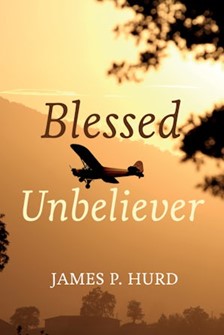
WINGSPREAD for April, 2024

Please forward and share this WINGSPREAD Ezine with others. Thank you.

Contents

  • Writer’s Corner
  • Blessed Unbeliever now available
  • New story
  • This month’s puzzler
  • Wingspread Ezine subscription information
  • Wisdom

Tip for writers: You can spin a tale that exists only in your head. But if you’re talking about a historic, known place, character or event, you’d better research it and get your facts right. Most of your readers won’t notice or care, but there’s that one that will find the error, then publish your mistake far and wide on Facebook.

Word of the month: PROP BET. Short for “proposition.” Propping is making a bet on something the bookmakers usually don’t take bets on. For instance, betting on the number of free throws in a basketball game.  

Question for you:  Writing a novel takes writing skill and great research. But it also takes imagination. You must seduce your reader into believing in locations, events or situations that are unusual, spun out of thin air. A favorite example: Charles Dickens tries to convince us that the evil groveler, Uriah Heep, is a believable character. How do you fire up your imagination when you write?

BLESSED UNBELIEVER novel

Blessed Unbeliever (paper or Kindle version) can be found at Wipf and Stock Publishers, Amazon https://a.co/d/9su5F3o or wherever good books are sold.

I can’t control what people mean by “evangelical” any more than I can demand that non-English speakers understand my English. A word means what the hearer thinks it means. Meanings of words change. For instance, “gay” used to mean bright and happy, as in “a gay party.” “Cool” used to refer to air temperature. No more. Thus, I can never guarantee other people will accept my parochial definition of “evangelical.” It used to be that people thought a fundamentalist was an evangelical on steroids and an evangelical was a fundamentalist on Prozac No more.. Today, “evangelical” means something quite different. . . .

To read more, click here:  https://jimhurd.com/2024/04/08/evangelicalism-whats-in-a-word/

Leave a comment on the website and share with others. Thanks.

(Thanks to Car Talk archives) Many years ago, one of our producers lived in New York. And he was a two-timing guy; he had two girlfriends.. 

One of the girlfriends lived in Brooklyn and the other lived in the Bronx. 

He could never decide which one to visit. He liked both of them equally and decided that he would just leave it to fate. He knew that when he went down to get the train, he would descend the stairs into the subway and pretty soon a train would come. And if it was the Bronx train, he’d get on the train and go visit the girl in the Bronx. If it was the Brooklyn train, he’d get on and visit the girlfriend in Brooklyn. And what made it great was that the trains ran equally often, every 10 minutes.

So he decided that he would go down to the train at random times during the day or night. He didn’t know the schedules of these trains, but he did know that every 10 minutes there would be a Brooklyn train, and every 10 minutes there would be a Bronx train. He figured his chances are 50/50, either way. 

However, he finds himself going to Brooklyn 9 out of 10 times. Even though the trains run equally, every 10 minutes to each location, and he chooses random times to go down to the train, he ends up 9 out of 10 times going to Brooklyn. 

Why was this happening?

(Answer will appear in next month’s WINGSPREAD newsletter.)

Answer to last month’s puzzler: 

What word has three sets of double letters? And what word has two H’s back to back? There might be a bunch of answers to this one. 

The first one is the word ‘bookkeeper’! b.o.o.k.k.e.e.p.e.r! Love that word. There may be others out there, but this one is the one we were looking for. 

And for the second word, the answer is, ‘withhold’. Two H’s in that word. And I’m sure there are many more out there, especially if people use Google. But these two were the ones we were looking for.

Subscribe free to this Ezine  

Click here https://jimhurd.com/home/  to subscribe to this WINGSPREAD ezine, sent direct to your email inbox, every month. You will receive a free article for subscribing. Please share this URL with interested friends, “like” it on Facebook, retweet on Twitter, etc.

Strategies of an avid reader

Will Rogers on aging:

First ~ Eventually you will reach a point when you stop lying about your age and start bragging about it.

Second ~ The older we get, the fewer things seem worth waiting in line for.

Third ~ Some people try to turn back their odometers. Not me; I want people to know why I look this way. I’ve traveled a long way, and some of the roads weren’t paved.

Fourth ~ When you are dissatisfied and would like to go back to your youth, think of Algebra.

Fifth ~ You know you are getting old when everything either dries up or leaks.

Sixth ~ I don’t know how I got over the hill without getting to the top.

Seventh ~ One of the many things no one tells you about aging is that it’s such a nice change from being young.

Eighth ~ One must wait until evening to see how splendid the day has been.

Ninth ~ Being young is beautiful, but being old is comfortable and relaxed.

Tenth ~ Long ago, when men cursed and beat the ground with sticks, it was called witchcraft , , , Today it’s called golf.

 Will Rogers, who died in a 1935 plane crash in Alaska with bush pilot Wiley Post, was one of the greatest political country/cowboy sages this country has ever known. Some of his sayings:

1. Never slap a man who’s chewing tobacco.

2. Never kick a cow chip on a hot day.

3. There are two theories to arguing with a woman. Neither works.

4. Never miss a good chance to shut up.

5. Always drink upstream from the herd.

6. If you find yourself in a hole, stop digging.

7. The quickest way to double your money is to fold it and put it back into your pocket.

8. There are three kinds of men:

The ones that learn by reading. The few who learn by observation.

The rest of them have to pee on the electric fence and find out for themselves.

9. Good judgment comes from experience, and a lot of that comes from bad judgment.

10. If you’re riding’ ahead of the herd, take a look back every now and then to make sure it’s still there.

11. Lettin’ the cat outta the bag is a whole lot easier’n puttin’ it back.

12. After eating an entire bull, a mountain lion felt so good he started roaring.

He kept it up until a hunter came along and shot him.

The moral: When you’re full of bull, keep your mouth shut.

If you wish to unsubscribe from this Wingspread Ezine, send an email to hurd@usfamily.net and put in the subject line: “unsubscribe.” (I won’t feel bad, promise!) Thanks.

Wingspread Ezine for February, 2024

Please forward and share this E-zine with others. Thank you.

Contents

  • Writer’s Corner
  • Blessed Unbeliever
  • New story
  • This month’s puzzler
  • Wingspread Ezine subscription information
  • Wisdom

Tip for writers: Rabbit trails. Wonderful paragraphs, or even chapters, that interrupt the narrative but may enrich the story. (E.g., in Les Miserables Victor Hugo interrupts the narrative by inserting four chapters of deep, miasmic description of the extensive sewer system under Paris.) How does a writer get away with this—the modern reader may lose interest if the author abandons the narrative. Some answers: 1. Break up these interruptions into smaller bits. 2. Insert some narrative into the diversion. 3. Never put a diversion in the first chapter of the book. 4. Include a protagonist or main character in the diversion. 5. Explain to the reader the purpose of the diversion. 6. Know that some readers may skip over a rabbit trail to get on with the dominant narrative. Charles Darwin, in his own family’s reading together, called this skipping “skipibus.” It’s alright; you have my permission.

Word of the month:  REVENANT: One that returns after long absence or after death. E.g., “He thought I was dead; I was a revenant from his distant past.”

Book of the month: LES MISERABLES. Victor Hugo. 1862. Translated by Charles Wilbour. Modern Library: New York. 1200 pages. A vast narrative set in Paris and its environs in the early 1800s. Fleeing from police inspector Javert, the convicted thief Jean Valjean robs a kind bishop who has sheltered him, but the bishop refuses to turn him over to the authorities. Valjean resolves to amend his life. He adopts little Cossette, daughter of a prostitute. Javert pursues them but at the insurrection barricades, Valjean saves Javert’s life. When Cossette falls in love with Marius Valjean hates him for stealing him away from her. And yet, Valjean saves Marius’ life, delivers him to precious Cossette, and as his own life ends, endows the happy couple with great wealth.

Question for you:  How do you personally overcome writer’s block? I’ll put some of your responses in the next Wingspread.

Blessed Unbeliever (paper or Kindle version) can be found at Wipf and Stock Publishers, Amazon https://a.co/d/9su5F3o or wherever good books are sold.

It’s too late for me, so you ask Grandpa Anderson what it was like building his tarpaper shack on the South Dakota prairie. Or ask him how he survived the death of his two young boys (your uncles), Jamie and Calvin. Grandpa and Grandma won’t be around forever, and after they’re gone you’ll long to be able to ask them questions. Ask them now. . . . To read more, click here  https://jimhurd.com/2024/02/06/a-letter-to-my-fourteen-year-old-self-you-are-not-weird/

Leave a comment on the website and share with others. Thanks.

(Thanks to “Car Talk Archives”) Many years ago, we had an uncle named Enzo. We only vaguely remember him. We were very young. Anyway, he went back to Italy. But before he went, he had 11 antique cars here. Each of them had a value of about 500 bucks. This was a while ago. 

So, when our Uncle Enzo died, he left a very interesting will. His will said that his 11 cars be divided among his three sons. But he wanted the oldest son to get more of his estate, due to his age. 

Half of the cars would go to the eldest son. One fourth of the cars to the middle son. And one sixth of the cars to the youngest son. 

So after the reading of the will, everyone was puzzled. Because there are 11 cars, and 11 is a prime number, it cannot be divided in halves, fourths or sixths. 

So just as everyone is scratching their heads not knowing what to do, our Uncle Vinny shows up in his 1962 Chevy Bel Air and says, “Don’t worry. I know what to do. I can help with my car.”

And the puzzler is, how do they do it?

Good luck.
 

Answer to last month’s puzzler: 

“Crusty” the mechanic had a little test to check out how good a car’s engine was. So, what was Crusty doing under the hood?

This little test is something he could do with his eyes closed. He didn’t even have to look at the engine. In fact, he often did this with his eyes closed so as not to be distracted by anything else. 

What he was doing was disconnecting the coil wire so the engine would crank, but it wouldn’t start. It was a kind of compression test. So he was listening for how the engine would crank and whether or not it would crank evenly. So as every piston came up on its compression stroke, he would hear the cadence of the engine. Cool, huh?

Subscribe free to this Ezine  

Click here https://jimhurd.com/home/  to subscribe to this WINGSPREAD ezine, sent direct to your email inbox, every month. You will receive a free article for subscribing. Please share this URL with interested friends, “like” it on Facebook, retweet on Twitter, etc.

If you wish to unsubscribe from this Wingspread Ezine, send an email to hurd@usfamily.net and put in the subject line: “unsubscribe.” (I won’t feel bad, promise!) Thanks.

Joyce Johnson said: Artists are nourished more by each other than by fame or by the public. To give one’s work to the world is an experience of peculiar emptiness. The work goes away from the artist into a void, like a message stuck into a bottle and flung into the sea.

He who has a “why” can bear any “how.” Nietzsche

The more often a man feels without acting, the less he will be able ever to act, and, in the long run, the less he will able to feel.   C.S. Lewis

The difficulty of literature is not to write, but to write what you mean. Robert Louis Stevenson

He was too cowardly to do what he knew to be right, as he had been too cowardly to avoid doing what he knew to be wrong.                  Charles Dickens

Lone, Wandering, but Lost?

How can some birds find their way from New York to Chile while I can get lost three blocks from home? I’ve had trouble navigating all my life—missing exits on the freeway, getting lost on cross-country flights, even walking out of a downtown store and turning north instead of south. What’s up? Am I just not paying attention?

Take driving. We have just visited Amish friends near the tiny town of Canton, Minnesota and are driving home, inhaling the smell of our sweet, Amish-baked bread. We’re on the proper road—US 52—but nothing looks familiar. Then Barbara points out the Iowa highway signs. We’re headed south instead of north.

I have driven multiple times to our friends’ house in Roseville. But today I’m not sure: do I take Rice Street or Lexington? What’s the street you turn off on? They’re on the corner of—which streets? Embarrassing to use a GPS to navigate to a friend’s house you’ve visited so many times.

I feel like a failure when I resort to using “Penelope,” our GPS. If Penelope speaks with a beautiful British accent sitting in London, how can she know about the secondary streets in Minneapolis-St. Paul, say nothing about traffic backups and construction zones? She dazzles in her directions but in rare cases she leads us down rabbit trails. One time Penelope points us a different direction than the way I pretty much know. Furthermore, my wife-navigator insists we’ve already gone beyond our destination. I do not sleep with Penelope so I defer to my wife, do a U-turn, and get lost. Penelope gets ticked and goes silent.

And walking. I have frustrating dreams about walking at night lost in the rain. Or I’m walking in a vast city and recognize no landmarks. Or I’m late heading to teach my college class but have forgotten my pants, or my notes, or haven’t prepared anything. Forgotten where the classroom is. Even forgotten where the bathrooms are.

Have you ever been on foot in a large city, crossed the street to enter a store and walked up a couple stories? Then you come down, exit onto the busy sidewalk and walk away in the wrong direction. Anybody? Anybody? I’ve done that multiple times.

I always go to the same ENT doctor. But each time I have to verify: is it the office building near Unity hospital or the one near Mercy? Which floor? The nurse leads me through a labyrinth of antiseptic-smelling hallways to a consultation room. But when I leave she needs to hold my moist hand to get me back to the lobby. Then when I walk out I’m forced to use the panic button on my smart key to find my honking car.

At our apartment in Oak Crest we must navigate a football-field-sized building stretching 50 yards down each wing. Today I walk down the fresh-scented hallway and burst unannounced into Larry and Julie’s apartment. “Hi, Larry and Julie! No, nothing; just dropping by.” Their door is the last door on the right in the east wing. My apartment door is the last door on the right in the west wing. Not only have I done this three times but I don’t know why and don’t know how to avoid it next time.

Even flying small planes. It’s 1965 and I’m flying a twin-engine Cessna 310 from Amarillo to Kansas City. I don’t have instrument charts so I’m forced to fly visual below a rainy cloud layer. I’m too low to receive navigation signals so I follow the compass, aiming far ahead, trying to correct for wind drift. Roads, rivers, railroad lines, small towns and fields flash by so fast and close I can almost smell the corn but I can’t identify anything with certainty. Finally I circle a water tower to read the name of the town and identify it on my chart.

It’s 1970 and I’m flying in Venezuela with an airplane full of missionary kids. They’re screaming as we fly through dark, lightning-filled clouds. I smell sour milk. Suddenly we burst out over the Orinoco river—second only in size to the Amazon. But I’m not sure if my destination is upriver or downriver and I’m low on fuel, flying over the broccoli of the vast jungle where airstrips are spaced out an hour or two apart. I let down to 100 feet and turn upriver, flying through the painful air, peering through a bleary windshield with the river racing backwards under our wings. We finally spot the grass airstrip.

More recently Jeremy and I are flying to Princeton, Minnesota, only fifteen minutes north. We will park there and walk over to the Hi-Way Inn for breakfast. (It’s a “$100 breakfast” if you include cost of the plane rental.) The restaurant lies on US 169, a major highway; can’t miss it. But we fly right past Princeton and have to circle back. I caution Jeremy—“Don’t tell your mom.”

Another anxious dream. I’m flying at high speed along city streets below the building tops. Or I have landed and am taxiing through a grove of pine trees on a rainy night, the propeller throwing up mud onto the windshield. But I’ve forgotten the way to taxi back to the airport.

So what’s going on? Years ago I failed only one portion of my flight program—navigation. I’ve worked really hard but have no evidence I’ve made much improvement so I pay extra attention and do a lot of crosschecking when I fly cross-country. Am I fated to fail? Or will I find some golden key that will perfect my navigational skills? I doubt it..

So when my wife asks me, “Do you know where we’re going?” I just say, “No, but I figure if I get in the general area we can drive around honking until someone finds us and tells us where to go.” She rolls her eyes and then stares straight ahead, mute.

Navigating

Why do some birds find their way from New York to Chile while I can get lost three blocks away from my own home? (True story.) I’ve had trouble navigating all my life— missing exits on the freeway, getting lost on cross-country flights, even walking out of a downtown store and turning north instead of south. What’s up? Am I just not paying attention? Is it genetic?

Take driving. We’ve just visited Amish friends near the tiny town of Canton, Minnesota and are headed north and home. We’re on the proper road—US 52—but nothing looks familiar. Then Barbara points out the Iowa highway signs. We’re going south.

I have driven multiple times to our friends’ house in Roseville. But today I’m not sure: do I take Rice Street or Lexington? What’s the street you turn off on? They’re on the corner of—which streets? Embarrassing to use a GPS to navigate to a friend’s house you’ve been to so many times.

I feel like a failure when I have to use GPS. “Penelope” speaks in a British voice but if she’s sitting in London, how can she know about the secondary streets in Minneapolis-St. Paul, not to mention traffic backups and construction zones? She usually dazzles in her directions but in rare cases she leads us down rabbit trails. In the worst case, Penelope points us a different direction than the way I pretty much know. Furthermore, my wife-navigator is certain we’ve already passed our destination. I do not sleep with Penelope so of course, I defer to my wife, do a U-turn, and get lost. Penelope gets ticked and goes silent.

Have you ever been on foot in a large city, crossed the street to enter a store and walked up a couple stories? Then you come down, exit, and walk away in the wrong direction? Anybody? Anybody? I’ve done that multiple times.

I always go to the same ENT doctor. But each time I have to verify: is the office building near Unity hospital or is it near Mercy? Which floor? The nurse leads me through a labyrinth of antiseptic-smelling hallways to the consultation room. But when I leave she needs to hold my moist hand to get me back to the lobby. Then when I walk out, I’m forced to use the panic button on my smart key to search for the honking car.

At our apartment in Oak Crest we have a football-field-sized main hallway, 50 yards down each wing. I walk home down the hallway and burst unannounced into Larry and Julie’s apartment. “Hi, Larry and Julie! No, nothing; just dropping by.” Their door is the last door on the right in the east wing. My apartment door is the last door on the right in the west wing. Not only have I done this three times but I don’t know why, or how to avoid it next time.

I have frustrating dreams about walking at night, lost in the rain. Or I’m walking in a vast city and recognize no landmarks. Or I’m late, heading to teach my college class but have forgotten my pants, or my notes, or haven’t prepared anything. Forgotten where the classroom is. Even forgotten where the bathrooms are.

I’m flying a twin-engine Cessna 310 from Amarillo to Kansas City. I don’t have instrument charts so I’m forced to fly visual below a rainy cloud layer. I’m too low to receive navigation signals so I follow the compass, aiming far ahead, trying to correct for the wind. Roads, rivers, railroad lines, small towns and fields flash by so fast and close I can almost smell the corn but I can’t identify anything. Finally I spot a water tower and circle it to read the name of the town and identify it on my air chart.

I’m flying in Venezuela and break out of the rainy clouds over the Orinoco river—second only in size to the Amazon. But I’m not sure if my destination is upriver or downriver and I’m low on fuel, flying over the broccoli of the vast jungle where airstrips are spaced out an hour or two apart.

Or take flying out of Anoka Airport, Minneapolis. This day I ask Jeremy to fly with me to Princeton, only fifteen minutes north. We can park there and walk over to the Hi-Way Inn for breakfast. (I call it the $100 breakfast.) The restaurant lies on US 169, a major highway; can’t miss it. But we fly right past Princeton and have to circle back. I warn Jeremy, “Don’t tell anybody.”

Anxious dreams. I’m flying at high speed along city streets below the building tops. Or I have landed and am taxiing through a grove of pine trees at night on a rainy, muddy track. Don’t know how to taxi back to the airstrip.

What’s going on? Years ago I only failed one portion of my flight program—navigation. I’ve worked really hard but have no evidence I’ve made much improvement so I pay extra attention when I fly cross-country.

Do I suffer from some genetic defect or something? Or is there some golden key that will perfect my navigational skills? I doubt it.

So when my wife asks me, “Do you know where we’re going?” I just say, “No, but I figure if I get in the general area we can just drive around honking and someone will find us and tell us where to go.” She rolls her eyes and stares straight ahead, mute.

Churched Atheists

Understandably, atheists don’t go to church. Church communities demand a huge time commitment and heavy emotional labor. They exert subtle and sometimes not-so-subtle pressure to change, to believe, to confess. And, what with the statistical decline nationwide in Christian belief and church attendance, fewer people even notice or care if atheists are absent.

Really though, if you’re an atheist you need church as much as believers do! Behold, all the benefits of churchgoing—singing, making friends, potlucks, social service, moral guidance, coming of age rituals (e.g., confirmation, graduation), social intensification rituals (e.g., births, baptisms, weddings, funerals). You may find a loving, accountability group (e.g., Christian AA) that offers hope instead of despair. You will find a good job-seeker network. A support group for life crises. A place to get married or buried. A place that offers meaning to your life. You might even find free babysitting! You can have all these things without abandoning atheism because so much of church life does not demand any belief in the supernatural

Turns out that churchgoing is good for your health. A 2020 study published in the International Journal of Epidemiology reported that church attenders had a 26% reduced risk of dying and a 34% lower risk of heavy drinking. Church attendance was also associated with less anxiety, depression, hopelessness and loneliness. Church attenders lean toward healthy family and community behaviors. You’ll find good mentors who will hold you accountable and give you honest critique. If you’re older, just getting out of the house and doing something—anything—is good for you. If you’re younger, hey, it might be worth going just to make your parents happy!

And the food! Go to “men’s fellowships” or ladies’ teas. Even some Bible studies are partly an elaborate excuse to eat good food. You run into older “church basement ladies” who are great cooks and you won’t find better potlucks anywhere. You can drink free coffee every Sunday with no hangovers or regrets.

Much church music is great music that people of all faiths or nonfaiths enjoy. Some sermons are masterpieces of homiletics, persuasive argument and great rhetoric—it’s ok to get inspired, even if you don’t buy the teachings. You may satisfy your need for the fine arts even if you don’t share the beliefs—singing, sculptures, paintings, images, creeds, holy books.

You might get free travel. Church people take “mission trips” to U.S. and foreign destinations and the congregation sometimes springs for the cost. There are often no explicit belief requirements or litmus tests for these trips (although there may be some behavioral requirements).

You’ll be shocked by the broad palette of church activities—basketball, book clubs, service groups, breakfast gatherings—none of which demand any religious commitment. And what a great place to meet someone who might become your good friend—or spouse!

You’ll learn about charitable causes to support. You’ll learn how to better deal with needy people, the poor or mentally challenged. You will become part of a fellowship that will support you in your dire need: health, family or marriage breakdown, social conflicts, economic collapse.

A multigenerational congregation will give you a chance to interact with people of different ages. If you pick a multiethnic church, even better. (But beware of over-zealous people who take their faith way too seriously and tend to have more rigid lifestyle expectations.)

You’ll be amazed at how rarely any churchgoer quizzes you on your own beliefs. Shocked at how infrequently anyone buttonholes you to contribute money to the church. Know that many other attenders do not share core church beliefs and may never contribute any money.

However, you must be on guard against the pitfalls. You might feel like a hypocrite—presenting yourself as someone you’re not. But take heart; many churchgoers feel the same way. They’re convinced others are much better Christians than themselves. They keep silent about their doubts and tend to mask their more juicy lifestyle habits. You’re in good company!

Another danger—your atheist friends might feel passed by or ignored, might mock and criticize you, might call you a hypocrite. You need to assure them you’re not a “seeker.”

At church you dare not trumpet your own beliefs nor criticize the beliefs of others (however crazy they might seem to you). You may need to hide your true beliefs, mask some of your more interesting habits. But surprise! I’ve found that people get way more upset over my politics than they ever do over my doctrinal beliefs. So, be careful.

Beware of ramped-up demands—asking your opinion about a Bible passage, inviting you to volunteer on a committee or to participate in a prayer meeting. Even with coffee and donuts it’s tedious to circle for an hour with people who think they’re talking to someone invisible . People might even seek you out for spiritual advice—awkward.

It’s rare, but church leadership might push you to become a member. This might require a litmus test that would demand that you lie about your beliefs and about certain delicious parts of your ungodly lifestyle. But in my experience, they let almost anybody slide through.

But we haven’t mentioned the greatest threat. You might like church. The food, camaraderie, physical and emotional support, entertainment, uplift and inspiration may tempt you to question your most deeply-held non-beliefs. As C.S. Lewis warns, you can’t be too careful. You run into these temptations at every turn.

Be strong. Resist. If not, you, like C.S. Lewis, might get sucked kicking and screaming into that 2,000-year-old fellowship of diverse, broken, hurting, annoying and amazing people who are on the road to a Christ encounter.

WINGSPREAD Ezine for June, 2023


Spreading your wings in a perplexing world

June 2023                                              James P. Hurd

Please freely forward and share this E-zine with others. Thank you.

Contents

  • Blessed Unbeliever published!
  • Writer’s Corner
  • New story
  • This month’s puzzler
  • Wingspread Ezine subscription information
  • Wisdom

New Novel: BLESSED UNBELIEVER 


I am happy for the people and libraries that have secured their copy of Blessed Unbeliever.

Sean McIntosh lives in a California world of Fundamentalist certainty—until his whole world unravels. He loses his girlfriend and loses his dream of becoming a missionary pilot. And he’s shaken by contradictions and mistakes he finds in the Bible. His missionary zeal languishes, then morphs into religious doubt as he sinks into unbelief and commits a blasphemous act after declaring himself an atheist—all the while at Torrey Bible Institute! But Grace pursues.

Blessed Unbeliever (paper or Kindle version) can be found at Wipf and Stock Publishers, Amazon https://a.co/d/9su5F3o  or wherever good books are sold.

Writer’s Corner

Tips for writers: “WRITE WHAT YOU KNOW.” Much better when writing fiction to “mine” you own life: places you’ve been (e.g., Amsterdam), experiences you’ve had (e.g., caught in a hurricane), people you knew (e.g., a bully or a teacher or a boss). Fictionalize this raw material for your own writing. Drill down to the details—this will draw your reader into your fictional world.

Word of the Month:  BRICOLAGE. A woven fabric or a mosaic of many different items fashioned into a new whole. One thinks of a tapestry or a mobile. Each detail is a piece of your puzzle that will create a beautiful, surprising, coherent whole.

Book of the month: C.S. Lewis, Mere Christianity. The best apology for Christianity that I’ve seen. C.S. Lewis, most known for his Narnia Tales (beginning with The Lion, the Witch, and the Wardrobe), was also a brilliant apologist.

Question from last month: Who is the most interesting fictional character you’ve ever read about? I like Cadfael, a twelfth-century Benedictine monk from Ellis Peters’ “Cadfael Chronicles” series. Smart crime sleuth, socially fluent, compassionate, spiritually deep, he is a Crusader who later took the Benedictine cowl and became a monk in Shrewsbury, England.

A new GPS for writers

New story: Crafting Gripping Dialogue

Elmore Leonard famously said that you should find all the parts of your writing that people tend to skim over—then delete them! But your readers will never skim over dialogue.

Why dialogue? Use dialogue to make the scene more immediate, vivid, in-the-moment. Use dialogue to reveal character, rather than having the narrator do it. Use dialogue to describe a scene—through the eyes of a character. Use dialogue to reveal conflict. Use it to reveal attributes of your characters—regional or ethnic identity, personality, temperament. Use it to reveal the thoughts of your character.

How to write compelling dialogue? Good dialogue never is a word-by-word transcription of the spoken word. But it needs to read as if it is. It should never seem contrived, made up. It should always be believable. How to do that? . . .  To read more, click here:  https://jimhurd.com/2023/05/31/crafting-gripping-dialogue/

(Leave a comment on the website and share with others. Thanks.)

This month’s puzzler

(Adapted from Car Talk Puzzler archives)

No Googling or websurfing to answer this one! This is a short historic puzzler. 

What is the capital of Liberia and why was the capital given that name?

 Good luck!

(Answer in next month’s Wingspread ezine.)

Last month’s puzzler: 

What is this sequence, and how would you complete it?

  • Juliet.
  • Kilo.
  • Lima.
  • Mike.
  • November.

Answer: These are letters in theInternational phonetic alphabet. It continues: Oscar, Papa, Quebec, Romeo, Sierra . . . Pilots use these to make a call number explicit, for example: “YVT-STP” becomes “Yankee Victor Tango — Sierra Tango Papa.”

Subscribe free to this Ezine  

Click here https://jimhurd.com/home/  to subscribe to this WINGSPREAD ezine, sent direct to your email inbox, every month. You will receive a free article for subscribing. Please share this URL with interested friends, “like” it on Facebook, retweet on Twitter, etc.

If you wish to unsubscribe from this Wingspread Ezine, send an email to hurd@usfamily.net and put in the subject line: “unsubscribe.” (I won’t feel bad, promise!) Thanks.

Wisdom 

My wife asked me to help prepare our 4-year-old for his first day at school….
….So I stole his lunch.

Whenever it rains, my wife just stands at the window looking sad….
….Do you think I should let her in?

If anyone knows how to fix broken hinges….
….My door is always open.

There’s nothing like a brisk fall morning….
….To keep me in bed till noon.

There’s no excuse for laziness….
….But if you find one, let me know.

What did the drunk driver die of?….
….Texting.

Where do you take someone who’s been injured in a peek-a-boo accident?….
….To the I.C.U.

Doctor: I’m sorry, I had to remove your colon….
Me Why

Did you know that before the crowbar was invented….
….Crows had to drink alone, at home.

Instant gratification….
….Takes too long.

I admit that I live in the past….
….But only because the housing is so much cheaper.

If you are not yelling at your kids….
….You are not spending enough time with them.

Only in America …….do drugstores

make the sick walk all the way to the back of the store to get their

prescriptions while healthy people can buy cigarettes at the

front.

___________________________________

Only in America …….do people order

double cheeseburgers, large fries, and a diet coke.

___________________________________

Only in America ……do banks leave

vault doors open and then chain the pens to the

counters.

___________________________________

Only in America ……do we leave cars worth

thousands of dollars in the driveway and put our useless junk in the garage.

___________________________________

Only in America ………..do we buy hot dogs

in packages of ten and buns in packages of eight.

___________________________________

Only in America …….do they have

drive-up ATM machines with Braille lettering.

___________________________________

EVER WONDER ….

Why the sun lightens our hair, but darkens our skin?

___________________________________

Why can’t women put

on mascara with their mouth closed?

___________________________________

Why don’t you ever see the headline: ‘Psychic Wins Lottery’?

Crafting Gripping Dialogue

Elmore Leonard famously said that you should find all the parts of your writing that people tend to skim over—then delete them! But your readers will never skim over dialogue.

Why dialogue? Use dialogue to make the scene more immediate, vivid, in-the-moment. Use dialogue to reveal character, rather than having the narrator do it. Use dialogue to describe a scene—through the eyes of a character. Use dialogue to reveal conflict. Use it to reveal attributes of your characters—regional or ethnic identity, personality, temperament. Use it to reveal the thoughts of your character.

How to write compelling dialogue? Good dialogue never is a word-by-word transcription of the spoken word. But it needs to read as if it is. It should never seem contrived, made up. It should always be believable. How to do that?

Use oblique dialogue. Dialogue should not be predictable: “How are you?” “I’m fine.” Rather,

“Why did you come late to the party?”

“I was hoping to see you here! When did you arrive”

“I wasn’t even going to come, but I’m glad I did.”

Note that the speakers do not immediately or directly answer questions.

Use tone in your dialogue. Formal or informal? Contractions and shorter words indicate a more informal speech. It’s less organized; it jumps around more.

Use conflict dialogue. Readers will not be patient with dialogue that merely reflects good manners. Even close friends or spouses have occasional conflicts. Add conflict and disagreement to your dialogue.

Use ethnic dialogue. Rather than tedious, forced artificial spellings of special words, sparingly choose a few words or phrases. Enough to give just a hint of regionalism. “Californier” to indicate a Boston accent. Use “y’all” to indicate a southern dialect. Or “acts” to reveal an African-American pronunciation of “ask.” Use special regional constructs: “They been,” “they be,” “they was,” “he were.”

Use internal dialogue. How represent the thoughts of a character? If you describe the thought, no special treatment is needed. But if you are “quoting” the thoughts you have several alternatives:

  • Use quote marks around the thoughts: “I’m in trouble,” he thought.
  • Put the thoughts in italics. I’m in trouble, he thought.
  • Do neither: I’m in trouble, he thought. -or- He wondered, Did Sally know what her mother had done?

I do not recommend the first. My editors prefer the second. I prefer the third, but it is a little harder to do.

Punctuation in dialogue? Just a few rules:

  • Should always open and close quote marks.
  • Punctuation goes inside of, not outside of, the quote marks.
  • A new speaker should always have a new paragraph.

You can take a ho hum piece and add vivid dialogue—your readers will love it.

WINGSPREAD Ezine for May, 2023


Spreading your wings in a perplexing world
May 2023                                                    James P. Hurd

Please forward and share this E-zine with others. Thank you.

Contents

  • Blessed Unbeliever published!
  • Writer’s Corner
  • New story
  • This month’s puzzler
  • Wingspread Ezine subscription information
  • Wisdom

BLESSED UNBELIEVER 

It’s exciting to see the interest in Blessed Unbeliever, a novel about religious zeal that morphs into religious doubt, and the persistence of pursuing grace.

Sean McIntosh lives in a California world of Fundamentalist certainty—until his world unravels. He’s trying to make sense of losing his girlfriend and losing his dream of becoming a missionary pilot. And he’s shaken by contradictions in the Bible. His despair leads him to commit a blasphemous act and declare himself an atheist—all the while at Torrey Bible Institute!

Blessed Unbeliever (paper or Kindle version) can be found at Wipf and Stock Publishers https://tinyurl.com/27pvdkyp , Amazon https://a.co/d/9su5F3o or wherever good books are sold.

Writer’s Corner

Punctuation matters!

Word of the Month:  EN MEDIA RES. Latin, meaning “in the middle of things.” It is effective to start a story, not at the beginning, but en media res, just before or just after the climactic event. Then you can fill in the details as the story unfolds.

Tip of the month:  “If it sounds like ‘writing,’ I rewrite it.” Elmore Leonard. Our readers should be captured by the story, not impressed by “the writing.” Writing is only the container, the medium that carries the story to the reader.

Your turn: Who is the most interesting character you’ve ever read about, biographical or fictional? (I like Sherlock Holmes. He is hilarious, but he doesn’t know that.)

This month’s puzzler

Adapted from Car Talk Puzzler archives

I’m going to give a series of names, a series of words, okay?

I’m going to give you a piece of the series, a sub-set of words, and your task will be to give me the rest of the series and tell me what the series is. 

And here they are: 

  • Juliet.
  • Kilo.
  • Lima.
  • Mike.
  • November.

And that’s it. That’s all I can give you. Pretty rough one huh? Good luck.

(Answer in next month’s Wingspread ezine.)

Last month’s puzzler: 

Recall that Ralph, an auto mechanic, can’t seem to get through airport security. He empties all his pockets, even takes off his belt, but still sets off the alarm. The TSA guy asks, “What’s your work?” Ralph replies, “Auto mechanic.” “Ah; that explains it!” says the TSA guy. What did the TSA guy realize?

Answer: To protect his feet, Ralph wore steel-toed boots—which set off the alarm. Removing them, he zipped through security.

New story: “Fearful of Finding the Fatal Flaw”

. . . In short, I became a Bible nerd. My faith depended on big words: dispensationalism, eternal security, election, the millennium, pre-Tribulational rapture and especially inerrancy. We sang, “The Bible stands, like a rock undaunted, far above the wrecks of time. . . .” The Bible was without error (in the original). . . . But I despaired of finding the answers I was seeking. I even considered becoming an atheist. . . .

To read more, click here: https://jimhurd.com/2023/05/03/fearful-of-finding-the-fatal-flaw/

(Leave a comment on the website and share with others. Thanks.)

Subscribe free to this Ezine  

Click here https://jimhurd.com/home/  to subscribe to this WINGSPREAD ezine, sent direct to your email inbox, every month. You will receive a free article for subscribing. Please share this URL with interested friends, “like” it on Facebook, retweet on Twitter, etc.

If you wish to unsubscribe from this Wingspread Ezine, send an email to hurd@usfamily.net and put in the subject line: “unsubscribe.” (I won’t feel bad, promise!) Thanks.

Wisdom

Last football wisdom (I promise!)

What does the average Alabama player get on his SATs? 
Drool.

How many Michigan State freshmen football players does it take to change a light bulb? 
None. That’s a sophomore course. 

How did the Auburn football player die from drinking milk? 
The cow fell on him. 

Two Texas A&M football players were walking in the woods. One of them said, ” Look, a dead bird.” 
The other looked up in the sky and said, “Where?” 

What do you say to a Florida State football player dressed in a three-piece suit? 
“Will the defendant please rise.”

How can you tell if a Clemson football player has a girlfriend? 
There’s tobacco juice on both sides of his pickup truck. 

What do you get when you put 32 Kentucky cheerleaders in one room? 
A full set of teeth. 

University of Michigan Coach Jim Harbaugh is only going to dress half of his players for the game this week. The other half will have to dress themselves. 

How is the Kansas football team like an opossum? 
They play dead at home and get killed on the road 

How do you get a former University of Miami football player off your porch? 
Pay him for the pizza.

These exquisite insults are from an era before the English language got boiled down to four-letter words.

1. “He had delusions of adequacy ”
Walter Kerr

2. “He has all the virtues I dislike and none of the vices I admire.”
Winston Churchill

3. “I have never killed a man, but I have read many obituaries with great pleasure.” Clarence Darrow

4. “He has never been known to use a word that might send a reader to the dictionary.”
William Faulkner (about Ernest Hemingway)

5. “Poor Faulkner. Does he really think big emotions come from big words?”
(Ernest Hemingway about William Faulkner)

6. “Thank you for sending me a copy of your book; I’ll waste no time reading it.”
Moses Hadas

7. “I didn’t attend the funeral, but I sent a nice letter saying I approved of it.”
Mark Twain

8. “He has no enemies but is intensely disliked by his friends.”
Oscar Wilde

9. “I am enclosing two tickets to the first night of my new play; bring a friend, if you have one.”
George Bernard Shaw to Winston Churchill

10. “Cannot possibly attend first night, will attend second… if there is one.”
Winston Churchill, in response

11. “I feel so miserable without you; it’s almost like having you here”
Stephen Bishop

12. “He is a self-made man and worships his creator.”
John Bright

13. “I’ve just learned about his illness. Let’s hope it’s nothing trivial.”
Irvin S. Cobb

14. “He is not only dull himself; he is the cause of dullness in others.”
Samuel Johnson

15. “He is simply a shiver looking for a spine to run up.
Paul Keating

16. “He loves nature in spite of what it did to him.”
Forrest Tucker

17. “Why do you sit there looking like an envelope without any address on it?”
Mark Twain

18. “His mother should have thrown him away and kept the stork.”
Mae West

19. “Some cause happiness wherever they go; others, whenever they go.”
Oscar Wilde

20. “He uses statistics as a drunken man uses lampposts… for support rather than illumination.”
Andrew Lang (1844-1912)

21. “He has Van Gogh’s ear for music.”
Billy Wilder

22. “I’ve had a perfectly wonderful evening. But I’m afraid this wasn’t it.”
Groucho Marx

23. Exchange between Lady Astor & Winston Churchill:
Lady Astor: If you were my husband I’d give you poison.
Churchill: Madam: If you were my wife, I’d drink it.

24. “He can compress the most words into the smallest idea of any man I know.”  Abraham Lincoln

25. “There’s nothing wrong with you that reincarnation won’t cure.”
Jack E. Leonard

26. “They never open their mouths without subtracting from the sum of human knowledge.”
Thomas Brackett Reed

27. “He inherited some good instincts from his Quaker forebears, but by diligent hard work, he overcame them.” James Reston (about Richard Nixon)