
Spreading your wings in a postmodern world
June 2026 James P. Hurd
Please forward and share this zine with others. Thank you.
The world is a strange, beautiful, mysterious and sometimes dangerpis place. This zine is dedicated to that mystery.
Contents
- Writer’s Corner
- This month’s story
- This month’s puzzler:
- WINGSPREAD Ezine subscription information
- Wisdom
Writer’s Corner
Dedicated to the world of words and the people who write them.
Want to browse archived WINGSPREAD stories? Click under “archives” at https://jimhurd.com/ These stories include memoirs, stories about bush flying, and personal essays. You can search for keywords in the webpage “search” function.
Here are a few examples of the stories:
Fundamentalist Sundays https://jimhurd.com/2016/09/
Valentine’s Alligator Hunt https://jimhurd.com/2015/02/09/valentines-alligator-hunt/
The Pilot Tells Himself Lies https://jimhurd.com/2018/01/23/the-pilot-tells-himself-lies/
Writer’s tip: Should I use a colon or an em dash? Write out numbers larger than ten? Use italics when writing people’s thoughts? Many, many decisions. But on all these issues, and many more, usage differs. AI can be very helpful. But the main thing is to be consistent—follow the same pattern throughout your piece. You may wish to create a style guide to remind you of the decisions you have made.
Word of the Month: SEMIQUINCENTENNIAL Adjective meaning 250 years. E.g., the U.S. semiquincentennial
Metaphor of the month: “His cynicism was so toxic it would strip paint off a wall.”
Digital resources: If you’re writing, and searching for a quick fact, use AI to find it. E.g., when did streetcar service end in Orange, California?
TV series of the month: FOYLE’S WAR. A police detective and his young, attractive driver solves crimes in the midst of the Blitz and England’s mobilization for WWII.
New story: Visiting Bishop Sam Yoder’s Farm
. . . I imagine they all wondered why we “English” were there. I was having second thoughts. The men eyed me carefully, sizing me up. How could I tell them I wanted to “study” them, as if they were butterflies pinned to a board? They’d probably never heard of “anthropology.” I wanted to collect demographic data on their families, study their marriage patterns and understand the many divisions the church had suffered since the 1890s. But how to explain this? I expected they were sensitive about the church divisions and secretive about the inbred marriages. So I told them, “I want to study White Buggy family histories.” . . .
To read more, click here: https://jimhurd.com/2026/06/12/visiting-bishop-sam-yoders-farm/
Leave a comment on the website, subscribe and share with others. Thanks.
You can also access my articles on Substack: https://jameshurd.substack.com/
This month’s puzzler. (Thanks to Car Talk Puzzler Archives)
Years ago, when railroads still ran steam locomotives, the Baltimore and Ohio Railroad had a busy freight line running south from Rochester. On that line, they used a 2-8-2 steam locomotive — two wheels in front, eight driving wheels, and two trailing wheels.
A locomotive like this could normally pull a train of 80 fully loaded cars. No problem. But on this particular run, something strange happened. If the train had 80 cars, it could make the trip just fine. But if it had only 60 cars, it couldn’t make it at all.
It needed more cars to succeed. Not fewer; more.
And the hint is: there was something unusual about the route south of Rochester.
So the puzzler question is:
Why did the locomotive need 80 cars to make the trip—but fail with only 60?
(Answer will appear in next month’s WINGSPREAD newsletter.)
If you wish to unsubscribe from this Wingspread Ezine, send an email to hurdjames1941@gmail.com and put in the subject line: “unsubscribe.” (I won’t feel bad, promise!) Thanks.
Wisdom
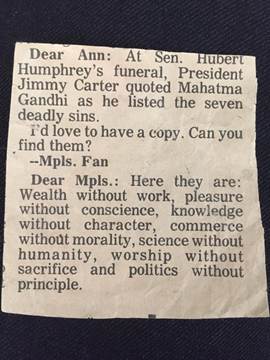
21st century words
- Intersectionality how an individual’s overlapping social identities (e.g., race, gender, class, sexuality, and ability) combine to create unique forms of discrimination, privilege, or inequality
- Cancel culture publicly boycotting or withdrawing support for individuals or groups because they have said or done something socially or morally unacceptable, especially in social media
- Othering the act of treating a person or group as fundamentally different, alien, or inferior to the mainstream or dominant social group. It creates a rigid “us vs. them” mindset
- Deadnaming using a former name of a transgender or non-binary individual
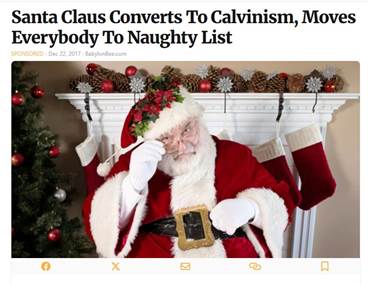
- I can’t remember how to write 1, 1000, 51, 6 and 500 in Roman numerals. I’M LIVID!
- The guy’s pants were so tight it looked like he’d been vacuum-packed into them by an Italian clothier with a grudge. (Thanks to D. Breneman for this one.)
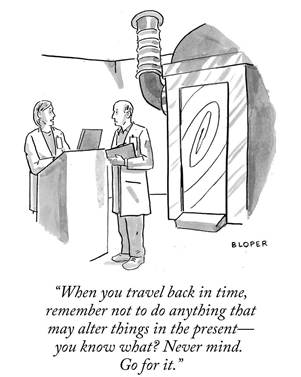
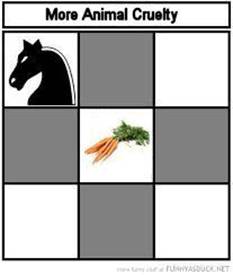
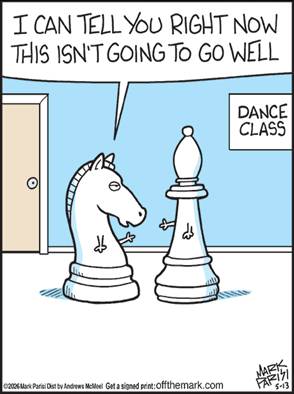
Chess humor . . .
21st century words
- Intersectionality how an individual’s overlapping social identities (e.g., race, gender, class, sexuality, and ability) combine to create unique forms of discrimination, privilege, or inequality
- Cancel culture publicly boycotting or withdrawing support for individuals or groups because they have said or done something socially or morally unacceptable, especially in social media
- Othering the act of treating a person or group as fundamentally different, alien, or inferior to the mainstream or dominant social group. It creates a rigid “us vs. them” mindset
- Deadnaming using a former name of a transgender or non-binary individual
 Wingspread