Spreading your wings in a postmodern world
November 2026 James P. Hurd
Please forward and share this zine with others. Thank you.
The world is a beautiful, mysterious, and sometimes disappointing place. This zine is dedicated to that awesome mystery.
Contents
- Writer’s Corner
- New Book: Navigating the Seasons
- This month’s puzzler:
- WINGSPREAD Ezine subscription information
- Wisdom
Writer’s Corner
Dedicated to the world of words and the people who use them.
Want to browse archived WINGSPREAD stories? Click under “archives” at https://jimhurd.com/ These stories include memoirs, stories about bush flying, and personal essays. You can type keywords in the webpage “search” function.
Here are a couple examples:
Reggie Radcliffe and the Fundamentalists https://jimhurd.com/?s=fundamentalist
Praying in a Ruined Cathedral Near York https://jimhurd.com/2015/05/28/praying-in-a-ruined-cathedral-near-york/
Social media quiz: At the end of her text, your granddaughter writes “IYKYK.” What does that mean?
Writer’s tip: If you’re editing a manuscript for publication, don’t worry too much about formatting or layout because the size of the printed page will be different from your 8.5 x 11” page. But work hard on grammar, punctuation and spelling. Be consistent—for instance, with hyphens, en and em dashes and ellipses.
Word of the Month: PODRISHENERS. A word my pastor made up to refer to faithful church people who week by week view the podcast of the service rather than actually attending.
Metaphor of the month: His face looked like an envelope without an address.
Digital resources: UNSPLASH.COM: A searchable website full of pictures that you can use without needing copyright permission. (But note the source in your acknowledgements.)
Streaming series of the month: Agatha Christie’s detective novels are all over the streaming services, e.g., Britbox, Amazon Prime, etc.
Task for you: The next story you write, practice writing it to one single person you know (e.g., a fellow writer or a friend). That will give you focus and fluency.
New Book!
Navigating the Seasons: A Journey Into Gratitude.
James P Hurd
In press with Wipf and Stock, it will be published in a couple of months. I am arranging a 40% pre-publication discount.
“I trace my journey through the ‘seasons’ of life, with the hope that the stories will strike a chord with your own journey. I tell stories about flying bush planes for Mission Aviation Fellowship in Mexico, Honduras, Venezuela, and Colombia, and stories about teaching anthropology at Bethel University, St. Paul. The “spiritual” stories trace my childhood fundamentalist faith, the doubts of adolescence, and the joy of finding a more generous faith in later years. And of course, a story about meeting Barbara.”
Email me if you’re interested in the 40% pre-publication discount.
Eleven Odd Words
Suggested by Ted Proffitt.
How many of these can you use in your next piece of writing?
- Kerfuffle
Have you ever heard the word “kerfuffle”? It is a delightful linguistic oddity that describes a state of mild chaos or disorder.
This peculiar term originated from Scottish dialects in the late 18th century, derived from the Gaelic cur, meaning to twist or bend, combined with fuffle, suggesting disorderly movement or commotion. As with quite a few examples on this list, the very sound of the word itself evokes its meaning.
- Discombobulate
Another word that rarely gets thrown around, “discombobulate,” aptly describes a state of confusion, disorientation, or bewilderment.
The prefix dis- means negation or reversal, while combobulate is an invention that might have been influenced by similar-sounding words like “discompose” or “discomfit.” Together, they form a word that evokes the sensation of being mentally perplexed.
- Bumfuzzle
Another word that describes a state of confusion, “bumfuzzle,” originated in the Southern United States in the mid-19th century with an uncertain etymology, possibly arising from a blend of “bamboozle” and “fuddle.”
This term embodies the linguistic treasure found in regional dialects, showcasing English’s ability to develop expressive terms to portray the complexity of human emotions.
- Flummox
A word that closes this trilogy of confusion terms, “flummox,” also describes a state of bewilderment, perplexity, or confusion.
Making its first appearance in 19th-century England, its exact etymology remains uncertain, possibly derived from combining flummock, a word meaning to bewilder or confuse, with the suffix “-ox,” adding emphasis or exaggeration.
- Flibbertigibbet
“Flibbertigibbet” is a term that can be used to describe someone who is frivolous or overly talkative. Its origins can be traced back to Old English, where flibbert denoted a frivolous person and gibbet referred to an inconsistent and unstable individual.
The word, as hard to pronounce as it is, serves as an apt definition for a lively yet disorganized individual. Think of someone who, when exposing his thoughts, is enthusiastic yet all over the place.
- Whippersnapper
We all know a “whippersnapper,” even if we probably don’t call them that way. The term is used to describe a young and inexperienced person, often with an air of arrogance or impudence.
The word dates back to the 17th century, blending “whip,” meaning something small or insignificant, with “snapper,” suggesting someone who talks back or is impertinent. It was initially used to mock young men who cracked whips while herding cattle, and it evolved into a light-hearted term teasingly aimed at youthful individuals displaying an excess of self-assurance.
- Bibble
If you’ve ever heard someone eating, sipping, slurping, or drinking noisily, then you have heard someone “bibble.” As with many cases in the English language, the origin of the word is very possibly rooted in onomatopoeia: a written emulation of the very sound that it aims to describe. The word is not to be confused with “nibble,” which means “to take small bites” of something.
- Gobbledygook
One –even less used– cousin of the term “gibberish,” “gobbledygook” is an endearing linguistic oddity used to describe incomprehensible or jumbled language, often mixed with obscure slang or meaningless words.
Coined in the 1940s by Texas Congressman Maury Maverick, this term blends “gobble,” reminiscent of turkeys’ sounds, with “gook,” signifying muddled, unclear speech. Initially aimed at criticizing bureaucratic language, it was eventually used to describe similar discourse in every other sphere as well.
- Abibliophobia
The kind of phobia that will turn anybody’s home into a library, “abibliophobia,” is a charmingly peculiar term that describes the fear of running out of reading material or being without books.
While not officially recognised in psychological dictionaries, its origins can be traced to the Greek roots a-, meaning without, biblio-, referring to books, and -phobia, denoting fear. This word defines the anxiety book lovers might experience at the thought of an empty shelf or an absence of new reading material.
- Cattywampus
A regional dialect, “cattywampus,” is a term that describes either something positioned diagonally or something that is going the wrong way.
In either case, the word evokes a sense of playful disorder or misalignment and is an example of the English language’s knack for inventing expressions that illustrate situations that aren’t quite straight or are plain wrong, but in a lighter sense.
- Collywobbles
A funny word to describe a not-so-funny sensation, “collywobbles” refers to a feeling of nervousness, unease, or fluttering in the stomach.
Its origins trace back to the 19th century, merging “colly,” an old English term for coal dust or darkness, with “wobbles,” implying an unsettled or wobbly sensation. Initially describing a feeling of stomach discomfort or anxiety, it evolved to signify a broader sense of nervousness or apprehension.
- Unwonted
The most fitting word on this list was left for the last. “Unwonted” is a very rarely used term that describes something uncommon, unusual, or not customary.
Coming from Old English, it combines “un-” as a prefix denoting negation or reversal and “wonted,” which is derived from wont, meaning accustomed or habitual. An unwonted word in itself, this was a much more used term in the days of Charles Dickens and Henry James, when prose and spoken language were more adorned.
This month’s puzzler. thanks to NPR’s Car Talk “Tappet Brothers”
It’s 1942. You’re sitting at a table covered with pennies, some heads up, some tails.
You’re blindfolded and wearing mittens, so you can’t see or feel which side is up. You’re told that exactly 10 pennies are heads up.
Your job: separate these coins into two groups, with the same number of heads in each group.
You can move, pick up, shake, or listen to the pennies, but no peeking.
The question is: Can you do it? If so, how?
(Answer will appear in next month’s WINGSPREAD newsletter.)
Answer to last month’s puzzler:
So, what was the weird thing about the building?
It was an elevator company in a one-story building.
We tricked you.
You’d think a company that sells elevators might want a building with, you know… an elevator. But this place had only one floor, so they couldn’t even demonstrate their own product there. To see an elevator in action, you’d have to go to another building.
So the joke was simply the mismatch: an elevator company in a one-story building.
Not exactly a great showroom.
If you wish to unsubscribe from this Wingspread Ezine, send an email to hurdjames1941@gmail.com and put in the subject line: “unsubscribe.” (I won’t feel bad, promise!) Thanks.
My last visit to the doctor’s cost $300. I said, “Doctor; I had to pay $300 for this visit; you were only with me for ten minutes.”
“Oh, sorry,” he said. Shall we talk about family or sports for another 25 minutes?”

“If you’re not at the table, you’re on the menu.” Mark Carney, Canadian Prime Minister (paraphrased), arguing for cooperation with the EU.
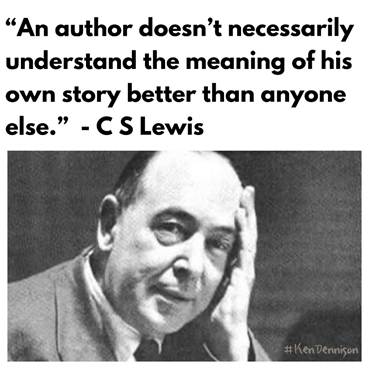
You’ll be surprised what ideas your readers get out of your stories.
I’m convinced I’m getting stronger. I didn’t used to be able to carry $50 of groceries all by myself.