All posts by hurdjp

Unknown's avatar

About hurdjp

Christ-follower, bush pilot, teacher, writer, family man. New novel: East Into Unbelief. Projected publishing date: Spring, 2022. Blog: jimhurd.com

WINGSPREAD Zine for Nov./Dec., 2025

Please forward and share this ezine with others. Thank you.

  • Writer’s Corner
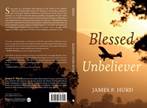
  • Blessed Unbeliever 
  • This month’s story: Plumbers and Electricians
  • This month’s puzzler: Who done it?
  • WINGSPREAD Ezine subscription information
  • Wisdom

Dedicated to people who love words. Words are miracles that brand humans as sentient creatures, creative, inventive, exploring. Taste the words as they roll around on your tongue; let them fill you with a sense of wonder.

NEW BOOK!  I have begun assembling a new book of stories and essays gleaned from the last ten years of my blogs. Maybe I’ll group these under the sections: Spring, Summer, Autumn and Winter. Spoiler alert: I’m in the “Winter” phase now, and looking back to those other seasons. I’ll keep you posted.

Why it’s important to write

Want to browse archived WINGSPREAD stories? Click here, then click under “archives”     https://jimhurd.com/    These stories include memoirs, stories about bush flying, personal essays and other topics. They’re searchable for key words.

Here are a few examples:

The joys of my annual physical exam: https://jimhurd.com/2024/10/25/the-annual-physical/

Why did it take so long to discover that I’m not weird? https://jimhurd.com/2024/02/06/a-letter-to-my-fourteen-year-old-self-you-are-not-weird/

Writer’s tip: Transgress. You seize the reader’s interest if you write something unexpected. Examples: “I’ve given up on Jesus.” “Morality is so 19th century.” Of course, your piece will sort out these shocking statements and explain what you mean. But use counterintuitive and contrary statements: contradictions, hyperbole, even forbidden words (used carefully). The object? Transgressing grabs the reader’s attention.

Words and metaphors

“a unicorn of a girl” (unique type)

“he shat his pants” (quite vivid)

haplotype (a sequence of polymorphic genes that tend to be inherited together). This is the way Ancestry.com discovers your ancestry.

Digital resources:

I still own my Strunk and White, Elements of Style, but you can ask AI (Artificial Intelligence) anything. Try typing into your browser: “chatgpt.” For instance: “What’s the difference between insure and ensure?” “When must you use a comma before a conjunction?” or “Please critique the attached story and give me suggestions on how to improve it.” What I do not do is ask AI to write the story for me.

Word of the month. FAIN (obsolescent): Gladly, willingly

Task for you: Write about how joyful you are without saying how joyful you are. (That is, show; don’t tell.)

Available in paper or Kindle version at Wipf and Stock Publishers, Amazon https://a.co/d/9su5F3o or wherever good books are sold.

Hashtags for the book: #california #author #christianwriter #babyloss #southerncalifornia #oc #planes #socal #aviationdaily #humanist #pilotlife #blessedunbeliever #religion #travel #christianauthor #aviationgeek #orangecounty #godless

Retirement is deceptive. You’re lulled into thinking that things will pretty much go on as they always have. They usually do. But then, life happens.

I’m working in my college office when the phone rings. “Jim, I don’t know what to do. I’m just sitting here on the sofa sewing and three times I’ve felt faint—like I’m about to pass out.”

My mind races. Is this just in Barbara’s head? In the past, I’ve joked with her that I’ve decided on her epitaph: “I told you I was sick!” But what if something’s really going on? She’s never complained about feeling faint before.

“How often is this happening to you?

“About every half hour or so. Oh! I feel like I’m fainting now!”

“Okay—I’m calling 911 and I’ll come home as soon as I can.”

I call 911, run out to my car, and drive home, praying as I go. When people ask me how prayer works, I always have a ready answer: “I don’t know. But the Bible tells us to pray, and Jesus prayed, so I pray.” . . . To read more, click here: https://tinyurl.com/4tshbrbb

Please “rate” the story and “share” it with others. Thanks.

You can also access my articles on Substack:   Plumbers and Electricians – by James P Hurd

This one is clever. You have to look closely at the following paragraph. You should actually not read it; you should have someone else read it to you to get the full experience. But you can read it if you have to. 

Here it is. 

“This paragraph is odd. What is its oddity? You may not find it at first, but this paragraph is not normal. What is wrong? It’s just a small thing, but an oddity that stands out. If you find it, what is it? You must know your days will not go on until you find out what is odd. You will pull your hair out. Your insomnia will push you until your poor brain finally short circuits trying to find an oddity in this paragraph. Good luck.” 

So what is it?

Remember, you have to examine the paragraph really well.

Good luck.

 (Answer will appear in next month’s WINGSPREAD newsletter.)

Answer to last month’s puzzler: 

So, a night watchman hears a person scream “No, Frank!” Then a gunshot. He enters the room and sees a minister, a plumber and a doctor. But how does he know that it was the minister that pulled the trigger?

Easy. 

The doctor and the plumber are women. So he made the likely guess that none of the women were named Frank. 

Subscribe free to this Ezine  

Click here https://jimhurd.com/home/  to subscribe to this WINGSPREAD ezine, sent direct to your email inbox, every month. You will receive a free article for subscribing. Please share this URL with interested friends, “like” it on Facebook, retweet on Twitter, etc.

If you wish to unsubscribe from this Wingspread Ezine, send an email to hurdjames1941@gmail.com  and put in the subject line: “unsubscribe.” (I won’t feel bad, promise!) Thanks.

Q. How do you keep your car from being stolen?
A. Buy a standard shift model

Q. How do you send a message in code?
A. Write in cursive

“Critical thinking without hope is cynicism. Hope without critical thinking is naiveté. Maria Popova

Here are some irreverent trivia questions about college football:

What does the average Alabama football player get on his SATs?
Drool.

How many Michigan State freshmen football players does it take to change a light bulb?
None. That’s a sophomore course.

How did the Auburn football player die from drinking milk?
The cow fell on him.

Two Texas A&M football players were walking in the woods. One of them said, ” Look, a dead bird.”
The other looked up in the sky and said, “Where?”

What do you say to a Florida State University football player dressed in a three-piece suit?
“Will the defendant please rise.”

How can you tell if a Clemson football player has a girlfriend?
There’s tobacco juice on both sides of the pickup truck.

What do you get when you put 32 Kentucky cheerleaders in one room?
A full set of teeth.

University of Michigan Coach Jim Harbaugh is only going to dress half of his players for the game this week. The other half will have to dress themselves.

How is the Kansas football team like an opossum?
They play dead at home and get killed on the road

How do you get a former University of Miami football player off your porch?
Pay him for the pizza.

On the Act of Writing:

  • “The first draft is just telling yourself the story.” – Terry Pratchett
  • “If you don’t have time to read, you don’t have the time—or the tools—to write.”
    – Stephen King
  • “Writing is a way of tasting life twice.” – Anaïs Nin
  • “Write what you know.” – Mark Twain
  • “Write the book you want to read.” – Toni Morrison
  • “Words are our most inexhaustible source of magic.” – J.K. Rowling
  • “Writing is a dog’s life, but the only life for me.” – Gustave Flaubert

Why some people don’t like Daylight Savings Time

Wisdom and Philosophy

  • “The only thing we have to fear is fear itself.”—Franklin D. Roosevelt
  • “Be yourself―everyone else is already taken.”—Oscar Wilde
  • “The mind is everything. What you think you become.”—Buddha 
  • “The journey of a thousand miles begins with one step.”—Lao Tzu
  • “In three words I can sum up everything I’ve learned about life: it goes on.”
    —Robert Frost
  • “The unexamined life is not worth living.”—Socrates

Plumbers and Electricians

I don’t pray because it makes sense to pray. I pray because my life
doesn’t make sense without prayer.   
Noah Benshea[i]

Retirement is deceptive. You’re lulled into thinking that things will pretty much go on as they always have. They usually do. But then, life happens.

I’m working in my college office when the phone rings. “Jim, I don’t know what to do. I’m just sitting here on the sofa sewing and three times I’ve felt faint—like I’m about to pass out.”

My mind races. Is this just in Barbara’s head? In the past, I’ve joked with her that I’ve decided on her epitaph: “I told you I was sick!” But what if something’s really going on? She’s never complained about feeling faint before.

“How often is this happening to you?

“About every half hour or so. Oh! I feel like I’m fainting now!”

“Okay—I’m calling 911 and I’ll come home as soon as I can.”

I call 911, run out to my car, and drive home, praying as I go. When people ask me how prayer works, I always have a ready answer: “I don’t know. But the Bible tells us to pray, and Jesus prayed, so I pray.”

When I wheel into our driveway, there’s a white paramedic van sitting in front of the garage, and they’re rolling Barbara out on a stretcher. She gives me a wan smile as they roll her in. I can almost read her mind—Oh, don’t worry about me. I’ll be fine. They’re just going to take me in to check me out. I’m not reassured. I jump into my car to follow the wailing siren.

The emergency room people admit Barbara immediately and hook her up to an EKG monitor. Sure enough, every eighth beat or so, the little squiggly line gets tired, flattens out, and squiggles more slowly.

After a short wait, Dr. Olinger walks in. “Your heart monitor indicates you’re skipping beats once in a while.” He’s in his early forties with alert, spiky brown hair, no glasses and the requisite white coat. He sits relaxed with crossed legs, talking calmly about life and death issues.

“We’re going to keep you overnight for observation and then we’ll probably give you a monitor to keep an eye on those skipped beats when we send you home.”

But the next morning, Dr. Olinger comes in, “I don’t like those skipping beats. We have ‘plumbers’ and ‘electricians’ here in the heart center. We’re going to send you to our ‘plumbers’ for an angiogram to see if any plaque is plugging your arteries.” I smile and nod my head in agreement.

Not Barbara. “I don’t want an angiogram.” This is vintage Barbara—even in the midst of medical emergencies, she’s still in control, questioning, making her own decisions.

“Well, we can just send you home with a monitor and take our chances, but what if you pass out again? I think you need an angiogram to check for blockage.”

“How do you do that?”

“Well, the doctors will insert a tube through your groin with a tiny camera on it and go hunting through your arteries.”

“What are they looking for?”

“They’re looking for blockages. We’re wondering if a partial blockage might be causing your fainting spells.”

“What if they find one blocked?”

“Then we can immediately put in a stent. It’s a little mesh cylinder that we insert collapsed.” He shows us a picture of the stent. It looks like one of those Chinese finger puzzles that you put your fingers into and then can’t pull them out. “After it’s inserted, we inflate a tiny balloon to push it out against the artery walls. In a few months, it gets ‘adopted’ by the artery and feels right at home there, and it’ll hold the artery nice and open.” I’m nodding my head to encourage Barbara.

“I don’t want a stent.”

But eventually she relents and decides to have the angiogram. I sit outside, wait and pray. After what seems a long time, they emerge and I walk alongside with my hand in hers as they roll her back to her room.

Dr. Olinger comes in and reports, “We did an angiogram and found a 70 percent block in your ‘widow maker’ artery.”

Widow maker? I think, That doesn’t sound good. He shows me the X-ray and I can see a narrowing in the artery that runs across the front of the heart.

“It’s called a widow-maker because if it’s completely blocked, you die. But we put the stent in. Hopefully that’ll take care of it, Barbara. We’ll keep you overnight and send you home tomorrow morning. But we’ll give you a monitor so we can keep an eye on your heart.”

Barbara’s having trouble getting used to the idea of an invasive stent in her body.

In the morning of day three, I’m watching the EKG screen. The squiggle’s mostly behaving itself but sometimes it stops and rests a couple of seconds.

Dr. Olinger says, “Hmmm. I don’t like the way the EKG looks. I don’t think the stent took care of the problem. I think you need to see an electrician.”

“Why? What’s that?”

 “The ‘plumbers’ work with the mechanics of the heart; the ‘electricians’ specialize in the electrical circuits that energize the heart. The heart nerves shock the muscles and contract them. One shock contracts the upper part of the heart; the other contracts the lower part. We’ll check them both out. They’ll stick a thin electric wire down into your heart area to see if the current is flowing normally to your heart.” He talks as if they’re checking your car’s ignition harness or something.

“I don’t want a wire in my heart.”

He gets up, walks over to his butcher-paper flipchart and draws a diagram of the upper and lower heart chambers, the little nerves that deliver shocks to each and the “bundle branch” in between that acts like an electrical switch that causes the lower muscle to contract just after the upper one does.

“We need to see if everything’s working.”

Barbara asks, “What happens if it’s not?”

“Well, since we’ve installed the stent and it hasn’t made any difference in your heart rhythm, we think you have a ‘bundle-branch block.’ This little switch here isn’t always working like it should.” (He points to the flipchart.) “If we find that it’s defective, we’ll install a pacemaker here to regulate the electric pulses.” He reminds me of my mechanic when he told me, “All you need is a new alternator.”

Barbara’s not convinced. “I don’t want a pacemaker.”

“Well, you don’t have to get one. You can just go home and see if you start fainting again. Why don’t you two just talk about it for a bit and I’ll come back in a while.”

Barbara’s looking at me. I’m looking at the green squiggles.  “We’d better let them check out your electric circuits.”

“But I don’t want a pacemaker.”

“They said they’d only install one if your electric circuits aren’t doing the job.”

“Yeah, but they’ll probably say I need one. I don’t want a wire in my heart.”

“But Precious, I don’t want you to have another fainting episode. Why don’t we pray for wisdom here? We need to make a decision.”

We pray. Dr. Olinger comes back in, and looks at Barbara. “You’re mad at me, aren’t you?” he says.

She laughed. “I just don’t want a pacemaker.”

“Well, you can always just go home and hope for the best.”

“Well . . . Jim thinks we should get it checked out, at least.”

“We can do that but if we find it isn’t working, we need to install a pacemaker.”

“Well . . . okay,” Barbara says, brow furrowing. “But I don’t like it.” Pen poised hesitantly, she ponders the permission document that has phrases like, “You might be disabled” or “you might die” or whatever. I can see her mind racing. It’s not that she doesn’t trust doctors—it’s just that she doesn’t trust them very much. She seems more comfortable with chiropractors, herbalists, naturopaths, or nutritionists.

Finally, she signs.

Barbara and I have had many conversations about health. She doesn’t seem to appreciate my personal philosophy—”Everybody needs to believe in something. I believe I’ll eat ice cream.”

If I complain of any health problems, she usually says, “Well, if you’d eat better, you’d probably feel better.”

“Maybe, but I’d rather be happy than healthy.”

(Eye roll) “Well, don’t expect me to take care of you if you get disabled.”

I think, Empty threat! I guess that’s the chance I’ve got to take.

She insists, “Why don’t you ask your doctor if you should change your diet?”

“Well, because I’m afraid he would say yes. Anyway, I think that if my body craves something, that must mean it’s good for me. I’d rather just take pills for any problem. Besides, what if I ate healthy for years but then got hit by a truck—all that sacrificial eating would be wasted.”

(Harder eye roll, furrowed brow. Then silence). I fear she’ll get her revenge when she writes my epitaph: “I tried to tell him but he wouldn’t listen.”

But now I’m concentrated on Barbara’s heart. They roll Barbara away to the procedure room and in an hour roll her back in.

“They put in a pacemaker,” she says. “I’m not too happy about it.” She shows me the purple bulge near her collarbone with the red slit and stitches. (Later she’ll show it off to relatives, friends and strangers.)

The nurses hook her up to the EKG, and I watch the little green squiggle. It’s squiggling perfectly, not missing a beat. “Barb; that means you won’t faint again, and if you should have more problems, the pacemaker will jump in and take over—it’s good insurance.”

Dr. Olinger comes in and explains that she must take Plavix for twelve months to prevent her stent from clogging up. “If your artery blocks again, you will probably die.”

“I don’t want to take lots of medicines.”

I say, “But Barb, you don’t want your stent to get clogged up.”

So she tries Plavix for a week; then we return to see Dr. Olinger. “I can’t take this medicine; it gives me headaches and I can’t sleep.”

“Well, headaches are better than dying.”

“Well, I guess I’ll just have to die.”

I feel like I’m in the middle of a food fight between people from two different cultures.

“Well, we can stop the Plavix and try putting you on Effient, but only if you don’t read the side effects!” (He laughs.) “But you have to take it faithfully every day for a year. Take half a pill in the morning and the other half in the evening.”

Barbara has always considered a prescription more a suggestion than a command. She starts the medicine, but at her own pace.

The next time we see Dr. Olinger, Barbara says, “You’re mad at me, aren’t you?”

He laughs. “Have you been taking your Effient?”

“Yes . . .  I take the half pill every morning but I only take the evening pill on alternate days.” Dr. Olinger groans, holds his head in both hands and drops his head onto the table in mock horror. “Barbara, you’ve got to take this regularly, or your stent might clog up.” Barbara smiles and says she’ll try.

*          *          *

Now it’s a year later, and Barbara’s feeling very good. She wasn’t kidding—she was very ill, and I’m grateful she’s feeling better now. She telephones in every three months so they can remotely check pacemaker function. Her Effient pills are finally done, but the final month she’s cut down to one-half pill per day. Did I mention she makes her own decisions about medicines?

Now we’re at Barbara’s last follow-up visit with Dr. Olinger and he’s smiling. Is it because Barbara’s doing so well, or because he won’t have to deal with her any longer?


[i] Noah Benshea, Jacob the Baker: Gentle Wisdom for a Complicated World. Random House, 1989.

Wingspread Zine for October, 2025

Please forward and share this ezine with others. Thank you.

Contents

  • Writer’s Corner
  • Blessed Unbeliever 
  • This month’s story: “The Returning”
  • This month’s puzzler:
  • WINGSPREAD Ezine subscription information
  • Wisdom

Dedicated to people who love words. Words are miracles that brand humans as sentient creatures―creative, inventive, exploring. Taste the words as they roll around on your tongue; let them fill you with wonder.

Want to browse archived WINGSPREAD stories? Click here, then click under “archives”     https://jimhurd.com/     These stories include memoirs, stories about bush flying, personal essays and other topics.

Here are a few examples:

“Why do I Make Stupid Mistakes?”
https://tinyurl.com/4b36sest

“A Blessed Death” https://jimhurd.com/2025/01/

Writer’s tip: If you’ve seen a metaphor used before, don’t use it. So many metaphors are hackneyed and trite (a purring engine, flat as a pancake, as bright as the sun)  Try to think of fresh metaphors.

Word of the month: A “contronym” is a word with two opposite meanings. For example:CLEAVEto split apart (“Cleave the log in two”) -or- to cling to (“Cleave to your principles”).

Task for you: Incorporate two new words into the next paragraph you write. You may even, like Shakespeare, make up your own words. Try turning a noun into a verb (“The baby aped her mother’s motions perfectly.”)

Book of the month: Christian Reflections. C.S. Lewis (Walter Hooper, editor). 1967. Nerd alert—sometimes Lewis is hard to read. And yet here he reflects on important issues: Unanswered prayer, ethics, Christianity and culture. Ironic that even right-wing Christians have “adopted” this pipe-smoking, bourbon-drinking Oxford don who accepts evolution and speculates about purgatory! However, he lends his great mind to powerful Christian apologetics.

Available in paper or Kindle version at Wipf and Stock Publishers, Amazon https://a.co/d/9su5F3o or wherever good books are sold.

Fifty-four years ago I traveled from Venezuela to Pennsylvania for our wedding. Now I’m tearing up entering Pennsylvania for the first time without Barbara. I learned to see this world through her eyes―now I love the place even more than she did.

     This year spring has come early to Lancaster County—green meadows of alfalfa, new-leaved trees, gardens of tulips, daffodils and phlox, the faint smell of spread manure. We pass eternal stone barns with their earth bridges rising to the second level. We hear the clip-clop of passing grey and black buggies.

We find the Willow Street Mennonite Church is thriving—lots of young families and children with many of Barbara’s relatives sprinkled in. A good Easter service. The promise of new life even as we memorialize its ending. I hear the “Lancaster lilt”—”youse staying for dinner? . . . it spited me . . . outen the light . . . there’s more pie back . . . baby’s all cried up; maybe she needs drying . . .”

To read more, click here: https://jimhurd.com/2025/10/01/the-returning/

Leave a comment on the website, subscribe and share with others. Thanks.

You can also access this and other recent articles on Substack:  https://jameshurd.substack.com/p/the-returning   

 An off-duty policeman is working as a night watchman in an office building.

He’s doing his nightly rounds, and he comes to a closed door. Behind the door, he hears voices.

He hears people talking, and an argument seems to be taking place. Raised voices, and yelling. Then he hears one of them say, “No, Frank! No, don’t do it. You’ll regret it.”

And then he hears what sounds like gun shots. Bang, bang, bang.

He burst through the door. What does he see? A dead man on the floor, and the proverbial smoking gun.

Now, in the room there are three living people. A minister, a doctor and a plumber.

He walks over to the minister and says, “You’re under arrest. You have the right to remain silent.” 

How does he know that it was the minister that pulled the trigger?

Good luck. 

 (Answer will appear in next month’s WINGSPREAD newsletter.)

Answer to last month’s puzzler: 

With the velociraptors pursuing you on Isla Nublar, your life depends on taking the correct fork in the road. You meet two guys—one always lies; the other always tells the truth. You get only one question. So what would the one question be to make sure you could get to the dock?

Here it is. 

I would look at one of the guys and say, “If I were to ask the other guy which road takes me to the dock, what would he say?”

Here’s why.

If you ask the truth teller, he is going to say, “The liar is going to tell you to take this road.” And that would be the wrong road, because he’s a liar. 

And if you ask the liar, he is going to point to the same road, because he has to lie about what the truth teller will say. 

So there ya have it. 

Click here https://jimhurd.com/home/  to subscribe to this WINGSPREAD ezine, sent direct to your email inbox, every month. You will receive a free article for subscribing. Please share this URL with interested friends, “like” it on Facebook, retweet on Twitter, etc.

If you wish to unsubscribe from this Wingspread Ezine, send an email to hurdjames1941@gmail.com  and put in the subject line: “unsubscribe.” (I won’t feel bad, promise!) Thanks.

  • Pre- means before, and post- means after. Using both at the same time would be preposterous.
  • Through prayer the Christ within us opens our eyes to the Christ among us.
    Henri Nouwen

“I’m foreman of the local sawmill,” he explained. “Every day, I have to blow the whistle at noon, so I call you to get the exact time.” Yolanda giggled, “That’s interesting, All this time, we’ve been setting our clock by your whistle.”

Obsolete Insults & Colorful Terms

  • caitiff – wretched, despicable person
  • knave – dishonest man
  • varlet – rogue or rascal
  • coxcomb – vain, conceited man
  • scullion – kitchen servant (used insultingly)
  • slubberdegullion – slob, slovenly person
  • looby – awkward, clumsy fellow

Ode to the Married Man

To keep your marriage brimming
with love in the loving cup
whenever you’re wrong admit it
whenever you’re right, shut up.
                              Ogden Nash

                    Learning how to order coffee

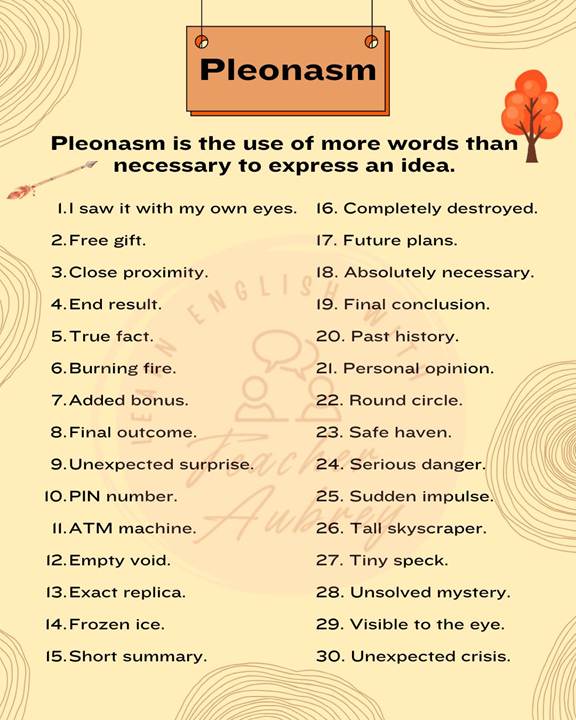
This list will help you tighten your writing―eliminate unnecessary words. My personal opinion is that this list is absolutely necessary―it’s a true fact.

                                                Advice for parents

The Returning

How memorialize 89 years of life?

Barbara died in December. It is now April and my daughter Kimberly and I depart Minneapolis and travel east on a mission―to carry Barbara’s ashes back to Willow Street Mennonite, her childhood church, founded in 1710. It feels so right to bring Barbara full circle back to the place where she grew up immersed in her family’s dairy farm and in this Mennonite community surrounded by relatives and friends in beautiful Lancaster County., Pennsylvania.

Fifty-four years ago I traveled from Venezuela to Lancaster County for our wedding. I learned to see this world through her eyes―now I love the place even more than she did but I’m tearing up as I arrive for the first time without Barbara.

We find Willow Street Mennonite Church thriving—lots of young families and children, with many of Barbara’s relatives sprinkled in. Even as we memorialize life’s ending, their Sunday Easter service promises new life. I’m enjoying hearing again the “Lancaster lilt”—”youse staying for dinner? . . . it spited me . . . outen the light . . . there’s more pie back . . . baby’s all cried up; maybe she needs drying . . .”

On Saturday, thirty people gather for Barbara’s memorial service. Joe Sherer, Willow Street minister, uses Barbara’s memoirs book to enrichen his remarks. I am humbled that Allen and Rachel (Groffdale horse-and-buggy Mennonites) have come, along with David and Sarah Lapp, the Amish couple who now farm the old Breneman farmstead. Both couples had to find car transportation.

I am blessed that all our children are here. Jeny has flown in from northern California and speaks of her childhood in the Hurd family. Son Timothy shares remembrances. When I rise to speak, I stand mute for several moments. Then, “Each life is sacred to God. Thus, it is fitting that we meet today to celebrate the life and faith of Barbara Ann Hurd Breneman. . . . When we moved to Colombia she comforted me after an airplane crash, nursed me through a bout of Typhoid fever. . . . Barbara was the beating heart of our home. Always loyal to her husband, a sacrificial wife and mother. She fiercely fostered our social, emotional and spiritual development. . . .”

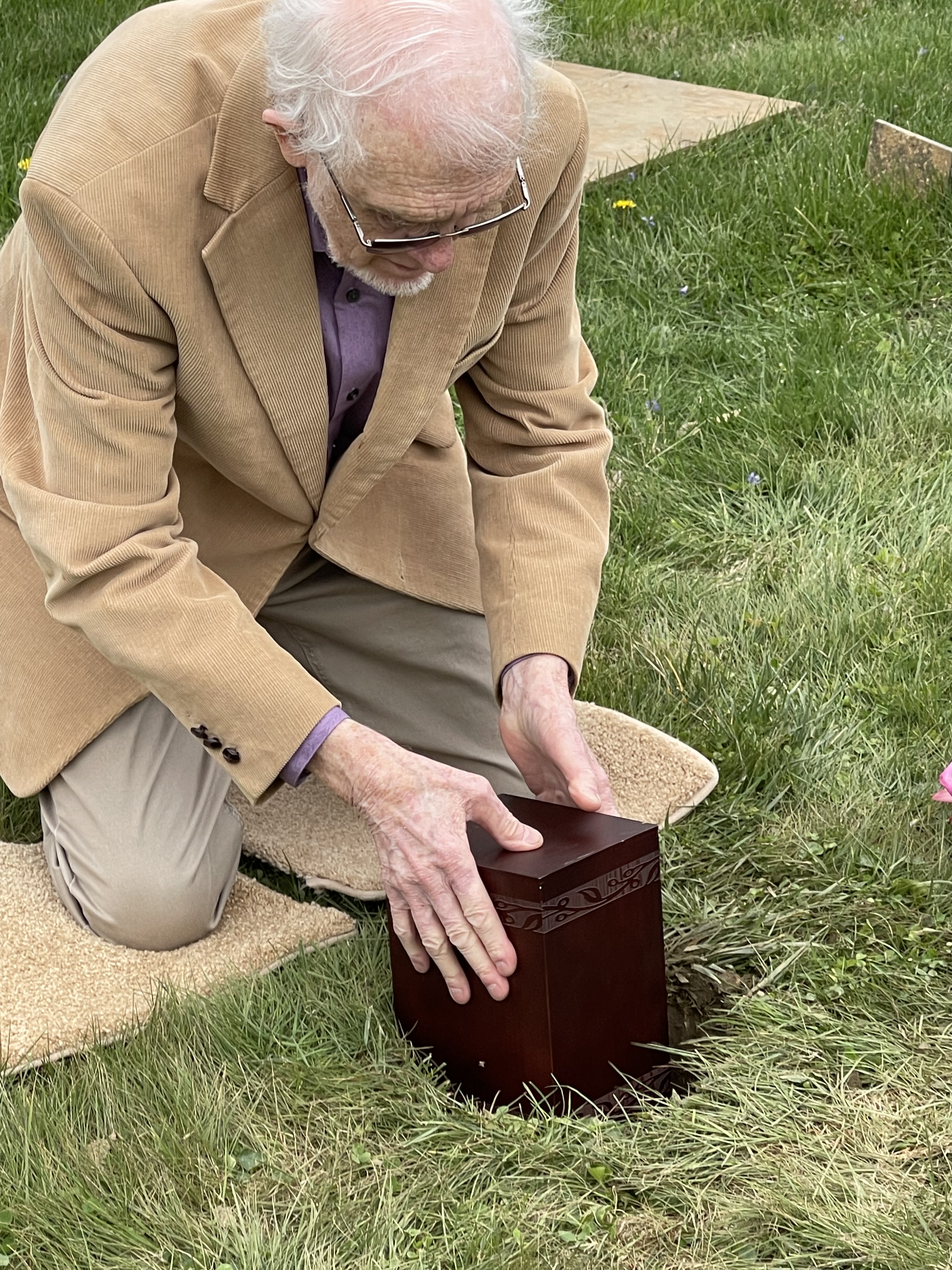
The service complete, I retrieve the urn and lead the way out to the graveyard. In this cemetery lie Barbara’s parents, grandparents and other relatives. Don Breneman, who mows the graveyard; says there are 2200 stones. I apologize for giving him another one to mow around. I lower the brown wooden urn into the ground. We pray, leave flowers, then depart.

I feel at peace; feel that we helped Barbara circle back home to the place that formed her, the place where she now rests in the plot that awaits my future arrival. Sadness overwhelms me but even more, gratitude—for Barbara’s life; her blessed death; her great gifts to me, our family, our community and our world. I take comfort in our Lord’s words, “I am the resurrection and the life.”

May eternal light shine upon her.

WINGSPREAD Zine for September, 2025

Please forward and share this zine with others. Thank you.

  • Writer’s Corner
  • Blessed Unbeliever 
  • This month’s story: “Silver Acres Formed Me”
  • This month’s puzzler: “Island of Truth and Lies”
  • WINGSPREAD Zine subscription information
  • Wisdom

This section betrays my belief that to be a writer is to be a lover of words. Words and human speech―miracles that brand humans as sentient creatures―creative, inventive, exploring. Taste the words as they roll around in your mouth, marvel at them, let them fill you with a sense of wonder.

Writer’s tip: First-person-present tense is gripping, immediate. It’s hard to write in this tense but give it a try. (Example: “I park the car in front, get out and walk up to the door. . .”)

Task for you: Try writing a 100-word paragraph using only the present, first-person tense.

Word of the month: GOBSMACKED (Obsolete) To be a writer is to be a word-lover, including obsolete words. This word comes from Irish and Scottish Gaelic. It still pops up in other places in British slang―for example, “shut your gob!” If you say that you were “gobsmacked” it means that you were so astonished, it was as though someone had smacked you in the mouth (Wikipedia). A phrase with a similar meaning: “Slapped upside the head,”

Book of the month: The biblical book of Ruth. A marvelous story about a foreign refugee woman (Moabite) who travels into Israel, finds a living, finds love and becomes an ancestor of King David and of Jesus. Hear her aching, immortal words to Naomi, her mother-in-law“—Beseech me not to leave thee . . .”

Sean McIntosh ingested fundamentalism along with his mother’s milk. And yet as he reached his late teens his doubts overwhelmed him and he proclaimed himself an atheist—while attending Torrey Bible Institute! This is his story.

Available in paper or Kindle version at Wipf and Stock Publishers, Amazon https://a.co/d/9su5F3o or wherever good books are sold.

When I entered sixth grade, Jim Hayden, who always wore a dark suit, white shirt and tie, taught our Sunday School class. To get to his classroom, us five boys—Gene, Fred, Ron, John and I―had to climb stairs up to a small room under the squat bell tower. This was our first “segregated” SS class and he seized the opportunity to warn us against sexual temptation, enlightening us on the meaning of certain sexual hand signs and counseling us how to behave with girls. Silver Acres was big on teaching the dangers of sex. However, the only temptation I was feeling at the moment was to pull the church bell rope which passed through the classroom from floor to ceiling. Yet I remember the delicious discovery of the second sex at Silver Acres. At that age, girls were attractive, mysterious and untouchable.. . . To read more, click here:  https://jimhurd.com/2025/09/02/silver-acres-formed-me/

Leave a comment on the story and share with others. Thanks.

You can also access my stories on Substack:   (2) Silver Acres Formed Me – by James P Hurd – James’s Substack

Want to browse archived WINGSPREAD stories? Click here:  https://jimhurd.com/ then click in the righthand column under “archives.”  These stories include memoirs, stories about bush flying, personal essays and other topics.

Here are a few examples:

“Trouble in Paradise” (a whimsical take on the Adam and Eve story) https://jimhurd.com/2024/04/  

“Lone, Wandering But Lost?(challenge of land and air navigation) https://tinyurl.com/3yuzsw3j 

“Egg McMuffin Miracle” (A personal “angel” epiphany)  https://tinyurl.com/24a5zr6y

This one is a classic. I’ll set the scene. 

You’re on Isla Nublar, the island from Jurassic Park. There are dangers around every corner. Pterodactyls are circling overhead. Tyrannosaurus Rex’s are nipping at your heels. The only hope to escape is to get to the dock before the last transport leaves the island. 

You’re driving along this road in your Nissan Pathfinder heading for the dock and you come to the proverbial fork in the road. You don’t know which way to go so you try to find someone to ask. 

Now, unfortunately, on this island there are only two kinds of people: liars and truth tellers. The liars always lie, and the truth tellers always tell the truth.

So you come to the fork in the road, and there are two guys there. And you know that they always travel in pairs. There’s always one liar and one truth teller. But you don’t know which is which. And you really need to know the way to the dock. 

So the puzzler question is, what one question could you ask either one of them that would certainly get you onto the right road and to safety where your boat awaits at the dock?

You only get one question. What would it be?

Good luck.

 (Answer will appear in next month’s WINGSPREAD newsletter.)

Answer to last month’s puzzler about the broken stone: 

This one was hard!

So what were the weights of the 4 individual pieces after the large stone was broken? Remember, the pieces of the broken stone could now be used to weigh any item, assuming those items were in 1-pound increments from 1 pound to 40 pounds, using the stones and a balance scale.

So how much did each piece weigh? And the hint that I gave was, how would you weigh 2 pounds?

Here is the answer:

One of the pieces has to be 1 pound. And if you use the hint I gave, then the next one has to be 3 pounds. Because if you put 1 pound on one side, and 3 pounds on the other side, that would equal weighing 2 pounds. If you weigh 2 pounds of hay on the 1 pound side, and it is equal with the 3 pound side, you know you have 2 pounds of hay.To weigh 4 pounds, you put the 1 and the 3 together. 

So if you follow this logic, you will see that the amounts have to be powers of 3 and there are four powers of 3 between 1 and 40: 1 pound (30), 3 pounds (31), 9 pounds (32), and 27 pounds (33), and these four add up to 40. Pretty slick, huh?

Click here https://jimhurd.com/home/  to subscribe to this WINGSPREAD ezine, sent direct to your email inbox, every month. You will receive a free article for subscribing. Please share this URL with interested friends, “like” it on Facebook, retweet on Twitter, etc.

If you wish to unsubscribe from this Wingspread Ezine, send an email to hurdjames1941@gmail.com  and put in the subject line: “unsubscribe.” (I won’t feel bad, promise!) Thanks.

Obsolete Words. (You still find these occasionally; sometimes in the old King James Bibles!) Demonstrates how words and usage change.

  • anon – soon, shortly (“I will come anon.”)
  • betimes – early, promptly
  • peradventure – perhaps, maybe
  • yclept – called, named (“A knight yclept Sir Gareth…”)
  • hark – listen (“Hark! The herald angels . . .”)
  • prithee – I pray thee; please
  • fain – gladly, willingly
  • nigh – near
  • ere – before
  • whilom – once upon a time
  • shew – actually, just an obsolete spelling of “show”
  • begotten – born
  • espoused – engaged
  • buckler – a small, round shield
  • manger – a feed trough for animals

Contronyms (single words that have opposite meanings depending on the context)

  1. Sanctionto approve (“The committee sanctioned the project”) / to penalize (“The country was sanctioned for violations”).
  2. Oversightsupervision (“She has oversight of the department”) / an error by neglect (“It was an oversight on my part”).
  3. Dustto remove fine particles (“I dusted the shelves”) / to apply fine particles (“I dusted the cake with sugar”).
  4. Leftremaining (“Only one slice left”) / departed (“She left the room”).
  5. Trimto decorate (“Trim the tree”) / to cut away (“Trim the hedge”).
  6. Boundheading toward (“She’s bound for Paris”) / restrained (“He was bound by ropes”).
  7. Cleaveto split apart (“Cleave the log in two”) / to cling to (“Cleave to your principles”).
  8. Seedto plant seeds (“Seed the garden”) / to remove seeds (“Seed the watermelon”).
  9. Screento show (“They screened the movie”) / to hide (“Screen the porch from the sun”).
  10. Weatherto withstand (“Weather the storm”) / to be worn away (“The rock weathered over time”).
  11. Fastquick (“He runs fast”) / fixed, unmoving (“The rope was held fast”).
  12. Clipto attach (“Clip the papers together”) / to cut off (“Clip the coupon”).
  13. Apologyexpression of regret (“He gave an apology”) / formal defense or justification (“Plato’s Apology”).
  14. Peruseto read carefully / to skim casually (usage has shifted over time).
  15. Boltto secure (“Bolt the door”) / to flee (“The horse bolted”).
  16. Overlookto supervise (“She overlooked the project”) / to miss noticing (“He overlooked the typo”).
  17. Goto proceed (“Go ahead”) / to fail or be spent (“The battery has gone”).
  18. Dustycovered in dust (“Dusty shelves”) / sprinkled with dust-like particles (“Dusty snow on the mountain”).
  19. Temperto soften (“Temper justice with mercy”) / to strengthen (“Tempered steel”).
  20. Outvisible (“The stars are out”) / extinguished (“The fire is out”).

                                    I can relate . . .

WINGSPREAD zine for August, 2025

Please forward and share this ezine with others. Thank you.

  • Writer’s Corner
  • Blessed Unbeliever 
  • This month’s story: “Delivering the Orange Daily News”
  • This month’s puzzler: “The Broken Stone”
  • WINGSPREAD ezine subscription information
  • Wisdom

Writer’s tip: You can indent the first line of each paragraph but do not indent the first line of the first paragraph in your article or story, or the first line following a major subheading or break in the story.

Complaint of the month: Autocorrect has become my worst enema.

Task for you: Write a 100-word story using only dialogue. Dialogue grabs the readers’ attention. Remember, each change of speaker needs a new paragraph.

Book of the month: The Complete Tales of Winnie-The-Pooh, A.A. Milne

Button Children’s Books. A delightful story of a chubby, fuzzy little bear and his friends who live in the 100-acre wood. Winnie is a “bear of little brain” but he has a heart of gold. Good stories to reread in these troubled times

The only kind of writing is rewriting. Ernest Hemingway

Available in paper or Kindle version at Wipf and Stock Publishers, Amazon https://a.co/d/9su5F3o or wherever good books are sold.

I got off my bike, leaned it against the brick wall of the news alley and stared through the barred window at the bubbling pot of molten lead. This was the first day of my first job―delivering newspapers for the Orange Daily News. . . .

The Daily News hired Johnny to be part delivery supervisor and part wet nurse. He worked with the paperboys, handling screw-ups and drying tears. Johnny told us, “You guys are entrepreneurs, independent businessmen.” Turns out that meant less liability for the paper—and we had to eat our losses. He would take us out door-knocking―a bleak task where we tried to sign up new subscribers. But how sell something you weren’t crazy about yourself? We liked Johnny who organized games in the YMCA gym and told a few dirty jokes. He would hold up an orange, army-type hat with “Orange Daily News” printed on the side and say, “You’ll get one of these cool hats and for every five new subscribers you sign up, you’ll get to pin on one of these shiny buttons.” I thought, I’d rather just get more cash. . . . To read more, click here:  https://tinyurl.com/4k73pdcb

Substack access: The article is on Substack but I haven’t yet learned how to grant public assess to it.

Leave a comment on the website and share with others. Thanks.

This is a non-automotive puzzler. Here we go.

Years ago, somewhere far, far away.

A farmer had a 40-pound stone, which he could use to weigh 40 pounds of feed or hay.

He would sell feed in 40-pound bundles and hay in 40-pound bales. He had a balance scale. He put the stone on one side, and he piled the other side with feed or hay. When it balanced, he knew he had enough to sell. 

Then one day, a neighbor borrowed the stone. But he had to apologize when he returned it because he had broken it into four pieces. And he felt really bad about it. 

As it turns out, the farmer who owned the stone later told the neighbor that he actually had done him a favor.

The pieces of the broken stone could now be used to weigh any item, assuming those items were in one-pound increments, from one pound to 40 pounds, so the farmer thought this was a great improvement.

So the puzzler is, what were the weights of the 4 individual stones after the large stone was broken?

And here’s the hint―how would you weigh 2 pounds? 

Good luck!

 (Answer will appear in next month’s WINGSPREAD newsletter.)

Answer to last month’s puzzler: 

Recall you have to decide which of three switches on the first floor turns on a light on the third floor. You’re allowed to go up and check the lightbulb only once.

Here is the answer.

Turn all the switches off.

Then you turn the first switch on and you leave it on for 10 minutes.

Then you turn it off and turn the second switch on.

You leave the third switch in the off position.

Then, you go upstairs to check the light.

When you get upstairs, if the bulb is on, then you know it is switch #2. 

If the bulb is off, and it is cold, then it is switch #3. 

If the bulb is warm, then you know it is switch #1. 

And that is how you do it. 

Oldy but goodie.

Subscribe free to this Ezine  

Click here https://jimhurd.com/home/  to subscribe to this WINGSPREAD ezine, sent direct to your email inbox, every month. You will receive a free article for subscribing. Please share this URL with interested friends, “like” it on Facebook, retweet on Twitter, etc.

If you wish to unsubscribe from this Wingspread Ezine, send an email to hurdjames1941@gmail.com and put in the subject line: “unsubscribe.” (I won’t feel bad, promise!) Thanks.

An historic 1946 picture from Mission Aviation Fellowship archives of Betty Green, one of the founders and first pilot with the mission. In the background is her Grumman J2F Duck―a bi-wing, radial-engine amphibian that she flew in New Guinea. I was privileged to know this godly, gracious woman.

Spelled the same, but different pronunciations and different meanings: 


1) The bandage was wound around the wound.

2) The farm was used to produce produce.

3) The dump was so full that it had to refuse more refuse.

4) We must polish the Polish furniture.

5) He could lead if he would get the lead out.

6) The soldier decided to desert his dessert in the desert.

7) He thought a birthday was a good time to present the present.

8) A bass was painted on the head of the bass drum.

9) When shot at, the dove dove into the bushes.

10) I did not object to the object.

11) The insurance was invalid for the invalid.

12) There was a row among the oarsmen about how to row.

13) They were too close to the door to close it.

14) The buck does funny things when the does are present.

15) A seamstress and a sewer fell down into a sewer line.

16) To help with planting, the farmer taught his sow to sow.

17) The wind was too strong to wind the sail.

18) Upon seeing the tear in the painting, I shed a tear.

19) I had to subject the subject to a series of tests.

20) How can I intimate this to my most intimate friend?

I called Willow Street, Pennsylvania cemetery about a tombstone for Barbara and me. Sticker shock–expensive. I delayed a month but finally called back and ordered one. They’ll put Barbara’s birth and death year on it and my birth year and a dash. Turns out they’ll charge me extra when they have to come back and chisel in my death date. So I think I’ll just ask them to put in “2060” right now. I figure it’ll give me something to shoot for.

I must be getting stronger. Last year I couldn’t even carry $50 of groceries with my two hands.  James P Hurd

Delivering the Orange Daily News

I got off my bike, leaned it against the brick wall of the news alley and stared through the barred window at the bubbling pot of molten lead. This was the first day of my first job―delivering newspapers for the Orange Daily News.

It was a small paper and “daily” was a stretch—we didn’t deliver on weekends. Some of the paperboys called it “The Orange daily butt-wipe.” The year I started, the Daily News certainly printed the big headlines—Emmett Till’s murder, Rosa Parks and the Montgomery bus boycott, Bill Haley’s sensational Rock Around the Clock, the launching of the first nuclear-powered submarine, building the first McDonald’s restaurant, and the spectacular Disneyland opening. But unlike the larger Santa Ana Register, the Daily News mainly covered local issues like road construction, the championship-bound Orange Lionettes softball team. It covered how my friend’s father embezzled money from the First National Bank or published the story of the Fourth of July parade with the barred jail sitting on the plaza where they would lock up local dignitaries. And of course, crossword puzzles and the Dear Abby column.

The Daily News offices sat on the Orange Plaza, an enormous roundabout in the center of Orange with tall palm trees and fountain. You entered the Daily News from the sidewalk, where the front office concealed the room behind with its rattling printing press that spit out thousands of papers each day.

I had two fights in the news alley—won one and lost one. When I hit Hawkins in the belly, he started crying and the fight was pretty much over. I felt strong and powerful―until Shockley did the same to me. I doubled over in pain and started bawling. Johnny, the delivery supervisor, took a dim view of fighting: “Knock it off! You boys can’t work here if you’re going to fight.” So pretty soon we learned our place in the pecking order.

We were never allowed to enter the press room but since the alley ran alongside, you could press your face against the protective window grill to watch the guy at the linotype, a marvelous machine that turns keystrokes into lines of brass molds. He would pour the lead-antimony-tin mixture into the molds to form the letters. The nearby printer swallows a huge roll of newsprint, then spits folded papers out the other end. You could smell the newsprint and almost feel the heat of the molten lead.

After Orange Intermediate would let out, I would bike through the city streets, park my Schwinn bicycle with its white sidewall tires in the news alley and wait with the other boys. Sometimes the papers were late so I would walk down the alley to a small jewelry store that had a cooler. You opened the lid to see where the Coke bottles hung on a rail, put your dime in the slot, then slid out an ice-cold bottle. It tasted marvelous on a hot summer’s day even if it froze your brain and people warned you that you could get instantaneous pneumonia. I bought one every day, reasoning that it was wise to form good habits.

The Daily News hired Johnny to be part delivery supervisor and part wet nurse. He worked with the paperboys, handling screw-ups and drying tears. Johnny told us, “You guys are entrepreneurs, independent businessmen.” Turns out that meant less liability for the paper—and we ate our losses. He would take us out door-knocking, a bleak task where we tried to sign up new subscribers. But how sell something you weren’t crazy about yourself? We liked Johnny who organized games in the YMCA gym and told a few dirty jokes. He would hold up an orange, army-type Daily News hat and say, “You’ll get one of these cool hats and for every five new subscribers you sign up, you’ll get one of these shiny buttons to pin onto it.” I thought, “I’d rather just get a bit more cash.”

An alley ran back about 75 feet alongside the building to the paper-folding room with its dirty brick walls, bleared windows and dark interior. It smelled like a sweathouse out of a Dickens novel. Sheet metal covered the tables where we slipped and folded the papers. “Slipping” meant putting a section or two inside the front section. On rainy days we had to shroud the papers in wax sheets. Folding was a work of art. You would fold the whole paper in half, then turn down a corner triangle, fold again, then tuck the triangle inside to make a little packet. After you finished folding you stuffed them into your white canvas bag labeled “Orange Daily News” and hung the bag over your bicycle handlebars.

I would ride out of the alley with my laden paper bags hitting my knees, head over to my Pine Street route in the northwest part of town. On the way, I swung by the gas station on Glassell Street that had a vending machine where I would buy a Heath bar. Reaching Pnne Street I would start throwing papers onto the porches or at least onto the sidewalk up near the door. The papers sailed and curved so you needed expert technique. We had to memorize the house numbers. Mrs. Weaver wanted me to walk up and leave the paper on her window sill and for my trouble, a shiny dime would appear on the sill on Fridays.

Most of my paper customers were nice people with only occasional complaints about late deliveries or stray papers. We loved the PIAs—“Paid in Advance” but we had to go out each month to collect from the other people. Sometimes they would say, “Come back next week.”

The route didn’t always go smoothly. I played on the Orange Intermediate basketball team and one day we had an away game. My dear mother picked up my papers downtown, folded them, then drove to the school and hung the paperbags on my bike. But when I arrived someone had pulled all the papers out and torn them up. I had to make a tearful, late trip to the office to pick up more papers and deliver them in the dark.

When I entered high school, I graduated to a six-mile, rural paper route. The houses sat far apart but most of them were PIAs so I didn’t have to collect. I didn’t have to bike downtown―they delivered the papers to our front lawn. If the papers were printed late and it was getting dark, my mom would drive me in our 1955 Ford station wagon while I sat on the tailgate throwing the papers.

Eventually I graduated to using my dad’s Cushman motor scooter. The route finished over on Santa Clara Avenue and there wasn’t a north-south street nearby so I would cut through the Fairhaven Cemetery to drive home. But if it got too late, they would close and lock the gates and I would have to make a long detour. One night it was very late and dark, the gates were still open and I had the headlight on when I entered the cemetery. I was traveling fast, eager to get home, riding along a line of Eucalyptus trees. I had to jog left through the trees to pass from the Santa Ana cemetery to the Fairhaven side. I jogged, but with it being late they’d put a chain across the break in the trees. I jammed on the brakes, left a dark skid mark and stopped with my front wheel touching the chain.

I somehow muscled the scooter under the chain and drove past a huge, dark building―the mausoleum that had fascinated us kids since we were in elementary school. We would tiptoe through the marble halls, talking in whispers. Then we’d yell and run, our voices echoing as we raced toward the door. I never would go in there alone. I passed on by, exited the cemetery at Fairhaven Ave., rode the half mile down Cambridge Street to our house and wheeled into the garage.

I wish now that I had told Mom how much I appreciated her helping with the route. And I wish I’d told her that, when I had to make the long ride home after dark, how I loved seeing the welcoming lights of home and smelling the late dinner she’d cooked for me.

WINGSPREAD Ezine for July, 2025

Please forward and share this ezine with others. Thank you.

  • Writer’s Corner
  • Blessed Unbeliever 
  • This month’s story: “On A Roll”
  • This month’s puzzler: light switches
  • WINGSPREAD Ezine subscription information
  • Wisdom

Writer’s tip: Start your novel or story in media res (“in the middle of things”). For instance, you could start it just before or just after a crisis, peaking the reader’s interest. You can then double back and tell the story more chronologically.

Word of the month: NERDSPLAINING  (I made this one up!)  This refers to a very intelligent person explaining something but using words and ideas you’ve never heard of.

Task for you: Write a story of 100 words without using any adjectives or adverbs (good practice in using fewer, more direct words). Here’s a prompt: The most unusual holiday I ever spent.

BLESSED UNBELIEVER novel

Available in paper or Kindle version at Wipf and Stock Publishers, Amazon https://a.co/d/9su5F3o or wherever good books are sold.

After flying to San Francisco, embracing my dear California sister and catching up on our lives, I get up to use the bathroom. It smells fresh and has a new towel laid out. But when I reach for the toilet paper, it’s facing the wall—backwards!

I’ve known Anne all my life―her opposite political persuasion, her preference for a different kind of church. None of this ever came between us. But the toilet paper shakes me. Where did she learn this? I don’t remember this happening in our childhood home. If she does this to the toilet paper what else is she hiding? Uncontrolled passive aggression? Anger issues? Never before have I noticed any serious issues. Did she do it on purpose? . . .

To read more, click here:  https://jimhurd.com/2025/07/15/on-a-roll/

Share the story with others and leave a comment on the website. Thanks.

Access more of my articles on Substack: https://jameshurd.substack.com/publish/post/164503545

This one is complicated, so make sure you concentrate!

There are three on/off switches on the wall on the first floor of a building.

You can tell when they’re switched on or off because they are either clicked up for on, or down for off, like a light switch.

You don’t know which of these three switches controls an incandescent lamp on the third floor of the building. The other two are not connected to anything and don’t do anything at all.

You are allowed to toggle the switches on or off as many times as you please.

Further, you are allowed to walk just once to the third floor to check the lamp to see if it is on or not.

So, how can you know which switch controls the lamp on the third floor?

(Answer will appear in next month’s WINGSPREAD newsletter.)

Answer to last month’s puzzler: 

What was the man buying in the hardware store if one costs 60 cents, but 200 costs only $1.80?

He was buying house numbers, the little numbers you put on your house! 

He lives at house number 200. So he just needs three numbers: a two and two zeros. Three times 60 cents equals $1.80.

Good one.

Click here https://jimhurd.com/wingspread-ezine/   to subscribe to this WINGSPREAD ezine, sent direct to your email inbox every month. You will receive a free article for subscribing. Please share this URL with interested friends, “like” it on Facebook, retweet on Twitter, etc.

If you wish to unsubscribe from this Wingspread Ezine, send an email to hurd@usfamily.net and put in the subject line: “unsubscribe.” (I won’t feel bad, promise!) Thanks.

Musings on Love

  1. “Love is sharing your popcorn.” – Charles Schultz
  2. “Gravitation is not responsible for people falling in love.” – Albert Einstein
  3. “Love is an ocean of emotions entirely surrounded by expenses.” – Thomas Dewar
  4. “I love you more than coffee, but please don’t make me prove it.” – Anonymous
  5. “A guy knows he’s in love when he loses interest in his car for a couple of days.” – Tim Allen
  6. “Marriage is like a walk in the park. Jurassic Park.” – Anonymous
  7. “Love is being stupid together.” – Paul Valery
  8. “Honesty is the key to a relationship. If you can fake that, you’re in.” – Richard Jeni
  9. “Forget love, I’d rather fall in chocolate.” – Anonymous
  10. “My wife and I were happy for twenty years – then we met.” – Rodney Dangerfield
  11. “My wife has a slight impediment in her speech. Every now and then she stops to breathe.” – Jimmy Durante
  12. “Love is the only kind of fire that is never covered by insurance.” – Anonymous
  13. “If love is the answer, could you rephrase the question?” – Lily Tomlin

The joys of family life

  1. “Insanity is hereditary; you get it from your children.” – Sam Levenson
  2. “Happiness is having a large, loving, caring, close-knit family in another city.” – George Burns
  3. “Having children is like living in a frat house – nobody sleeps, everything’s broken, and there’s a lot of throwing up.” – Ray Romano
  4. “A family reunion is an effective form of birth control.” – Robert A. Heinlein
  5. “The advantage of growing up with siblings is that you become very good at fractions.” – Anonymous
  6. “Remember, as far as anyone knows, we are a nice, normal family.” – Homer Simpson
  7. “Home, nowadays, is a place where part of the family waits until the rest of the family brings the car back.” – Earl Wilson
  8. “A family is a unit composed not only of children but of men, women, an occasional animal, and the common cold.” – Ogden Nash
  9. “Being part of a family means smiling for photos.” – Harry Morgan
  10. “The other night I ate at a real nice family restaurant. Every table had an argument going.” – George Carlin
  11. “The family is one of nature’s masterpieces.” – George Santayana

Classic One-Liners

  1. “I always arrive late at the office, but I make up for it by leaving early.” – Anonymous
  2. “Sometimes I lie awake at night, and I ask, ‘Where have I gone wrong?’ Then a voice says to me, ‘This is going to take more than one night.’” – Charlie Brown
  3. “If you think nobody cares if you’re alive, try missing a couple of car payments.” – Earl Wilson
  4. “My fake plants died because I did not pretend to water them.” – Mitch Hedberg
  5. “I told my wife she was drawing her eyebrows too high. She looked surprised.” – Anonymous
  6. “I want my children to have all the things I couldn’t afford. Then I want to move in with them.” – Phyllis Diller
  7. “I used to think I was indecisive, but now I’m not so sure.” – Anonymous
  8. “I’m writing a book. I’ve got the page numbers done.” – Steven Wright
  9. “A clear conscience is usually the sign of a bad memory.” – Steven Wright
  10. “I dream of a better tomorrow, where chickens can cross the road and not be questioned about their motives.” – Anonymous
  11. “I refuse to join any club that would have me as a member.” – Groucho Marx
  12. “Always borrow money from a pessimist. He won’t expect it back.” – Oscar Wilde
  13. “Behind every great man is a woman rolling her eyes.” – Jim Carrey

On A Roll

Traveling out of state you never know what you’ll run into—alien environment, alien customs. You want to be open-minded but where do you draw the line?

After flying to San Francisco, embracing my dear California sister and catching up on our lives, I get up to use the bathroom. It smells fresh and has a new towel laid out. But when I reach for the toilet paper, it’s facing the wall—backwards!

I’ve known Anne all my life―her opposite political persuasion, her preference for a different kind of church. None of this ever came between us. But the toilet paper shakes me. Where did she learn this? I don’t remember this happening in our childhood home. If she does this to the toilet paper what else is she hiding? Have I missed her darker side? Uncontrolled passive aggression? Anger issues? Never before have I noticed any serious issues. Did she do it on purpose?

I determine to take the high road here. I turn the roll around on the holder, exit the room and greet Anne as if nothing happened. But when I later pop into the bathroom to brush my teeth, I feel slapped in the face―the toilet paper is reversed again! We never exchanged any angry words—she just reversed it without asking me.

I spend a sleepless night, tossing, turning and troubled. I give myself a lecture: You’re not the host; you’re a guest. You must go with the flow and overlook things. Get over it. And yet I can’t. I can eat different foods she prepares, engage in long conversations about topics I’m not interested in, go places I don’t want to go. But the toilet roll—I just can’t let it go.

In the morning neither of us say anything but I can feel the tension rising. I wonder if Anne has talked to her husband but I don’t sense any estrangement when I talk to him about cars, airplanes, softball. Maybe he doesn’t know about it, or worse, doesn’t care. I dread the coming weeks and months with this bone of contention lodged in my throat.

I have forgiven her, really, but I wonder if I shouldn’t talk to her. At breakfast, Rich hasn’t gotten up yet and Anne and I sit savoring the comforting coffee and scrambled eggs cooked with just a hint of tabasco sauce. I take a deep breath and begin: “Anne, I noticed the toilet paper was reversed and when I turned it around you turned it back. I want you to know I’ve forgiven you and will never bring it up again.”

My sister’s eyes widen and her mouth opens but nothing comes out. Finally, “Oh, Jamie; I didn’t know that was such a big deal. I’m sorry.” Not said patronizingly but full of respect and I don’t detect any anger. (I notice that women tend to apologize, even if they don’t think they’ve done anything wrong.) We share small talk for a few awkward minutes. I think this helps; I feel my muscles relax and the tension dissipate. From then on, I turn the roll her way but later I notice she comes in and turns it back my way. I count that as a sign of our mutual respect.

A couple days later I red-eye back to Minnesota and Uber home after midnight. My own kitchen, bedroom, bathroom. My bathroom! I feel relief wash over me as I reach for the toilet paper and find the loose end facing front. It feels so right.

Why make such a big deal of this? Because if you let things like this slide, next it’s slurping, double chip-dipping or maybe even grand larceny. I figure I did her a service by nipping bad behavior in the bud. And anyway; one of my strongest spiritual gifts is judgmentalism.

Since that difficult day I’ve moved on; I’m not holding on to it. Like, every time I call Anne, I assure her that I’ve put the toilet paper conflict behind us and will never bring it up again. And I congratulate myself on achieving reconciliation after such a sharp misunderstanding.

But I sometimes wonder if she’s still doing it wrong.