WINGSPREAD Ezine for May, 2023


Spreading your wings in a perplexing world
May 2023                                                    James P. Hurd

Please forward and share this E-zine with others. Thank you.

Contents

  • Blessed Unbeliever published!
  • Writer’s Corner
  • New story
  • This month’s puzzler
  • Wingspread Ezine subscription information
  • Wisdom

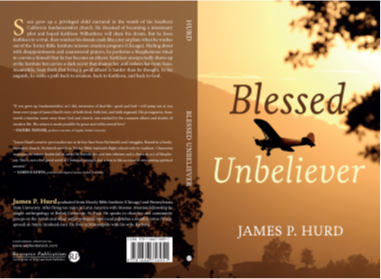
BLESSED UNBELIEVER 

It’s exciting to see the interest in Blessed Unbeliever, a novel about religious zeal that morphs into religious doubt, and the persistence of pursuing grace.

Sean McIntosh lives in a California world of Fundamentalist certainty—until his world unravels. He’s trying to make sense of losing his girlfriend and losing his dream of becoming a missionary pilot. And he’s shaken by contradictions in the Bible. His despair leads him to commit a blasphemous act and declare himself an atheist—all the while at Torrey Bible Institute!

Blessed Unbeliever (paper or Kindle version) can be found at Wipf and Stock Publishers https://tinyurl.com/27pvdkyp , Amazon https://a.co/d/9su5F3o or wherever good books are sold.

Writer’s Corner

Punctuation matters!

Word of the Month:  EN MEDIA RES. Latin, meaning “in the middle of things.” It is effective to start a story, not at the beginning, but en media res, just before or just after the climactic event. Then you can fill in the details as the story unfolds.

Tip of the month:  “If it sounds like ‘writing,’ I rewrite it.” Elmore Leonard. Our readers should be captured by the story, not impressed by “the writing.” Writing is only the container, the medium that carries the story to the reader.

Your turn: Who is the most interesting character you’ve ever read about, biographical or fictional? (I like Sherlock Holmes. He is hilarious, but he doesn’t know that.)

This month’s puzzler

Adapted from Car Talk Puzzler archives

I’m going to give a series of names, a series of words, okay?

I’m going to give you a piece of the series, a sub-set of words, and your task will be to give me the rest of the series and tell me what the series is. 

And here they are: 

  • Juliet.
  • Kilo.
  • Lima.
  • Mike.
  • November.

And that’s it. That’s all I can give you. Pretty rough one huh? Good luck.

(Answer in next month’s Wingspread ezine.)

Last month’s puzzler: 

Recall that Ralph, an auto mechanic, can’t seem to get through airport security. He empties all his pockets, even takes off his belt, but still sets off the alarm. The TSA guy asks, “What’s your work?” Ralph replies, “Auto mechanic.” “Ah; that explains it!” says the TSA guy. What did the TSA guy realize?

Answer: To protect his feet, Ralph wore steel-toed boots—which set off the alarm. Removing them, he zipped through security.

New story: “Fearful of Finding the Fatal Flaw”

. . . In short, I became a Bible nerd. My faith depended on big words: dispensationalism, eternal security, election, the millennium, pre-Tribulational rapture and especially inerrancy. We sang, “The Bible stands, like a rock undaunted, far above the wrecks of time. . . .” The Bible was without error (in the original). . . . But I despaired of finding the answers I was seeking. I even considered becoming an atheist. . . .

To read more, click here: https://jimhurd.com/2023/05/03/fearful-of-finding-the-fatal-flaw/

(Leave a comment on the website and share with others. Thanks.)

Subscribe free to this Ezine  

Click here https://jimhurd.com/home/  to subscribe to this WINGSPREAD ezine, sent direct to your email inbox, every month. You will receive a free article for subscribing. Please share this URL with interested friends, “like” it on Facebook, retweet on Twitter, etc.

If you wish to unsubscribe from this Wingspread Ezine, send an email to hurd@usfamily.net and put in the subject line: “unsubscribe.” (I won’t feel bad, promise!) Thanks.

Wisdom

Last football wisdom (I promise!)

What does the average Alabama player get on his SATs? 
Drool.

How many Michigan State freshmen football players does it take to change a light bulb? 
None. That’s a sophomore course. 

How did the Auburn football player die from drinking milk? 
The cow fell on him. 

Two Texas A&M football players were walking in the woods. One of them said, ” Look, a dead bird.” 
The other looked up in the sky and said, “Where?” 

What do you say to a Florida State football player dressed in a three-piece suit? 
“Will the defendant please rise.”

How can you tell if a Clemson football player has a girlfriend? 
There’s tobacco juice on both sides of his pickup truck. 

What do you get when you put 32 Kentucky cheerleaders in one room? 
A full set of teeth. 

University of Michigan Coach Jim Harbaugh is only going to dress half of his players for the game this week. The other half will have to dress themselves. 

How is the Kansas football team like an opossum? 
They play dead at home and get killed on the road 

How do you get a former University of Miami football player off your porch? 
Pay him for the pizza.

These exquisite insults are from an era before the English language got boiled down to four-letter words.

1. “He had delusions of adequacy ”
Walter Kerr

2. “He has all the virtues I dislike and none of the vices I admire.”
Winston Churchill

3. “I have never killed a man, but I have read many obituaries with great pleasure.” Clarence Darrow

4. “He has never been known to use a word that might send a reader to the dictionary.”
William Faulkner (about Ernest Hemingway)

5. “Poor Faulkner. Does he really think big emotions come from big words?”
(Ernest Hemingway about William Faulkner)

6. “Thank you for sending me a copy of your book; I’ll waste no time reading it.”
Moses Hadas

7. “I didn’t attend the funeral, but I sent a nice letter saying I approved of it.”
Mark Twain

8. “He has no enemies but is intensely disliked by his friends.”
Oscar Wilde

9. “I am enclosing two tickets to the first night of my new play; bring a friend, if you have one.”
George Bernard Shaw to Winston Churchill

10. “Cannot possibly attend first night, will attend second… if there is one.”
Winston Churchill, in response

11. “I feel so miserable without you; it’s almost like having you here”
Stephen Bishop

12. “He is a self-made man and worships his creator.”
John Bright

13. “I’ve just learned about his illness. Let’s hope it’s nothing trivial.”
Irvin S. Cobb

14. “He is not only dull himself; he is the cause of dullness in others.”
Samuel Johnson

15. “He is simply a shiver looking for a spine to run up.
Paul Keating

16. “He loves nature in spite of what it did to him.”
Forrest Tucker

17. “Why do you sit there looking like an envelope without any address on it?”
Mark Twain

18. “His mother should have thrown him away and kept the stork.”
Mae West

19. “Some cause happiness wherever they go; others, whenever they go.”
Oscar Wilde

20. “He uses statistics as a drunken man uses lampposts… for support rather than illumination.”
Andrew Lang (1844-1912)

21. “He has Van Gogh’s ear for music.”
Billy Wilder

22. “I’ve had a perfectly wonderful evening. But I’m afraid this wasn’t it.”
Groucho Marx

23. Exchange between Lady Astor & Winston Churchill:
Lady Astor: If you were my husband I’d give you poison.
Churchill: Madam: If you were my wife, I’d drink it.

24. “He can compress the most words into the smallest idea of any man I know.”  Abraham Lincoln

25. “There’s nothing wrong with you that reincarnation won’t cure.”
Jack E. Leonard

26. “They never open their mouths without subtracting from the sum of human knowledge.”
Thomas Brackett Reed

27. “He inherited some good instincts from his Quaker forebears, but by diligent hard work, he overcame them.” James Reston (about Richard Nixon)

Fearful of Finding the Fatal Flaw

My pious mother and father helped start Silver Acres Church (Santa Ana, California) and immersed us in weekly Sunday school, countless Fundamentalist sermons, and an arsenal of memorized Bible verses. In short, I became a Bible nerd. My faith depended on big words: dispensationalism, eternal security, election, the millennium, pre-Tribulational rapture and especially inerrancy. We sang, “The Bible stands, like a rock undaunted, far above the wrecks of time. . . .” The Bible was without error (in the original).

Pastor Cantrell preached, “If you question inerrancy you question God. The doctrine of inerrancy rests, not on examining the text, but on the belief that God would never allow mistakes.” It made good sense—if God wrote the Bible, how could it contain errors?

The summer of my sixth grade I attended Pine Valley Christian camp. Being a Bible nerd I often launched frivolous questions at our speakers. What was the first mention of baseball in the Bible? (the Big-inning). First mention of smoking? (when Rachel lit off her camel). Shortest person in the Bible? (Eliphaz the Shuhite). You get the idea.

I asked one speaker: “Where’s the first mention of tennis in the Bible?” He didn’t know. I told him, “When David served in Saul’s court.”

He was not amused. “Son, you should not make fun of the Bible. It’s God’s holy word.” I turned away, chastened. Silver Acres and Pine Valley taught me that the Bible did not, could not have any mistakes in it—inerrancy on steroids.

Later, I enrolled in Moody Bible Institute. Impersonal Chicago intimidated me, although I felt comfortable behind the sacred gates of Moody’s big stone arch that fronts LaSalle Street. I expected that by studying my inerrant Bible at Moody I would find the answers to my nagging questions: How understand my loneliness? Lack of friends? My social awkwardness? But I was disappointed and sank further into depression.

I feared I would find one fatal, unanswerable flaw in the Bible that would bring my whole faith crashing down.  I consulted my roommate George: “I’m really confused. The numbers don’t agree. I Kings 7:26 says that Solomon’s basin held two thousand baths, while II Chronicles 4:5 says it held three thousand baths. Were these two different basins? Did Solomon have four thousand horse stalls (I Kings 4:26) or forty thousand  (II Chronicles 9:25)? Did Jesus’ sermon occur on the mountain (Matthew 5:1–2) or on the plain (Luke 6:17, 20)? Did Judas, Jesus’s betrayer, hang himself, or was he eviscerated in a field? Three of the Gospel writers list three different ‘last words’ of Jesus. They disagree about whether Jesus was two or three days in the tomb. Which of these is inerrant? All of them? And why doesn’t God answer my prayers?” George only nodded his head thoughtfully.

And the scientific contradictions. When Job states that God “hangs the earth on nothing” (Job 26:7), my teachers saw an ancient confirmation of modern science.  But elsewhere in the same book we learn that God “laid the foundations of the earth,” (38:4), a pre-scientific view.

My teachers pointed with approval to Isaiah’s phrase “the circle of the earth” as an example of ancient scientific knowledge (Isaiah 40:22). But when John mentions the “four corners of the earth” (Revelation 7:1) they protested that he was only using a metaphor.

I despaired of finding the answers I was seeking. I even considered becoming an atheist.

“Inerrancy” is a modern controversy. Even the great 16th century theologians John Calvin and Martin Luther allowed mistakes in the Bible. They treasured a God-inspired text in spite of the contradictions they found.

After college I was speaking at a graduate school where I suggested that the notion of Biblical inerrancy is a “shibboleth” (that is, a symbol, a code word to signal the difference between “us” and “them.”) To separate us from the people with the wrong doctrines. After the talk, the grand old man of the school took me aside and told me, “Inerrancy is not a shibboleth; it’s an essential doctrine of the Christian faith!” I felt like a Cub Scout in knee pants being scolded by his scoutmaster.

But eventually I turned again to read the Gospels where I discovered that inerrancy and other doubtful questions, while important, paled in the brilliant light of the man Jesus who had “nothing beautiful or majestic to attract us to him, did no wrong, was despised and forsaken, yet bore all of our weaknesses and sorrows.” Today, this man’s love, his words and his deeds, overwhelm any doubts that may trouble me.

WINGSPREAD Ezine for April 2023


Spreading your wings in a perplexing world

April 2023                                                    James P. Hurd

Please forward and share this E-zine with others. Thank you.

Contents

  • Blessed Unbeliever published!
  • Writer’s Corner
  • New story
  • This month’s puzzler
  • Wingspread Ezine subscription information
  • Wisdom

BLESSED UNBELIEVER is on the shelves!

In Blessed Unbeliever, Sean McIntosh lives in a California world of Fundamentalist certainty—until that world unravels. Now he’s shaken by contradictions in the Bible. Plus he’s trying to make sense of losing his girlfriend and losing his dream of becoming a missionary pilot. His despair leads him to commit a blasphemous act while at Torrey Bible Institute, Chicago. But, despite his honest attempt at atheism, grace pursues.

Blessed Unbeliever (paper or Kindle version) can be found at Wipf and Stock Publishers, Amazon https://a.co/d/9su5F3o or wherever good books are sold.

Writer’s Corner

Word of the Month: TYPESET or GALLEY version. The book is laid out, formatted and returned to the author for final corrections. (I found 100 errors in the typeset version of Blessed Unbeliever!)

Tip of the month: It’s helpful to sketch out your whole book. For each chapter or section, briefly list major scenes, major characters and major events, and maybe even the weather! This allows you to see the whole topography of your chronology and plot. Even Charles Dickens did this.

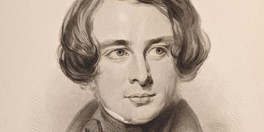
Author of the month: CHARLES DICKENS

Born in Portsmouth in 1812, Dickens saw his whole family sent to debtors’ prison while he himself was apprenticed to hard labor with a bootblack. His difficult life informed several of his novels (Pickwick Papers, David Copperfield, Hard Times, Bleak House).  The epitaph at his tomb in Poets’ Corner, Westminster Abbey reads: “. . . He was a sympathiser with the poor, the suffering, and the oppressed; and by his death, one of England’s greatest writers is lost to the world.”

Book of the month: Dickens based David Copperfield partly on the struggles in his own life. Here, he created one of his most infamous characters: the “‘umble” Uriah Heep.

Your turn: Who is the most interesting character you’ve ever read about, biographical or fictional? Why? (I’ll list some of these in the next ezine.)

New story: Muleticos: A graceful disaster

In Thee we trust, whate’er befall;
Thy sea is great, our boats are small.

—Henry van Dyke, from “O Maker of the Mighty Deep”

I see Muleticos airstrip appear from behind a hill—my last stop for the day. I test the brake pedals—they’re firm. Here in northwest Colombia the tiny grass airstrips dotting the landscape appear more like pastures than runways. Airstrips that most pilots would eschew. Turns out I should have eschewed Muleticos that day.

To read more, click here: Muleticos: A graceful disaster | Wingspread (jimhurd.com)    

(Leave a comment on the website and share with others. Thanks.)

This month’s puzzler: Ralph on a Jet Plane

Adapted from Car Talk Puzzler archives

Ralph, an auto mechanic, has to catch a flight late on a Friday night after a long workday but he’s forgotten to bring his change of clothes. So he changes into a crisp new mechanics uniform that he finds in the shop.

When he walks through security the metal detector alarm sounds. So the guard goes, “Excuse me, sir, would you kindly empty the contents of your pockets?”

So, Ralph empties his pockets. Puts all his stuff in the little tray. Wallet, keys,  everything. He tries to walk through again, but the alarm goes off again. So they ask him to remove any jewelry he has or his belt and try to walk through again. He does that and then walks through a third time. And the alarm goes off, for the third time. 

So finally, the guard looks at him and says, “What do you do for a living?”

And Ralph says, “I’m a mechanic, I fix cars.”

The guard smiles and says, “Oh; that explains it.”

So, what’s happening here? Hint: it wasn’t just auto repair mechanics that were having this issue. And remember, this was a long time ago, so this issue never happens now. But it happened then.

(Answer in next month’s Wingspread ezine.)

Last month’s puzzler. Recall the three candidates for a detective job. The head detective gives them a test, with a clue in one of the town’s libraries “stuck inside a book between pages 165 and 166.” Two of the candidates rushed out the door. The third just sat there—and he got the job. Why?

Answer: Everyone knows this, but not many people think about it. There is nothing between pages 165 and 166, just as there’s nothing between pages one and two of the book. Page one is the right-hand page and page two is printed on the back of that page.

Subscribe free to this Ezine  

Click here https://jimhurd.com/home/  to subscribe to this WINGSPREAD ezine, sent direct to your email inbox, every month. You will receive a free article for subscribing. Please share this URL with interested friends, “like” it on Facebook, retweet on Twitter, etc.

If you wish to unsubscribe from this Wingspread Ezine, send an email to hurd@usfamily.net and put in the subject line: “unsubscribe.” (I won’t feel bad, promise!) Thanks.

Wisdom

Football Wisdom

“Football is NOT a contact sport, it is a collision sport. Dancing IS a contact sport.” 
– Duffy Daugherty / Michigan State 

After USC lost 51-0 to Notre Dame, the coach’s post-game message to his
team was: “All those who need showers, take them.” 
– John McKay / USC 

 If lessons are learned in defeat, our team is getting a great education.” 
– Murray Warmath / Minnesota 

“The only qualifications for a lineman are to be big and dumb. To be a back, you only have to be dumb.” 
– Knute Rockne / Notre Dame

“We live one day at a time and scratch where it itches.” 
– Darrell Royal / Texas 

“We didn’t tackle well today, but we made up for it by not blocking.” 
– John McKay / USC 

“I’ve found that prayers work best when you have big players.” 
– Knute Rockne / Notre Dame

Why do Auburn fans wear orange? So they can dress that way for the game on Saturday, go hunting on Sunday, and pick up trash on Monday. 

Mary brings good News to Eve

Muleticos: A graceful disaster

In Thee we trust, whate’er befall;
Thy sea is great, our boats are small.

—Henry van Dyke, from “O Maker of the Mighty Deep”

I see Muleticos airstrip appear from behind a hill—my last stop for the day. I test the brake pedals—they’re firm. Here in northwest Colombia the tiny grass airstrips dotting the landscape appear more like pastures than runways. Airstrips most pilots would eschew. Turns out, I should have eschewed Muleticos that day.

I remember Barbara and I and our three-year-old Kimberly flying into Barranquilla, Colombia where our new coworkers, Bill and Carole Clapp, meet us at the airport. On the long bus ride down to our new home in Monterìa, the blacktop undulates in the heat. I’m fatigued, pensive and plagued with doubts. Have we made the right decision to come to Colombia?

Bill, the great pilot and genius mechanic. He’s been with Mission Aviation Fellowship for several years. Some swim; he walks on water. Thirtyish, he’s slightly built with sandy hair and comes equipped with a can-do attitude. In his orientation, I don’t learn much from him about the people, culture or the long-standing Colombian civil war. He focuses on the machine we fly and the tiny airstrips we service. It is as if we live in our own mechanical world, insulated from everything around us. When he checks the oil, he wipes the dipstick off in the crook of his knee and says, “Just don’t let your wife catch you doing that.” He reminds me, “Bush flying isn’t safe, it’s dangerous—you gotta constantly manage the risks. Once a kid rammed a stick in my elevator hinges. Another time a drunk climbed up on the back of the fuselage just as I was about to take off.”

Knowing these risks, MAF fields some of the best bush pilots in the world. Some fly on skis in the snows of Nepal; others fly over the jungles of Brazil. In its first twenty-five years, MAF flew thousands of missions around the world with no fatal accidents. I began my flying knowing all men are mortal, but I somehow assumed we MAF pilots were an exception. And yet, shortly after I started my Mexico tour, George Raney crashed in New Guinea. A year later, Don Roberson crashed in Venezuela after an in-flight fire. Paul, my chief pilot and good friend in Honduras, ran into a mountain. So much for immortality. As I would fly over the vast jungles sustained only by a thin aluminum wing and a single propeller, I realized that I faced the same risks that had overwhelmed each of my friends.

Here in sparsely populated Northwest Colombia, no electronic navigation aids guide you so we fly mainly by compass and clock, trying to identify farmsteads, dirt roads and low hills. Crude homemade windsocks at some of the strips signal the wind’s direction and velocity. Bill says, “Always fly over first and check for people, animals, tools or debris on the airstrip.” After several orientation flights, he releases me on my own.

Today, like every day, I strap the airplane to my back and begin to-ing and fro-ing between Betania, San Pedro, Tierra Alta, Saiza and Nazaret, each flight taking less than thirty minutes. I notice that I’m flying the approaches just a tad faster than I did in my previous tour in Venezuela, touching down a little later and burning up a bit more strip before stopping—the price of taking two years off of flying. It’s late afternoon. I’m tired, sweaty and ready to be done for the day. I head for Muleticos with three people aboard including Adalberto, the hacienda owner. After Muleticos I can return home.

I circle over the 350-meter strip; it’s seems clear. Adalberto maintains the airstrip for the village because it connects him to the outside world where the paved road begins. Bill had told me, “Look how the strip here is fenced in. But those holes in the fence allow people and animals to cross. Always circle first and gun the engine. People will hear the plane and keep clear. You’ve got lots of room, but you can’t takeoff to the west. You would splat against that little hill, which would be counterproductive. You’ve got to land west and takeoff east.”

We bank to land to the west, steadily losing altitude. There’s not much wind. I’m glad that our Cessna 180 has a Robertson conversion—drooping ailerons and specially modified wings that give it a lower stalling speed and shorter landing roll.

I peg the airspeed at 55 mph and watch the boundary fence grow larger. I’m in the groove, staring at my touchdown point—a single tuft of grass. If the tuft moves up the windshield, I add power; if it moves down, I throttle back.

When we’re a thousand feet out, I notice the airstrip weeds standing as high as the top of the plane’s wheels. Too low now for a go-around—we’re committed to land.

I cross the fence and am flaring when out of the corner of my eye I see two black pigs running across the foot trail. The left landing gear shudders when it rips one pig in half, then the other—thunk, thunk!

I jam on the brakes. The right brake grabs, but the left brake pedal sinks to the floor. The collision must have severed the brake line! In tailwheel planes like this Cessna 180, if you swerve too much, the nose and tail will switch places. When we lurch right, I release the brake and the plane straightens, but the far fence looms large in the windshield and I’m alarmed to see several people hanging over it. I brake again and the plane again swerves right. I release the brake and the plane straightens. We’re running out of strip but still going 30 mph. I brake again, hard. The plane pivots right. I’ve lost all control now and I feel like I’m watching a slow-motion movie. We crash through the side fence and plow into a six-inch tree trunk.

As we slide to a stop, I yell, “Salgan todos ya!” (Everybody out now!) My passengers scramble out of the plane. I’m surprised at my first thought—Good; I won’t have to make any more flights today. I realize I’m completely drained.

We inspect the plane. It rests inert on its crippled left wing like a wounded insect. I smell aviation fuel, and ask someone to put a bucket under the dripping tank vent. The left landing gear lies curled back under the fuselage, tethered only by the brake line. The crash has severed the left wing strut. The dogs have carried the dead pigs away.

Curious campesinos gather around. “Hermano, will the plane fly tomorrow?”

“No.”

I’m barely able to communicate by HF radio with the distant control tower in Montería—”We’ve crashed here in Muleticos. Please phone my wife and tell her we’re all right. I’ll come out overland tomorrow.”

The local Christian brothers feed me a supper of rice and beans. It lies tasteless in my mouth. I feel weak, despondent. How will we ever repair the plane? I sink exhausted into my hammock and immediately fall asleep.

The next morning I sit astride a mule on the long, enervating trip home, my head down, one hand on the reins and the other balancing the plane’s battery on the mule’s neck. It hasn’t rained, and I choke on the dust swirling around my face. The mule’s sweat smells and the saddle chafes. Finally, we reach a waiting Land Rover and continue our journey over dirt roads that pass through many corral gates.

Long after dark I arrive home in Monterìa unshaven, covered with sweat and dirt, teared up and penitential. Barbara gives me a great hug at our door. I tell her, “I broke the airplane!” She reminds me of the many things I should be thankful for. The plane, completely out of control, miraculously avoided the people lining the fence. No one was injured. The plane is repairable. But how little gratitude I feel at that moment!

The next day I tell Bill. “The left strut’s severed; it’s useless. And the left landing gear’s broken off.”

Bill has restored whole airplanes in his home basement. Several times MAF has sent him to the other side of the world to help rebuild crashed airplanes. He decides we should go back immediately and patch the plane together, assuring me, “We’ll order a new strut down from the States.”

After another Land Rover and muleback journey we arrive at the airstrip where Bill casts an eye on the damaged plane. He minimizes the fact that the rear wing spar has two right-angle bends in it and enlists several men to help us lift the crippled left wing and shove a wooden rice-pounding mortar under the belly to support the plane. A donkey with half-closed eyes scratches his behind against one of the airstrip markers and dumps a brown dollop on the grass. I think, He never has to worry about broken machinery.

We work two days. Bill hacksaws off the damaged part of the strut and asks one of the campesinos to go find a good hardwood tree. The man soon returns with a block of hardwood and using his machete, deftly fashions it to fit inside the severed strut stub. Bill’s tools seem a natural extension of his arms and fingers—he expertly attaches the wood splint with big PK screws. The broken landing gearbox presents the most complex problem. Bill says, “We need an electric drill to remove the large, severed rivets.” But no electricity.

Adalberto says, “I’ll bring my light plant over from the hacienda to run your drill.” Soon a donkey shows up with the light plant balanced on his back. We drill out the rivets in the landing gear attach bracket and install large bolts.

After much patching up of the airplane, we finally start the engine. At 1800 rpm the whole airplane shakes. The bent prop is an inch out of track! We use a wooden prybar to attempt to pull the blade back into alignment, but it doesn’t budge. And yet Bill, ever the can-do optimist, says, “It’ll push air fine. We just won’t fly it at 1800 rpm.”

The airplane now stands on its own two feet, the lower part of the left wing strut an unpainted hardwood stub. Large bolts secure the damaged landing gear to the fuselage. A mass of PK screws and duct tape strengthens the wrinkled aluminum at the end of the left wing. The controls seem to work fine.

Meanwhile, Aeronautica Civil has helicoptered in to inspect the crash. They give us permission to sacar la avioneta (take the airplane out). That means we can dislodge the plane from the bush and set it upright on the airstrip. But Bill employs a more liberal interpretation—“sacar la avioneta”means we can fly it to Bogotá! (He follows the dictum, “It’s easier to ask forgiveness than to ask permission.”) When he runs the engine up it seems fine. So he advances the throttle, hurtles down the strip, and soon disappears over the hill. I feel lonely, abandoned. All that remains is another day-long muleback and Land Rover trip home to Montería.

A few days after returning home, I fall ill with a rising, burning fever. When the fever breaks I’m covered with sweat, shivering with shuddering chills. Barbara piles on blankets, but they don’t warm. Then the fever rises again and the cycle repeats. I think, I have malaria. But after some blood tests the doctor declares, “You’ve got typhoid fever.”

I take antibiotics and lie in bed for one month, weak as a flaccid noodle, rehearsing the accident a thousand times. Should I have intentionally ground-looped? Pumped the brake more? It will be two months before the airplane returns to service. Yet I’m perversely cheered that my typhoid provides an excellent excuse not to help Bill with the airplane repairs in Bogotá. I eventually recover and we finish the repairs together.

Our months in Colombia stretch into three years. We suffer eight robberies. The bank forecloses on the owner of our rented house. We launch an abortive communal living experiment. A school bus backs into our Land Rover and then a loaded dump truck crashes into it with Barbara driving. Were we wrong to insist on going to Colombia instead of Nicaragua, where MAF assigned us? Was it a bad decision to land at Muleticos in the one-foot-high grass? Should I have tried to ground-loop the airplane?

Yet Colombia provides us many treasures. We encounter many memorable people—Mario, the pastor of the local church; Andrés, the agriculturalist who helps improve the campesinos’ cacao crops; Gregorio, the faithful pastor who carries in his pocket two letters of reference: one to the army and the other to the guerillas.

I eventually stop asking why the accident happened and start asking, “God, what do you have for me in this? How should I respond?” I realize that life is fecund, full of God-surprises. I’m thankful for Barbara’s faithful support and thankful for all the rare and wonderful experiences in Colombia. That’s why grace is called grace. Every curse becomes a blessing. No one was injured in the accident, I survived typhoid fever, and while in Montería we adopted two more precious children—Tim and Jennifer.

Colombia, I embrace you. You’re a contradiction, a harsh teacher. But you’re also a vehicle of grace. I love the slightly-modified bumper sticker I’ve seen —“Grace Happens.”

WINGSPREAD Ezine for February, 2023


“Spreading your wings in a perplexing world”

February 2023                                                            James P. Hurd

Please forward and share this E-zine with anyone. Thank you.

Contents

  • Blessed Unbeliever release
  • Writer’s Corner
  • New story
  • This month’s puzzler
  • Wingspread Ezine subscription information
  • Wisdom

BLESSED UNBELIEVER is published!

In Blessed Unbeliever, Sean McIntosh has good reason to doubt his fundamentalist faith— he’s just lost his girlfriend and his life dream of aviation. But when he turns to unbelief, he finds it harder than he ever imagined—especially at Torrey Bible Institute! So he commits a secret act of blasphemy to convince himself he is an atheist. It’s a long journey back to his girlfriend, his life dream, and his faith. (Wipf and Stock, January 2023.)

Order:  https://wipfandstock.com/9781666756951/blessed-unbeliever/

Or, click HERE to view on Amazon.com  (Amazon also has an electronic Kindle version.)

Writers’ Corner

Word of the Month: ENDORSEMENT: A few sentences recommending a book—often found on the back cover.

Tip of the month: Normally, you do not use a comma if you’re joining two sentences:

Wrong: Bill went downtown, and Sally went to the country.

Correct: Bill went downtown and Sally went to the country.

Author of the month: IGNATIUS. A first century Christian bishop who, while on the way to Rome to die a martyr’s death, wrote a letter to Bishop Polycarp in which he speaks of the invisible God become visible. An early proclamation of the Christ.

Book of the month: CELTIC DAILY PRAYER. (Books I and II.) Northumbria Community. A marvelous book of scriptures and daily readings, including writings by Celtic Christians.

Immortal lines in movies. Eric contributed: “It’s too bad she won’t live, but then again, who does?” (one policeman to another in Blade Runner)

Yes, but why are you here?

New story: Chiapas Air Ambulance

https://jimhurd.com/2023/02/01/chiapas-air-ambulance/

We’re circling over Corralito, a remote airstrip in Chiapas State, Mexico. I check for animals on the strip and wonder if the injured Tzeltal Indian man is still alive. The tiny strip lies tucked in below a cornfield on a terraced hillside, so I need to approach around a low hill. At the last minute the airstrip appears in my windshield. We bank, line up with the strip and soon feel the long grass under our wheels as we taxi the red and white Cessna 180 over to where Mario lies inert on a stretcher with his tumid stomach bulging below his pulled-up shirt.

Antonio, his brother, stands by mute while another man talks to me in Spanish. “Capitán, Mario was feeding stalks into the trapiche sugar cane press when the horse’s bar turned and squeezed him against the press.” As we lay the injured man in the airplane, I think, he’s young; he has a good chance of pulling through. . . .  To read more, click above.

(Leave a comment on the website and share with others: https://jimhurd.com . Thanks.)

This month’s puzzler:

Drake, the head detective, has three candidates who’ve applied for an assistant detective job, so he decides to test them with a little quiz. “Look guys, there’s a crime that needs to be solved and there’s a clue in one of the public libraries in Bakersfield. The clue is stuck inside a book, between pages 165 and 166. The book was written by two famous brothers about cars.”

Two of the guys jump up and bolt out the door. The third guy just sits there. Drake says, “You got the job.” Why did he get the job? What did he know that the other two guys didn’t know?  Hint: an author might be more likely to get this puzzler. (Answer next month.)

Last month’s puzzler: Recall that Mrs. Simmons, the suburban housewife, was very fond of her mother-in-law. One morning after breakfast, she went shopping and then stopped as she often did, to have a mid-morning cup of coffee with the older woman. When Mrs. Simmons returned home, the first thing she saw was the grizzly remains of her husband . . .

Instead of calling a doctor or the police, she calmly went about her domestic chores. Why?

Answer: Walking in her door, Mrs. Simmons viewed the vase containing her husband’s cremains.

Subscribe free to this Ezine : 

Click here https://jimhurd.com/home/  to subscribe to this WINGSPREAD ezine, sent direct to your email inbox, every month. You will receive a free article for subscribing. Please share this URL with interested friends, “like” it on Facebook, retweet on Twitter, etc.

If you wish to unsubscribe from this Wingspread Ezine, send an email to hurd@usfamily.net and put in the subject line: “unsubscribe.” (I won’t feel bad, promise!) Thanks.

Wisdom

 Creative new words:   

Reintarnation (n.): coming back to life as a hillbilly.

Sarchasm (n.): the gulf between the author of sarcastic wit and the person who doesn’t get it.

Osteopornosis (n.): a degenerate disease

Decafhalon (n.): getting through the day consuming only things that are good for you.

Beelzebug (n.): satan in the form of a mosquito that gets into your bedroom at three a.m. and cannot be cast out.

Caterpallor (n.): the color you turn when you discover only half a worm in the fruit you’re eating.

Cashtration (n.): the act of buying a house that renders the subject financially impotent.

Intaxication (n.): euphoria at getting a tax refund, then realizing it was always your money anyway.

Karmageddon (n.): It’s like, when everybody is sending off these bad vibes, right? And then, like, the earth explodes and it’s like, a serious bummer.

I mean, you’ve got to be kidding.

Nine Important Facts to Remember as We Grow Older

#9. Death is the number one killer in the world.

#8. Life is sexually transmitted.

#7. Good health is merely the slowest possible rate at which one can die.

#6. Men have two motivations: hunger and sex, and they can’t tell them apart. If you see a gleam in his eyes, make him a sandwich.

#5. Give a person a fish and you feed them for a day. Teach a person to use the Internet and they won’t bother you for weeks, months, maybe years.

#4. Health nuts are going to feel stupid someday, lying in the hospital, dying of nothing.

#3. All of us could take a lesson from the weather. It pays no attention to criticism.

#2. In the 60s, people took LSD to make the world weird. Now the world is weird, and people take Prozac to make it normal.

#1. Life is like a jar of jalapeno peppers. What you do today may be a burning issue tomorrow.

Chiapas Air Ambulance

A repeat of a story blogged four years ago.

(Please share this story with others and “rate” it, below.)

We’re circling over Corralito, a remote airstrip in Chiapas State, Mexico. I check for animals on the strip and wonder if the injured Tzeltal Indian man is still alive. The tiny strip lies tucked in below a terraced cornfield on a hillside, so I need to approach around a low hill. At the last minute the airstrip appears in my windshield. We bank, line up with the strip and soon we feel the long grass under our wheels as we taxi the red and white Cessna 180 over to where Mario lies inert on a stretcher with his tumid stomach bulging below his pulled-up shirt.

Antonio, his brother, stands by mute while another man talks to me in Spanish. “Capitán, Mario was feeding stalks into the trapiche sugar cane press when the horse’s bar turned and squeezed him against the press.” As we lay the injured man in the airplane, I think, he’s young; he has a good chance of pulling through.

We depart Corralito for our home base. San Cristobal sits on the Pan American highway at an altitude of 7,200 feet, landlocked in the bottom of a vast basin with high mountains surrounding. Last night a squally norther blew across the region and its soggy remains still stick fast to the mountains. I test the entrails of the storm, probing one cloud-clogged pass after another. Finally I see a bit of light where the Comitán highway snakes between two hills. We high-jump the pass and then drop down into San Cristobal bowl. We can see the ground, but a solid wall of clouds plugs the path ahead! I bank steeply in the cramped head of the valley to reverse course, pulling on flaps to decrease our turning radius. We cut it so close it seems the wing seems buried halfway into the mountainside. Even using the best angle of climb we barely make it back through the narrow pass. I almost decide to divert to Tuxtla down in the valley, but at the last minute we slide through a hole along the rim and drop down into the huge San Cristobal bowl.

After landing in the late afternoon light, Chuck, the chief pilot, helps me load Mario into our old Chevy van to drive him to the small hospital for X-rays. The doctor tells us, “His interior organs are damaged. He needs to go to Tuxtla.”

We can’t fly at night; we must take him down the mountain in the van. So again we load him in and soon we’re on our way down the winding road. I think, Antonio must feel helpless in the hands of strangers who are struggling to save his brother’s life. I sit in the back next to the patient, feeling his heaving chest and listening to his hoarse, shallow breathing.

Then white foam bubbles out of his mouth—his lungs must be filling with fluid! I tell Chuck to drive faster. Then his breathing stops.

Antonio asks me in broken Spanish, “Will we get there in time?”

“We’ll try our best.”

Then I realize he’s gone. Antonio begs us to continue on to Tuxtla, but Chuck tells him, “There’s nothing we can do; it’s too late. We’ll have to go back to San Cristobal. If there’s still a little bit of life in him when we arrive, we’ll see the doctor again.”

We head back into town and rouse the doctor in the middle of the night to ask for a death certificate. He gives it to us, but we can’t quickly get the additional permit to transport the body back to Corralito so we’ll have to do it secretly. We drive into our darkened hangar and carefully lay the man onto the floor of the plane. His forlorn brother works to arrange the limp limbs before rigor mortis sets in. I get back to my hostel late, vomit, and then lie sleepless all night. It’s the first time I’ve seen a man die.


The next day at first light, Chuck takes off to fly the body back to Corralito. Antonio, dejected, sits in the copilot seat. I walk outside the hangar feeling the morning chill, my eyes following the plane as it climbs out over the valley—a tiny red dot silhouetted against the green mountains. I know something of grace in my life; I now pray grace for the dear, waiting family who must plan for a funeral. I trust that our work can continue here and that our flight service can help lighten the load for many of these Chiapanecos.

Click HERE to view Blessed Unbeliever on Amazon.com

Wingspread Ezine for January, 2023


“Spreading your wings in a perplexing world”

January 2023                                                  James P. Hurd

Please forward and share this E-zine with anyone. Thank you.

Contents

  • Blessed Unbeliever release!
  • Writers Corner
  • New story: Clutchers Car Club
  • This month’s puzzler
  • Wingspread Ezine subscription information
  • Wisdom

BLESSED UNBELIEVER is in press!

In Blessed Believer, Sean McIntosh has good reason to doubt his fundamentalist faith— he’s just lost his girlfriend and his life dream of aviation. But when he turns to unbelief, he finds it harder than he ever imagined—especially at Torrey Bible Institute! So he commits a secret act of sacrilege to convince himself he’s an atheist. It’s a long journey back to his girlfriend, his life dream, and his faith. (Wipf and Stock, 2023.)

Buy here: https://wipfandstock.com/9781666756951/blessed-unbeliever/
or on Amazon (Kindle format coming soon).

Writers Corner

Word of the Month: ENDORSEMENTS: The short paragraphs written on the back cover, recommending a book to the reader (see above).

Tip of the month: PROOFREADING. 1. Print out your piece and read it out loud to yourself. 2. Get a couple of people (readers or writers preferred) to read your piece through. 3. Professional proofreading is expensive but may be necessary.

Your turn:     What is the most memorable line you’re read, or heard in a movie? Email me your favorite at hurd@usfamily.net. Example: Where Harry says, “Go ahead; make my day” (Clint Eastwood, Sudden Impact, 1983).

I’ll post your responses here next week.

Last week I asked you about the best short story you’ve ever read. Two of my personal favorites come to mind.

Jack London, “Two Boys on a Mountain.” Makes your hands sweat.

Nathaniel Hawthorne, “The Hollow of the Three Hills,” about an unfaithful wife encountering a witch. Horror and despair.

This is the woman I married . . .

New story: Clutchers Car Club  

 https://jimhurd.com/2023/01/03/clutchers-car-club/

This is a background story based on my novel, Blessed Unbeliever, about Sean McIntosh and Kathleen Wilberforce in the 1950s. It gives some background on Reggie Radcliffe, Sean’s enemy.

After he arrived at Stanton, Reggie Radcliffe single-handedly birthed the Clutchers Car Club—a coterie of church kids, all motorheads. One dark Tuesday night in spring 1959, the Clutchers gathered as usual in the barn at Jeff Adam’s Villa Park orange ranch. A dry Santa Ana wind whipped the branches, flinging oranges off the trees like projectiles. Cars pulled in and parked among the trees. As the guys walked into the barn, which was swept and all alight, a small radio played Bobby Darin—“I want a dream lover, so I don’t have to dream alone. . . .”    
To read more, click above   

(Leave a comment on the website and share with others: https://jimhurd.com . Thanks.)

This month’s puzzler

This is from a book of riddles collected by Agnes Rogers. Mrs. Simmons, a suburban housewife, was very fond of her mother-in-law. One morning after breakfast, she went shopping and then stopped as she often did, to have a mid-morning cup of coffee with the older woman. When Mrs. Simmons returned home, the first thing she saw was the grizzly remains of her husband . . .

Instead of calling a doctor or the police, she calmly went about her domestic chores. Why?

Answer to last month’s puzzler: You recall the defendant was rightly convicted by the jury but the judge was compelled to let him go free. Why? Answer: The guy was one half of a Siamese twin and it would have been unfair to the other half if the guy was imprisoned. (I know: a rare occurrence, and kind of a lame puzzler! Please do not erase me from your memory!  😊)

“Was it something I said?”

Subscribe free to this Ezine  

Click here https://jimhurd.com/home/  to subscribe to this WINGSPREAD ezine, sent direct to your email inbox, every month. You will receive a free article for subscribing. Please share this URL with interested friends, “like” it on Facebook, retweet on Twitter, etc.

If you wish to unsubscribe from this Wingspread Ezine, send an email to hurd@usfamily.net and put in the subject line: “unsubscribe.” (I won’t feel bad, promise!) Thanks.

Wisdom

There’s this hot dog stand, and a Buddhist walks up and says, “Make me one with everything.” 

Why did the Hindu patient refuse to take Novocain from the Buddhist dentist?
He wanted to transcend dental medication.

“We are not necessarily doubting that God will do the best for us; we are wondering how painful the best will turn out to be.”   C.S. Lewis

More football

“A school without football is in danger of deteriorating into a medieval study hall.” 
– Frank Leahy / Notre Dame 

“He doesn’t know the meaning of the word fear. In fact, I just saw his grades and he doesn’t know the meaning of a lot of words.”
-Ohio State’s Urban Meyer on one of his players: 

“I never graduated from Iowa. But I was only there for two terms – Truman’s and Eisenhower’s” 
– Alex Karras / Iowa 

WINGSPREAD Ezine for December, 2022


“Spreading your wings in a perplexing world”

December 2022                                                           James P. Hurd

Please forward and share this E-zine with anyone. Thank you.

Contents

  • New story
  • This month’s puzzler
  • Writer’s Corner
  • Blessed Believer is in press!
  • Wingspread Ezine subscription information
  • Wisdom

This is your Christmas meme. (You’re welcome.)

New story: “Why Do I Make Stupid Mistakes?”

I do stupid things. I know; everyone does. But I’ve elevated it to an art form. I turn on the wrong stove burner, miss doctor’s appointments, forget to put the car in park. I’ve locked my padlock key in the gym locker, forgotten to close the garage door for the night, forgotten to lock the house doors, showed up for a wedding, and later a funeral, on the wrong day, turned into the wrong side of a divided highway, backed into a light pole guywire, etc.

Take when I crashed my 2011 Toyota Prius. The hybrid Prius is easy to get used to. But being a hybrid, the car runs on an engine plus an electric motor, and the car can be “on” even when the engine is stopped.

This day I pull up to our mailbox and put the four-way flashers on. When I jump out, the car begins rolling forward until I jump back in and slam on the brake.

Another time I’m waiting in line for gas and get out to see how many cars are ahead of me. The car starts rolling. I jump in and brake just before I slam into the car in front of me.

I tell myself, “I’ll never do that again.” But  I do, and the next time I pay for it. . . .

To read more, click here:   https://jimhurd.com/2022/12/06/why-do-i-make-stupid-mistakes/

(Leave a comment on the website and share with others: https://jimhurd.com . Thanks.)

This month’s puzzler

(Thanks to Tom and Ray, “Car Talk”)

A man is accused of a crime. He comes before a judge and jury and is tried for said crime. Wicked crime, like murder or something. A heinous crime, indeed. 

And he is convicted. The judge says, “Your guilt has been proven. The jury has found you guilty. Yet by law, I am compelled to set you free.”

The jury has found him guilty. What kind of a crime could he have committed that the judge is bound to set him free? 

(Hints: He did not commit suicide; no statute of limitations issues)

(Another hint: It’s kind of a stupid answer . . . or at least very rare, but it makes sense.)

Answer to last month’s puzzler: 

Fred and Gertie. The car’s out of gas. He tells her to lock the doors and don’t let anyone in; he’s going to walk back to the gas station. When he comes back with a few gallons of gas, there is also a police officer outside the car. They approach the car simultaneously. And there they see Gertie lying in the back seat apparently unconscious. And in the seat next to her is a stranger!

But the car is locked, windows up, sunroof shut tight. She didn’t let anyone in. There is no evidence at all that anyone has broken into the car, and she did not unlock it.

The policeman seeing this whole thing now doesn’t ask any questions of anyone, including the stranger. Immediately, he knew exactly what happened. 

So, what happened to Gertie? Who is the stranger? And how did he get it?

And here is the answer: There was no foul play. Gertie passed out in the throes of childbirth. The stranger was their newborn child and that’s why no one asked any questions. And that’s why no one had to break in. And of course, we all now know where the stranger came from. (Let’s hope Gertie fully recovers.)

Writers’ Corner

“Blessed Unbeliever” is in press!

In Blessed Believer, Sean McIntosh has good reason to doubt his fundamentalist faith: he’s just lost his girlfriend and his life dream of aviation. He burns his Bible but finds atheism harder than he ever imagined—especially at Torrey Bible Institute! Can he find his way back to faith?(Wipf and Stock, fall, 2023. Launch party, advance discounts, excerpts, book signings, etc. to follow.)

Tip of the month: Do not forget the DENOUEMENT—the explanation of how things turn out in the story. Don’t leave the reader hanging. Pull all the loose ends together.

Word of the Month: PLOT ARC. The rise and fall of the action throughout the novel. Parts of the plot arc: inciting incident, the problem, trying to solve the problem, the crisis, the resolution of the problem, denouement

Religious disingenuity

YOUR TURN:     What is the greatest, best short story you have ever read, and why? (I will list your picks in our next newsletter.)      

Subscribe free to this Ezine  

Click here https://jimhurd.com/home/  to subscribe to this WINGSPREAD ezine, sent direct to your email inbox, every month. You will receive a free article for subscribing. Please share this URL with interested friends, “like” it on Facebook, retweet on Twitter, etc.

If you wish to unsubscribe from this Wingspread Ezine, send an email to hurd@usfamily.net and put in the subject line: “unsubscribe.” (I won’t feel bad, promise!) Thanks.

Wisdom

Football

Gentlemen, it is better to have died a small boy than to fumble the football . . .” 
– John Heisman, first football coach at Rice 

“I make my practices real hard because if a player is a quitter, I want him to quit in practice, not in a game.” 
– Bear Bryant / Alabama 

“It isn’t necessary to see a good tackle, you can hear it!” 
– Knute Rockne / Notre Dame 

“At Georgia Southern, we don’t cheat. 
That costs money, and we don’t have any.” 
– Erik Russell / Georgia Southern 

“The man who complains about the way the ball bounces is likely to be the one who dropped it.” 
– Lou Holtz / Arkansas – Notre Dame 

“When you win, nothing hurts.” 
– Joe Namath / Alabama 

“I don’t expect to win enough games to be put on NCAA probation I just want to win enough to warrant an investigation.” 
– Bob Devaney / Nebraska 

“My advice to defensive players is to take the shortest route to the ball and arrive in a bad humor.” 
– Bowden Wyatt / Tennessee 

“I could have been a Rhodes Scholar except for my grades.” 
– Duffy Daugherty / Michigan State 

(This one requires a bit of biblical knowledge)

Why Do I Make Stupid Mistakes?

I do stupid things. I know; everyone does. But I’ve elevated it to an art form. I turn on the wrong stove burner, miss doctor’s appointments, forget to put the car in park. I’ve locked my padlock key in the gym locker, forgotten to close the garage door for the night, forgotten to lock the house doors, showed up for a wedding, and later a funeral, on the wrong day, turned into the wrong side of a divided highway, backed into a light pole guywire.

Take when I crashed my 2011 Toyota Prius. The hybrid Prius is easy to get used to. But being a hybrid, the car runs on an engine plus an electric motor, and the car can be “on” even when the engine is stopped.

This day I pull up to our mailbox and put the four-way flashers on. When I jump out, the car begins rolling forward until I jump back in and slam on the brake.

Another time I’m waiting in line for gas and get out to see how many cars are ahead of me. The car starts rolling. I jump in and brake just before I slam into the car in front of me.

I tell myself, “I’ll never do that again.” But  I do, and the next time I pay for it.

I pull into my garage and sit there with my foot still on the brake, listening to MPR on the radio. The engine has stopped. After five minutes I turn the radio off and get out. The car then runs ahead into my workbench and damages the bumper ($700). Once again I’d forgotten to put the car in park and also forgotten to turn the car off.

Why did this happen? For starters, I was stopping the car for long periods of time keeping my foot on the brake without putting the car in park. Then I was taking my foot off the brake without checking that the car was in park or turned off.

Then there was the time I ran a red light. We are leaving my friend’s medical appointment in an unfamiliar part of the city. I’m talking animatedly about his procedure, our families, church. I approach an intersection, carefully look both ways—and then roll through a red light! I was focused on our conversation instead of focusing on my driving.

Worse when people do stupid stuff in the air. I flew a twin engine Cessna 310 to Amarillo, Texas, and offered to take three friends up for a ride. After we take off and climb to 4000 feet, I switch from using the main fuel tanks to the auxiliary tanks. Then I decide to practice flying single engine, so I shut down and feather the right engine. All goes well, but when I try to restart the engine it won’t start. I’m slowly losing altitude. I add full power on the good engine and frantically try to restart the dead engine. Nothing. Still losing altitude.

I decide we’ll have to land on a single engine, so I enter the Amarillo traffic pattern. We’re sinking lower and lower and I worry we won’t make the runway. I am so obsessed trying to restart the engine that I fail to check other systems.

I start my prelanding checklist and almost too late, I realize three things. I should never have practiced engine shutdown with a full load of passengers. The extended landing gear is creating more drag and causing our rapid descent.

Plus, I notice I’m still running on the aux fuel tanks. I switch the tanks back to mains and the engine immediately starts. Turns out that only the main fuel tanks have a boost pump to push the gas up to the engines. So you always need to start the engines on the main tank.

So how do I avoid doing stupid stuff? Problem is, there are different kinds of stupid mistakes. We can divide them into mistakes of knowledge, of skill, and of judgment.

First, mistakes of knowledge.  When I ran the red light, I didn’t know the streets and intersections well; first time I’d been in that area of town. In the Cessna 310 case, I did not know the fuel valve had to be on the main tank for starting.

Once I worked three hours trying to fix the brakes on my car. Then I checked out a YouTube video and was able to finish the job in twenty minutes. I needed more knowledge.

Flight instructing at Orange County Airport (now John Wayne Airport), my boss told me to test-fly a repaired plane. I jumped into the little Ercoupe (“so simple anyone can fly it”) and took off. When I came back to land in a roaring crosswind, I just about wrapped it up in a little aluminum ball. I should have known that the landing gear swivels so that the airplane can land with its nose cocked into the wind. I hadn’t even glanced at the owner’s manual. Lack of knowledge almost killed me.

Preplanning builds knowledge. Once we were driving with some friends to a small-town event in Wisconsin and ended up driving one hour north instead of south. We missed the event. If I would have studied  a map, we would have arrived in time.

Renting a car? Speeding away from the rental office at night, in the rain, in an unfamiliar car, in an unfamiliar city makes for some interesting (and dangerous) gymnastics in the first ten minutes. Always take the time to check out mirror-adjusts, emergency brake, headlights, four-ways, instrument panel, windshield wipers before moving.

A planning calendar, consulted weekly or even daily, means fewer missed appointments. In aviation, many (fatal) accidents could have been avoided if the pilot had checked the weather conditions beforehand. In flying, as in driving, you cannot do too much preplanning before you go.

Second, mistakes of skill. With my Prius, I had the knowledge; I knew how the hybrid system worked. But I had not practiced driving the car in various scenarios. I hadn’t developed good skills, such as never stopping without putting the car in park, or never removing my foot from the brake without checking to see if the car begins rolling.

In aviation, instructors talk about “overlearning”—continued practicing after you have learned a maneuver. Many states restrict driving privileges at night until the driver has practiced during the daytime.

My flight instructor would tell me, “Report incidents; prevent accidents.” Pay attention to incidents. An incident means you need more practice.

In aviation we practice emergency landings, flying with instrument failures, flying in unexpected weather. One should also (safely) practice emergencies in driving a car—loss of brakes, loss of steering, uncontrolled skids. Practice makes perfect.

Checklists build skill. With the Cessna 310, I failed to use the emergency checklist that would have reminded me to switch to main tanks for startup. Even in a car, it’s good to have a checklist. Checklists reduce the chance of missing something.

Be intentional. Do not rely on “muscle memory”—those automatic movements you are familiar with. Once my friend was flying, coming in to land. We were talking. He automatically reached down to pull on the carburetor heat but pulled the mixture instead. The engine stopped until I yelled, “mixture!”

A friend was transitioning to a new airplane. He landed, then reached over to raise the flaps—and pulled the landing gear up underneath him! In this new airplane, the landing gear lever was in the same location as the flaps lever in the previous plane.

Distractions. Managing distractions is a learned skill. After running the red light, I realized I needed to stop talking and concentrate on my driving in an unfamiliar environment. Other distractions: trying to talk to someone sitting in the back seat, juggling a soft drink and a sandwich while fiddling with the heater and the GPS. Answering your cellphone. Many pilots have the rule of a “sterile cockpit”: no talking or other distractions five minutes before takeoff or five minutes before landing. I try to have the rule of no distractions when driving through an intersection or even when driving in an unfamiliar neighborhood. For instance, I turn the radio off.

But mistakes of judgment are the most dangerous.

Risk factors. Years ago I drove through a construction zone at high speed—at night, in the rain, tired. I saw fast-moving bright lights, swerved, and barely missed a huge rumbling earthmover. I had underestimated the multiple risk factors: Night. Windy. Unfamiliar road. Construction zone. Exhausted driver. Any one of these is manageable but when they pile up, you’re in danger. For instance, you may be safe driving at night, but if it’s windy and the roads are icy, you’ve multiplied your risk factors. You must be conscious of how many risk factors you’re dealing with. Three strikes and you’re out.Good judgment demands assessing the risk factors.

Overconfidence. I ran the red light not only because I was distracted; I was also overconfident. Most people assume they’re better drivers than other people. We tend to overestimate our abilities—think about the sixteen-year-old boy who drives confidently at 100 mph in a residential neighborhood. The greatest judgment mistake is overconfidence.

So, how to avoid doing stupid things? Here’s a starter list:

  • Read the instructions (written or digital)
  • Plan carefully before executing a complex task
  • Consider a written checklist and follow it
  • Practice emergencies before you experience them
  • Take “incidents” very seriously, and change your behavior
  • Be intentional; don’t rely on muscle memory
  • Reduce distractions
  • Remember that multiple danger factors multiply risk
  • Avoid the trap of overconfidence

We all need to learn more, practice more, and use better judgment. I still do stupid things—just not quite as often.

Here’s to your increased safety!