Tag Archives: memoir

Wingspread Zine for October, 2025

Please forward and share this ezine with others. Thank you.

Contents

  • Writer’s Corner
  • Blessed Unbeliever 
  • This month’s story: “The Returning”
  • This month’s puzzler:
  • WINGSPREAD Ezine subscription information
  • Wisdom

Dedicated to people who love words. Words are miracles that brand humans as sentient creatures―creative, inventive, exploring. Taste the words as they roll around on your tongue; let them fill you with wonder.

Want to browse archived WINGSPREAD stories? Click here, then click under “archives”     https://jimhurd.com/     These stories include memoirs, stories about bush flying, personal essays and other topics.

Here are a few examples:

“Why do I Make Stupid Mistakes?”
https://tinyurl.com/4b36sest

“A Blessed Death” https://jimhurd.com/2025/01/

Writer’s tip: If you’ve seen a metaphor used before, don’t use it. So many metaphors are hackneyed and trite (a purring engine, flat as a pancake, as bright as the sun)  Try to think of fresh metaphors.

Word of the month: A “contronym” is a word with two opposite meanings. For example:CLEAVEto split apart (“Cleave the log in two”) -or- to cling to (“Cleave to your principles”).

Task for you: Incorporate two new words into the next paragraph you write. You may even, like Shakespeare, make up your own words. Try turning a noun into a verb (“The baby aped her mother’s motions perfectly.”)

Book of the month: Christian Reflections. C.S. Lewis (Walter Hooper, editor). 1967. Nerd alert—sometimes Lewis is hard to read. And yet here he reflects on important issues: Unanswered prayer, ethics, Christianity and culture. Ironic that even right-wing Christians have “adopted” this pipe-smoking, bourbon-drinking Oxford don who accepts evolution and speculates about purgatory! However, he lends his great mind to powerful Christian apologetics.

Available in paper or Kindle version at Wipf and Stock Publishers, Amazon https://a.co/d/9su5F3o or wherever good books are sold.

Fifty-four years ago I traveled from Venezuela to Pennsylvania for our wedding. Now I’m tearing up entering Pennsylvania for the first time without Barbara. I learned to see this world through her eyes―now I love the place even more than she did.

     This year spring has come early to Lancaster County—green meadows of alfalfa, new-leaved trees, gardens of tulips, daffodils and phlox, the faint smell of spread manure. We pass eternal stone barns with their earth bridges rising to the second level. We hear the clip-clop of passing grey and black buggies.

We find the Willow Street Mennonite Church is thriving—lots of young families and children with many of Barbara’s relatives sprinkled in. A good Easter service. The promise of new life even as we memorialize its ending. I hear the “Lancaster lilt”—”youse staying for dinner? . . . it spited me . . . outen the light . . . there’s more pie back . . . baby’s all cried up; maybe she needs drying . . .”

To read more, click here: https://jimhurd.com/2025/10/01/the-returning/

Leave a comment on the website, subscribe and share with others. Thanks.

You can also access this and other recent articles on Substack:  https://jameshurd.substack.com/p/the-returning   

 An off-duty policeman is working as a night watchman in an office building.

He’s doing his nightly rounds, and he comes to a closed door. Behind the door, he hears voices.

He hears people talking, and an argument seems to be taking place. Raised voices, and yelling. Then he hears one of them say, “No, Frank! No, don’t do it. You’ll regret it.”

And then he hears what sounds like gun shots. Bang, bang, bang.

He burst through the door. What does he see? A dead man on the floor, and the proverbial smoking gun.

Now, in the room there are three living people. A minister, a doctor and a plumber.

He walks over to the minister and says, “You’re under arrest. You have the right to remain silent.” 

How does he know that it was the minister that pulled the trigger?

Good luck. 

 (Answer will appear in next month’s WINGSPREAD newsletter.)

Answer to last month’s puzzler: 

With the velociraptors pursuing you on Isla Nublar, your life depends on taking the correct fork in the road. You meet two guys—one always lies; the other always tells the truth. You get only one question. So what would the one question be to make sure you could get to the dock?

Here it is. 

I would look at one of the guys and say, “If I were to ask the other guy which road takes me to the dock, what would he say?”

Here’s why.

If you ask the truth teller, he is going to say, “The liar is going to tell you to take this road.” And that would be the wrong road, because he’s a liar. 

And if you ask the liar, he is going to point to the same road, because he has to lie about what the truth teller will say. 

So there ya have it. 

Click here https://jimhurd.com/home/  to subscribe to this WINGSPREAD ezine, sent direct to your email inbox, every month. You will receive a free article for subscribing. Please share this URL with interested friends, “like” it on Facebook, retweet on Twitter, etc.

If you wish to unsubscribe from this Wingspread Ezine, send an email to hurdjames1941@gmail.com  and put in the subject line: “unsubscribe.” (I won’t feel bad, promise!) Thanks.

  • Pre- means before, and post- means after. Using both at the same time would be preposterous.
  • Through prayer the Christ within us opens our eyes to the Christ among us.
    Henri Nouwen

“I’m foreman of the local sawmill,” he explained. “Every day, I have to blow the whistle at noon, so I call you to get the exact time.” Yolanda giggled, “That’s interesting, All this time, we’ve been setting our clock by your whistle.”

Obsolete Insults & Colorful Terms

  • caitiff – wretched, despicable person
  • knave – dishonest man
  • varlet – rogue or rascal
  • coxcomb – vain, conceited man
  • scullion – kitchen servant (used insultingly)
  • slubberdegullion – slob, slovenly person
  • looby – awkward, clumsy fellow

Ode to the Married Man

To keep your marriage brimming
with love in the loving cup
whenever you’re wrong admit it
whenever you’re right, shut up.
                              Ogden Nash

                    Learning how to order coffee

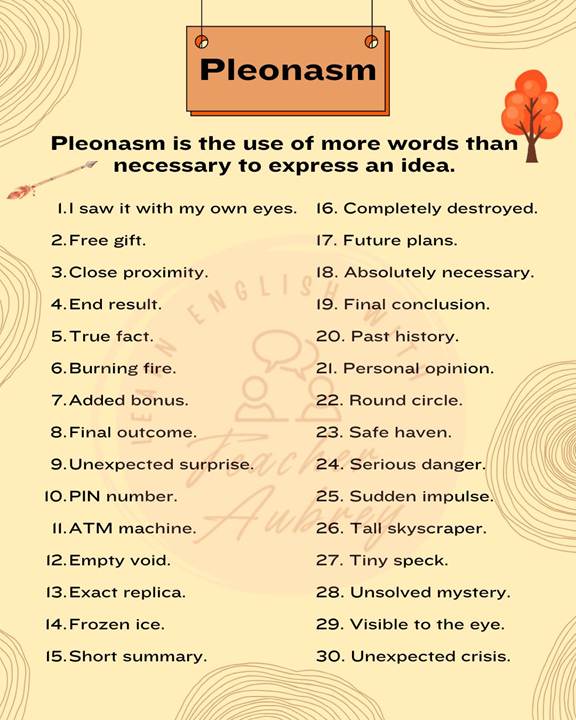
This list will help you tighten your writing―eliminate unnecessary words. My personal opinion is that this list is absolutely necessary―it’s a true fact.

                                                Advice for parents

The Returning

How memorialize 89 years of life?

Barbara died in December. It is now April and my daughter Kimberly and I depart Minneapolis and travel east on a mission―to carry Barbara’s ashes back to Willow Street Mennonite, her childhood church, founded in 1710. It feels so right to bring Barbara full circle back to the place where she grew up immersed in her family’s dairy farm and in this Mennonite community surrounded by relatives and friends in beautiful Lancaster County., Pennsylvania.

Fifty-four years ago I traveled from Venezuela to Lancaster County for our wedding. I learned to see this world through her eyes―now I love the place even more than she did but I’m tearing up as I arrive for the first time without Barbara.

We find Willow Street Mennonite Church thriving—lots of young families and children, with many of Barbara’s relatives sprinkled in. Even as we memorialize life’s ending, their Sunday Easter service promises new life. I’m enjoying hearing again the “Lancaster lilt”—”youse staying for dinner? . . . it spited me . . . outen the light . . . there’s more pie back . . . baby’s all cried up; maybe she needs drying . . .”

On Saturday, thirty people gather for Barbara’s memorial service. Joe Sherer, Willow Street minister, uses Barbara’s memoirs book to enrichen his remarks. I am humbled that Allen and Rachel (Groffdale horse-and-buggy Mennonites) have come, along with David and Sarah Lapp, the Amish couple who now farm the old Breneman farmstead. Both couples had to find car transportation.

I am blessed that all our children are here. Jeny has flown in from northern California and speaks of her childhood in the Hurd family. Son Timothy shares remembrances. When I rise to speak, I stand mute for several moments. Then, “Each life is sacred to God. Thus, it is fitting that we meet today to celebrate the life and faith of Barbara Ann Hurd Breneman. . . . When we moved to Colombia she comforted me after an airplane crash, nursed me through a bout of Typhoid fever. . . . Barbara was the beating heart of our home. Always loyal to her husband, a sacrificial wife and mother. She fiercely fostered our social, emotional and spiritual development. . . .”

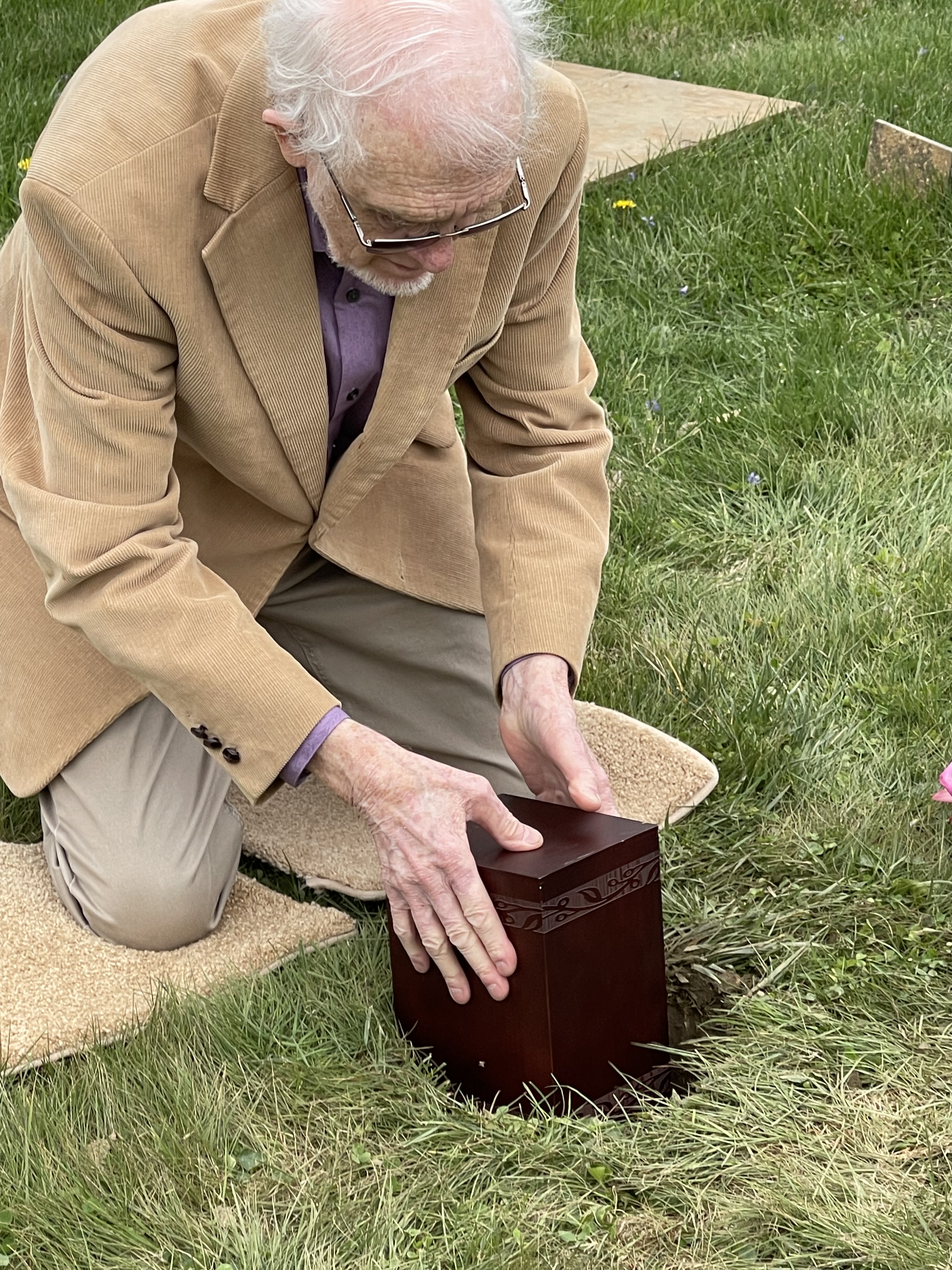
The service complete, I retrieve the urn and lead the way out to the graveyard. In this cemetery lie Barbara’s parents, grandparents and other relatives. Don Breneman, who mows the graveyard; says there are 2200 stones. I apologize for giving him another one to mow around. I lower the brown wooden urn into the ground. We pray, leave flowers, then depart.

I feel at peace; feel that we helped Barbara circle back home to the place that formed her, the place where she now rests in the plot that awaits my future arrival. Sadness overwhelms me but even more, gratitude—for Barbara’s life; her blessed death; her great gifts to me, our family, our community and our world. I take comfort in our Lord’s words, “I am the resurrection and the life.”

May eternal light shine upon her.

Delivering the Orange Daily News

I got off my bike, leaned it against the brick wall of the news alley and stared through the barred window at the bubbling pot of molten lead. This was the first day of my first job―delivering newspapers for the Orange Daily News.

It was a small paper and “daily” was a stretch—we didn’t deliver on weekends. Some of the paperboys called it “The Orange daily butt-wipe.” The year I started, the Daily News certainly printed the big headlines—Emmett Till’s murder, Rosa Parks and the Montgomery bus boycott, Bill Haley’s sensational Rock Around the Clock, the launching of the first nuclear-powered submarine, building the first McDonald’s restaurant, and the spectacular Disneyland opening. But unlike the larger Santa Ana Register, the Daily News mainly covered local issues like road construction, the championship-bound Orange Lionettes softball team. It covered how my friend’s father embezzled money from the First National Bank or published the story of the Fourth of July parade with the barred jail sitting on the plaza where they would lock up local dignitaries. And of course, crossword puzzles and the Dear Abby column.

The Daily News offices sat on the Orange Plaza, an enormous roundabout in the center of Orange with tall palm trees and fountain. You entered the Daily News from the sidewalk, where the front office concealed the room behind with its rattling printing press that spit out thousands of papers each day.

I had two fights in the news alley—won one and lost one. When I hit Hawkins in the belly, he started crying and the fight was pretty much over. I felt strong and powerful―until Shockley did the same to me. I doubled over in pain and started bawling. Johnny, the delivery supervisor, took a dim view of fighting: “Knock it off! You boys can’t work here if you’re going to fight.” So pretty soon we learned our place in the pecking order.

We were never allowed to enter the press room but since the alley ran alongside, you could press your face against the protective window grill to watch the guy at the linotype, a marvelous machine that turns keystrokes into lines of brass molds. He would pour the lead-antimony-tin mixture into the molds to form the letters. The nearby printer swallows a huge roll of newsprint, then spits folded papers out the other end. You could smell the newsprint and almost feel the heat of the molten lead.

After Orange Intermediate would let out, I would bike through the city streets, park my Schwinn bicycle with its white sidewall tires in the news alley and wait with the other boys. Sometimes the papers were late so I would walk down the alley to a small jewelry store that had a cooler. You opened the lid to see where the Coke bottles hung on a rail, put your dime in the slot, then slid out an ice-cold bottle. It tasted marvelous on a hot summer’s day even if it froze your brain and people warned you that you could get instantaneous pneumonia. I bought one every day, reasoning that it was wise to form good habits.

The Daily News hired Johnny to be part delivery supervisor and part wet nurse. He worked with the paperboys, handling screw-ups and drying tears. Johnny told us, “You guys are entrepreneurs, independent businessmen.” Turns out that meant less liability for the paper—and we ate our losses. He would take us out door-knocking, a bleak task where we tried to sign up new subscribers. But how sell something you weren’t crazy about yourself? We liked Johnny who organized games in the YMCA gym and told a few dirty jokes. He would hold up an orange, army-type Daily News hat and say, “You’ll get one of these cool hats and for every five new subscribers you sign up, you’ll get one of these shiny buttons to pin onto it.” I thought, “I’d rather just get a bit more cash.”

An alley ran back about 75 feet alongside the building to the paper-folding room with its dirty brick walls, bleared windows and dark interior. It smelled like a sweathouse out of a Dickens novel. Sheet metal covered the tables where we slipped and folded the papers. “Slipping” meant putting a section or two inside the front section. On rainy days we had to shroud the papers in wax sheets. Folding was a work of art. You would fold the whole paper in half, then turn down a corner triangle, fold again, then tuck the triangle inside to make a little packet. After you finished folding you stuffed them into your white canvas bag labeled “Orange Daily News” and hung the bag over your bicycle handlebars.

I would ride out of the alley with my laden paper bags hitting my knees, head over to my Pine Street route in the northwest part of town. On the way, I swung by the gas station on Glassell Street that had a vending machine where I would buy a Heath bar. Reaching Pnne Street I would start throwing papers onto the porches or at least onto the sidewalk up near the door. The papers sailed and curved so you needed expert technique. We had to memorize the house numbers. Mrs. Weaver wanted me to walk up and leave the paper on her window sill and for my trouble, a shiny dime would appear on the sill on Fridays.

Most of my paper customers were nice people with only occasional complaints about late deliveries or stray papers. We loved the PIAs—“Paid in Advance” but we had to go out each month to collect from the other people. Sometimes they would say, “Come back next week.”

The route didn’t always go smoothly. I played on the Orange Intermediate basketball team and one day we had an away game. My dear mother picked up my papers downtown, folded them, then drove to the school and hung the paperbags on my bike. But when I arrived someone had pulled all the papers out and torn them up. I had to make a tearful, late trip to the office to pick up more papers and deliver them in the dark.

When I entered high school, I graduated to a six-mile, rural paper route. The houses sat far apart but most of them were PIAs so I didn’t have to collect. I didn’t have to bike downtown―they delivered the papers to our front lawn. If the papers were printed late and it was getting dark, my mom would drive me in our 1955 Ford station wagon while I sat on the tailgate throwing the papers.

Eventually I graduated to using my dad’s Cushman motor scooter. The route finished over on Santa Clara Avenue and there wasn’t a north-south street nearby so I would cut through the Fairhaven Cemetery to drive home. But if it got too late, they would close and lock the gates and I would have to make a long detour. One night it was very late and dark, the gates were still open and I had the headlight on when I entered the cemetery. I was traveling fast, eager to get home, riding along a line of Eucalyptus trees. I had to jog left through the trees to pass from the Santa Ana cemetery to the Fairhaven side. I jogged, but with it being late they’d put a chain across the break in the trees. I jammed on the brakes, left a dark skid mark and stopped with my front wheel touching the chain.

I somehow muscled the scooter under the chain and drove past a huge, dark building―the mausoleum that had fascinated us kids since we were in elementary school. We would tiptoe through the marble halls, talking in whispers. Then we’d yell and run, our voices echoing as we raced toward the door. I never would go in there alone. I passed on by, exited the cemetery at Fairhaven Ave., rode the half mile down Cambridge Street to our house and wheeled into the garage.

I wish now that I had told Mom how much I appreciated her helping with the route. And I wish I’d told her that, when I had to make the long ride home after dark, how I loved seeing the welcoming lights of home and smelling the late dinner she’d cooked for me.

On A Roll

Traveling out of state you never know what you’ll run into—alien environment, alien customs. You want to be open-minded but where do you draw the line?

After flying to San Francisco, embracing my dear California sister and catching up on our lives, I get up to use the bathroom. It smells fresh and has a new towel laid out. But when I reach for the toilet paper, it’s facing the wall—backwards!

I’ve known Anne all my life―her opposite political persuasion, her preference for a different kind of church. None of this ever came between us. But the toilet paper shakes me. Where did she learn this? I don’t remember this happening in our childhood home. If she does this to the toilet paper what else is she hiding? Have I missed her darker side? Uncontrolled passive aggression? Anger issues? Never before have I noticed any serious issues. Did she do it on purpose?

I determine to take the high road here. I turn the roll around on the holder, exit the room and greet Anne as if nothing happened. But when I later pop into the bathroom to brush my teeth, I feel slapped in the face―the toilet paper is reversed again! We never exchanged any angry words—she just reversed it without asking me.

I spend a sleepless night, tossing, turning and troubled. I give myself a lecture: You’re not the host; you’re a guest. You must go with the flow and overlook things. Get over it. And yet I can’t. I can eat different foods she prepares, engage in long conversations about topics I’m not interested in, go places I don’t want to go. But the toilet roll—I just can’t let it go.

In the morning neither of us say anything but I can feel the tension rising. I wonder if Anne has talked to her husband but I don’t sense any estrangement when I talk to him about cars, airplanes, softball. Maybe he doesn’t know about it, or worse, doesn’t care. I dread the coming weeks and months with this bone of contention lodged in my throat.

I have forgiven her, really, but I wonder if I shouldn’t talk to her. At breakfast, Rich hasn’t gotten up yet and Anne and I sit savoring the comforting coffee and scrambled eggs cooked with just a hint of tabasco sauce. I take a deep breath and begin: “Anne, I noticed the toilet paper was reversed and when I turned it around you turned it back. I want you to know I’ve forgiven you and will never bring it up again.”

My sister’s eyes widen and her mouth opens but nothing comes out. Finally, “Oh, Jamie; I didn’t know that was such a big deal. I’m sorry.” Not said patronizingly but full of respect and I don’t detect any anger. (I notice that women tend to apologize, even if they don’t think they’ve done anything wrong.) We share small talk for a few awkward minutes. I think this helps; I feel my muscles relax and the tension dissipate. From then on, I turn the roll her way but later I notice she comes in and turns it back my way. I count that as a sign of our mutual respect.

A couple days later I red-eye back to Minnesota and Uber home after midnight. My own kitchen, bedroom, bathroom. My bathroom! I feel relief wash over me as I reach for the toilet paper and find the loose end facing front. It feels so right.

Why make such a big deal of this? Because if you let things like this slide, next it’s slurping, double chip-dipping or maybe even grand larceny. I figure I did her a service by nipping bad behavior in the bud. And anyway; one of my strongest spiritual gifts is judgmentalism.

Since that difficult day I’ve moved on; I’m not holding on to it. Like, every time I call Anne, I assure her that I’ve put the toilet paper conflict behind us and will never bring it up again. And I congratulate myself on achieving reconciliation after such a sharp misunderstanding.

But I sometimes wonder if she’s still doing it wrong.

The World of Center Street Elementary

September, 1946. Mother took my hand as we walked the dirt along Mr. Wheeler’s avocado orchard, turned to walk the three blocks of Culver Street, then crossed the playground toward Center Street school. I raised my eyes to view the enormous three-story wooden cube with its green-shingled hip roof and windows that stared out with unblinking eyes. I was excited about the classroom work but worried about meeting new kids. Mother pointed to a cave-like opening under the entrance stairs. “That’s the boys’ bathroom. The girls’ is on the other side; never go in there.”

She said goodbye as I climbed the wooden steps to where Mrs. Brennan extended her carefully-tended white hand. She wore her greying hair up in a bun and her blue dress reached to her calves. I glanced behind me to see my mother disappearing across the playground. As we entered, I smelled the waxed hardwood floor and turned to gawk at the carved wooden staircase rising toward second floor.

When the noon buzzer rang, Mrs. Brennan told us, “You may eat downstairs in the lunchroom or outside under the playground shelter.” Students walked to the cloakroom and grabbed lunches out of their cubbyholes but I left the building and wandered around the playground hungry, wondering why my mother hadn’t packed me a lunch.

Principal Ebersole saw me. “Are you in kindergarten?”

“Yes.”

“Why are you still here? Kindergarten ends at noon.”

“Mrs. Brennan never told us to go home.”

“Mrs. Brennan? She’s the first-grade teacher. You should have been in Mrs. Baker’s class.”

“No one told me . . .”

Mother came to pick me up.

The next morning, my neighbor Jerry and I were walking to school along Culver when we passed a dark, stuccoed house with tall grass, scraggly bushes and the window shades pulled down. “A witch lives there,” Jerry told me. We started running.

A block farther on, we looked down Harwood Street and saw the tiny store that sold Bazooka gum, M&Ms, and candy cigarettes. We walked over, searching our pockets for change. I opened the little paper packet Mom had sent with me and used the money to buy M&Ms for Jerry and me. We arrived at Kindergarten all sweet and chocolatey.

After a few weeks of walking down Culver Street we got braver and shortcut through our orange orchard smelling the fragrant blossoms so we could cut through Joe’s Lumberyard—a chaotic assortment of broken chairs, metal tables, old doors, window frames with peeling paint, derelict staircases, ceiling trusses, broken strips of siding, toilet stools, bathtubs, kitchen sinks and faucets, piles of used lumber—all strewn helter-skelter with little rabbit runs winding between. It looked like a ghost town hit by a tornado.

Stray cats haunted the woodpiles, along with the occasional rabbit. Once we saw a coyote. And then there was Sam the Tramp who guarded the lumberyard with his snarly dog Butch. Unshaven, with his long dishwater-gray hair hanging to his earlobes, he wore torn brown pants too big for him, scuffed shoes with holes in the leather and a ripped straw hat, appearing as a person destiny had a serious grudge against. He slept in a tiny tarpaper shack that stood amidst the lumber and debris. He didn’t talk; he just sat in front of his shack on an old chair with missing spindles and stared at us until we took off running. “I think he’s a serial killer,” Jerry told me.

. Mrs. Baker, serious as a Puritan preacher, sat soberly with every inch of her body erect in her desk chair. When she rose to illustrate something, her fingernails would scratch the blackboard. And yet she had a great heart for her students. Her classroom had plastered walls reaching high to the ceilings, large windows that allowed the sun to beat in onto the hardwood floor and no air conditioning. Chains supported big hanging light fixtures that glowed beige. A sandbox stood in one corner. The letters of the alphabet in block letters and cursive ran along the top of the blackboards. We sat at cast-iron-legged wooden desks on which some past students had carved their initials. A hole was cut in the top that previously held an ink jar, the purpose of which, my dad told me, was for dipping the pigtails of the girl in front of you. A pencil sharpener hung on the wall near the blackboard. Once when I blew in it to clean out the shavings, pulverized lead flew out all over my face

We always began by reciting the Pledge of Allegiance but it was years before I learned what “republic” and “indivisible” meant. I liked learning about the pilgrims and singing patriotic songs—“God Bless America,” “America the Beautiful.” Then  a song about leading the tow-mules sixteen miles along the Erie Canal and finally, “Las Chiapanecas,” about the Mexican girls who danced twirling their full skirts. I don’t remember any opening prayers. I learned to form letters and to add and subtract. Being left-handed, I would pull my pencil across the page and slant the letters to the right. The teacher gave up trying to change me. When mid-morning came, we marched down to the lunchroom where we drank our little cartons of milk, free if your family was low-income.

Then we returned to class to read from Dick and Jane—a beautiful picture story book about little kids and their dog, Spot. “Look, Dick, look.” “See Spot run.” “Jump, Spot, jump.” Dick and Jane lived in an all-white neighborhood with no dirt or trash or crime, yet still patrolled by big, friendly, blue-suited policemen. Next, we had show-and-tell time when kids would stand in front of the class and tell stories about themselves. Some of these may have been true. Once Harold told his story with his fly open. Nobody said anything.

The next year I was sitting in Mrs. Brennan’s first grade class as the hands of the big Seth Thomas wall clock nibbled away at the morning until the piercing buzzer signaled lunchtime. We carried our lunches outside to eat under wooden shelters that shielded us from the sun. The kids who ate bologna and cheese sandwiches made fun of my mom’s sandwiches of mayonnaise and avocado, made with avocados from our own orchard. Once when Darlene walked by, a boy yelled, “I wish I had that swing in my back yard!” I didn’t know what he meant..

Out on the playground, the LA basin smogged our throats. But sometimes, hot, dry, fifty-mile-per-hour Santana winds would roll in from the east through the Banning pass. The wind blew all the smog out to sea, leaving the air so clean it quivered. The trees swung their leaves like nets and shed some of their smaller branches. Inhaling the smell of blowing dust, we tried out the merry-go-round, swings, a sagging, netless basketball hoop and the exercise bars. The merry-go-round was a marvel of perpetual motion that seemed to spin forever, making your head dizzy. But if it spun too fast, the bearings would grind and it would throw kids off. The tall swings had canvas seats held by long chains. The fifth graders told us they could pump the swings so hard they looped-the-loop. I had nightmares about looping, then crashing down on the high crossbar. I spent hours shooting baskets at the solitary, sad and sagging iron hoop.

Kids would jump and grab the parallel bars with gritty, sweaty hands, then do the dead man’s drop. You got swinging by your knees, then released at the top of the swing and tried to land on your feet. When I  tried it I landed on my backside and knocked my breath away. The girls would hang upside down on these bars with their dresses falling down over their heads, yelling at the staring boys, “Get your eyes full!” The Center Street girls fascinated me. They seemed a different species, walking around the gravely playground in their white dresses with the little starched collars, white bows in their hair.

We played kickball on the dirt diamond. When it was my turn to kick, Gary Bradley sauntered over, pushed me down and took my place. I started crying. I tried to avoid him but later, in middle school, he beat me up again. Gary—poster child for the human condition, terrifying pustule of ego with bulbous eyes, puffy face and wearing an attitude tough as nails, grated on people like tinfoil on a filling. He gave me my first bloody nose. Then Sherman, an unerupted volcano with an IQ below the range of his body temperature, would push boys down onto the gravel. I avoided him until the day Mom invited him to go to church with us. Awkward. I assumed. Jesus’ command to “love your enemies” did not include Gary or Sherman,

We met Okie and Arkie kids whose parents had fled to California from the Midwest of the 1930s to escape the terrible dustbowl droughts. They took over the jobs the locals did not want and began replacing the Mexican orange pickers in the orchards. The girls in their faded dresses looked as if their mothers had forgotten to comb their hair. The boys wore longer, disheveled hair, overalls instead of jeans, and they talked funny. Big belt buckles. You didn’t want to sit next to them. They smelled perspired and If they sniffed something, they would lean over and smell your crotch.

Most Mexicans lived on the other side of Glassell and went to Killefer School. In the 1940s, Orange Unified was one of the first districts to integrate so later, in first grade, we got Richard Herrera. Brown-skinned with straight black hair, he wore a tiny crucifix hanging from a gold chain. His English was pretty good. We became friends.

Every Wednesday, the higher grades got to practice jumping onto a fire escape slide that spiraled down from the third floor. During Cub Scout nights, some of us would sneak up to the dark third floor and feel our way over to the fire escape. One after another we launched, sailing down the slick slide. We found the exit doors locked, so we had to climb back up the slide, slipping and sliding. One night the principal caught us. It was totally worth it.

At the end of my fifth grade year, Center Street finally closed her doors. That day, anyone could slide down the fire escape—even the principal! But soon they bulldozed the school to the ground. When graduation day came we filed by the principal to receive our diplomas. Afterwards the teachers assembled the students to do the Bunny Hop. But Silver Acres Church was fundamentalist and Brother Cantrell preached hard against dancing. So instead of dancing, Kevin and I sat in the hallway at a table playing chess. Kevin was happy but I felt like a nerd. That summer Jerry and I were walking through Joe’s junkyard when we saw an abandoned metal helix lying on its side, forlorn and forsaken. We stared at the twisted metal of the derelict fire escape.

After graduation I thought my bullying troubles were over. Until I moved on to the anteroom of Hades—Orange Intermediate School. Another world to conquer!

A Letter to my Fourteen-Year-Old Self: You are not Weird

Hello, Jamie. Here I am over 80 years old and I realized something—you’re not weird! I found this out about you much later. Know that I’m in your corner pulling for you, interested in all your details. Right now, you’re wondering why your nose is too high on your face, how to get rid of freckles, how to get a tan on non-tannable skin. How to grow more muscle. How to stand up to bullies. How to afford the clothes that the Big Men on Campus wear. How to get more than a glance from girls. I know; I’ve been there.

I know it’s easy to think about what’s not going right in your life—few friends, no girlfriends, clumsy at sports, lack of money, too much control from parents. Even questioning your faith. Instead of obsessing about what’s wrong. But I recommend you focus on all you have, all the stuff you’re taking for granted, stuff most people in the world do not have: job opportunities, faith formation and church, health, the privilege of whiteness, a peaceful life, shelter, transportation, plenty of food, education, mentors and friends—you’ve got it all.

Constantly rehearse what God has done for you—how he’s gotten you out of trouble, what he’s given you. Treasure your interest in mission aviation—it will channel so many of your life choices. Remember that God will protect you from the trap of lust.

Embrace the truth that God has a plan for your future. Indeed, you are his beloved. I know—sometimes all you see is that you’re alone and discouraged but God is supporting you, directing your future. I know you think that to get friends you need to be a strong, funny, handsome, interesting person. Only after high school did I learn the truth—people are interested in people who are interested in them. Learn to talk in terms of the other person’s interests, not your own. (Read Dale Carnegie, How to Win Friends and Influence People.) Focusing on others will attract others to you. Actually, people want to talk about themselves. Ask questions and pursue conversations without jumping in with your own problems, your own stories. Don’t interrupt. I’m still working on being a good listener. People like people who will listen.

Your social life will only get better through high school and beyond—you gotta believe it. You will mature a ton and be better able to handle the challenges you will face. You will gain more friends, have more girlfriends. You will find people are becoming truly interested in you.

Are people opposing you? Hey; to be alive is to have conflicts. But when people accuse you or put you down, know that a lot of that comes from their own insecurity. Don’t be defensive. If someone criticizes you, just smile and say, “I’ve got lots of things I’m working on.”

Look around at the adults who believe in you—your pastor, teacher, your parents’ friends, your employer, your school counselor. Let them know you’re thankful for all their interest and advice. Looking back, I am stunned at how many of these people I took for granted and never even thanked.

It’s too late for me, so you ask Grandpa Anderson what it was like building his tarpaper shack on the South Dakota prairie, or ask him how he survived the death of his two young boys (your uncles), Jamie and Calvin. Grandpa and Grandma won’t be around forever, and after they’re gone you’ll long to be able to ask them questions. Ask them now.

After I married and had kids, I realized that having my own teenagers was punishment for the way I treated my parents when I was a teenager! Notice how your parents sacrifice for you—time, money, acts of kindness. Thank them for this. Cherish their love and support for all you do. Don’t take this stuff for granted.

Take time to explore your world. Learn where your water comes from, your electricity. Learn how your neighborhood is laid out. Go on a mission or a service trip. Travel, if you can. You will not have much time for this later.

Think about a part-time job and start saving a little money each month. Get smart on money matters—saving, investing, spending. Don’t buy a bunch of stuff. These things won’t matter when you get older.

Read the Bible each day and pray the Scriptures. Wise Solomon counsels—“Remember now thy creator in the days of thy youth . . .”

Believe it and believe God when he proclaims—“You are not weird!”

Searching for Mr. Texas

(adapted from Wingspread: A Memoir of Faith and Flying by James P. Hurd)

The sun has riz, the sun has set, and we is still in Texas yet.

My Uncle John from Amarillo, Texas wasn’t a Fundamentalist. Actually, he wasn’t named John, he wasn’t my uncle, and he wasn’t originally from Texas. I thought I knew him when I was a child, but trying to understand him took up most of my adult life. Recently I quizzed my brother and sisters, scanned through old photographs, Googled his name and searched for information about the Texas Panhandle, all trying to find out who he was. A long search.

John’s real name was Clien John Fowlston but he didn’t like Clien so he always went by John. He was born in Dubuque, Iowa and only later moved to Texas. He was nephew to my grandmother Loretta (he called her “Aunt Ret”).

I wonder about John’s brief first marriage—he never talked about it. But I remember his second wife, Syble—a tall woman, her silver-gray hairbun held tight with a black comb. Texas bred, she had a clear complexion and beautiful, soulful eyes that oozed Texas upper-class grace. Reserved but easy to talk to, she exercised a civilizing influence on John. “Johnny, why don’t you change your shirt?” or, “Johnny, why do you give presents to one child and not to all of them?” or, “Johnny, don’t shout.”

We always anticipate Uncle John and Aunt Syble’s driving up to our house in a Cadillac or Lincoln. (He isn’t burdened with a conservationist conscience. He says, “I always try to buy the car that uses the most gasoline.”) John brings each of us things, like a big Eisenhower silver dollar or ten dollars “to spend on whatever you want.” He brings me a tennis racket (a sport I will enjoy into my sixties). Our family of seven never goes out to eat except when Uncle John takes us to Mrs. Knott’s Chicken Restaurant at Knott’s Berry Farm, an amazing world of tastes and smells.

Uncle John stands six-foot-two and has pale skin and disheveled white hair. His Texas hat complements his gravelly voice. He wears cowboy boots (no spurs) and a belt with a silver buckle around his ample middle, the epitome of a prosperous Texan cattleman. He holds his lips somewhere between a smile and a grimace and when he laughs he says, “Keeesh, keeesh.” He’s loud and Horatio Alger optimistic. He intimidates.

In California John seems exotic . He walks with too much swagger, talks too loudly and is too conservative, even for Dick Nixon’s Orange County. He’s an uneducated millionaire and seems puzzled that other people are not wealthy. He boasts, “After I left fifth grade, I learned everything else that I needed to know by myself.”

But, like the panda bear or the Komodo dragon, one can best understand John in his native habitat—Dumas, Texas. He sits at his massive desk on the fifth floor of the Amarillo building where a sign on his desk reads, “C. J. Fowlston, Investment Counselor.”

I remember preparing to travel to Dumas, our longest family vacation. Long before first light we leave Orange, California in our light-green Ford station wagon packed with all our food for the trip (we don’t do restaurants) and with “gospel bomb” tracts wrapped in red cellophane which we will throw at pedestrians. We join historic Highway 66 near San Bernardino and follow it all the way—Barstow, Needles, Flagstaff, Winslow. We cross the Mojave Desert in the cool of the morning before the burning sun rises. Mother first knew the great Mojave as a small child, when Grandfather drove her and his whole family from South Dakota to California in his new Model T. Their constant quest for water dominated his trip journal. Today the Mojave still challenges us, especially Mother. A canvas water bag hangs on the front bumper and Mother drapes a water-soaked cloth in the passenger window to help with the heat. At night we pull into a miserable little motel in Gallup, New Mexico. The screens are ripped and the floors uneven. But Mother bursts into tears when she finds out how much it costs. Dad packs us up and moves on to a humbler motel.

It takes forever to get to Texas. We roll through Gallup, Albuquerque, Tucumcari and finally into Amarillo. In 1857, Ned Beale used camels to map out this route along the old Santa Fe Trail. The 1880s railroad line followed the Beale Wagon Road and eventually so did Route 66, America’s “Main Street.” Just thirty years before our Texas trip, haggard dust bowl survivors trekked westward along this same highway, traveling in wheezing, radiator-boiling cars piled high with all their belongings. In California I went to elementary school with their kids—we called them “Okies and Arkies.” They wore overalls and smelled your crotch when someone farted. We didn’t like them.

You can’t tell Texas is coming but the mountains and mesas of New Mexico gradually morph into undulating plains as we enter the Panhandle. When we pass the vast ranches and the horse-headed oil donkeys, I wonder, Does the Panhandle produce anything besides oil and cattle? Bold, proud, independent, self-made Texas. She doesn’t even seem to notice we’ve come.

We finally arrive at Uncle John’s ranch, drive through the gate with the cast-iron brand “Derrick Ranch” overhead and park in front of the brick rambler. John and Syble emerge with a warm welcome and soon we’re sipping sweet tea in their living room. A photo hangs on the wall—it’s John and Syble in Egypt, astride camels, with the pyramids in the background. But the heart of the house is behind. A massive wooden door, carved in Taos, New Mexico, opens into a huge rec room with knotty pine walls. A sign hangs over the bar—”No drinking before 5:00 p.m.” Mother doesn’t approve of Uncle John’s drinking. Windows on all sides give a view of the vast, watered cornfields. I can see cows stretching their necks over the fence.

Uncle John introduces me to Texas racism. He boasts, “There isn’t a n— in all of Potter County.” Amarillo is scrubbed clean of African Americans and most Mexicans, people that John tars with the same brush. He once asked my brother-in-law who worked at United Airlines, “Do any n—s or ch—s work there?” Rich replied, “Well, some black people and Chinese people work there.” One time my friend Dave and I were traveling Route 66 from Chicago to California, and after driving way too long without sleep, we stopped to see Uncle John in Amarillo. He immediately delivered his ultimate insult—“You California drivers are worse than Mexican drivers.” Before he would talk to us, he installed us in an Amarillo motel and demanded that we sleep.

Today, John and Syble take our family to fish and swim at Conchas Dam near Tucumcari. We squeeze slices of white bread into little doughballs and plunge the hook into them, hoping to catch some tiny bluegill for Syble to fry up. John seems to want all of us to have a good time. He walks around the dock in swim trunks tied over his pear-shaped body. He’s bare-chested, with drooping dugs and white chest hair. He has a giant appetite, especially for beef and pork, and in later years will suffer from the gout.

Back at the ranch, John maintains four thousand head of polled Hereford cattle that are destined to feed the hungry maws of the likes of McDonald’s and Burger King. The cows come right up to the fence where I can feel their warm breath. I see John out in the field holding my little sister’s hand while she stands atop a huge bull. He lets us ride his cow ponies, one of which runs away with my sister Mary. Mine takes a sharp turn, but I don’t—I fly off and thud to the ground. When I use his .22 to shoot at groundhogs and rabbits, I don’t hit anything so I switch to a shotgun. In the barn we play on the hay bales and dive into the grain.

One evening John invites dozens of booted cattlemen to eat huge beefburgers that he personally grills in the backyard. He warns, “If the insides aren’t bright red, it’s ruined.” He takes us to the gas and oil museum and points out a sign along a rural road that says, “First Oil Strike in Texas.” Then we drive out north of Dumas to the Amarillo Country Club. I don’t see any people of color, except for the waitstaff.

Mother tries to witness to Uncle John. He attends church sporadically, but he isn’t saved. For our family, being saved was like being pregnant—you either are or you aren’t. Most people we know aren’t. We Fundamentalists don’t smoke, drink or go to the movies. (I will later go to my first movie at age twenty-two.) We suspect Uncle John is Episcopal, not out of spiritual hunger but because of his social status. He says, “Those Fundamentalist radio preachers are all crooks!” Our family frequently prays he will get saved.

Uncle John may have been intelligent but the smartest thing he did was arranging to be born at exactly the right time—1901. The twentieth century gave us automobiles, airplanes, factories and two World Wars, all dependent on massive doses of petroleum. In 1918 the Amarillo Oil Company sunk the “No. 1 Masterson” in the lime, granite and dolomite sediments of the Texas Panhandle. It was soon producing ten million cubic feet of natural gas daily and became the forerunner of the greatest gas field in the world.

Perfect timing for John. When John turned fifteen, his family had left Dubuque, Iowa, for Tulsa to work in the nascent oil fields. Oil lust grew and the oil and gas industry revved up to satisfy the appetites of thousands of automobiles and later thousands of warplanes. After ten years in Tulsa and a detour to work the oil fields in Venezuela, John moved to Amarillo to work in the Panhandle fields and rode the oil gusher to the top floor of one of Amarillo’s office buildings where he became a successful investment counselor. I once sat in his office and heard him say on the phone: “The uranium mine seems good? Okay—buy a hundred shares.”

When we finally depart, Uncle John presents us with a plain white, fat envelope. “Don’t open this until the New Mexico border,” he orders. What’s in the envelope? We speed to the border, pull over to the side of the road, open it, and find enough cash to finance most of our trip. John has scrawled on a piece of paper, “Stay in a good motel. Buy a good Mexican dinner in Santa Fe. Detour up to Taos to see the three-story adobe Indian village.” We obey.

Later, when I am a student in Chicago, Uncle John frequently sends me pages of the Amarillo Globe-Times by third-class mail, underlined, annotated and then rolled up and taped. He always encloses a handwritten letter so he doesn’t have to pay first-class postage. Even when he types his letters I can hardly read them because of their elliptical sentences, missing characters, sparse punctuation and hurried scrawl. I try to decipher them and send a postcard back.

After I am married, I remember telephoning Uncle John to tell him that Barbara and I are adopting our first child (Kimberly) from Costa Rica. I can almost feel him stiffen.

“Are you gonna get a white one?”

“No. I think we’re gonna get a brown one.”

“What’s wrong with a white one?”

“Nothing, but we like variety.”

“Well, the rest of the world doesn’t!”

Yet when we visit him in his old age he warmly receives us, along with our two adopted children from Colombia. He takes us to a rib joint and put us up in a motel. He drives us out to the ranch (but not to the country club). This is the last time I see Uncle John.

John gave us great gifts. A long time ago, he moved my uncles’ coffins. Mother’s brother Calvin died from the fever on their South Dakota homestead in the winter of 1917 when he was two and his older brother, Jamie, nine, died two months later. Grandpa put their coffins in a snow bank and then in the spring after the frost left the ground, buried them in Bonita Springs. Later, Uncle John exhumed the coffins and moved them to Hopkinton, Iowa, near the graves of others in the family. It was a touching act and one of the first stories I heard about Uncle John.

Recently I call Joyce Perkins in Amarillo, a kind woman who for over thirty years has faithfully administered the C. J. and Syble Fowlston Trust. She tells me, “The trust still provides money to Cal Farley’s Ranch for Boys near Amarillo. Their motto is ‘a shirttail to hang onto.’ And, because of John’s interest in The Lawrence Welk Show, I send some money every month to KACV-TV, our local PBS station.”

So, who is Uncle John? Is he “Mr. Texas,” a self-taught and self-made man of the world, a loud, opinionated, rich oil- and cattleman with only a fifth-grade education who rose to be a millionaire? Is he a racist, politically somewhere to the right of Rush Limbaugh? He’s all of these. Yet I remember with gratitude his steady interest in our family, his monthly stipends to us while later we were missionaries in Latin America and especially remember his warm welcome for us at Derrick Ranch. Uncle John, peace to your memory.