Category Archives: memoir

WINGSPREAD Zine for Nov./Dec., 2025

Please forward and share this ezine with others. Thank you.

  • Writer’s Corner
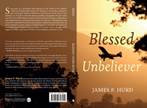
  • Blessed Unbeliever 
  • This month’s story: Plumbers and Electricians
  • This month’s puzzler: Who done it?
  • WINGSPREAD Ezine subscription information
  • Wisdom

Dedicated to people who love words. Words are miracles that brand humans as sentient creatures, creative, inventive, exploring. Taste the words as they roll around on your tongue; let them fill you with a sense of wonder.

NEW BOOK!  I have begun assembling a new book of stories and essays gleaned from the last ten years of my blogs. Maybe I’ll group these under the sections: Spring, Summer, Autumn and Winter. Spoiler alert: I’m in the “Winter” phase now, and looking back to those other seasons. I’ll keep you posted.

Why it’s important to write

Want to browse archived WINGSPREAD stories? Click here, then click under “archives”     https://jimhurd.com/    These stories include memoirs, stories about bush flying, personal essays and other topics. They’re searchable for key words.

Here are a few examples:

The joys of my annual physical exam: https://jimhurd.com/2024/10/25/the-annual-physical/

Why did it take so long to discover that I’m not weird? https://jimhurd.com/2024/02/06/a-letter-to-my-fourteen-year-old-self-you-are-not-weird/

Writer’s tip: Transgress. You seize the reader’s interest if you write something unexpected. Examples: “I’ve given up on Jesus.” “Morality is so 19th century.” Of course, your piece will sort out these shocking statements and explain what you mean. But use counterintuitive and contrary statements: contradictions, hyperbole, even forbidden words (used carefully). The object? Transgressing grabs the reader’s attention.

Words and metaphors

“a unicorn of a girl” (unique type)

“he shat his pants” (quite vivid)

haplotype (a sequence of polymorphic genes that tend to be inherited together). This is the way Ancestry.com discovers your ancestry.

Digital resources:

I still own my Strunk and White, Elements of Style, but you can ask AI (Artificial Intelligence) anything. Try typing into your browser: “chatgpt.” For instance: “What’s the difference between insure and ensure?” “When must you use a comma before a conjunction?” or “Please critique the attached story and give me suggestions on how to improve it.” What I do not do is ask AI to write the story for me.

Word of the month. FAIN (obsolescent): Gladly, willingly

Task for you: Write about how joyful you are without saying how joyful you are. (That is, show; don’t tell.)

Available in paper or Kindle version at Wipf and Stock Publishers, Amazon https://a.co/d/9su5F3o or wherever good books are sold.

Hashtags for the book: #california #author #christianwriter #babyloss #southerncalifornia #oc #planes #socal #aviationdaily #humanist #pilotlife #blessedunbeliever #religion #travel #christianauthor #aviationgeek #orangecounty #godless

Retirement is deceptive. You’re lulled into thinking that things will pretty much go on as they always have. They usually do. But then, life happens.

I’m working in my college office when the phone rings. “Jim, I don’t know what to do. I’m just sitting here on the sofa sewing and three times I’ve felt faint—like I’m about to pass out.”

My mind races. Is this just in Barbara’s head? In the past, I’ve joked with her that I’ve decided on her epitaph: “I told you I was sick!” But what if something’s really going on? She’s never complained about feeling faint before.

“How often is this happening to you?

“About every half hour or so. Oh! I feel like I’m fainting now!”

“Okay—I’m calling 911 and I’ll come home as soon as I can.”

I call 911, run out to my car, and drive home, praying as I go. When people ask me how prayer works, I always have a ready answer: “I don’t know. But the Bible tells us to pray, and Jesus prayed, so I pray.” . . . To read more, click here: https://tinyurl.com/4tshbrbb

Please “rate” the story and “share” it with others. Thanks.

You can also access my articles on Substack:   Plumbers and Electricians – by James P Hurd

This one is clever. You have to look closely at the following paragraph. You should actually not read it; you should have someone else read it to you to get the full experience. But you can read it if you have to. 

Here it is. 

“This paragraph is odd. What is its oddity? You may not find it at first, but this paragraph is not normal. What is wrong? It’s just a small thing, but an oddity that stands out. If you find it, what is it? You must know your days will not go on until you find out what is odd. You will pull your hair out. Your insomnia will push you until your poor brain finally short circuits trying to find an oddity in this paragraph. Good luck.” 

So what is it?

Remember, you have to examine the paragraph really well.

Good luck.

 (Answer will appear in next month’s WINGSPREAD newsletter.)

Answer to last month’s puzzler: 

So, a night watchman hears a person scream “No, Frank!” Then a gunshot. He enters the room and sees a minister, a plumber and a doctor. But how does he know that it was the minister that pulled the trigger?

Easy. 

The doctor and the plumber are women. So he made the likely guess that none of the women were named Frank. 

Subscribe free to this Ezine  

Click here https://jimhurd.com/home/  to subscribe to this WINGSPREAD ezine, sent direct to your email inbox, every month. You will receive a free article for subscribing. Please share this URL with interested friends, “like” it on Facebook, retweet on Twitter, etc.

If you wish to unsubscribe from this Wingspread Ezine, send an email to hurdjames1941@gmail.com  and put in the subject line: “unsubscribe.” (I won’t feel bad, promise!) Thanks.

Q. How do you keep your car from being stolen?
A. Buy a standard shift model

Q. How do you send a message in code?
A. Write in cursive

“Critical thinking without hope is cynicism. Hope without critical thinking is naiveté. Maria Popova

Here are some irreverent trivia questions about college football:

What does the average Alabama football player get on his SATs?
Drool.

How many Michigan State freshmen football players does it take to change a light bulb?
None. That’s a sophomore course.

How did the Auburn football player die from drinking milk?
The cow fell on him.

Two Texas A&M football players were walking in the woods. One of them said, ” Look, a dead bird.”
The other looked up in the sky and said, “Where?”

What do you say to a Florida State University football player dressed in a three-piece suit?
“Will the defendant please rise.”

How can you tell if a Clemson football player has a girlfriend?
There’s tobacco juice on both sides of the pickup truck.

What do you get when you put 32 Kentucky cheerleaders in one room?
A full set of teeth.

University of Michigan Coach Jim Harbaugh is only going to dress half of his players for the game this week. The other half will have to dress themselves.

How is the Kansas football team like an opossum?
They play dead at home and get killed on the road

How do you get a former University of Miami football player off your porch?
Pay him for the pizza.

On the Act of Writing:

  • “The first draft is just telling yourself the story.” – Terry Pratchett
  • “If you don’t have time to read, you don’t have the time—or the tools—to write.”
    – Stephen King
  • “Writing is a way of tasting life twice.” – Anaïs Nin
  • “Write what you know.” – Mark Twain
  • “Write the book you want to read.” – Toni Morrison
  • “Words are our most inexhaustible source of magic.” – J.K. Rowling
  • “Writing is a dog’s life, but the only life for me.” – Gustave Flaubert

Why some people don’t like Daylight Savings Time

Wisdom and Philosophy

  • “The only thing we have to fear is fear itself.”—Franklin D. Roosevelt
  • “Be yourself―everyone else is already taken.”—Oscar Wilde
  • “The mind is everything. What you think you become.”—Buddha 
  • “The journey of a thousand miles begins with one step.”—Lao Tzu
  • “In three words I can sum up everything I’ve learned about life: it goes on.”
    —Robert Frost
  • “The unexamined life is not worth living.”—Socrates

The Returning

How memorialize 89 years of life?

Barbara died in December. It is now April and my daughter Kimberly and I depart Minneapolis and travel east on a mission―to carry Barbara’s ashes back to Willow Street Mennonite, her childhood church, founded in 1710. It feels so right to bring Barbara full circle back to the place where she grew up immersed in her family’s dairy farm and in this Mennonite community surrounded by relatives and friends in beautiful Lancaster County., Pennsylvania.

Fifty-four years ago I traveled from Venezuela to Lancaster County for our wedding. I learned to see this world through her eyes―now I love the place even more than she did but I’m tearing up as I arrive for the first time without Barbara.

We find Willow Street Mennonite Church thriving—lots of young families and children, with many of Barbara’s relatives sprinkled in. Even as we memorialize life’s ending, their Sunday Easter service promises new life. I’m enjoying hearing again the “Lancaster lilt”—”youse staying for dinner? . . . it spited me . . . outen the light . . . there’s more pie back . . . baby’s all cried up; maybe she needs drying . . .”

On Saturday, thirty people gather for Barbara’s memorial service. Joe Sherer, Willow Street minister, uses Barbara’s memoirs book to enrichen his remarks. I am humbled that Allen and Rachel (Groffdale horse-and-buggy Mennonites) have come, along with David and Sarah Lapp, the Amish couple who now farm the old Breneman farmstead. Both couples had to find car transportation.

I am blessed that all our children are here. Jeny has flown in from northern California and speaks of her childhood in the Hurd family. Son Timothy shares remembrances. When I rise to speak, I stand mute for several moments. Then, “Each life is sacred to God. Thus, it is fitting that we meet today to celebrate the life and faith of Barbara Ann Hurd Breneman. . . . When we moved to Colombia she comforted me after an airplane crash, nursed me through a bout of Typhoid fever. . . . Barbara was the beating heart of our home. Always loyal to her husband, a sacrificial wife and mother. She fiercely fostered our social, emotional and spiritual development. . . .”

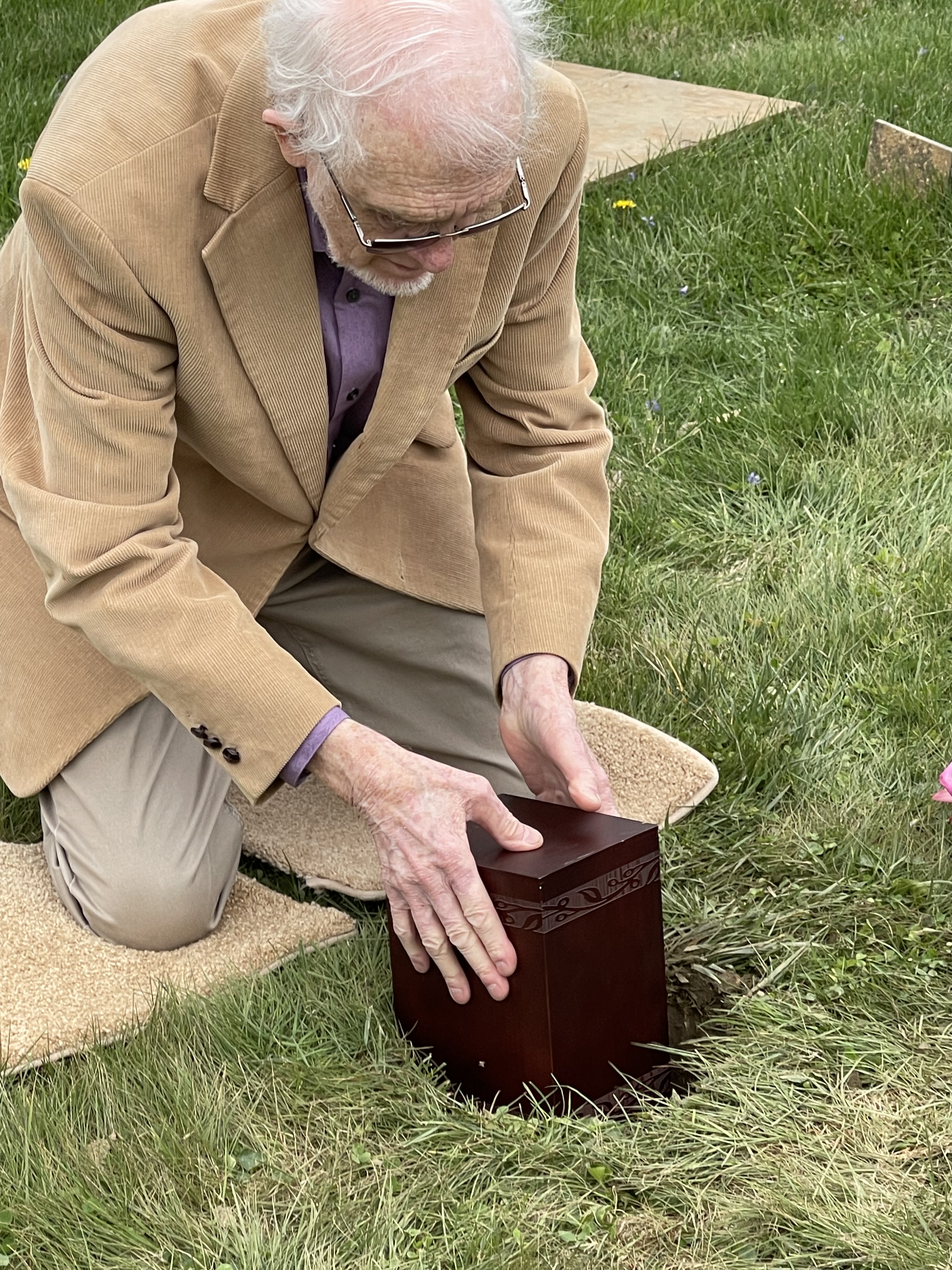
The service complete, I retrieve the urn and lead the way out to the graveyard. In this cemetery lie Barbara’s parents, grandparents and other relatives. Don Breneman, who mows the graveyard; says there are 2200 stones. I apologize for giving him another one to mow around. I lower the brown wooden urn into the ground. We pray, leave flowers, then depart.

I feel at peace; feel that we helped Barbara circle back home to the place that formed her, the place where she now rests in the plot that awaits my future arrival. Sadness overwhelms me but even more, gratitude—for Barbara’s life; her blessed death; her great gifts to me, our family, our community and our world. I take comfort in our Lord’s words, “I am the resurrection and the life.”

May eternal light shine upon her.

Venturing Beyond the Pale

“The President,” sarcastically so called because he was thermometer-thin, unathletic and mute, sat alone on a bench near the Orange High School snack shop. I felt pressure rising in my gut as I sat down to “witness” to him about how all people are sinners and how he needed to “accept Christ” to escape eternal damnation. He said nothing. After about twenty minutes I got up and walked away—and never spoke to him again. My most embarrassing day in high school; I felt like I violated him.

The Comfort of Certainty

Witnessing to The President was an example of what fundamentalists did. Twice on Sunday and most Wednesday nights our family would drive the eight miles to the church that cradled my childhood: Silver Acres. The men would arrive in suits and women in hats, some with veils. Pop McIntosh led the singing, waving his arm to keep the beat. Before I left elementary school, I had memorized the lyrics of “Power in the Blood,” “It is Well with my Soul,” “Abide with Me,” “Blest Be the Tie that Binds,” etc. Earl Ward taught me to play chess and on men’s potluck night, Mr. Ballew always bought cherry pies, baked by his Emma.

Before Brother Cantrell preached his sermon, he would invite people to join the church: “We’re fundamentalist, independent, unaffiliated, Bible-believing, premillennial, pretribulational.” I thought, if you understood that string of big words serves you right if they baptize you. After church Bro. Cantrell and Walter Loitz would talk Bible and football.

At 10 I could recite all the biblical books in order: Genesis, Exodus, Leviticus, Numbers . . .  We would have “sword drills,” using our “sword” to see who could look up verses the fastest. I became a Bible nerd, reading my Scofield Bible, and devouring Bro. Cantrell’s big words: Inerrancy means that the Bible contains no errors of any kind. The world is that territory “beyond the pale,” outside the camp, that place of temptation that lies under control of the Evil One. The rapture, tribulation and millennial kingdom referred to events happening at the end of time. He talked a lot about the end times. Modernist referred to people or churches we shunned, some of which questioned the resurrection, the virgin birth and biblical inerrancy. Some fundamentalists even practiced “secondary separation”—separating from those (e.g., Billy Graham) who themselves fraternized with modernists (e.g., Martin Luther King, Jr.). My friend Jerry was mainline Methodist—I once asked him if his church celebrated Easter! Unlike them, we did not kneel in church or make the sign of the cross. No crosses hung on the wall at Silver Acres, no pictures of Jesus. Instead of liturgy and sacraments we anchored our beliefs in Bible verses.

Growing up, I felt as if knew God’s plans for my life and for the world. And I confess, I carried a teeny bit of pride in my arcane vocabulary. I felt no need to help make the world a better place because the world was under control of the Evil One. So we endeavored to only persuade people to join us as we waited for Jesus to come back.

After WWII, many middle-class Americans valued high morals and a conservative lifestyle but fundamentalists went further. Bro. Cantrell preached against smoking, drinking, dancing, movie theaters and gambling. Of course I grew interested in the church girls. I watched Kay Cantrell sitting broadly on the piano bench in her see-through blouse (pushing the boundaries of fundamentalist norms). One day in the Cantrell parsonage I saw two books lying on the dining room table: What Every Christian Boy Should Know and What Every Christian Girl Should Know. The second sounded more interesting but as I was paging through it, Mrs. Cantrell walked in and warned me, “Jamie, that book is only for girls.”

I was the only one in my grade who did not take square dance classes in middle school. Even into college I never touched a cigarette, never gambled and never drank alcohol. Do I regret these constraints? No. Years later, these same moral values restrained me from jumping into bed with an over-eager girlfriend. I harbor a teeny regret missing the great movies—I never entered a theater until my twenties.

The Scofield Bible, with its authoritative notes, clarified biblical complexities. It erased the ambiguities, melted the mysteries, quieted my questioning and defeated my doubts. It felt good to be certain—you demonstrated your faith by not questioning. I learned that Jesus, son of the transcendent God, died not only for the world but for me.

But we did not merely parrott propositions. It was a social movement created by a faithful band of people who wished to live separate from the world. As a young person I embraced fundamentalist faith and enjoyed being part of the ingroup. It gave me a way to understand the Bible and embrace life-orienting beliefs. It gave me a task—carrying God’s message to the world. I understood why evil existed in the world, understood how to protect myself from it. This buoyed me through the tempests of my early life.

Silver Acres gave me a moral gyroscope that helped me survive the pains of adolescence. It assured me of who I was and what my purpose was in the world. I received precious gifts—a loving community, a dense network of friends and supportive adults. I knew who my people were and who my God was. Silver Acres insulated me from that world of sin and temptation beyond the pale. Later, the church pointed me toward Bible Institute and Christian mission.

Cracks in the Wall

And yet, as I moved into adolescence I began to feel like a social leper—different, conspicuous, isolated. There weren’t many fundamentalists out there. I grew to dislike worldly people, criticized their wrong beliefs, judged their lifestyles. I became more and more socially isolated and confused.

Further, I started doubting the great fundamentalist doctrines. The ordinance of communion bored me. Bro. Cantrell would spend half the service assuring us that “this is only grape juice and crackers; nothing to see here.” Ushers passed crumbled saltines and little plastic cups of grape juice along the rows. If communion food was merely grape juice and crackers, why bother? I longed for something deeper, more connective as I explored how far I could tip the communion cup without spilling the juice.

Since the Bible was inerrant, I was terrified I would find one small mistake that would destroy my whole faith. I worried about conflicts between the gospel accounts and how to reconcile the Old Testament God who commanded the destruction of the Canaanites with the New Testament God-in-Jesus who preached unconditional love?

Fundamentalists argued that the Bible is literally true “in all it affirms.” But how could the book of Revelation be literally true? Locust-shaped horses with women’s hair and stingers in their tails, stars falling to earth, a beast with ten heads . . . Surely these were symbolic?

I had the most trouble when the text touched scientific subjects—the “four corners” of the earth, the sun rising and setting. If you did the genealogies in the Bible, the universe seemed to be only 6,000 years old. How could this square with scientific findings?  Surely the text was pre-scientific? How convince worldly people to accept something I myself had trouble believing?

Opening the Door

When I moved to Cal State Fullerton and joined Intervarsity Christian Fellowship, I encountered a wonderful community that included strong Christians from mainline and Catholic traditions. I enjoyed friendships at Cal State with non-Christians and even atheists. My very questions and doubts gave me a kinship with them. I became more transparent and found they would frequently open up about their own questions. I was expanding my scope, widening my tent, embracing the world beyond the pale. I had found an expression of faith I could believe in and even more important, a faith that I could celebrate and share.

Not long ago, I boarded the Amtrak to travel from Mattoon, Illinois back to Minneapolis. Finding my assigned seat, I discovered a young man stretched out across it, asleep. I cautiously woke him. sat down, and for the next two hours, enjoyed an amazing conversation. Jamil, married and in his early twenties, was Palestinian, a “man without a country.” And Muslim. Formerly, I would have argued with him about the Bible or the deity of Christ. But this day, I found I was talking to a man in transition. His marriage was in trouble and he was looking for a mosque and an imam he could relate to. He was full of questions. I sympathized, talking about my own quest for a church and minister. We parted friends and talked by telephone a couple of times after that.

I treasure my fundamentalist foundations but today I’m happy living “beyond the pale” and learning how to embrace all people in God’s beloved world, happy learning that we all are on a spiritual quest.

A Letter to my Fourteen-Year-Old Self: You are not Weird

Hello, Jamie. Here I am over 80 years old and I realized something—you’re not weird! I found this out about you much later. Know that I’m in your corner pulling for you, interested in all your details. Right now, you’re wondering why your nose is too high on your face, how to get rid of freckles, how to get a tan on non-tannable skin. How to grow more muscle. How to stand up to bullies. How to afford the clothes that the Big Men on Campus wear. How to get more than a glance from girls. I know; I’ve been there.

I know it’s easy to think about what’s not going right in your life—few friends, no girlfriends, clumsy at sports, lack of money, too much control from parents. Even questioning your faith. Instead of obsessing about what’s wrong. But I recommend you focus on all you have, all the stuff you’re taking for granted, stuff most people in the world do not have: job opportunities, faith formation and church, health, the privilege of whiteness, a peaceful life, shelter, transportation, plenty of food, education, mentors and friends—you’ve got it all.

Constantly rehearse what God has done for you—how he’s gotten you out of trouble, what he’s given you. Treasure your interest in mission aviation—it will channel so many of your life choices. Remember that God will protect you from the trap of lust.

Embrace the truth that God has a plan for your future. Indeed, you are his beloved. I know—sometimes all you see is that you’re alone and discouraged but God is supporting you, directing your future. I know you think that to get friends you need to be a strong, funny, handsome, interesting person. Only after high school did I learn the truth—people are interested in people who are interested in them. Learn to talk in terms of the other person’s interests, not your own. (Read Dale Carnegie, How to Win Friends and Influence People.) Focusing on others will attract others to you. Actually, people want to talk about themselves. Ask questions and pursue conversations without jumping in with your own problems, your own stories. Don’t interrupt. I’m still working on being a good listener. People like people who will listen.

Your social life will only get better through high school and beyond—you gotta believe it. You will mature a ton and be better able to handle the challenges you will face. You will gain more friends, have more girlfriends. You will find people are becoming truly interested in you.

Are people opposing you? Hey; to be alive is to have conflicts. But when people accuse you or put you down, know that a lot of that comes from their own insecurity. Don’t be defensive. If someone criticizes you, just smile and say, “I’ve got lots of things I’m working on.”

Look around at the adults who believe in you—your pastor, teacher, your parents’ friends, your employer, your school counselor. Let them know you’re thankful for all their interest and advice. Looking back, I am stunned at how many of these people I took for granted and never even thanked.

It’s too late for me, so you ask Grandpa Anderson what it was like building his tarpaper shack on the South Dakota prairie, or ask him how he survived the death of his two young boys (your uncles), Jamie and Calvin. Grandpa and Grandma won’t be around forever, and after they’re gone you’ll long to be able to ask them questions. Ask them now.

After I married and had kids, I realized that having my own teenagers was punishment for the way I treated my parents when I was a teenager! Notice how your parents sacrifice for you—time, money, acts of kindness. Thank them for this. Cherish their love and support for all you do. Don’t take this stuff for granted.

Take time to explore your world. Learn where your water comes from, your electricity. Learn how your neighborhood is laid out. Go on a mission or a service trip. Travel, if you can. You will not have much time for this later.

Think about a part-time job and start saving a little money each month. Get smart on money matters—saving, investing, spending. Don’t buy a bunch of stuff. These things won’t matter when you get older.

Read the Bible each day and pray the Scriptures. Wise Solomon counsels—“Remember now thy creator in the days of thy youth . . .”

Believe it and believe God when he proclaims—“You are not weird!”

WINGSPREAD Ezine for August, 2023


Spreading your wings in a perplexing world

August 2023                                                    James P. Hurd

Please forward and share this E-zine with others. Thank you.

  • Blessed Unbeliever now available in Australia!
  • Writer’s Corner
  • New story
  • This month’s puzzler
  • Wingspread Ezine subscription information
  • Wisdom

I am thrilled that Koorong, largest Christian book publisher in Australia, will distribute Blessed Unbeliever.  

Blessed Unbeliever (paper or Kindle version) can be found at Wipf and Stock Publishers, Amazon https://a.co/d/9su5F3o or wherever good books are sold.

Tip for writers: Always have at least two projects going. That way, if you get stumped or bored, you can switch to your other project awhile.

Word of the Month:  LAYOUT: This is everything that is done after your manuscript is finished, revised and edited and before it is published. Things like type font, paragraphing, margins, headings, front and back matter, cover design, back cover endorsements, chapter numbering and headings, and a host of other decisions. Really—it’s a big deal—you might wish to get it done professionally.

Book of the month: TRINITY, Leon Uris. 1976. 749 pages. A sloggy but powerful historical novel about the English/Irish, Protestant/Catholic, North/South conflicts. Requires patience, but it’s worth it. Colonization, famine, war. The tragedy of Ireland.

Question for you: If you were stranded on a desert island and could have only five books, which would you have? I’ll list these books in next month’s WINGSPREAD.

You can’t tell Texas is coming but the mountains and mesas of New Mexico gradually morph into undulating plains as we enter the Panhandle. When we pass the vast ranches and the horse-headed oil donkeys, I wonder, Does the Panhandle produce anything besides oil and cattle? Bold, proud, independent, self-made Texas. She doesn’t even seem to notice we’ve come.

We finally arrive at Uncle John’s ranch, drive through the gate with the cast-iron brand “Derrick Ranch” overhead and park in front of the brick rambler. . . .

To read more, click here:  https://jimhurd.com/2023/07/28/searching-for-mr-texas/  Leave a comment on the website and share with others. Thanks.

(Adapted from Car Talk Puzzler archives)

A very long time ago, back in the day, I was test driving a BMW with a five-speed manual transmission. I had my son Andrew along with me at the time. He was about 12 years old or so. We were heading to Toys-R-Us, or something. We are driving along on the highway. 

So there we are, and he looks over at the speedometer and says, “Gee Daddy, will this thing really go 160 miles per hour?” He always asks this question when we are test driving a car. 

I looked down at the speedometer and the dashboard and then I said, “No, it won’t.”

A week later, he and I were again test driving a car. And this time, we were driving in a Mustang with a five-speed manual transmission. And like always, he looks over and says, “Gee Daddy, will this car do 160? Because that’s what the speedometer says?”

So, I look down at the dashboard and then I say, “Yes, this one will.”

So, the puzzler is, how did I know that?

(Answer will appear in next month’s WINGSPREAD newsletter.)

Answer to last month’s puzzler: 

Recall: It was a beautiful sunny summer afternoon in 1958. And I was driving my new car. I stopped at a stoplight, and a pedestrian noticed I had stopped. 

Then he stepped off the sidewalk and walked right into the front right fender of my car. 

What happened here?

Well, it was 1958. And the car I was driving was a brand new VW Bug. And as we all know, the VW Bugs had the engine in the back, and the trunk space in the front. 

And the pedestrian was blind. So, he was used to hearing the engine in the front of the car. He heard mine, assumed the car was a few feet back from where it was, and he walked right into my car. 

This would not happen these days, for sure. 

Click here https://jimhurd.com/home/  to subscribe to this WINGSPREAD Ezine, sent direct to your email inbox, every month. You will receive a free article for subscribing. Please share this URL with interested friends, “like” it on Facebook, retweet on Twitter, etc.

If you wish to unsubscribe from this Wingspread Ezine, send an email to hurd@usfamily.net and put in the subject line: “unsubscribe.” (I won’t feel bad, promise!) Thanks.

Relationships move at the speed of trust.

Where do bad rainbows go?
Prism. It’s a light sentence, and gives them time to reflect.
(This story is enlightening.)

Minnesota Bible verses:

  1. It is what it is.
  2. What goes around comes around.
  3. It’s all good.
  4. Whatever

Things I learned getting old . . .

1. When one door closes and another door opens, you are probably in prison.

2. To me, “drink responsibly” means don’t spill it.

3. Age 60 might be the new 40, but 9:00 pm is the new midnight.

4. It’s the start of a brand new day, and I’m off like a herd of turtles.

5. The older I get, the earlier it gets late.

6. When I say, “The other day,” I could be referring to any time between yesterday and 15 years ago.

7. I remember being able to get up without making sound effects.

8. I had my patience tested. I’m negative.

9. Remember, if you lose a sock in the dryer, it comes back as a Tupperware lid that doesn’t fit any of your containers.

10. If you’re sitting in public and a stranger takes the seat next to you, just stare straight ahead and say, “Did you bring the money?”

11. When you ask me what I am doing today, and I say “nothing,” it does not mean I am free. It means I am doing nothing and wish to continue doing it.

12. I finally got eight hours of sleep. It took me three days, but whatever.

13. I run like the winded.

14. I hate when a couple argues in public, and I missed the beginning and don’t know whose side I’m on.

15. When someone asks what I did over the weekend, I squint and ask, “Why, what did you hear?”

16. When you do squats, are your knees supposed to sound like a goat chewing on an aluminum can stuffed with celery?

17. I don’t mean to interrupt people. I just randomly remember things and get really excited.

18. When I ask for directions, please don’t use words like “east.”

19. Don’t bother walking a mile in my shoes. That would be boring. Spend 30 seconds in my head. That’ll freak you right out.

20. Sometimes, someone unexpected comes into your life out of nowhere, makes your heart race, and changes you forever. We call those people cops.

21. My luck is like a bald guy who just won a comb.”

-source unknown.

Chiapas Air Ambulance

A repeat of a story blogged four years ago.

(Please share this story with others and “rate” it, below.)

We’re circling over Corralito, a remote airstrip in Chiapas State, Mexico. I check for animals on the strip and wonder if the injured Tzeltal Indian man is still alive. The tiny strip lies tucked in below a terraced cornfield on a hillside, so I need to approach around a low hill. At the last minute the airstrip appears in my windshield. We bank, line up with the strip and soon we feel the long grass under our wheels as we taxi the red and white Cessna 180 over to where Mario lies inert on a stretcher with his tumid stomach bulging below his pulled-up shirt.

Antonio, his brother, stands by mute while another man talks to me in Spanish. “Capitán, Mario was feeding stalks into the trapiche sugar cane press when the horse’s bar turned and squeezed him against the press.” As we lay the injured man in the airplane, I think, he’s young; he has a good chance of pulling through.

We depart Corralito for our home base. San Cristobal sits on the Pan American highway at an altitude of 7,200 feet, landlocked in the bottom of a vast basin with high mountains surrounding. Last night a squally norther blew across the region and its soggy remains still stick fast to the mountains. I test the entrails of the storm, probing one cloud-clogged pass after another. Finally I see a bit of light where the Comitán highway snakes between two hills. We high-jump the pass and then drop down into San Cristobal bowl. We can see the ground, but a solid wall of clouds plugs the path ahead! I bank steeply in the cramped head of the valley to reverse course, pulling on flaps to decrease our turning radius. We cut it so close it seems the wing seems buried halfway into the mountainside. Even using the best angle of climb we barely make it back through the narrow pass. I almost decide to divert to Tuxtla down in the valley, but at the last minute we slide through a hole along the rim and drop down into the huge San Cristobal bowl.

After landing in the late afternoon light, Chuck, the chief pilot, helps me load Mario into our old Chevy van to drive him to the small hospital for X-rays. The doctor tells us, “His interior organs are damaged. He needs to go to Tuxtla.”

We can’t fly at night; we must take him down the mountain in the van. So again we load him in and soon we’re on our way down the winding road. I think, Antonio must feel helpless in the hands of strangers who are struggling to save his brother’s life. I sit in the back next to the patient, feeling his heaving chest and listening to his hoarse, shallow breathing.

Then white foam bubbles out of his mouth—his lungs must be filling with fluid! I tell Chuck to drive faster. Then his breathing stops.

Antonio asks me in broken Spanish, “Will we get there in time?”

“We’ll try our best.”

Then I realize he’s gone. Antonio begs us to continue on to Tuxtla, but Chuck tells him, “There’s nothing we can do; it’s too late. We’ll have to go back to San Cristobal. If there’s still a little bit of life in him when we arrive, we’ll see the doctor again.”

We head back into town and rouse the doctor in the middle of the night to ask for a death certificate. He gives it to us, but we can’t quickly get the additional permit to transport the body back to Corralito so we’ll have to do it secretly. We drive into our darkened hangar and carefully lay the man onto the floor of the plane. His forlorn brother works to arrange the limp limbs before rigor mortis sets in. I get back to my hostel late, vomit, and then lie sleepless all night. It’s the first time I’ve seen a man die.


The next day at first light, Chuck takes off to fly the body back to Corralito. Antonio, dejected, sits in the copilot seat. I walk outside the hangar feeling the morning chill, my eyes following the plane as it climbs out over the valley—a tiny red dot silhouetted against the green mountains. I know something of grace in my life; I now pray grace for the dear, waiting family who must plan for a funeral. I trust that our work can continue here and that our flight service can help lighten the load for many of these Chiapanecos.

Click HERE to view Blessed Unbeliever on Amazon.com