Category Archives: Uncategorized
The World of Center Street Elementary
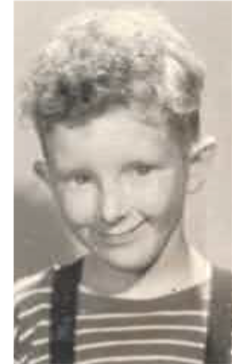
September, 1946. Mother took my hand as we walked the dirt along Mr. Wheeler’s avocado orchard, turned to walk the three blocks of Culver Street, then crossed the playground toward Center Street school. I raised my eyes to view the enormous three-story wooden cube with its green-shingled hip roof and windows that stared out with unblinking eyes. I was excited about the classroom work but worried about meeting new kids. Mother pointed to a cave-like opening under the entrance stairs. “That’s the boys’ bathroom. The girls’ is on the other side; never go in there.”
She said goodbye as I climbed the wooden steps to where Mrs. Brennan extended her carefully-tended white hand. She wore her greying hair up in a bun and her blue dress reached to her calves. I glanced behind me to see my mother disappearing across the playground. As we entered, I smelled the waxed hardwood floor and turned to gawk at the carved wooden staircase rising toward second floor.
When the noon buzzer rang, Mrs. Brennan told us, “You may eat downstairs in the lunchroom or outside under the playground shelter.” Students walked to the cloakroom and grabbed lunches out of their cubbyholes but I left the building and wandered around the playground hungry, wondering why my mother hadn’t packed me a lunch.
Principal Ebersole saw me. “Are you in kindergarten?”
“Yes.”
“Why are you still here? Kindergarten ends at noon.”
“Mrs. Brennan never told us to go home.”
“Mrs. Brennan? She’s the first-grade teacher. You should have been in Mrs. Baker’s class.”
“No one told me . . .”
Mother came to pick me up.
The next morning, my neighbor Jerry and I were walking to school along Culver when we passed a dark, stuccoed house with tall grass, scraggly bushes and the window shades pulled down. “A witch lives there,” Jerry told me. We started running.
A block farther on, we looked down Harwood Street and saw the tiny store that sold Bazooka gum, M&Ms, and candy cigarettes. We walked over, searching our pockets for change. I opened the little paper packet Mom had sent with me and used the money to buy M&Ms for Jerry and me. We arrived at Kindergarten all sweet and chocolatey.
After a few weeks of walking down Culver Street we got braver and shortcut through our orange orchard smelling the fragrant blossoms so we could cut through Joe’s Lumberyard—a chaotic assortment of broken chairs, metal tables, old doors, window frames with peeling paint, derelict staircases, ceiling trusses, broken strips of siding, toilet stools, bathtubs, kitchen sinks and faucets, piles of used lumber—all strewn helter-skelter with little rabbit runs winding between. It looked like a ghost town hit by a tornado.
Stray cats haunted the woodpiles, along with the occasional rabbit. Once we saw a coyote. And then there was Sam the Tramp who guarded the lumberyard with his snarly dog Butch. Unshaven, with his long dishwater-gray hair hanging to his earlobes, he wore torn brown pants too big for him, scuffed shoes with holes in the leather and a ripped straw hat, appearing as a person destiny had a serious grudge against. He slept in a tiny tarpaper shack that stood amidst the lumber and debris. He didn’t talk; he just sat in front of his shack on an old chair with missing spindles and stared at us until we took off running. “I think he’s a serial killer,” Jerry told me.
. Mrs. Baker, serious as a Puritan preacher, sat soberly with every inch of her body erect in her desk chair. When she rose to illustrate something, her fingernails would scratch the blackboard. And yet she had a great heart for her students. Her classroom had plastered walls reaching high to the ceilings, large windows that allowed the sun to beat in onto the hardwood floor and no air conditioning. Chains supported big hanging light fixtures that glowed beige. A sandbox stood in one corner. The letters of the alphabet in block letters and cursive ran along the top of the blackboards. We sat at cast-iron-legged wooden desks on which some past students had carved their initials. A hole was cut in the top that previously held an ink jar, the purpose of which, my dad told me, was for dipping the pigtails of the girl in front of you. A pencil sharpener hung on the wall near the blackboard. Once when I blew in it to clean out the shavings, pulverized lead flew out all over my face
We always began by reciting the Pledge of Allegiance but it was years before I learned what “republic” and “indivisible” meant. I liked learning about the pilgrims and singing patriotic songs—“God Bless America,” “America the Beautiful.” Then a song about leading the tow-mules sixteen miles along the Erie Canal and finally, “Las Chiapanecas,” about the Mexican girls who danced twirling their full skirts. I don’t remember any opening prayers. I learned to form letters and to add and subtract. Being left-handed, I would pull my pencil across the page and slant the letters to the right. The teacher gave up trying to change me. When mid-morning came, we marched down to the lunchroom where we drank our little cartons of milk, free if your family was low-income.
Then we returned to class to read from Dick and Jane—a beautiful picture story book about little kids and their dog, Spot. “Look, Dick, look.” “See Spot run.” “Jump, Spot, jump.” Dick and Jane lived in an all-white neighborhood with no dirt or trash or crime, yet still patrolled by big, friendly, blue-suited policemen. Next, we had show-and-tell time when kids would stand in front of the class and tell stories about themselves. Some of these may have been true. Once Harold told his story with his fly open. Nobody said anything.
The next year I was sitting in Mrs. Brennan’s first grade class as the hands of the big Seth Thomas wall clock nibbled away at the morning until the piercing buzzer signaled lunchtime. We carried our lunches outside to eat under wooden shelters that shielded us from the sun. The kids who ate bologna and cheese sandwiches made fun of my mom’s sandwiches of mayonnaise and avocado, made with avocados from our own orchard. Once when Darlene walked by, a boy yelled, “I wish I had that swing in my back yard!” I didn’t know what he meant..
Out on the playground, the LA basin smogged our throats. But sometimes, hot, dry, fifty-mile-per-hour Santana winds would roll in from the east through the Banning pass. The wind blew all the smog out to sea, leaving the air so clean it quivered. The trees swung their leaves like nets and shed some of their smaller branches. Inhaling the smell of blowing dust, we tried out the merry-go-round, swings, a sagging, netless basketball hoop and the exercise bars. The merry-go-round was a marvel of perpetual motion that seemed to spin forever, making your head dizzy. But if it spun too fast, the bearings would grind and it would throw kids off. The tall swings had canvas seats held by long chains. The fifth graders told us they could pump the swings so hard they looped-the-loop. I had nightmares about looping, then crashing down on the high crossbar. I spent hours shooting baskets at the solitary, sad and sagging iron hoop.
Kids would jump and grab the parallel bars with gritty, sweaty hands, then do the dead man’s drop. You got swinging by your knees, then released at the top of the swing and tried to land on your feet. When I tried it I landed on my backside and knocked my breath away. The girls would hang upside down on these bars with their dresses falling down over their heads, yelling at the staring boys, “Get your eyes full!” The Center Street girls fascinated me. They seemed a different species, walking around the gravely playground in their white dresses with the little starched collars, white bows in their hair.
We played kickball on the dirt diamond. When it was my turn to kick, Gary Bradley sauntered over, pushed me down and took my place. I started crying. I tried to avoid him but later, in middle school, he beat me up again. Gary—poster child for the human condition, terrifying pustule of ego with bulbous eyes, puffy face and wearing an attitude tough as nails, grated on people like tinfoil on a filling. He gave me my first bloody nose. Then Sherman, an unerupted volcano with an IQ below the range of his body temperature, would push boys down onto the gravel. I avoided him until the day Mom invited him to go to church with us. Awkward. I assumed. Jesus’ command to “love your enemies” did not include Gary or Sherman,
We met Okie and Arkie kids whose parents had fled to California from the Midwest of the 1930s to escape the terrible dustbowl droughts. They took over the jobs the locals did not want and began replacing the Mexican orange pickers in the orchards. The girls in their faded dresses looked as if their mothers had forgotten to comb their hair. The boys wore longer, disheveled hair, overalls instead of jeans, and they talked funny. Big belt buckles. You didn’t want to sit next to them. They smelled perspired and If they sniffed something, they would lean over and smell your crotch.
Most Mexicans lived on the other side of Glassell and went to Killefer School. In the 1940s, Orange Unified was one of the first districts to integrate so later, in first grade, we got Richard Herrera. Brown-skinned with straight black hair, he wore a tiny crucifix hanging from a gold chain. His English was pretty good. We became friends.
Every Wednesday, the higher grades got to practice jumping onto a fire escape slide that spiraled down from the third floor. During Cub Scout nights, some of us would sneak up to the dark third floor and feel our way over to the fire escape. One after another we launched, sailing down the slick slide. We found the exit doors locked, so we had to climb back up the slide, slipping and sliding. One night the principal caught us. It was totally worth it.
At the end of my fifth grade year, Center Street finally closed her doors. That day, anyone could slide down the fire escape—even the principal! But soon they bulldozed the school to the ground. When graduation day came we filed by the principal to receive our diplomas. Afterwards the teachers assembled the students to do the Bunny Hop. But Silver Acres Church was fundamentalist and Brother Cantrell preached hard against dancing. So instead of dancing, Kevin and I sat in the hallway at a table playing chess. Kevin was happy but I felt like a nerd. That summer Jerry and I were walking through Joe’s junkyard when we saw an abandoned metal helix lying on its side, forlorn and forsaken. We stared at the twisted metal of the derelict fire escape.
After graduation I thought my bullying troubles were over. Until I moved on to the anteroom of Hades—Orange Intermediate School. Another world to conquer!
Freedom Sunday
Here’s an op ed I wrote several years ago on “Freedom Sunday.”
Alan, please forgive me for walking out during our church’s Freedom Sunday. I mean you no disrespect. At our service you sit down near the front with your prosthetic leg in camo. I recognize your courage–the agony you endured plus your agony when you inflicted suffering on others. I pray for your complete healing—body, mind, and spirit.
I grieve for you, but also for my church and her mixed loyalties. In the narthex, a huge American flag hangs over the cross, a crown of thorns obscuring its starry field. We sing “Battle Hymn of the Republic” and the spotlight swings to illuminate a raised white cross. “As he died to make men holy let us die to make men free…” On the big video screen behind the altar, three F−15’s flash over the three-crossed hill of Calvary. Not missionaries, but uniformed soldiers march up and down our church aisles bearing, not Christian, but military flags. Today, Caesar trumps Christ. The sword trumps the dove. America’s founding fathers trump Abraham, Isaac, and Jacob.
It seems that even more than the cross, patriotism bonds people together. In front of the pulpit I see the central sacred symbol—erect between army boots stands an upright AK-47 rifle holding a helmet. We learn it’s even okay for Christians to kill other Christians if the targets are fighting in enemy armies. Today, the nonviolent, bloodied Lamb of God wears camo and carries a gun. They’d better not try to take away his rights again. Our children learn the lesson well—it takes redemptive violence to bring peace.
On Freedom Sunday the church cheerleads for the State, praising its force as she mourns her own dead and wounded. The State returns the favor and declares the church tax-exempt.
So Alan, I honor you. I’m glad the church makes a place for you at Christ’s table. I love my country; I love my church. I’ll be back next Sunday. But today, I must walk out. Please forgive me.
Thank you.
James P. Hurd
Wingspread Ezine for May, 2024
Spreading your wings in a perplexing world
May, 2024 James P. Hurd
Please forward and share this E-zine with others. Thank you.
Contents
- Writer’s Corner
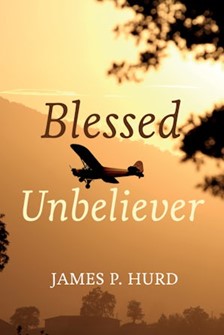
- Blessed Unbeliever now available
- This month’s story: “Trouble in Paradise”
- This month’s puzzler
- WINGSPREAD Ezine subscription information
- Wisdom
Writer’s Corner
Tip for writers: Notice dialogue, description and metaphor used by other writers. These can be adapted for your own writing.
Word of the month: SCABROUS. Indecent, salacious. (from “scabs”). “He began receiving scabrous publications.”
Question for you: What is the best novel you’ve ever read and why? (I’ll publish some answers in our next ezine.)
BLESSED UNBELIEVER novel
Why did Sean, who received his Christian teaching with his mother’s milk, turn his back on faith and walk away? But unbeknownst, grace pursued.

Blessed Unbeliever (paper or Kindle version) can be found at Wipf and Stock Publishers, Amazon https://a.co/d/9su5F3o or wherever good books are sold.
New story
I remember telling myself, Wow, Eve! The big green snake was scary, but he really talked sense. I ate the fruit and I didn’t die. Anyway, God loves me so much I’m sure one piece of fruit is no big deal for him.
Shortly after we’d arrived in the park God told us, “Enjoy, celebrate, but don’t eat any fruit from the Tree of the Knowledge of Good and Evil or you’ll die.” (Adam and I referred to the tree as “the TKGE.”)
I felt so happy when I walked over to the vegetable garden, my bare feet sinking into the most, fresh-smelling soil. I asked Adam, “If God loves us, why would he deny us fruit that looks so good?”
Adam says, “I don’t know; he has his reasons, I guess. Maybe it’s a test. Anyway there’re so many other good trees.”
“Yeah, but I wonder if the TKGE fruit looks different. There must be something special about it.”
“Maybe, but I’m busy here with the garden, so let’s talk about it later.” (In those special days, guys grew and ate green, leafy vegetables.) . . . To read more, click here: https://jimhurd.com/2024/04/30/trouble-in-paradise/
Leave a comment on the website and share with others. Thanks.


Windows on our beautiful world
This month’s puzzler
(Thanks to Car Talk puzzler archives.) Three guys check into a motel in the middle of nowhere. They’re running from the law and they have to lay low for a night. They approach the front desk clerk and he tells them that one room will be $30. This is the cheapest motel ever.
They are really strapped for cash so they decide to share one room. They each give the clerk $10 and then they go to the room.
After they leave, the clerk realizes that he overcharged them. They were having a special on rooms, and the price was supposed to be $25, not $30. So, he gives the bellboy $5 and asks him to return this to the three guys, since he overcharged them.
So the bellboy takes the $5, but as he’s heading to the room, he thinks to himself, “Well, there are three guys, and $5. They won’t be able to split this evenly, so I’m going to keep $2, and give them $3.” He says to them, “Here’s $3. You were overcharged for the room.” And they say, “Thank you very much.” He leaves, having pocketed the $2.
So here is the question.
They each spent $10 to start off with. Then they each get back $1. So they each spent $9 on the room. And 9 times 3 is 27. Plus the $2 that the bellboy stole. That all equals $29.
So, what happened to the other dollar? Since they originally spent $30?
(Answer will appear in next month’s WINGSPREAD ezine.)
Answer to last month’s puzzler:
You recall the guy had two girlfriends—one in Brooklyn and one in the Bronx. So, which one should he visit? The trains to Brooklyn and the Bronx run equally often—every 10 minutes, so he figures if he randomly arrives at the station, he should have equal time with each girl. But that isn’t what happens. Nine out of ten times he ends up going to Brooklyn. So, what is happening with these ten-minute trains?
And here is the answer. Yes, the trains ran equally often, every 10 minutes. That is true. But the schedule was such that the Bronx train would always arrive one minute after the Brooklyn train. So, when the guy would get to the station and go down the steps to the platform, unless he got in there during that one minute window between the Brooklyn train and the Bronx train, he would always take the Brooklyn train because it always arrived first. So he would get on whichever train arrived first. And that was almost always the Brooklyn train.

Subscribe free to this Ezine
Click here https://jimhurd.com/home/ to subscribe to this WINGSPREAD ezine, sent direct to your email inbox, every month. You will receive a free article for subscribing. Please share this URL with interested friends, “like” it on Facebook, retweet on Twitter, etc.
If you wish to unsubscribe from this Wingspread Ezine, send an email to hurd@usfamily.net and put in the subject line: “unsubscribe.” (I won’t feel bad, promise!) Thanks.
Wisdom
Who knew? It was Shakespeare who invented these common words: accommodation, all-knowing, amazement, countless, dexterously, dislocate, dwindle, frugal, indistinguishable, lackluster, laughable, premeditated, star-crossed
Some wise sayings to celebrate spring:
- When one door closes and another door opens, you are probably in prison.
- Age 60 might be the new 40, but 9:00 pm is the new midnight.
- The older I get, the earlier it gets late.
- When I say, “The other day,” I could be referring to any time between yesterday and 15 years ago.
- I had my patience tested. I’m negative.
- Remember, if you lose a sock in the dryer, it comes back as a Tupperware lid that doesn’t fit any of your containers.
- If you’re sitting in public and a stranger takes the seat next to you, just stare straight ahead and say, “Did you bring the money?”
- When you ask me what I am doing today, and I say “nothing,” it does not mean I am free. It means I am doing nothing.
- I finally got eight hours of sleep. It took me three days, but whatever.
- I run like the winded.
- I hate when a couple argues in public, and I missed the beginning and don’t know whose side I’m on.
- When someone asks what I did over the weekend, I squint and ask, “Why, what did you hear?”
- I don’t mean to interrupt people. I just randomly remember things and get really excited.
- When I ask for directions, please don’t use words like “east.”
- Sometimes, someone unexpected comes into your life out of nowhere, makes your heart race, and changes you forever. We call those people cops.

Wordplay — ideas for marketing signage.
- Signage for an Electrician’s truck:
Let us remove your shorts. - Signage for a curtain delivery truck:
Blind man driving. - Signage for a Podiatrist’s office:
Time wounds all heels. - Signage for a Septic Tank Truck:
Yesterday’s Meals on Wheels - Signage for an Optometrist’s Office:
If you don’t see what you’re looking for,
You’ve come to the right place. - Signage for a Plumber’s truck:
We repair what your husband fixed. - Don’t sleep with a drip. Call your plumber.
- Signage for a Tire Repair Shop:
Invite us to your next blowout. - Signage for a Maternity Room door:
“Push. Push. Push.” - Signage for a Car Dealership:
The best way to get back on your feet—miss a car payment. - Signage for a Muffler Shop:
No appointment necessary. We hear you coming. - Signage for a Veterinarian’s waiting room:
Be back in 5 minutes. Sit! Stay! - Signage for a Shoe repair store:
We will heel you
We will save your sole
We will even dye for you - Signage for an Electric Company:
We would be delighted if you send in your payment on time
However, if you don’t, YOU will be de-lighted. - Signage for a Restaurant:
Don’t stand there and be hungry; come on in and get fed up. - Signage for a Funeral Home:
Drive carefully. We’ll wait. - Signage for a Propane Filling Station:
Thank Heaven for little grills. - Signage for a Radiator Shop:
Best place in town to take a leak.
My work here is done. . . .
Trouble in Paradise
Thus, they in mutual accusation spent
The fruitless hours, but neither self-condemning.
And of their vain contest appeared no end.
Milton
I remember telling myself, Wow, Eve! The big green snake was scary, but he really talked sense. I ate the fruit and I didn’t die. Anyway, God loves me so much I’m sure one piece of fruit is no big deal for him.
Shortly after we arrived in the park God told us, “Enjoy, celebrate, but don’t eat any fruit from the Tree of the Knowledge of Good and Evil or you’ll die.” (Adam and I referred to the tree as “the TKGE.”)
I remember I was so happy strolling over to the vegetable garden, my bare feet sinking into the most, fresh-smelling soil. I asked Adam, “If God loves us, why would he deny us fruit that looks so good?”
Adam says, “I don’t know; he has his reasons, I guess. Maybe it’s a test. Anyway there’re so many other good trees.”
“Yeah, but I wonder if the TKGE fruit looks different. There must be something special about it.”
“Maybe, but I’m busy here with the garden, so let’s talk about it later.”
I decide I’ll walk over and take a good look at it without telling Adam. He would probably try to keep me from going or at least insist on going with me, but he’s always busy tinkering, doesn’t like to be disturbed—besides he’d probably be bored.
I’m walking among the oak, apple and pear trees, glowing orange and purple maple leaves spiraling down in front of me. Then I spot the TKGE. It seems kind of ordinary, really, but with big red fruit. No fence around it or anything. I think, I’ll just walk over and look at it; I won’t touch it.
Then I see a form gliding through the nearby trees, now revealed, now hidden by the leaves. Smooth, shiny green skin, dark unblinking eyes, looking steadily at me—I’m fascinated. It’s like the dirty parts in a movie—you try not to look, but you do anyway.
I startle when he speaks —“The fruit trees are great, aren’t they? Did God say you can’t eat from any of these trees?”
“Oh no, actually we can eat from all of them, except we can’t even touch that Knowledge Tree there or we’ll die!”
“You won’t die! It’s just that he knows that if you eat it you’ll have great knowledge like he does. He’d rather keep you in the dark. I’ve been around here for a while; I know how these things work. Anyway, you’re special. If God loves you, he wouldn’t want to deny you anything, would he? What’s the point of creating the big red fruit if he didn’t mean for you to eat any?”
His slender head now looms over my shoulder. He seems so logical, trustworthy, the voice of experience. I’m smelling a pungent perfume, feeling the pull of his eyes, and sensing the sweet fruit. I kind of wish Adam were here with me….
All at once, I reach out my hand, grab the fruit, and eat—it explodes sweet in my mouth. I eat the whole thing but, not wanting to litter, I save the core. The snake has disappeared. And I’m not dead! I can’t wait to tell Adam.
I joyously run back to find Adam tilling the kale and Swiss chard. (In those special days, guys ate green, leafy vegetables.) “Adam—I ate the TKGE fruit and look, I didn’t die! We must have misunderstood what God said. It tastes so sweet!”
“O boy! Who’ve you been talking to? Do I have to go everyplace with you?
“Well, you were busy and I was only going to look at it.”
“But what’re we going to tell God? He said don’t eat it.”
“Why did he put it there if he didn’t want us to eat it?”
His face clouds, he hesitates, then suddenly he grabs the core from my hand and eats it. Just like a guy, I think. But is he really hungry? Or just so dependent on me that, realizing I might be kicked out of the park, he wants to be sure he’s kicked out with me?
Now Adam starts looking me up and down—and up and down. I blush. Strange; I’ve never felt self-conscious before. I find some fig leaves and use fibers to sew them together to make loincloths for us. As an afterthought, I sew two extra small round discs for me. We walk deeper into the forest because, for the first time, we just want to be alone.
After a couple of hours I hear God calling out: “Adam, where are you?” (Why doesn’t God call for both of us?) We walk deeper into the forest, playing hide and seek.
God finally catches up with us and says to Adam, “Why are you hiding?”
So my smart husband comes up with a great excuse: “I was afraid because I was naked, so I hid.”
God asks, “Who told you that you were naked? Did you eat the fruit I told you not to eat?”
Adam gets a pained look on his face, immediately confesses, and then passes the buck: “Yep, I did, but this woman that you gave me insisted that I eat it, and you know her—I just couldn’t say no.”
At this point God rolls his eyes, gives up on Adam, and turns to me. I boldly re-pass the buck: “Well, the serpent told me to eat it, and you know weak little me—no sales resistance. Adam wouldn’t come with me—he didn’t even warn me.”
God finds the serpent and tells him the bad news: “Henceforth you’ll be looking at life from shoelace level. And people will step on your head.” The unblinking eyes slink off to disappear into the greenery.
Then he turns to me: “It will hurt you to bear children, and now your husband will be telling you what to do.”
“You mean Adam? How well do you know this man? He can’t even change his mind without consulting me. Can’t follow instructions, no initiative. How could he be my ‘leader?’”
“Well, Eve, you know he’ll be ticked if he isn’t in charge. And even though you have to pretend he’s the leader in public, you can always influence him at home. Trust me; this’ll work.”
“Well, I guess I’ll just have to try to keep Adam from screwing up.”
Then God turns to Adam: “Failure of leadership! Why didn’t you stop her from going? Why didn’t you tell her not to talk to strangers?”
Adam replies,” I’ve tried that before, but you know how hard it is to tell her anything.”
God says, “You thought life was complicated in the garden. But now you’ll have to dig in harder soil, fight sharp thorns and predatory insects and perform sweaty labor. It isn’t going to be a walk in the park.” Adam hung his head and thought about his easy work—the garden vegetables had almost sprung up by themselves.
God replaced our fig-leaf loincloths with the skins of slain animals, kicked us out of the park and posted a guard against our returning. My face turned red when Adam asked God if he could eat the meat. Then he made a fateful decision that influenced all of his male descendants—he promised himself, I’ll never willingly eat green leafy vegetables again. I remember those early “outside” days. We hung on the heavy lattice fence like banished traitors, looking in at the beautiful park we could never again enter. Brambles had breached the fence and the grass inside was browning. I thought, How ungrateful we were; how much we took for granted.
Adam turned to me, “Eve, why did you wander off like that? Anyway, who ever heard of a talking snake? Why didn’t you ask me before you ate the fruit?
“Well, why didn’t you warn me? Why didn’t you put your foot down? Then I never would have gone. Or at least, you should have insisted on going with me. Failure of leadership.”
“Eve, Didn’t you even stop to think? You knew God had a good reason to prohibit that tree.”
“Well, maybe, but it’s not my fault you ate the fruit that I gave you.”
And so we passed the hours in fruitless arguing.
How was I to know that my simple decision would affect our grandchildren’s grandchildren? That they would only be able to dream about the shining park? They’ll blame us for eating, but I’ll bet they would’ve done the same thing. The apple doesn’t fall far from the tree.
WINGSPREAD for April, 2024

Spreading your wings in a perplexing world
April, 2024 James P. Hurd
Please forward and share this WINGSPREAD Ezine with others. Thank you.
Contents
- Writer’s Corner
- Blessed Unbeliever now available
- New story
- This month’s puzzler
- Wingspread Ezine subscription information
- Wisdom
Writer’s Corner
Tip for writers: You can spin a tale that exists only in your head. But if you’re talking about a historic, known place, character or event, you’d better research it and get your facts right. Most of your readers won’t notice or care, but there’s that one that will find the error, then publish your mistake far and wide on Facebook.
Word of the month: PROP BET. Short for “proposition.” Propping is making a bet on something the bookmakers usually don’t take bets on. For instance, betting on the number of free throws in a basketball game.
Question for you: Writing a novel takes writing skill and great research. But it also takes imagination. You must seduce your reader into believing in locations, events or situations that are unusual, spun out of thin air. A favorite example: Charles Dickens tries to convince us that the evil groveler, Uriah Heep, is a believable character. How do you fire up your imagination when you write?
BLESSED UNBELIEVER novel

Blessed Unbeliever (paper or Kindle version) can be found at Wipf and Stock Publishers, Amazon https://a.co/d/9su5F3o or wherever good books are sold.
New story: “Evangelical: What’s in a Word?”
I can’t control what people mean by “evangelical” any more than I can demand that non-English speakers understand my English. A word means what the hearer thinks it means. Meanings of words change. For instance, “gay” used to mean bright and happy, as in “a gay party.” “Cool” used to refer to air temperature. No more. Thus, I can never guarantee other people will accept my parochial definition of “evangelical.” It used to be that people thought a fundamentalist was an evangelical on steroids and an evangelical was a fundamentalist on Prozac No more.. Today, “evangelical” means something quite different. . . .
To read more, click here: https://jimhurd.com/2024/04/08/evangelicalism-whats-in-a-word/
Leave a comment on the website and share with others. Thanks.
This month’s puzzler
(Thanks to Car Talk archives) Many years ago, one of our producers lived in New York. And he was a two-timing guy; he had two girlfriends..
One of the girlfriends lived in Brooklyn and the other lived in the Bronx.
He could never decide which one to visit. He liked both of them equally and decided that he would just leave it to fate. He knew that when he went down to get the train, he would descend the stairs into the subway and pretty soon a train would come. And if it was the Bronx train, he’d get on the train and go visit the girl in the Bronx. If it was the Brooklyn train, he’d get on and visit the girlfriend in Brooklyn. And what made it great was that the trains ran equally often, every 10 minutes.
So he decided that he would go down to the train at random times during the day or night. He didn’t know the schedules of these trains, but he did know that every 10 minutes there would be a Brooklyn train, and every 10 minutes there would be a Bronx train. He figured his chances are 50/50, either way.
However, he finds himself going to Brooklyn 9 out of 10 times. Even though the trains run equally, every 10 minutes to each location, and he chooses random times to go down to the train, he ends up 9 out of 10 times going to Brooklyn.
Why was this happening?
(Answer will appear in next month’s WINGSPREAD newsletter.)
Answer to last month’s puzzler:
What word has three sets of double letters? And what word has two H’s back to back? There might be a bunch of answers to this one.
The first one is the word ‘bookkeeper’! b.o.o.k.k.e.e.p.e.r! Love that word. There may be others out there, but this one is the one we were looking for.
And for the second word, the answer is, ‘withhold’. Two H’s in that word. And I’m sure there are many more out there, especially if people use Google. But these two were the ones we were looking for.
Subscribe free to this Ezine
Click here https://jimhurd.com/home/ to subscribe to this WINGSPREAD ezine, sent direct to your email inbox, every month. You will receive a free article for subscribing. Please share this URL with interested friends, “like” it on Facebook, retweet on Twitter, etc.
Wisdom

Strategies of an avid reader
Will Rogers on aging:
First ~ Eventually you will reach a point when you stop lying about your age and start bragging about it.
Second ~ The older we get, the fewer things seem worth waiting in line for.
Third ~ Some people try to turn back their odometers. Not me; I want people to know why I look this way. I’ve traveled a long way, and some of the roads weren’t paved.
Fourth ~ When you are dissatisfied and would like to go back to your youth, think of Algebra.
Fifth ~ You know you are getting old when everything either dries up or leaks.
Sixth ~ I don’t know how I got over the hill without getting to the top.
Seventh ~ One of the many things no one tells you about aging is that it’s such a nice change from being young.
Eighth ~ One must wait until evening to see how splendid the day has been.
Ninth ~ Being young is beautiful, but being old is comfortable and relaxed.
Tenth ~ Long ago, when men cursed and beat the ground with sticks, it was called witchcraft , , , Today it’s called golf.

Will Rogers, who died in a 1935 plane crash in Alaska with bush pilot Wiley Post, was one of the greatest political country/cowboy sages this country has ever known. Some of his sayings:
1. Never slap a man who’s chewing tobacco.
2. Never kick a cow chip on a hot day.
3. There are two theories to arguing with a woman. Neither works.
4. Never miss a good chance to shut up.
5. Always drink upstream from the herd.
6. If you find yourself in a hole, stop digging.
7. The quickest way to double your money is to fold it and put it back into your pocket.
8. There are three kinds of men:
The ones that learn by reading. The few who learn by observation.
The rest of them have to pee on the electric fence and find out for themselves.
9. Good judgment comes from experience, and a lot of that comes from bad judgment.
10. If you’re riding’ ahead of the herd, take a look back every now and then to make sure it’s still there.
11. Lettin’ the cat outta the bag is a whole lot easier’n puttin’ it back.
12. After eating an entire bull, a mountain lion felt so good he started roaring.
He kept it up until a hunter came along and shot him.
The moral: When you’re full of bull, keep your mouth shut.


If you wish to unsubscribe from this Wingspread Ezine, send an email to hurd@usfamily.net and put in the subject line: “unsubscribe.” (I won’t feel bad, promise!) Thanks.
Wingspread Ezine for February, 2024
Spreading your wings in a perplexing world
February, 2024 James P. Hurd
Please forward and share this E-zine with others. Thank you.
Contents
- Writer’s Corner
- Blessed Unbeliever
- New story
- This month’s puzzler
- Wingspread Ezine subscription information
- Wisdom
Writer’s Corner
Tip for writers: Rabbit trails. Wonderful paragraphs, or even chapters, that interrupt the narrative but may enrich the story. (E.g., in Les Miserables Victor Hugo interrupts the narrative by inserting four chapters of deep, miasmic description of the extensive sewer system under Paris.) How does a writer get away with this—the modern reader may lose interest if the author abandons the narrative. Some answers: 1. Break up these interruptions into smaller bits. 2. Insert some narrative into the diversion. 3. Never put a diversion in the first chapter of the book. 4. Include a protagonist or main character in the diversion. 5. Explain to the reader the purpose of the diversion. 6. Know that some readers may skip over a rabbit trail to get on with the dominant narrative. Charles Darwin, in his own family’s reading together, called this skipping “skipibus.” It’s alright; you have my permission.
Word of the month: REVENANT: One that returns after long absence or after death. E.g., “He thought I was dead; I was a revenant from his distant past.”
Book of the month: LES MISERABLES. Victor Hugo. 1862. Translated by Charles Wilbour. Modern Library: New York. 1200 pages. A vast narrative set in Paris and its environs in the early 1800s. Fleeing from police inspector Javert, the convicted thief Jean Valjean robs a kind bishop who has sheltered him, but the bishop refuses to turn him over to the authorities. Valjean resolves to amend his life. He adopts little Cossette, daughter of a prostitute. Javert pursues them but at the insurrection barricades, Valjean saves Javert’s life. When Cossette falls in love with Marius Valjean hates him for stealing him away from her. And yet, Valjean saves Marius’ life, delivers him to precious Cossette, and as his own life ends, endows the happy couple with great wealth.
Question for you: How do you personally overcome writer’s block? I’ll put some of your responses in the next Wingspread.
BLESSED UNBELIEVER novel

Blessed Unbeliever (paper or Kindle version) can be found at Wipf and Stock Publishers, Amazon https://a.co/d/9su5F3o or wherever good books are sold.

New story: “A Letter to my Fourteen-Year-Old Self: You are not Weird”
It’s too late for me, so you ask Grandpa Anderson what it was like building his tarpaper shack on the South Dakota prairie. Or ask him how he survived the death of his two young boys (your uncles), Jamie and Calvin. Grandpa and Grandma won’t be around forever, and after they’re gone you’ll long to be able to ask them questions. Ask them now. . . . To read more, click here https://jimhurd.com/2024/02/06/a-letter-to-my-fourteen-year-old-self-you-are-not-weird/
Leave a comment on the website and share with others. Thanks.

This month’s puzzler
(Thanks to “Car Talk Archives”) Many years ago, we had an uncle named Enzo. We only vaguely remember him. We were very young. Anyway, he went back to Italy. But before he went, he had 11 antique cars here. Each of them had a value of about 500 bucks. This was a while ago.
So, when our Uncle Enzo died, he left a very interesting will. His will said that his 11 cars be divided among his three sons. But he wanted the oldest son to get more of his estate, due to his age.
Half of the cars would go to the eldest son. One fourth of the cars to the middle son. And one sixth of the cars to the youngest son.
So after the reading of the will, everyone was puzzled. Because there are 11 cars, and 11 is a prime number, it cannot be divided in halves, fourths or sixths.
So just as everyone is scratching their heads not knowing what to do, our Uncle Vinny shows up in his 1962 Chevy Bel Air and says, “Don’t worry. I know what to do. I can help with my car.”
And the puzzler is, how do they do it?
Good luck.
(Answer will appear in next month’s WINGSPREAD newsletter.)
Answer to last month’s puzzler:
“Crusty” the mechanic had a little test to check out how good a car’s engine was. So, what was Crusty doing under the hood?
This little test is something he could do with his eyes closed. He didn’t even have to look at the engine. In fact, he often did this with his eyes closed so as not to be distracted by anything else.
What he was doing was disconnecting the coil wire so the engine would crank, but it wouldn’t start. It was a kind of compression test. So he was listening for how the engine would crank and whether or not it would crank evenly. So as every piston came up on its compression stroke, he would hear the cadence of the engine. Cool, huh?
Subscribe free to this Ezine
Click here https://jimhurd.com/home/ to subscribe to this WINGSPREAD ezine, sent direct to your email inbox, every month. You will receive a free article for subscribing. Please share this URL with interested friends, “like” it on Facebook, retweet on Twitter, etc.
If you wish to unsubscribe from this Wingspread Ezine, send an email to hurd@usfamily.net and put in the subject line: “unsubscribe.” (I won’t feel bad, promise!) Thanks.
Wisdom
Joyce Johnson said: Artists are nourished more by each other than by fame or by the public. To give one’s work to the world is an experience of peculiar emptiness. The work goes away from the artist into a void, like a message stuck into a bottle and flung into the sea.
He who has a “why” can bear any “how.” Nietzsche
The more often a man feels without acting, the less he will be able ever to act, and, in the long run, the less he will able to feel. C.S. Lewis
The difficulty of literature is not to write, but to write what you mean. Robert Louis Stevenson
He was too cowardly to do what he knew to be right, as he had been too cowardly to avoid doing what he knew to be wrong. Charles Dickens

Lone, Wandering, but Lost?
How can some birds find their way from New York to Chile while I can get lost three blocks from home? I’ve had trouble navigating all my life—missing exits on the freeway, getting lost on cross-country flights, even walking out of a downtown store and turning north instead of south. What’s up? Am I just not paying attention?
Take driving. We have just visited Amish friends near the tiny town of Canton, Minnesota and are driving home, inhaling the smell of our sweet, Amish-baked bread. We’re on the proper road—US 52—but nothing looks familiar. Then Barbara points out the Iowa highway signs. We’re headed south instead of north.
I have driven multiple times to our friends’ house in Roseville. But today I’m not sure: do I take Rice Street or Lexington? What’s the street you turn off on? They’re on the corner of—which streets? Embarrassing to use a GPS to navigate to a friend’s house you’ve visited so many times.
I feel like a failure when I resort to using “Penelope,” our GPS. If Penelope speaks with a beautiful British accent sitting in London, how can she know about the secondary streets in Minneapolis-St. Paul, say nothing about traffic backups and construction zones? She dazzles in her directions but in rare cases she leads us down rabbit trails. One time Penelope points us a different direction than the way I pretty much know. Furthermore, my wife-navigator insists we’ve already gone beyond our destination. I do not sleep with Penelope so I defer to my wife, do a U-turn, and get lost. Penelope gets ticked and goes silent.
And walking. I have frustrating dreams about walking at night lost in the rain. Or I’m walking in a vast city and recognize no landmarks. Or I’m late heading to teach my college class but have forgotten my pants, or my notes, or haven’t prepared anything. Forgotten where the classroom is. Even forgotten where the bathrooms are.
Have you ever been on foot in a large city, crossed the street to enter a store and walked up a couple stories? Then you come down, exit onto the busy sidewalk and walk away in the wrong direction. Anybody? Anybody? I’ve done that multiple times.
I always go to the same ENT doctor. But each time I have to verify: is it the office building near Unity hospital or the one near Mercy? Which floor? The nurse leads me through a labyrinth of antiseptic-smelling hallways to a consultation room. But when I leave she needs to hold my moist hand to get me back to the lobby. Then when I walk out I’m forced to use the panic button on my smart key to find my honking car.
At our apartment in Oak Crest we must navigate a football-field-sized building stretching 50 yards down each wing. Today I walk down the fresh-scented hallway and burst unannounced into Larry and Julie’s apartment. “Hi, Larry and Julie! No, nothing; just dropping by.” Their door is the last door on the right in the east wing. My apartment door is the last door on the right in the west wing. Not only have I done this three times but I don’t know why and don’t know how to avoid it next time.
Even flying small planes. It’s 1965 and I’m flying a twin-engine Cessna 310 from Amarillo to Kansas City. I don’t have instrument charts so I’m forced to fly visual below a rainy cloud layer. I’m too low to receive navigation signals so I follow the compass, aiming far ahead, trying to correct for wind drift. Roads, rivers, railroad lines, small towns and fields flash by so fast and close I can almost smell the corn but I can’t identify anything with certainty. Finally I circle a water tower to read the name of the town and identify it on my chart.
It’s 1970 and I’m flying in Venezuela with an airplane full of missionary kids. They’re screaming as we fly through dark, lightning-filled clouds. I smell sour milk. Suddenly we burst out over the Orinoco river—second only in size to the Amazon. But I’m not sure if my destination is upriver or downriver and I’m low on fuel, flying over the broccoli of the vast jungle where airstrips are spaced out an hour or two apart. I let down to 100 feet and turn upriver, flying through the painful air, peering through a bleary windshield with the river racing backwards under our wings. We finally spot the grass airstrip.
More recently Jeremy and I are flying to Princeton, Minnesota, only fifteen minutes north. We will park there and walk over to the Hi-Way Inn for breakfast. (It’s a “$100 breakfast” if you include cost of the plane rental.) The restaurant lies on US 169, a major highway; can’t miss it. But we fly right past Princeton and have to circle back. I caution Jeremy—“Don’t tell your mom.”
Another anxious dream. I’m flying at high speed along city streets below the building tops. Or I have landed and am taxiing through a grove of pine trees on a rainy night, the propeller throwing up mud onto the windshield. But I’ve forgotten the way to taxi back to the airport.
So what’s going on? Years ago I failed only one portion of my flight program—navigation. I’ve worked really hard but have no evidence I’ve made much improvement so I pay extra attention and do a lot of crosschecking when I fly cross-country. Am I fated to fail? Or will I find some golden key that will perfect my navigational skills? I doubt it..
So when my wife asks me, “Do you know where we’re going?” I just say, “No, but I figure if I get in the general area we can drive around honking until someone finds us and tells us where to go.” She rolls her eyes and then stares straight ahead, mute.
Navigating
Why do some birds find their way from New York to Chile while I can get lost three blocks away from my own home? (True story.) I’ve had trouble navigating all my life— missing exits on the freeway, getting lost on cross-country flights, even walking out of a downtown store and turning north instead of south. What’s up? Am I just not paying attention? Is it genetic?
Take driving. We’ve just visited Amish friends near the tiny town of Canton, Minnesota and are headed north and home. We’re on the proper road—US 52—but nothing looks familiar. Then Barbara points out the Iowa highway signs. We’re going south.
I have driven multiple times to our friends’ house in Roseville. But today I’m not sure: do I take Rice Street or Lexington? What’s the street you turn off on? They’re on the corner of—which streets? Embarrassing to use a GPS to navigate to a friend’s house you’ve been to so many times.
I feel like a failure when I have to use GPS. “Penelope” speaks in a British voice but if she’s sitting in London, how can she know about the secondary streets in Minneapolis-St. Paul, not to mention traffic backups and construction zones? She usually dazzles in her directions but in rare cases she leads us down rabbit trails. In the worst case, Penelope points us a different direction than the way I pretty much know. Furthermore, my wife-navigator is certain we’ve already passed our destination. I do not sleep with Penelope so of course, I defer to my wife, do a U-turn, and get lost. Penelope gets ticked and goes silent.
Have you ever been on foot in a large city, crossed the street to enter a store and walked up a couple stories? Then you come down, exit, and walk away in the wrong direction? Anybody? Anybody? I’ve done that multiple times.
I always go to the same ENT doctor. But each time I have to verify: is the office building near Unity hospital or is it near Mercy? Which floor? The nurse leads me through a labyrinth of antiseptic-smelling hallways to the consultation room. But when I leave she needs to hold my moist hand to get me back to the lobby. Then when I walk out, I’m forced to use the panic button on my smart key to search for the honking car.
At our apartment in Oak Crest we have a football-field-sized main hallway, 50 yards down each wing. I walk home down the hallway and burst unannounced into Larry and Julie’s apartment. “Hi, Larry and Julie! No, nothing; just dropping by.” Their door is the last door on the right in the east wing. My apartment door is the last door on the right in the west wing. Not only have I done this three times but I don’t know why, or how to avoid it next time.
I have frustrating dreams about walking at night, lost in the rain. Or I’m walking in a vast city and recognize no landmarks. Or I’m late, heading to teach my college class but have forgotten my pants, or my notes, or haven’t prepared anything. Forgotten where the classroom is. Even forgotten where the bathrooms are.
I’m flying a twin-engine Cessna 310 from Amarillo to Kansas City. I don’t have instrument charts so I’m forced to fly visual below a rainy cloud layer. I’m too low to receive navigation signals so I follow the compass, aiming far ahead, trying to correct for the wind. Roads, rivers, railroad lines, small towns and fields flash by so fast and close I can almost smell the corn but I can’t identify anything. Finally I spot a water tower and circle it to read the name of the town and identify it on my air chart.
I’m flying in Venezuela and break out of the rainy clouds over the Orinoco river—second only in size to the Amazon. But I’m not sure if my destination is upriver or downriver and I’m low on fuel, flying over the broccoli of the vast jungle where airstrips are spaced out an hour or two apart.
Or take flying out of Anoka Airport, Minneapolis. This day I ask Jeremy to fly with me to Princeton, only fifteen minutes north. We can park there and walk over to the Hi-Way Inn for breakfast. (I call it the $100 breakfast.) The restaurant lies on US 169, a major highway; can’t miss it. But we fly right past Princeton and have to circle back. I warn Jeremy, “Don’t tell anybody.”
Anxious dreams. I’m flying at high speed along city streets below the building tops. Or I have landed and am taxiing through a grove of pine trees at night on a rainy, muddy track. Don’t know how to taxi back to the airstrip.
What’s going on? Years ago I only failed one portion of my flight program—navigation. I’ve worked really hard but have no evidence I’ve made much improvement so I pay extra attention when I fly cross-country.
Do I suffer from some genetic defect or something? Or is there some golden key that will perfect my navigational skills? I doubt it.
So when my wife asks me, “Do you know where we’re going?” I just say, “No, but I figure if I get in the general area we can just drive around honking and someone will find us and tell us where to go.” She rolls her eyes and stares straight ahead, mute.
Churched Atheists
Understandably, atheists don’t go to church. Church communities demand a huge time commitment and heavy emotional labor. They exert subtle and sometimes not-so-subtle pressure to change, to believe, to confess. And, what with the statistical decline nationwide in Christian belief and church attendance, fewer people even notice or care if atheists are absent.
Really though, if you’re an atheist you need church as much as believers do! Behold, all the benefits of churchgoing—singing, making friends, potlucks, social service, moral guidance, coming of age rituals (e.g., confirmation, graduation), social intensification rituals (e.g., births, baptisms, weddings, funerals). You may find a loving, accountability group (e.g., Christian AA) that offers hope instead of despair. You will find a good job-seeker network. A support group for life crises. A place to get married or buried. A place that offers meaning to your life. You might even find free babysitting! You can have all these things without abandoning atheism because so much of church life does not demand any belief in the supernatural
Turns out that churchgoing is good for your health. A 2020 study published in the International Journal of Epidemiology reported that church attenders had a 26% reduced risk of dying and a 34% lower risk of heavy drinking. Church attendance was also associated with less anxiety, depression, hopelessness and loneliness. Church attenders lean toward healthy family and community behaviors. You’ll find good mentors who will hold you accountable and give you honest critique. If you’re older, just getting out of the house and doing something—anything—is good for you. If you’re younger, hey, it might be worth going just to make your parents happy!
And the food! Go to “men’s fellowships” or ladies’ teas. Even some Bible studies are partly an elaborate excuse to eat good food. You run into older “church basement ladies” who are great cooks and you won’t find better potlucks anywhere. You can drink free coffee every Sunday with no hangovers or regrets.
Much church music is great music that people of all faiths or nonfaiths enjoy. Some sermons are masterpieces of homiletics, persuasive argument and great rhetoric—it’s ok to get inspired, even if you don’t buy the teachings. You may satisfy your need for the fine arts even if you don’t share the beliefs—singing, sculptures, paintings, images, creeds, holy books.
You might get free travel. Church people take “mission trips” to U.S. and foreign destinations and the congregation sometimes springs for the cost. There are often no explicit belief requirements or litmus tests for these trips (although there may be some behavioral requirements).
You’ll be shocked by the broad palette of church activities—basketball, book clubs, service groups, breakfast gatherings—none of which demand any religious commitment. And what a great place to meet someone who might become your good friend—or spouse!
You’ll learn about charitable causes to support. You’ll learn how to better deal with needy people, the poor or mentally challenged. You will become part of a fellowship that will support you in your dire need: health, family or marriage breakdown, social conflicts, economic collapse.
A multigenerational congregation will give you a chance to interact with people of different ages. If you pick a multiethnic church, even better. (But beware of over-zealous people who take their faith way too seriously and tend to have more rigid lifestyle expectations.)
You’ll be amazed at how rarely any churchgoer quizzes you on your own beliefs. Shocked at how infrequently anyone buttonholes you to contribute money to the church. Know that many other attenders do not share core church beliefs and may never contribute any money.
However, you must be on guard against the pitfalls. You might feel like a hypocrite—presenting yourself as someone you’re not. But take heart; many churchgoers feel the same way. They’re convinced others are much better Christians than themselves. They keep silent about their doubts and tend to mask their more juicy lifestyle habits. You’re in good company!
Another danger—your atheist friends might feel passed by or ignored, might mock and criticize you, might call you a hypocrite. You need to assure them you’re not a “seeker.”
At church you dare not trumpet your own beliefs nor criticize the beliefs of others (however crazy they might seem to you). You may need to hide your true beliefs, mask some of your more interesting habits. But surprise! I’ve found that people get way more upset over my politics than they ever do over my doctrinal beliefs. So, be careful.
Beware of ramped-up demands—asking your opinion about a Bible passage, inviting you to volunteer on a committee or to participate in a prayer meeting. Even with coffee and donuts it’s tedious to circle for an hour with people who think they’re talking to someone invisible . People might even seek you out for spiritual advice—awkward.
It’s rare, but church leadership might push you to become a member. This might require a litmus test that would demand that you lie about your beliefs and about certain delicious parts of your ungodly lifestyle. But in my experience, they let almost anybody slide through.
But we haven’t mentioned the greatest threat. You might like church. The food, camaraderie, physical and emotional support, entertainment, uplift and inspiration may tempt you to question your most deeply-held non-beliefs. As C.S. Lewis warns, you can’t be too careful. You run into these temptations at every turn.
Be strong. Resist. If not, you, like C.S. Lewis, might get sucked kicking and screaming into that 2,000-year-old fellowship of diverse, broken, hurting, annoying and amazing people who are on the road to a Christ encounter.