Tag Archives: Wingspread

WINGSPREAD Zine for September, 2025

Please forward and share this zine with others. Thank you.

  • Writer’s Corner
  • Blessed Unbeliever 
  • This month’s story: “Silver Acres Formed Me”
  • This month’s puzzler: “Island of Truth and Lies”
  • WINGSPREAD Zine subscription information
  • Wisdom

This section betrays my belief that to be a writer is to be a lover of words. Words and human speech―miracles that brand humans as sentient creatures―creative, inventive, exploring. Taste the words as they roll around in your mouth, marvel at them, let them fill you with a sense of wonder.

Writer’s tip: First-person-present tense is gripping, immediate. It’s hard to write in this tense but give it a try. (Example: “I park the car in front, get out and walk up to the door. . .”)

Task for you: Try writing a 100-word paragraph using only the present, first-person tense.

Word of the month: GOBSMACKED (Obsolete) To be a writer is to be a word-lover, including obsolete words. This word comes from Irish and Scottish Gaelic. It still pops up in other places in British slang―for example, “shut your gob!” If you say that you were “gobsmacked” it means that you were so astonished, it was as though someone had smacked you in the mouth (Wikipedia). A phrase with a similar meaning: “Slapped upside the head,”

Book of the month: The biblical book of Ruth. A marvelous story about a foreign refugee woman (Moabite) who travels into Israel, finds a living, finds love and becomes an ancestor of King David and of Jesus. Hear her aching, immortal words to Naomi, her mother-in-law“—Beseech me not to leave thee . . .”

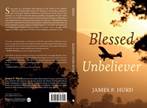
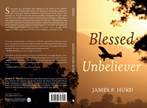
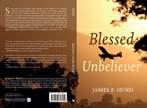
Sean McIntosh ingested fundamentalism along with his mother’s milk. And yet as he reached his late teens his doubts overwhelmed him and he proclaimed himself an atheist—while attending Torrey Bible Institute! This is his story.

Available in paper or Kindle version at Wipf and Stock Publishers, Amazon https://a.co/d/9su5F3o or wherever good books are sold.

When I entered sixth grade, Jim Hayden, who always wore a dark suit, white shirt and tie, taught our Sunday School class. To get to his classroom, us five boys—Gene, Fred, Ron, John and I―had to climb stairs up to a small room under the squat bell tower. This was our first “segregated” SS class and he seized the opportunity to warn us against sexual temptation, enlightening us on the meaning of certain sexual hand signs and counseling us how to behave with girls. Silver Acres was big on teaching the dangers of sex. However, the only temptation I was feeling at the moment was to pull the church bell rope which passed through the classroom from floor to ceiling. Yet I remember the delicious discovery of the second sex at Silver Acres. At that age, girls were attractive, mysterious and untouchable.. . . To read more, click here:  https://jimhurd.com/2025/09/02/silver-acres-formed-me/

Leave a comment on the story and share with others. Thanks.

You can also access my stories on Substack:   (2) Silver Acres Formed Me – by James P Hurd – James’s Substack

Want to browse archived WINGSPREAD stories? Click here:  https://jimhurd.com/ then click in the righthand column under “archives.”  These stories include memoirs, stories about bush flying, personal essays and other topics.

Here are a few examples:

“Trouble in Paradise” (a whimsical take on the Adam and Eve story) https://jimhurd.com/2024/04/  

“Lone, Wandering But Lost?(challenge of land and air navigation) https://tinyurl.com/3yuzsw3j 

“Egg McMuffin Miracle” (A personal “angel” epiphany)  https://tinyurl.com/24a5zr6y

This one is a classic. I’ll set the scene. 

You’re on Isla Nublar, the island from Jurassic Park. There are dangers around every corner. Pterodactyls are circling overhead. Tyrannosaurus Rex’s are nipping at your heels. The only hope to escape is to get to the dock before the last transport leaves the island. 

You’re driving along this road in your Nissan Pathfinder heading for the dock and you come to the proverbial fork in the road. You don’t know which way to go so you try to find someone to ask. 

Now, unfortunately, on this island there are only two kinds of people: liars and truth tellers. The liars always lie, and the truth tellers always tell the truth.

So you come to the fork in the road, and there are two guys there. And you know that they always travel in pairs. There’s always one liar and one truth teller. But you don’t know which is which. And you really need to know the way to the dock. 

So the puzzler question is, what one question could you ask either one of them that would certainly get you onto the right road and to safety where your boat awaits at the dock?

You only get one question. What would it be?

Good luck.

 (Answer will appear in next month’s WINGSPREAD newsletter.)

Answer to last month’s puzzler about the broken stone: 

This one was hard!

So what were the weights of the 4 individual pieces after the large stone was broken? Remember, the pieces of the broken stone could now be used to weigh any item, assuming those items were in 1-pound increments from 1 pound to 40 pounds, using the stones and a balance scale.

So how much did each piece weigh? And the hint that I gave was, how would you weigh 2 pounds?

Here is the answer:

One of the pieces has to be 1 pound. And if you use the hint I gave, then the next one has to be 3 pounds. Because if you put 1 pound on one side, and 3 pounds on the other side, that would equal weighing 2 pounds. If you weigh 2 pounds of hay on the 1 pound side, and it is equal with the 3 pound side, you know you have 2 pounds of hay.To weigh 4 pounds, you put the 1 and the 3 together. 

So if you follow this logic, you will see that the amounts have to be powers of 3 and there are four powers of 3 between 1 and 40: 1 pound (30), 3 pounds (31), 9 pounds (32), and 27 pounds (33), and these four add up to 40. Pretty slick, huh?

Click here https://jimhurd.com/home/  to subscribe to this WINGSPREAD ezine, sent direct to your email inbox, every month. You will receive a free article for subscribing. Please share this URL with interested friends, “like” it on Facebook, retweet on Twitter, etc.

If you wish to unsubscribe from this Wingspread Ezine, send an email to hurdjames1941@gmail.com  and put in the subject line: “unsubscribe.” (I won’t feel bad, promise!) Thanks.

Obsolete Words. (You still find these occasionally; sometimes in the old King James Bibles!) Demonstrates how words and usage change.

  • anon – soon, shortly (“I will come anon.”)
  • betimes – early, promptly
  • peradventure – perhaps, maybe
  • yclept – called, named (“A knight yclept Sir Gareth…”)
  • hark – listen (“Hark! The herald angels . . .”)
  • prithee – I pray thee; please
  • fain – gladly, willingly
  • nigh – near
  • ere – before
  • whilom – once upon a time
  • shew – actually, just an obsolete spelling of “show”
  • begotten – born
  • espoused – engaged
  • buckler – a small, round shield
  • manger – a feed trough for animals

Contronyms (single words that have opposite meanings depending on the context)

  1. Sanctionto approve (“The committee sanctioned the project”) / to penalize (“The country was sanctioned for violations”).
  2. Oversightsupervision (“She has oversight of the department”) / an error by neglect (“It was an oversight on my part”).
  3. Dustto remove fine particles (“I dusted the shelves”) / to apply fine particles (“I dusted the cake with sugar”).
  4. Leftremaining (“Only one slice left”) / departed (“She left the room”).
  5. Trimto decorate (“Trim the tree”) / to cut away (“Trim the hedge”).
  6. Boundheading toward (“She’s bound for Paris”) / restrained (“He was bound by ropes”).
  7. Cleaveto split apart (“Cleave the log in two”) / to cling to (“Cleave to your principles”).
  8. Seedto plant seeds (“Seed the garden”) / to remove seeds (“Seed the watermelon”).
  9. Screento show (“They screened the movie”) / to hide (“Screen the porch from the sun”).
  10. Weatherto withstand (“Weather the storm”) / to be worn away (“The rock weathered over time”).
  11. Fastquick (“He runs fast”) / fixed, unmoving (“The rope was held fast”).
  12. Clipto attach (“Clip the papers together”) / to cut off (“Clip the coupon”).
  13. Apologyexpression of regret (“He gave an apology”) / formal defense or justification (“Plato’s Apology”).
  14. Peruseto read carefully / to skim casually (usage has shifted over time).
  15. Boltto secure (“Bolt the door”) / to flee (“The horse bolted”).
  16. Overlookto supervise (“She overlooked the project”) / to miss noticing (“He overlooked the typo”).
  17. Goto proceed (“Go ahead”) / to fail or be spent (“The battery has gone”).
  18. Dustycovered in dust (“Dusty shelves”) / sprinkled with dust-like particles (“Dusty snow on the mountain”).
  19. Temperto soften (“Temper justice with mercy”) / to strengthen (“Tempered steel”).
  20. Outvisible (“The stars are out”) / extinguished (“The fire is out”).

                                    I can relate . . .

WINGSPREAD zine for August, 2025

Please forward and share this ezine with others. Thank you.

  • Writer’s Corner
  • Blessed Unbeliever 
  • This month’s story: “Delivering the Orange Daily News”
  • This month’s puzzler: “The Broken Stone”
  • WINGSPREAD ezine subscription information
  • Wisdom

Writer’s tip: You can indent the first line of each paragraph but do not indent the first line of the first paragraph in your article or story, or the first line following a major subheading or break in the story.

Complaint of the month: Autocorrect has become my worst enema.

Task for you: Write a 100-word story using only dialogue. Dialogue grabs the readers’ attention. Remember, each change of speaker needs a new paragraph.

Book of the month: The Complete Tales of Winnie-The-Pooh, A.A. Milne

Button Children’s Books. A delightful story of a chubby, fuzzy little bear and his friends who live in the 100-acre wood. Winnie is a “bear of little brain” but he has a heart of gold. Good stories to reread in these troubled times

The only kind of writing is rewriting. Ernest Hemingway

Available in paper or Kindle version at Wipf and Stock Publishers, Amazon https://a.co/d/9su5F3o or wherever good books are sold.

I got off my bike, leaned it against the brick wall of the news alley and stared through the barred window at the bubbling pot of molten lead. This was the first day of my first job―delivering newspapers for the Orange Daily News. . . .

The Daily News hired Johnny to be part delivery supervisor and part wet nurse. He worked with the paperboys, handling screw-ups and drying tears. Johnny told us, “You guys are entrepreneurs, independent businessmen.” Turns out that meant less liability for the paper—and we had to eat our losses. He would take us out door-knocking―a bleak task where we tried to sign up new subscribers. But how sell something you weren’t crazy about yourself? We liked Johnny who organized games in the YMCA gym and told a few dirty jokes. He would hold up an orange, army-type hat with “Orange Daily News” printed on the side and say, “You’ll get one of these cool hats and for every five new subscribers you sign up, you’ll get to pin on one of these shiny buttons.” I thought, I’d rather just get more cash. . . . To read more, click here:  https://tinyurl.com/4k73pdcb

Substack access: The article is on Substack but I haven’t yet learned how to grant public assess to it.

Leave a comment on the website and share with others. Thanks.

This is a non-automotive puzzler. Here we go.

Years ago, somewhere far, far away.

A farmer had a 40-pound stone, which he could use to weigh 40 pounds of feed or hay.

He would sell feed in 40-pound bundles and hay in 40-pound bales. He had a balance scale. He put the stone on one side, and he piled the other side with feed or hay. When it balanced, he knew he had enough to sell. 

Then one day, a neighbor borrowed the stone. But he had to apologize when he returned it because he had broken it into four pieces. And he felt really bad about it. 

As it turns out, the farmer who owned the stone later told the neighbor that he actually had done him a favor.

The pieces of the broken stone could now be used to weigh any item, assuming those items were in one-pound increments, from one pound to 40 pounds, so the farmer thought this was a great improvement.

So the puzzler is, what were the weights of the 4 individual stones after the large stone was broken?

And here’s the hint―how would you weigh 2 pounds? 

Good luck!

 (Answer will appear in next month’s WINGSPREAD newsletter.)

Answer to last month’s puzzler: 

Recall you have to decide which of three switches on the first floor turns on a light on the third floor. You’re allowed to go up and check the lightbulb only once.

Here is the answer.

Turn all the switches off.

Then you turn the first switch on and you leave it on for 10 minutes.

Then you turn it off and turn the second switch on.

You leave the third switch in the off position.

Then, you go upstairs to check the light.

When you get upstairs, if the bulb is on, then you know it is switch #2. 

If the bulb is off, and it is cold, then it is switch #3. 

If the bulb is warm, then you know it is switch #1. 

And that is how you do it. 

Oldy but goodie.

Subscribe free to this Ezine  

Click here https://jimhurd.com/home/  to subscribe to this WINGSPREAD ezine, sent direct to your email inbox, every month. You will receive a free article for subscribing. Please share this URL with interested friends, “like” it on Facebook, retweet on Twitter, etc.

If you wish to unsubscribe from this Wingspread Ezine, send an email to hurdjames1941@gmail.com and put in the subject line: “unsubscribe.” (I won’t feel bad, promise!) Thanks.

An historic 1946 picture from Mission Aviation Fellowship archives of Betty Green, one of the founders and first pilot with the mission. In the background is her Grumman J2F Duck―a bi-wing, radial-engine amphibian that she flew in New Guinea. I was privileged to know this godly, gracious woman.

Spelled the same, but different pronunciations and different meanings: 


1) The bandage was wound around the wound.

2) The farm was used to produce produce.

3) The dump was so full that it had to refuse more refuse.

4) We must polish the Polish furniture.

5) He could lead if he would get the lead out.

6) The soldier decided to desert his dessert in the desert.

7) He thought a birthday was a good time to present the present.

8) A bass was painted on the head of the bass drum.

9) When shot at, the dove dove into the bushes.

10) I did not object to the object.

11) The insurance was invalid for the invalid.

12) There was a row among the oarsmen about how to row.

13) They were too close to the door to close it.

14) The buck does funny things when the does are present.

15) A seamstress and a sewer fell down into a sewer line.

16) To help with planting, the farmer taught his sow to sow.

17) The wind was too strong to wind the sail.

18) Upon seeing the tear in the painting, I shed a tear.

19) I had to subject the subject to a series of tests.

20) How can I intimate this to my most intimate friend?

I called Willow Street, Pennsylvania cemetery about a tombstone for Barbara and me. Sticker shock–expensive. I delayed a month but finally called back and ordered one. They’ll put Barbara’s birth and death year on it and my birth year and a dash. Turns out they’ll charge me extra when they have to come back and chisel in my death date. So I think I’ll just ask them to put in “2060” right now. I figure it’ll give me something to shoot for.

I must be getting stronger. Last year I couldn’t even carry $50 of groceries with my two hands.  James P Hurd

Delivering the Orange Daily News

I got off my bike, leaned it against the brick wall of the news alley and stared through the barred window at the bubbling pot of molten lead. This was the first day of my first job―delivering newspapers for the Orange Daily News.

It was a small paper and “daily” was a stretch—we didn’t deliver on weekends. Some of the paperboys called it “The Orange daily butt-wipe.” The year I started, the Daily News certainly printed the big headlines—Emmett Till’s murder, Rosa Parks and the Montgomery bus boycott, Bill Haley’s sensational Rock Around the Clock, the launching of the first nuclear-powered submarine, building the first McDonald’s restaurant, and the spectacular Disneyland opening. But unlike the larger Santa Ana Register, the Daily News mainly covered local issues like road construction, the championship-bound Orange Lionettes softball team. It covered how my friend’s father embezzled money from the First National Bank or published the story of the Fourth of July parade with the barred jail sitting on the plaza where they would lock up local dignitaries. And of course, crossword puzzles and the Dear Abby column.

The Daily News offices sat on the Orange Plaza, an enormous roundabout in the center of Orange with tall palm trees and fountain. You entered the Daily News from the sidewalk, where the front office concealed the room behind with its rattling printing press that spit out thousands of papers each day.

I had two fights in the news alley—won one and lost one. When I hit Hawkins in the belly, he started crying and the fight was pretty much over. I felt strong and powerful―until Shockley did the same to me. I doubled over in pain and started bawling. Johnny, the delivery supervisor, took a dim view of fighting: “Knock it off! You boys can’t work here if you’re going to fight.” So pretty soon we learned our place in the pecking order.

We were never allowed to enter the press room but since the alley ran alongside, you could press your face against the protective window grill to watch the guy at the linotype, a marvelous machine that turns keystrokes into lines of brass molds. He would pour the lead-antimony-tin mixture into the molds to form the letters. The nearby printer swallows a huge roll of newsprint, then spits folded papers out the other end. You could smell the newsprint and almost feel the heat of the molten lead.

After Orange Intermediate would let out, I would bike through the city streets, park my Schwinn bicycle with its white sidewall tires in the news alley and wait with the other boys. Sometimes the papers were late so I would walk down the alley to a small jewelry store that had a cooler. You opened the lid to see where the Coke bottles hung on a rail, put your dime in the slot, then slid out an ice-cold bottle. It tasted marvelous on a hot summer’s day even if it froze your brain and people warned you that you could get instantaneous pneumonia. I bought one every day, reasoning that it was wise to form good habits.

The Daily News hired Johnny to be part delivery supervisor and part wet nurse. He worked with the paperboys, handling screw-ups and drying tears. Johnny told us, “You guys are entrepreneurs, independent businessmen.” Turns out that meant less liability for the paper—and we ate our losses. He would take us out door-knocking, a bleak task where we tried to sign up new subscribers. But how sell something you weren’t crazy about yourself? We liked Johnny who organized games in the YMCA gym and told a few dirty jokes. He would hold up an orange, army-type Daily News hat and say, “You’ll get one of these cool hats and for every five new subscribers you sign up, you’ll get one of these shiny buttons to pin onto it.” I thought, “I’d rather just get a bit more cash.”

An alley ran back about 75 feet alongside the building to the paper-folding room with its dirty brick walls, bleared windows and dark interior. It smelled like a sweathouse out of a Dickens novel. Sheet metal covered the tables where we slipped and folded the papers. “Slipping” meant putting a section or two inside the front section. On rainy days we had to shroud the papers in wax sheets. Folding was a work of art. You would fold the whole paper in half, then turn down a corner triangle, fold again, then tuck the triangle inside to make a little packet. After you finished folding you stuffed them into your white canvas bag labeled “Orange Daily News” and hung the bag over your bicycle handlebars.

I would ride out of the alley with my laden paper bags hitting my knees, head over to my Pine Street route in the northwest part of town. On the way, I swung by the gas station on Glassell Street that had a vending machine where I would buy a Heath bar. Reaching Pnne Street I would start throwing papers onto the porches or at least onto the sidewalk up near the door. The papers sailed and curved so you needed expert technique. We had to memorize the house numbers. Mrs. Weaver wanted me to walk up and leave the paper on her window sill and for my trouble, a shiny dime would appear on the sill on Fridays.

Most of my paper customers were nice people with only occasional complaints about late deliveries or stray papers. We loved the PIAs—“Paid in Advance” but we had to go out each month to collect from the other people. Sometimes they would say, “Come back next week.”

The route didn’t always go smoothly. I played on the Orange Intermediate basketball team and one day we had an away game. My dear mother picked up my papers downtown, folded them, then drove to the school and hung the paperbags on my bike. But when I arrived someone had pulled all the papers out and torn them up. I had to make a tearful, late trip to the office to pick up more papers and deliver them in the dark.

When I entered high school, I graduated to a six-mile, rural paper route. The houses sat far apart but most of them were PIAs so I didn’t have to collect. I didn’t have to bike downtown―they delivered the papers to our front lawn. If the papers were printed late and it was getting dark, my mom would drive me in our 1955 Ford station wagon while I sat on the tailgate throwing the papers.

Eventually I graduated to using my dad’s Cushman motor scooter. The route finished over on Santa Clara Avenue and there wasn’t a north-south street nearby so I would cut through the Fairhaven Cemetery to drive home. But if it got too late, they would close and lock the gates and I would have to make a long detour. One night it was very late and dark, the gates were still open and I had the headlight on when I entered the cemetery. I was traveling fast, eager to get home, riding along a line of Eucalyptus trees. I had to jog left through the trees to pass from the Santa Ana cemetery to the Fairhaven side. I jogged, but with it being late they’d put a chain across the break in the trees. I jammed on the brakes, left a dark skid mark and stopped with my front wheel touching the chain.

I somehow muscled the scooter under the chain and drove past a huge, dark building―the mausoleum that had fascinated us kids since we were in elementary school. We would tiptoe through the marble halls, talking in whispers. Then we’d yell and run, our voices echoing as we raced toward the door. I never would go in there alone. I passed on by, exited the cemetery at Fairhaven Ave., rode the half mile down Cambridge Street to our house and wheeled into the garage.

I wish now that I had told Mom how much I appreciated her helping with the route. And I wish I’d told her that, when I had to make the long ride home after dark, how I loved seeing the welcoming lights of home and smelling the late dinner she’d cooked for me.

WINGSPREAD Ezine for July, 2025

Please forward and share this ezine with others. Thank you.

  • Writer’s Corner
  • Blessed Unbeliever 
  • This month’s story: “On A Roll”
  • This month’s puzzler: light switches
  • WINGSPREAD Ezine subscription information
  • Wisdom

Writer’s tip: Start your novel or story in media res (“in the middle of things”). For instance, you could start it just before or just after a crisis, peaking the reader’s interest. You can then double back and tell the story more chronologically.

Word of the month: NERDSPLAINING  (I made this one up!)  This refers to a very intelligent person explaining something but using words and ideas you’ve never heard of.

Task for you: Write a story of 100 words without using any adjectives or adverbs (good practice in using fewer, more direct words). Here’s a prompt: The most unusual holiday I ever spent.

BLESSED UNBELIEVER novel

Available in paper or Kindle version at Wipf and Stock Publishers, Amazon https://a.co/d/9su5F3o or wherever good books are sold.

After flying to San Francisco, embracing my dear California sister and catching up on our lives, I get up to use the bathroom. It smells fresh and has a new towel laid out. But when I reach for the toilet paper, it’s facing the wall—backwards!

I’ve known Anne all my life―her opposite political persuasion, her preference for a different kind of church. None of this ever came between us. But the toilet paper shakes me. Where did she learn this? I don’t remember this happening in our childhood home. If she does this to the toilet paper what else is she hiding? Uncontrolled passive aggression? Anger issues? Never before have I noticed any serious issues. Did she do it on purpose? . . .

To read more, click here:  https://jimhurd.com/2025/07/15/on-a-roll/

Share the story with others and leave a comment on the website. Thanks.

Access more of my articles on Substack: https://jameshurd.substack.com/publish/post/164503545

This one is complicated, so make sure you concentrate!

There are three on/off switches on the wall on the first floor of a building.

You can tell when they’re switched on or off because they are either clicked up for on, or down for off, like a light switch.

You don’t know which of these three switches controls an incandescent lamp on the third floor of the building. The other two are not connected to anything and don’t do anything at all.

You are allowed to toggle the switches on or off as many times as you please.

Further, you are allowed to walk just once to the third floor to check the lamp to see if it is on or not.

So, how can you know which switch controls the lamp on the third floor?

(Answer will appear in next month’s WINGSPREAD newsletter.)

Answer to last month’s puzzler: 

What was the man buying in the hardware store if one costs 60 cents, but 200 costs only $1.80?

He was buying house numbers, the little numbers you put on your house! 

He lives at house number 200. So he just needs three numbers: a two and two zeros. Three times 60 cents equals $1.80.

Good one.

Click here https://jimhurd.com/wingspread-ezine/   to subscribe to this WINGSPREAD ezine, sent direct to your email inbox every month. You will receive a free article for subscribing. Please share this URL with interested friends, “like” it on Facebook, retweet on Twitter, etc.

If you wish to unsubscribe from this Wingspread Ezine, send an email to hurd@usfamily.net and put in the subject line: “unsubscribe.” (I won’t feel bad, promise!) Thanks.

Musings on Love

  1. “Love is sharing your popcorn.” – Charles Schultz
  2. “Gravitation is not responsible for people falling in love.” – Albert Einstein
  3. “Love is an ocean of emotions entirely surrounded by expenses.” – Thomas Dewar
  4. “I love you more than coffee, but please don’t make me prove it.” – Anonymous
  5. “A guy knows he’s in love when he loses interest in his car for a couple of days.” – Tim Allen
  6. “Marriage is like a walk in the park. Jurassic Park.” – Anonymous
  7. “Love is being stupid together.” – Paul Valery
  8. “Honesty is the key to a relationship. If you can fake that, you’re in.” – Richard Jeni
  9. “Forget love, I’d rather fall in chocolate.” – Anonymous
  10. “My wife and I were happy for twenty years – then we met.” – Rodney Dangerfield
  11. “My wife has a slight impediment in her speech. Every now and then she stops to breathe.” – Jimmy Durante
  12. “Love is the only kind of fire that is never covered by insurance.” – Anonymous
  13. “If love is the answer, could you rephrase the question?” – Lily Tomlin

The joys of family life

  1. “Insanity is hereditary; you get it from your children.” – Sam Levenson
  2. “Happiness is having a large, loving, caring, close-knit family in another city.” – George Burns
  3. “Having children is like living in a frat house – nobody sleeps, everything’s broken, and there’s a lot of throwing up.” – Ray Romano
  4. “A family reunion is an effective form of birth control.” – Robert A. Heinlein
  5. “The advantage of growing up with siblings is that you become very good at fractions.” – Anonymous
  6. “Remember, as far as anyone knows, we are a nice, normal family.” – Homer Simpson
  7. “Home, nowadays, is a place where part of the family waits until the rest of the family brings the car back.” – Earl Wilson
  8. “A family is a unit composed not only of children but of men, women, an occasional animal, and the common cold.” – Ogden Nash
  9. “Being part of a family means smiling for photos.” – Harry Morgan
  10. “The other night I ate at a real nice family restaurant. Every table had an argument going.” – George Carlin
  11. “The family is one of nature’s masterpieces.” – George Santayana

Classic One-Liners

  1. “I always arrive late at the office, but I make up for it by leaving early.” – Anonymous
  2. “Sometimes I lie awake at night, and I ask, ‘Where have I gone wrong?’ Then a voice says to me, ‘This is going to take more than one night.’” – Charlie Brown
  3. “If you think nobody cares if you’re alive, try missing a couple of car payments.” – Earl Wilson
  4. “My fake plants died because I did not pretend to water them.” – Mitch Hedberg
  5. “I told my wife she was drawing her eyebrows too high. She looked surprised.” – Anonymous
  6. “I want my children to have all the things I couldn’t afford. Then I want to move in with them.” – Phyllis Diller
  7. “I used to think I was indecisive, but now I’m not so sure.” – Anonymous
  8. “I’m writing a book. I’ve got the page numbers done.” – Steven Wright
  9. “A clear conscience is usually the sign of a bad memory.” – Steven Wright
  10. “I dream of a better tomorrow, where chickens can cross the road and not be questioned about their motives.” – Anonymous
  11. “I refuse to join any club that would have me as a member.” – Groucho Marx
  12. “Always borrow money from a pessimist. He won’t expect it back.” – Oscar Wilde
  13. “Behind every great man is a woman rolling her eyes.” – Jim Carrey

WINGSPREAD Ezine for June, 2025

Please forward and share this ezine with others. Thank you.

  • Writer’s Corner
  • Blessed Unbeliever 
  • This month’s story
  • This month’s puzzler
  • WINGSPREAD Ezine subscription information
  • Wisdom

Writer’s tip: “If it sounds like writing, I rewrite it.” Elmore Leonard

Word of the month: DEIPNOSOPHIST: An expert in the art of discourse while dining

Task for you: Find a piece of writing that you really enjoy and use it as a template for your own writing: style, vocabulary, metaphors, characterizations, description of scenes, plot.

I confess I sometimes more enjoy talking to atheists than to Christians. My atheist friends seem honest about their doubts. Although my own doubts have been addressed, they have not been quenched. I believe we are all on a spiritual quest and I wish to know the quest of each person I meet. Blessed Unbeliever (below) is the story of one such quest. Much is autobiographical (I won’t tell you which parts!). But the names have been changed to protect the innocent.

Blessed Unbeliever (paper or Kindle version) can be found at Wipf and Stock Publishers, Amazon https://a.co/d/9su5F3o or wherever good books are sold.

*Note: This is a different kind of essay where I trace my personal journey from fundamentalism into a more ecumenical faith.

“The President,” sarcastically so called because he was thermometer-thin, unathletic and mute, sat alone on a bench near the Orange High School snack shop. I felt pressure rising in my gut as I sat down to “witness” to him about how all people are sinners and how he needed to “accept Christ” to escape eternal damnation. He said nothing. After about twenty minutes I got up and walked away—and never spoke to him again. My most embarrassing day in high school; I felt like I had committed a violation.

Witnessing to The President was an example of what fundamentalists did. . . . To read more, click here:  https://tinyurl.com/asepunwc

Leave a comment on the website and share with others. Thanks.

Years ago, back in the 80’s, a guy walks into a hardware store to purchase something for his house.

He asks the clerk, “How much is one?”

The clerk says, “60 cents.”

And the guys say, “Okay, how much for 12?”

The clerk says, “$1.20.”

So the guy says, “Okay then. I’ll take 200.”

And the clerk says, “That’ll be $1.80.”

And the puzzler is very simple. 

What was he buying?

Good luck, friends.

 (Answer will appear in next month’s WINGSPREAD newsletter.)

Answer to last month’s puzzler: 

How start building a bridge across Niagara Falls? They held a kite-flying contest. The first kid to be able to get his kite to land on the other side of Niagara gorge won the contest.

So once the kite was across, they attached a rope to the kite string and pulled it across. And they did this with the rope until they were able to pull the cable across. Pretty brilliant. 

And the kid’s name was Homan Walsh, a 16-year-old kid from Ireland who won the contest and made history. 

Subscribe free to this Ezine  

Click here https://jimhurd.com/home/  to subscribe to this WINGSPREAD ezine, sent direct to your email inbox, every month. You will receive a free article for subscribing. Please share this URL with interested friends, “like” it on Facebook, retweet on Twitter, etc.

If you wish to unsubscribe from this Wingspread Ezine, send an email to hurd@usfamily.net and put in the subject line: “unsubscribe.” (I won’t feel bad, promise!) Thanks.

C.S. Lewis’s stepson tells the story of a time when Lewis was walking with a friend and a person on the street came up and asked him for spare change. Lewis emptied his pockets and gave it all to the man, and once he had left, the friend challenged him, “You shouldn’t have given that man all that money, he’ll only spend it on drink.” To which Lewis replied, “Well, if I’d kept it, I would have only spent it on drink.”

The upward path of human evolution

Empathy. These eleven short stories make us think twice about the daily happenings in our lives.

1. Today, I interviewed my grandmother for part of a research paper I’m working on for my Psychology class. When I asked her to define success in her own words, she said;
“Success is when you look back at your life and the memories make you smile.”

2. Today, after my 72 hour shift at the fire station, a woman ran up to me at the grocery store and gave me a hug. When I tensed up, she realized I didn’t recognize her. She let go with tears of joy in her eyes and the most sincere smile and said;
“On 9-11-2001, you carried me out of the World Trade Center.”

3. Today, after I watched my dog get run over by a car, I sat on the side of the road holding him and crying. And just before he died, He licked the tears off my face.

4. Today at 7 AM, I woke up feeling ill, but decided I needed the money, so I went into work. At 3 PM I got laid off. On my drive home I got a flat tire. When I went into the trunk for the spare, it was flat too.

A man in a BMW pulled over, gave me a ride, we chatted, and then he offered me a job. I start tomorrow.

5. Today, as my father, three brothers, and two sisters stood around my mother’s hospital bed, my mother uttered her last coherent words before she died.

She simply said, “I feel so loved right now. We should have gotten together like this more often.”

6. Today, I kissed my dad on the forehead as he passed away in a small hospital bed. About 5 seconds after he passed, I realized it was the first time I had given him a kiss since I was a little boy.

7. Today, in the cutest voice, my 8-year-old daughter asked me to start recycling. I chuckled and asked, “Why?” She replied, “So you can help me save the planet.” I chuckled again and asked, “And why do you want to save the planet?”

Because that’s where I keep all my stuff,” she said.

8. Today, when I witnessed a 27-year-old breast cancer patient laughing hysterically at her 2-year-old daughter’s antics, I suddenly realized that I need to stop complaining about my life and start celebrating it again.

9. Today, a boy in a wheelchair saw me desperately struggling on crutches with my broken leg and offered to carry my backpack and books for me. He helped me all the way across campus to my class and as he was leaving he said, “I hope you feel better soon.”

10. Today, I was feeling down because the results of a biopsy came back malignant. When I got home, I opened an e-mail that said, “Thinking of you today. If you need me, I’m a phone call away.” It was from a high school friend I hadn’t seen in 10 years.

11. Today, I was traveling in Kenya and I met a refugee from Zimbabwe. He said he hadn’t eaten anything in over 3 days and looked extremely skinny and unhealthy. Then my friend offered him the rest of the sandwich he was eating. The first thing the man said was, “We can share it.”

Venturing Beyond the Pale

“The President,” sarcastically so called because he was thermometer-thin, unathletic and mute, sat alone on a bench near the Orange High School snack shop. I felt pressure rising in my gut as I sat down to “witness” to him about how all people are sinners and how he needed to “accept Christ” to escape eternal damnation. He said nothing. After about twenty minutes I got up and walked away—and never spoke to him again. My most embarrassing day in high school; I felt like I violated him.

The Comfort of Certainty

Witnessing to The President was an example of what fundamentalists did. Twice on Sunday and most Wednesday nights our family would drive the eight miles to the church that cradled my childhood: Silver Acres. The men would arrive in suits and women in hats, some with veils. Pop McIntosh led the singing, waving his arm to keep the beat. Before I left elementary school, I had memorized the lyrics of “Power in the Blood,” “It is Well with my Soul,” “Abide with Me,” “Blest Be the Tie that Binds,” etc. Earl Ward taught me to play chess and on men’s potluck night, Mr. Ballew always bought cherry pies, baked by his Emma.

Before Brother Cantrell preached his sermon, he would invite people to join the church: “We’re fundamentalist, independent, unaffiliated, Bible-believing, premillennial, pretribulational.” I thought, if you understood that string of big words serves you right if they baptize you. After church Bro. Cantrell and Walter Loitz would talk Bible and football.

At 10 I could recite all the biblical books in order: Genesis, Exodus, Leviticus, Numbers . . .  We would have “sword drills,” using our “sword” to see who could look up verses the fastest. I became a Bible nerd, reading my Scofield Bible, and devouring Bro. Cantrell’s big words: Inerrancy means that the Bible contains no errors of any kind. The world is that territory “beyond the pale,” outside the camp, that place of temptation that lies under control of the Evil One. The rapture, tribulation and millennial kingdom referred to events happening at the end of time. He talked a lot about the end times. Modernist referred to people or churches we shunned, some of which questioned the resurrection, the virgin birth and biblical inerrancy. Some fundamentalists even practiced “secondary separation”—separating from those (e.g., Billy Graham) who themselves fraternized with modernists (e.g., Martin Luther King, Jr.). My friend Jerry was mainline Methodist—I once asked him if his church celebrated Easter! Unlike them, we did not kneel in church or make the sign of the cross. No crosses hung on the wall at Silver Acres, no pictures of Jesus. Instead of liturgy and sacraments we anchored our beliefs in Bible verses.

Growing up, I felt as if knew God’s plans for my life and for the world. And I confess, I carried a teeny bit of pride in my arcane vocabulary. I felt no need to help make the world a better place because the world was under control of the Evil One. So we endeavored to only persuade people to join us as we waited for Jesus to come back.

After WWII, many middle-class Americans valued high morals and a conservative lifestyle but fundamentalists went further. Bro. Cantrell preached against smoking, drinking, dancing, movie theaters and gambling. Of course I grew interested in the church girls. I watched Kay Cantrell sitting broadly on the piano bench in her see-through blouse (pushing the boundaries of fundamentalist norms). One day in the Cantrell parsonage I saw two books lying on the dining room table: What Every Christian Boy Should Know and What Every Christian Girl Should Know. The second sounded more interesting but as I was paging through it, Mrs. Cantrell walked in and warned me, “Jamie, that book is only for girls.”

I was the only one in my grade who did not take square dance classes in middle school. Even into college I never touched a cigarette, never gambled and never drank alcohol. Do I regret these constraints? No. Years later, these same moral values restrained me from jumping into bed with an over-eager girlfriend. I harbor a teeny regret missing the great movies—I never entered a theater until my twenties.

The Scofield Bible, with its authoritative notes, clarified biblical complexities. It erased the ambiguities, melted the mysteries, quieted my questioning and defeated my doubts. It felt good to be certain—you demonstrated your faith by not questioning. I learned that Jesus, son of the transcendent God, died not only for the world but for me.

But we did not merely parrott propositions. It was a social movement created by a faithful band of people who wished to live separate from the world. As a young person I embraced fundamentalist faith and enjoyed being part of the ingroup. It gave me a way to understand the Bible and embrace life-orienting beliefs. It gave me a task—carrying God’s message to the world. I understood why evil existed in the world, understood how to protect myself from it. This buoyed me through the tempests of my early life.

Silver Acres gave me a moral gyroscope that helped me survive the pains of adolescence. It assured me of who I was and what my purpose was in the world. I received precious gifts—a loving community, a dense network of friends and supportive adults. I knew who my people were and who my God was. Silver Acres insulated me from that world of sin and temptation beyond the pale. Later, the church pointed me toward Bible Institute and Christian mission.

Cracks in the Wall

And yet, as I moved into adolescence I began to feel like a social leper—different, conspicuous, isolated. There weren’t many fundamentalists out there. I grew to dislike worldly people, criticized their wrong beliefs, judged their lifestyles. I became more and more socially isolated and confused.

Further, I started doubting the great fundamentalist doctrines. The ordinance of communion bored me. Bro. Cantrell would spend half the service assuring us that “this is only grape juice and crackers; nothing to see here.” Ushers passed crumbled saltines and little plastic cups of grape juice along the rows. If communion food was merely grape juice and crackers, why bother? I longed for something deeper, more connective as I explored how far I could tip the communion cup without spilling the juice.

Since the Bible was inerrant, I was terrified I would find one small mistake that would destroy my whole faith. I worried about conflicts between the gospel accounts and how to reconcile the Old Testament God who commanded the destruction of the Canaanites with the New Testament God-in-Jesus who preached unconditional love?

Fundamentalists argued that the Bible is literally true “in all it affirms.” But how could the book of Revelation be literally true? Locust-shaped horses with women’s hair and stingers in their tails, stars falling to earth, a beast with ten heads . . . Surely these were symbolic?

I had the most trouble when the text touched scientific subjects—the “four corners” of the earth, the sun rising and setting. If you did the genealogies in the Bible, the universe seemed to be only 6,000 years old. How could this square with scientific findings?  Surely the text was pre-scientific? How convince worldly people to accept something I myself had trouble believing?

Opening the Door

When I moved to Cal State Fullerton and joined Intervarsity Christian Fellowship, I encountered a wonderful community that included strong Christians from mainline and Catholic traditions. I enjoyed friendships at Cal State with non-Christians and even atheists. My very questions and doubts gave me a kinship with them. I became more transparent and found they would frequently open up about their own questions. I was expanding my scope, widening my tent, embracing the world beyond the pale. I had found an expression of faith I could believe in and even more important, a faith that I could celebrate and share.

Not long ago, I boarded the Amtrak to travel from Mattoon, Illinois back to Minneapolis. Finding my assigned seat, I discovered a young man stretched out across it, asleep. I cautiously woke him. sat down, and for the next two hours, enjoyed an amazing conversation. Jamil, married and in his early twenties, was Palestinian, a “man without a country.” And Muslim. Formerly, I would have argued with him about the Bible or the deity of Christ. But this day, I found I was talking to a man in transition. His marriage was in trouble and he was looking for a mosque and an imam he could relate to. He was full of questions. I sympathized, talking about my own quest for a church and minister. We parted friends and talked by telephone a couple of times after that.

I treasure my fundamentalist foundations but today I’m happy living “beyond the pale” and learning how to embrace all people in God’s beloved world, happy learning that we all are on a spiritual quest.

WINGSPREAD Ezine for May, 2025

Please forward and share this Ezine with others. Thank you.

  • Writer’s Corner
  • Blessed Unbeliever 
  • This month’s story
  • This month’s puzzler
  • WINGSPREAD Ezine subscription information
  • Wisdom

**Alert: WINGSPREAD has a new email address: hurdjames1941@gmail.com. The old usfamily address is dead; do not use.

Writer’s tip: Separate a list of items by commas (e.g., “… pliers, wrenches, hammers, and nails). The last comma is known as an “Oxford” comma. (I, however, avoid, flee from, resist and omit this last comma because I think it is unnecessary.) If a list has an item that itself includes a comma, use semicolons to separate instead of commas. E.g., “. . . pieces of plaster; rusty nails; old, discarded wooden studs; and glassless, paintless window frames.”

Word of the month: EPONYMOUS. Do we really need this word? Or is it just used by nerdy people showing off? It means “named after someone or something.” E.g., “Henry Ford and his famous, eponymous car company.”

Reminds me of William Faulkner’s friendly jab at Ernest Hemingway, “He never uses a word that sends a man to a dictionary.” Probably true of Hemingway. I will occasionally employ a little-used word because it really nails what I wish to express (e.g., disingenuous, effluvium, sclerotic). Not too often, though. Sometimes I’ll use an obsolescent word (saturnine, sartorial). Each word is a world of meaning, a priceless tool in the writer’s toolkit. In your own writing, wield words well.

Task for you: Invent a new word (people do this all the time). For instance, turn a noun into an adjective or a verb, etc. Send me your examples (along with definitions) and I’ll put them in the next Wingspread.

Magazine of the month: CHRISTIANITY TODAY. While you could label this magazine evangelical, I find it covers a broad range of Protestant and Catholic issues and also issues in other world religions, fully engaging the social, political and cultural milieu in which all religion is embedded.

I confess I sometimes more enjoy talking to atheists than Christians. My atheist friends seem honest about their doubts. Although my own doubts have been answered, they have not been quenched. Since I am a doubter, I find much in common with atheists. I believe we are all on a spiritual quest and I wish to know the quest of each person I meet. Blessed Unbeliever (below) is the story of one such quest. Much is autobiographical (I won’t tell you which parts!). But the names have been changed to protect the innocent.

Sean McIntosh left his Fundamentalist childhood and walked the road toward becoming an atheist—while attending Torrey Bible Institute! Spoiler alert: it didn’t work out very well. Blessed Unbeliever (paper or Kindle version) can be found at Wipf and Stock Publishers, Amazon https://a.co/d/9su5F3o or wherever good books are sold.

“Barbara, the snow’s late this year.”

She looks up from her piecrust work. “Yes, it’s only five days ’til Thanksgiving.”

But today, the wind chills. I gaze out the window at the fine flakes falling here in Minnesota, hundreds of miles away from my California childhood. This harbinger snow warns, “Nothing is forever.”

Our first snow is inevitable but still a surprise. We turned the clocks back just two weeks ago (“spring ahead; fall back”), but today, less than a month from winter solstice, the sun appears tardily over the far end of Pleasure Creek pond, rising in its low southern arc, only to set early.

We are the shrouded ones, billeted in carpentered cocoons. Mine is a bookish breed. At home, my fingers rest on computer keys, pretending that the seasons never change. At work, I inhabit an indoor world smelling of classroom chalk, students to-ing and fro-ing in the halls, my days seasoned with specialty coffee and good conversation. . . .

To read more, click here:  https://tinyurl.com/57t9p6n2


Leave a comment on the website and share with others. Thanks.

No fair doing an internet search but if you do, don’t reveal the answer if you find it.

Long before airplanes were invented, some engineers were contemplating building a suspension bridge across the gorge of Niagara Falls. There’s a big gorge there. A gorge is a canyon with a river at the bottom, basically. 

So they were thinking of building this bridge, but there was no way to get the cables from one side to the other, because there was no boat that could fight that current in the raging water below. They didn’t have powered boats back then. This was in the days of steam, and wind for power. When sailors were made of steel and ships were made of wood.

Anyway, they figured out they had to get the cables across somehow. And the builders staged a contest open to the public to solve their problem. The contest was won by a young kid, a boy. Shortly after the contest was completed, they were able to run the cables from one side of the gorge to the other.

The puzzler question is very simple.

How did they do it?

(Answer will appear in next month’s WINGSPREAD newsletter.)

Answer to last month’s puzzler: 

So what movie prominently featured a Ferrari and a Renault?

I’m guessing that the people who tried to Google this one were pretty disappointed. Because this was a trick question!

The Ferrari and Renault in question here are not cars, but character names. There full names were Signor Ferrari and Captain Louis Renault. 

And these are characters from the very famous movie, Casablanca

Now, don’t be mad about the trickery here. We never once said that the Ferrari and the Renault were cars . . . .

Click here https://jimhurd.com/home/  to subscribe to this WINGSPREAD ezine, sent direct to your email inbox, every month. You will receive a free article for subscribing. Please share this URL with interested friends, “like” it on Facebook, retweet on Twitter, etc.

If you wish to unsubscribe from this Wingspread Ezine, send an email to hurdjames1941@gmail.com (**Note the new email address!!) and put in the subject line: “unsubscribe.” (I won’t feel bad, promise!) Thanks.

THOUGHTS FOR THE DAY

  • Autocorrect has become my worst enema.
  • Exquisite insult: “He’s a bubble off plumb.”
  • “When I fed the poor they called me a saint. When I asked why they were poor, they called me a Communist.” —Bishop Dom Helder Camara of Recife, Brazil
  • “They’re like grits in the South, whether you want them or not they show up!”
  • A kleptomaniac is somebody who helps himself because he cannot help himself.
  • A Freudian slip is where you say one thing but mean a mother.
  • Ambition is a poor excuse for not having enough sense to be lazy.
  • Hard work pays off in the future; laziness pays off now.
  • I intend to live forever… So far, so good.
  • If Barbie is so popular, why do you have to buy her friends?
  • Eagles may soar, but weasels don’t get sucked into jet engines.
  • What happens if you get scared half to death twice?
  • My mechanic told me, “I couldn’t repair your brakes, so I made your horn louder.”
  • Why do psychics have to ask you for your name?
  • If at first you don’t succeed, destroy all evidence that you tried.
  • A conclusion is the place where you got tired of thinking.
  • Experience is something you don’t get until just after you need it.
  • The hardness of the butter is proportional to the softness of the bread.
  • To steal ideas from one person is plagiarism; to steal from many is research.
  • The problem with the gene pool is that there’s no lifeguard.
  • The sooner you fall behind, the more time you’ll have to catch up. 
  • The colder the x-ray table, the more of your body is required to be on it.
  • Everyone has a photographic memory; some just don’t have film. 
  • If at first you don’t succeed, skydiving is not for you.
  • If your car could travel at the speed of light, would your headlights work?

The Snow Sermon

Grow old along with me!

The best is yet to be,

The last of life, for which the first was made:

Our times are in His hand

Who saith “A whole I planned,

Youth shows but half; trust God:
see all, nor be afraid!”

—Robert Browning, “Rabbi Ben Ezra”[1]

“Barbara, the snow’s late this year.”

She looks up from her piecrust work. “Yes, it’s only five days ’til Thanksgiving.”

But today, the wind chills. I gaze out the window at the fine flakes falling here in Minnesota, hundreds of miles away from my California childhood. This harbinger snow warns, “Nothing is forever.”

Our first snow is inevitable but still a surprise. We turned the clocks back just two weeks ago (“spring ahead; fall back”), but today, less than a month from winter solstice, the sun appears tardily over the far end of Pleasure Creek pond, rising in its low southern arc only to set early.

We are the shrouded ones, billeted in carpentered cocoons. Mine is a bookish breed. At home, my fingers rest on computer keys, pretending that the seasons never change. At work, I inhabit an indoor world smelling of classroom chalk, students to-ing and fro-ing in the halls, my days seasoned with specialty coffee and good conversation.

The seasons never changed in the California of my childhood with its palms, eucalyptus, magnolia and orange trees. But today, here in Minnesota, the sun hangs low on the horizon and the spruce branches slowly whiten.

Last summer here, at 45o north latitude, the sun slanted up out of the pond and across our sunroom window bringing slow-motion dawns and leisurely dusks. Now the luminous light of late afternoon dims rapidly, along with my mood.

I didn’t notice winter’s warning—the browning tips of the redtop grass, the drooping prairie flowers. I reluctantly relinquish the long, languid days of summer, but I want to hang on to fall forever—her wild rains and winds, her stratospheric flocks of geese, and her small, furry creatures that scuttle across our narrow strip of pond-side prairie. Last week, the colder winds encouraged the topmost elm leaves to redden, turn brown, then relax their grip, falling to the grass in a burnt-red and yellow oval downwind of the tree, offering their last sweet smell of decay. These days are precious as we all face the south sun.

But fall is fading. I step out the door onto virgin snow that overwhelms the green cut grass. No animal tracks blemish the pristine whiteness—my footprints are the first.

The crystalline flakes arrive mute, indiscriminate, taking their time to land, more comfortable on the skin than fall’s stinging raindrops. I pull my coat around my chin. I need a hat and gloves. Our marigolds glow deep maroon in the lambent light. Their tendrils still climb the iron shepherd’s crook, but with looser grip. The hostas along the house shot out long exuberant spears, but they droop now, their enthusiasm spent. In the garden, the broccoli survives first frost, then fades. The bottoms of the tomato stalks change from green to yellow. Even the deer shun the dying plants.

I lie down spread-eagle on the lawn and stare up into the falling flakes. A light wind blows the snow slantwise through the maple’s witch-finger branches. I cannot feel it as it whitens my hair and clothes, but I taste it and smell its freshness. The snow stifles all sound except the distant cry of geese. I’m glad to be alive today¾to see, to taste, to experience heaven’s bright herald of winter.

Pleasure Creek pond lies still, somehow sensing the season’s shift, anticipates the icy patina that will soon cloud her face. The geese swim carelessly, agnostic about their future, congregating with cocked heads, assaying the season. Snow sifts down into the bordering, browning prairie grass, gilding the tiny husk of each shriveled prairie flower. Milkweed pods burst open and spew their filaments.

The seasons teach me the cycle.

Hopeful spring says, “Start, take heart, scatter abroad, be reckless and wild.”

Ebullient summer says, “Work, sweat, thrive; strive while you’re alive.”

Savory fall says, “Gather, rejoice, revel in the harvest.”

But winter’s annunciatory flakes say, “Get ready! Check the snow shovels. Drain the garden hoses. Secure the patio furniture. The weather is changing. Treasure what you have. Embrace your now.”

Almost for the first time, I realize that the seasons mirror my own life. I have a new appreciation of Woody Allen’s words—”I don’t want to achieve immortality by my work; I want to achieve immortality by not dying.”

My branches are still sturdy, but they feel more the winter’s winds. Some of my life-leaves have fallen. More and more, conversations drift to health matters and health vocabulary—mitral valve, atrial fibrillation, gout, LDL, neuropathy.

The snow carries a severe mercy and an unexpected grace—”I make all things new. I erase the dirt of your past. I shroud sorrows and heal wounds. I redeem. Savor me. I’ll blanket you with bitter white, but I’m preparing you for glorious spring. Trust what you cannot see. Weeping lasts for a time, but joy comes in the morning.”

Can I be thankful for winter’s snows? There’s a light at eventide that illumines winter’s day, that shines deeper, more faithfully. As Gerard Manley Hopkins writes, “And though the last lights off the black West went/ Oh, morning, at the brown brink eastward springs . . .”

Winter enforces a pause—”Cease, withdraw, listen, read, pray. You can hear God better in your quiet.” I must let winter do its silent work. The first snowfall helps me focus, makes me grateful for what I have. Like an unexpected illness, it sharpens my joys, spurs me to value life more, helps me to see how precious is life.

I’m so thankful now, in the early winter of my life. I wish to pay attention, to read the seasons, to prepare well for my later years and beyond. Before I return to my fireside, I say, “First snow, I welcome you. Teach me well the wisdom of winter.”


[1] http://www.poetryfoundation.org/poem/173031 Accessed 1/3/14.

Pitch Perfect

It’s a normal smoggy day at Chino airport. I’ve just taken off with my student, Stan, whom I’m checking out in his two-seater, fabric-covered Taylorcraft. The takeoff goes normally but after we level off and pick up speed, Stan can’t keep the plane’s nose down.

“Trim forward, Stan.”

“I am.”

“Trim down more.”

“I am!”

The plane is still pitching up violently, threatening to stall. I see Stan straining to push the control wheel forward, but it isn’t helping. What’s wrong?

I’m studying anthropology at Cal State Fullerton and need a little extra cash so when Hank Bradford lures me over to Chino with the promise, “I’ll give you a twin-engine checkout in the Aero Commander” (a larger twin-engine plane), I jump at the chance to work for United California Aviation—the outsize name for Hank’s dubious fixed-base operation. UCA consists of an office, a small workroom with a picture of a naked woman hanging on the wall and a few hundred square feet claimed from the vast and empty adjoining hangar. Hank has opened a small café and offers hamburgers to a few army personnel temporarily stationed here. He acts as a maître d, circulating through the room chatting up the troops as he follows a waitress around, pretending to grab her hips.

I never see the promised Aero Commander. Rather, I end up doing routine maintenance on random aircraft that show up. No tools available—I bring my own. But one day I arrive at work about noon on a Thursday and Hank says, “Wanna’ take the Apache and fly some fishermen down to Baja for the weekend?” Immediately I say yes, even though I’ll miss a day of my classes and even though I have little time to prepare for the flight. But you never turn down a chance to fly a multiengine plane. A fun weekend.

Now today I’m still trying to figure out why Stan can’t control his airplane. “Stan! Give me the wheel.” I grab the dual control wheel and it just about hits me in the face! The airplane is still trying mightily to pitch up. If the nose rises a bit more, the airplane will stall and plummet us to the ground. I barely keep it level, forcing the control wheel forward. “Stan, we have to turn back to the airport; something’s wrong. I’ll land the plane because I don’t know how it’ll react if we slow up.” I hold forward pressure on the wheel all the way through the landing.

I walk around the plane, suspecting something’s wrong with the elevator control system, those “flippers” at the tail that pitch the airplane up or down but they seem to be operating normally.

Then I notice the small trim tab hinged at the rear of one of the elevator surfaces. This tiny deflector moves the larger elevators up or down. So I yell to Stan who is still in the cockpit, “Stan; turn the trim tab crank counterclockwise.” As Stan turns the crank to lower the nose, I see the trim tab moving downward. In flight, this would force the elevator up, which would pitch the nose up­—the opposite of how it’s supposed to work. The mechanic (probably my boss, Hank) had hooked up the trim tab control cable backwards! “Stan; we’re done flying until I get this control fixed!”

This flight could have been a disaster—I hate to think what would have happened if Stan had been flying without an instructor. In the future I determine that after maintenance is done on an airplane I need to perform a more thorough preflight check—including the trim tab.

WINGSPREAD Ezine for March, 2025

Please forward and share this Ezine with others. Thank you.

  • Writer’s Corner
  • Blessed Unbeliever 
  • This month’s story: “Brave New World of Cooking”
  • This month’s puzzler
  • WINGSPREAD Ezine subscription information
  • Wisdom

Word of the month: RECRUDESCENCE. The return of something terrible after a time of reprieve. E.g., the recrudescence of the polio virus. Remember Faulkner’s critique of Hemingway: “He refuses to use a word that would send a person to a dictionary.”

Task for you: If you’re stuck, try responding to a probe. Here’s one: What was the most embarrassing incident in your life? Another: Choose a memorable incident. How would that incident have unfolded if you were the opposite gender? Different age? Different ethnicity?

Book of the month: I write this WINGSPREAD on March 17, St. Patrick’s Day, the great saint who led a non-violent conversion in Ireland in the 5th century. Some of his writings have come down to us. Just Google “St. Patrick’s Confession” and you can read his Confessio where he recounts being hauled off to Ireland as a slave, his miraculous escape, and his years of service to the people of Ireland.

I confess I enjoy talking to atheists who seem honest about their doubts. Although my own doubts have been answered, they have not been quenched. Since I am a doubter, I find much in common with atheists. I believe we are all on a spiritual quest and I wish to know the quest of each person I meet. Unbeliever (below) is the story of one such quest. Much is autobiographical (I won’t tell you which parts!). But the names have been changed to protect the innocent.

Sean McIntosh left his Fundamentalist childhood and walked the road toward becoming an atheist—while attending Torrey Bible Institute! Spoiler alert: it didn’t work out very well. Blessed Unbeliever (paper or Kindle version) can be found at Wipf and Stock Publishers, Amazon https://a.co/d/9su5F3o or wherever good books are sold.

I was no stranger to cooking; It was what happened before Mom or Wife called you to the dinner table. Most people on the planet know how to cook. This story is for the rest of us.

After I left home at eighteen, I ate institutional food at Moody Bible Institute for two years. When I moved out to Wooddale Airport for flight training I boarded at Mrs. Volle’s house and ate her excellent cooking. Then back to dorm life at Cal State Fullerton and eating in the cafeteria. When I departed to fly in southern Mexico for Mission Aviation Fellowship, I roomed in a boarding house. Great food—refried beans, eggs, rice, tamales and tortillas, sliced papaya, fresh tropical fruit juices, café con leche. I used to sit in the kitchen smelling the simmering pots and watching the Indian women scraping the leftover refried beans back in.

Moving to Honduras, I lived with Mario who worked as an assistant to the MAF dentist. A maid cooked all our meals—until Mario spied her lover’s shoes under the closet curtain and dismissed her. . . .

To read more, click here:  https://tinyurl.com/4tu4rvd5

Leave a comment on the website and share with others. Thanks.

Many years ago, when I was vacationing in upstate New York in a sleepy little town called Cold Springs, I had occasion to go to an antiques auction.

One of the items that comes up was a child’s sled, a wooden sled that the auctioneer claims was made by George Washington himself.

The auctioneer turns the thing over and carved into the one of the wooden slats on the back is this:

“G Washington, September 10, 1752.”

Now I remember from sixth grade that the square root of 3 was George Washington’s birthday. The square root of 3 is 1.732. And George Washington’s birthday is in 1732. 

So, if this carving on the sled is accurate, that would make him 20 years old at the time. So it stands to reason that at the age of 20, before he started his military career, he might be making a sled for a niece or nephew or for his own kids. Who knows. 

So, I’m ready to bid 20 bucks on the thing, when someone in the crowd pipes up and says, “It’s a fake.”

He was right. It was a fake. But the puzzler is, how did he know that?

Good luck.
 

(Answer will appear in next month’s WINGSPREAD newsletter.)

Answer to last month’s puzzler: 

Recall Holmes told Watson he was 35 the day before yesterday and will be 38 next year. How is this possible? Tricky, right? Here is the answer. The conversation took place on January 1. Holmes’ birthday is December 31, when he turned 36. He was 35 the “day before yesterday.” Got it? Great, huh?

(Whoops! A careful reader reminded me I had used this puzzler last year.)

Subscribe free to this Ezine  

Click here https://jimhurd.com/home/  to subscribe to this WINGSPREAD ezine, sent direct to your email inbox, every month. You will receive a free article for subscribing. Please share this URL with interested friends, “like” it on Facebook, retweet on Twitter, etc.

If you wish to unsubscribe from this Wingspread Ezine, send an email to hurd@usfamily.net and put in the subject line: “unsubscribe.” (I won’t feel bad, promise!) Thanks.

When I was young, I was told that anyone could become President….
I’m beginning to believe it.

I didn’t realize how unsocial I was until there was a pandemic….
And my life didn’t really change all that much.

Don’t wear headphones while vacuuming; I’ve just finished the whole house before realizing the vacuum wasn’t plugged in.

I gave all my dead batteries away today—free of charge.

I just ordered a life alert bracelet. If I ever get a life I’ll be notified immediately

To the guy who invented “zero” … Thanks for nothing.

The Disappointment Club is pleased to announce that the Friday meeting is cancelled.

When telephones were tied with a wire—humans were free

Self-esteem is the feeling which makes us attribute our failures to bad luck, and our successes to good judgment.

A woman adopted two dogs and named them Timex and Rolex.
Her friend asked her how she came up with the names.
She replied, “They’re both watch dogs.”

Doctor: I’m afraid your condition is fairly advanced.
Patient: It was in its early stages when I first sat down in your waiting room.

How does my doctor expect me to lose weight, when every medication he prescribes says, ‘Take with food.’

Me: Doctor, I’ve swallowed a spoon.
Doctor: Sit there and don’t stir.

I was walking past a farm and a sign said: “Duck, eggs!”
I thought, “That’s an unnecessary comma. Then it hit me.”

If you’re not familiar with the work of Steven Wright, he’s the famous Erudite (comic) scientist, his mind sees things differently than most of us do. . . here are some of his gems:

1 – I’d kill for a Nobel Peace Prize.

2.- Borrow money from pessimists — they don’t expect it back.

3 – Half the people you know are below average.

4 – 99% of lawyers give the rest a bad name.

5 – 82.7% of all statistics are made up on the spot. 

6 – A conscience is what hurts when all your other parts feel so good.

7 – A clear conscience is usually the sign of a bad memory.

8 – If you want the rainbow, you got to put up with the rain.

9 – All those who believe in psycho kinesis, raise my hand.

10 – The early bird may get the worm, but the second mouse gets the cheese.

11 – I almost had a psychic girlfriend, …… But she left me before we met.

12 – OK, so what’s the speed of dark?

13 – How can you tell when you’re out of invisible ink?

14 – If everything seems to be going well, you have obviously overlooked something.

15 – Depression is merely anger without enthusiasm.

16 – When everything is coming your way, you’re in the wrong lane.