Wingspread Ezine for May, 2024

Please forward and share this E-zine with others. Thank you.

Contents

  • Writer’s Corner
  • Blessed Unbeliever now available
  • This month’s story: “Trouble in Paradise”
  • This month’s puzzler
  • WINGSPREAD Ezine subscription information
  • Wisdom

Tip for writers: Notice dialogue, description and metaphor used by other writers. These can be adapted for your own writing.

Word of the month: SCABROUS.    Indecent, salacious. (from “scabs”). “He began receiving scabrous publications.”

Question for you:  What is the best novel you’ve ever read and why? (I’ll publish some answers in our next ezine.)

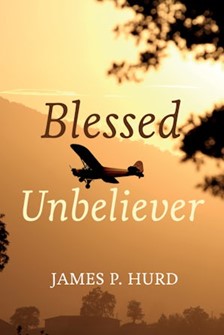
Why did Sean, who received his Christian teaching with his mother’s milk, turn his back on faith and walk away? But unbeknownst, grace pursued.

Blessed Unbeliever (paper or Kindle version) can be found at Wipf and Stock Publishers, Amazon https://a.co/d/9su5F3o or wherever good books are sold.

I remember telling myself, Wow, Eve! The big green snake was scary, but he really talked sense. I ate the fruit and I didn’t die. Anyway, God loves me so much I’m sure one piece of fruit is no big deal for him.

Shortly after we’d arrived in the park God told us, “Enjoy, celebrate, but don’t eat any fruit from the Tree of the Knowledge of Good and Evil or you’ll die.” (Adam and I referred to the tree as “the TKGE.”)

I felt so happy when I walked over to the vegetable garden, my bare feet sinking into the most, fresh-smelling soil. I asked Adam, “If God loves us, why would he deny us fruit that looks so good?”

Adam says, “I don’t know; he has his reasons, I guess. Maybe it’s a test. Anyway there’re so many other good trees.”

“Yeah, but I wonder if the TKGE fruit looks different. There must be something special about it.”

“Maybe, but I’m busy here with the garden, so let’s talk about it later.” (In those special days, guys grew and ate green, leafy vegetables.) . . .  To read more, click here:  https://jimhurd.com/2024/04/30/trouble-in-paradise/

Leave a comment on the website and share with others. Thanks.

                                   Windows on our beautiful world

 (Thanks to Car Talk puzzler archives.) Three guys check into a motel in the middle of nowhere. They’re running from the law and they have to lay low for a night. They approach the front desk clerk and he tells them that one room will be $30. This is the cheapest motel ever. 

They are really strapped for cash so they decide to share one room. They each give the clerk $10 and then they go to the room. 

After they leave, the clerk realizes that he overcharged them. They were having a special on rooms, and the price was supposed to be $25, not $30. So, he gives the bellboy $5 and asks him to return this to the three guys, since he overcharged them. 

So the bellboy takes the $5, but as he’s heading to the room, he thinks to himself, “Well, there are three guys, and $5. They won’t be able to split this evenly, so I’m going to keep $2, and give them $3.” He says to them, “Here’s $3. You were overcharged for the room.” And they say, “Thank you very much.” He leaves, having pocketed the $2.

So here is the question. 

They each spent $10 to start off with. Then they each get back $1. So they each spent $9 on the room. And 9 times 3 is 27. Plus the $2 that the bellboy stole. That all equals $29. 

So, what happened to the other dollar? Since they originally spent $30?

(Answer will appear in next month’s WINGSPREAD ezine.)

Answer to last month’s puzzler: 

You recall the guy had two girlfriends—one in Brooklyn and one in the Bronx. So, which one should he visit? The trains to Brooklyn and the Bronx run equally often—every 10 minutes, so he figures if he randomly arrives at the station, he should have equal time with each girl. But that isn’t what happens. Nine out of ten times he ends up going to Brooklyn. So, what is happening with these ten-minute trains? 

And here is the answer. Yes, the trains ran equally often, every 10 minutes. That is true. But the schedule was such that the Bronx train would always arrive one minute after the Brooklyn train. So, when the guy would get to the station and go down the steps to the platform, unless he got in there during that one minute window between the Brooklyn train and the Bronx train, he would always take the Brooklyn train because it always arrived first. So he would get on whichever train arrived first. And that was almost always the Brooklyn train. 

Subscribe free to this Ezine  

Click here https://jimhurd.com/home/  to subscribe to this WINGSPREAD ezine, sent direct to your email inbox, every month. You will receive a free article for subscribing. Please share this URL with interested friends, “like” it on Facebook, retweet on Twitter, etc.

If you wish to unsubscribe from this Wingspread Ezine, send an email to hurd@usfamily.net and put in the subject line: “unsubscribe.” (I won’t feel bad, promise!) Thanks.

Who knew? It was Shakespeare who invented these common words: accommodation, all-knowing, amazement, countless, dexterously, dislocate, dwindle, frugal, indistinguishable, lackluster, laughable, premeditated, star-crossed

Some wise sayings to celebrate spring:

  1. When one door closes and another door opens, you are probably in prison.
  2. Age 60 might be the new 40, but 9:00 pm is the new midnight.
  3. The older I get, the earlier it gets late.
  4. When I say, “The other day,” I could be referring to any time between yesterday and 15 years ago.
  5. I had my patience tested. I’m negative.
  6. Remember, if you lose a sock in the dryer, it comes back as a Tupperware lid that doesn’t fit any of your containers.
  7. If you’re sitting in public and a stranger takes the seat next to you, just stare straight ahead and say, “Did you bring the money?”
  8. When you ask me what I am doing today, and I say “nothing,” it does not mean I am free. It means I am doing nothing.
  9. I finally got eight hours of sleep. It took me three days, but whatever.
  10. I run like the winded.
  11. I hate when a couple argues in public, and I missed the beginning and don’t know whose side I’m on.
  12. When someone asks what I did over the weekend, I squint and ask, “Why, what did you hear?”
  13. I don’t mean to interrupt people. I just randomly remember things and get really excited.
  14. When I ask for directions, please don’t use words like “east.”
  15. Sometimes, someone unexpected comes into your life out of nowhere, makes your heart race, and changes you forever. We call those people cops.

Wordplay — ideas for marketing signage.

  • Signage for an Electrician’s truck:
    Let us remove your shorts.
  • Signage for a curtain delivery truck:
    Blind man driving.
  • Signage for a Podiatrist’s office:
    Time wounds all heels.
  • Signage for a Septic Tank Truck:
    Yesterday’s Meals on Wheels
  • Signage for an Optometrist’s Office:
    If you don’t see what you’re looking for,
    You’ve come to the right place.
  • Signage for a Plumber’s truck:
    We repair what your husband fixed.
  • Don’t sleep with a drip. Call your plumber.
  • Signage for a Tire Repair Shop:
    Invite us to your next blowout.
  • Signage for a Maternity Room door:
    “Push. Push. Push.”
  • Signage for a Car Dealership:
    The best way to get back on your feet—miss a car payment.
  • Signage for a Muffler Shop:
    No appointment necessary. We hear you coming.
  • Signage for a Veterinarian’s waiting room:
    Be back in 5 minutes. Sit! Stay!
  • Signage for a Shoe repair store:
    We will heel you
    We will save your sole
    We will even dye for you
  • Signage for an Electric Company:
    We would be delighted if you send in your payment on time
    However, if you don’t, YOU will be de-lighted.
  • Signage for a Restaurant:
    Don’t stand there and be hungry; come on in and get fed up.
  • Signage for a Funeral Home:
    Drive carefully. We’ll wait.
  • Signage for a Propane Filling Station:
    Thank Heaven for little grills.
  • Signage for a Radiator Shop:
    Best place in town to take a leak.

My work here is done. . . .

Trouble in Paradise

Thus, they in mutual accusation spent
The fruitless hours, but neither self-condemning.
And of their vain contest appeared no end. 
                                                            Milton

I remember telling myself, Wow, Eve! The big green snake was scary, but he really talked sense. I ate the fruit and I didn’t die. Anyway, God loves me so much I’m sure one piece of fruit is no big deal for him.

Shortly after we arrived in the park God told us, “Enjoy, celebrate, but don’t eat any fruit from the Tree of the Knowledge of Good and Evil or you’ll die.” (Adam and I referred to the tree as “the TKGE.”)

I remember I was so happy strolling over to the vegetable garden, my bare feet sinking into the most, fresh-smelling soil. I asked Adam, “If God loves us, why would he deny us fruit that looks so good?”

Adam says, “I don’t know; he has his reasons, I guess. Maybe it’s a test. Anyway there’re so many other good trees.”

“Yeah, but I wonder if the TKGE fruit looks different. There must be something special about it.”

“Maybe, but I’m busy here with the garden, so let’s talk about it later.”

I decide I’ll walk over and take a good look at it without telling Adam. He would probably try to keep me from going or at least insist on going with me, but he’s always busy tinkering, doesn’t like to be disturbed—besides he’d probably be bored.

I’m walking among the oak, apple and pear trees, glowing orange and purple maple leaves spiraling down in front of me. Then I spot the TKGE. It seems kind of ordinary, really, but with big red fruit. No fence around it or anything. I think, I’ll just walk over and look at it; I won’t touch it.

Then I see a form gliding through the nearby trees, now revealed, now hidden by the leaves.  Smooth, shiny green skin, dark unblinking eyes, looking steadily at me—I’m fascinated. It’s like the dirty parts in a movie—you try not to look, but you do anyway.

I startle when he speaks —“The fruit trees are great, aren’t they? Did God say you can’t eat from any of these trees?”

“Oh no, actually we can eat from all of them, except we can’t even touch that Knowledge Tree there or we’ll die!”

“You won’t die! It’s just that he knows that if you eat it you’ll have great knowledge like he does. He’d rather keep you in the dark. I’ve been around here for a while; I know how these things work. Anyway, you’re special. If God loves you, he wouldn’t want to deny you anything, would he? What’s the point of creating the big red fruit if he didn’t mean for you to eat any?”

His slender head now looms over my shoulder. He seems so logical, trustworthy, the voice of experience. I’m smelling a pungent perfume, feeling the pull of his eyes, and sensing the sweet fruit. I kind of wish Adam were here with me….

All at once, I reach out my hand, grab the fruit, and eat—it explodes sweet in my mouth. I eat the whole thing but, not wanting to litter, I save the core. The snake has disappeared. And I’m not dead! I can’t wait to tell Adam.

I joyously run back to find Adam tilling the kale and Swiss chard. (In those special days, guys ate green, leafy vegetables.) “Adam—I ate the TKGE fruit and look, I didn’t die! We must have misunderstood what God said. It tastes so sweet!”

“O boy! Who’ve you been talking to? Do I have to go everyplace with you?

“Well, you were busy and I was only going to look at it.”

“But what’re we going to tell God? He said don’t eat it.”

“Why did he put it there if he didn’t want us to eat it?”

His face clouds, he hesitates, then suddenly he grabs the core from my hand and eats it. Just like a guy, I think. But is he really hungry? Or just so dependent on me that, realizing I might be kicked out of the park, he wants to be sure he’s kicked out with me?

Now Adam starts looking me up and down—and up and down. I blush. Strange; I’ve never felt self-conscious before. I find some fig leaves and use fibers to sew them together to make loincloths for us. As an afterthought, I sew two extra small round discs for me. We walk deeper into the forest because, for the first time, we just want to be alone.

After a couple of hours I hear God calling out: “Adam, where are you?” (Why doesn’t God call for both of us?) We walk deeper into the forest, playing hide and seek.

God finally catches up with us and says to Adam, “Why are you hiding?”

So my smart husband comes up with a great excuse: “I was afraid because I was naked, so I hid.”

God asks, “Who told you that you were naked? Did you eat the fruit I told you not to eat?”

Adam gets a pained look on his face, immediately confesses, and then passes the buck: “Yep, I did, but this woman that you gave me insisted that I eat it, and you know her—I just couldn’t say no.”

At this point God rolls his eyes, gives up on Adam, and turns to me. I boldly re-pass the buck: “Well, the serpent told me to eat it, and you know weak little me—no sales resistance. Adam wouldn’t come with me—he didn’t even warn me.”

God finds the serpent and tells him the bad news: “Henceforth you’ll be looking at life from shoelace level. And people will step on your head.” The unblinking eyes slink off to disappear into the greenery.

Then he turns to me: “It will hurt you to bear children, and now your husband will be telling you what to do.”

“You mean Adam? How well do you know this man? He can’t even change his mind without consulting me. Can’t follow instructions, no initiative. How could he be my ‘leader?’”

“Well, Eve, you know he’ll be ticked if he isn’t in charge. And even though you have to pretend he’s the leader in public, you can always influence him at home. Trust me; this’ll work.”

“Well, I guess I’ll just have to try to keep Adam from screwing up.”

Then God turns to Adam: “Failure of leadership! Why didn’t you stop her from going? Why didn’t you tell her not to talk to strangers?”

Adam replies,” I’ve tried that before, but you know how hard it is to tell her anything.”

God says, “You thought life was complicated in the garden. But now you’ll have to dig in harder soil, fight sharp thorns and predatory insects and perform sweaty labor. It isn’t going to be a walk in the park.” Adam hung his head and thought about his easy work—the garden vegetables had almost sprung up by themselves.

God replaced our fig-leaf loincloths with the skins of slain animals, kicked us out of the park and posted a guard against our returning. My face turned red when Adam asked God if he could eat the meat. Then he made a fateful decision that influenced all of his male descendants—he promised himself, I’ll never willingly eat green leafy vegetables again. I remember those early “outside” days. We hung on the heavy lattice fence like banished traitors, looking in at the beautiful park we could never again enter. Brambles had breached the fence and the grass inside was browning. I thought, How ungrateful we were; how much we took for granted.

Adam turned to me, “Eve, why did you wander off like that? Anyway, who ever heard of a talking snake? Why didn’t you ask me before you ate the fruit?

“Well, why didn’t you warn me? Why didn’t you put your foot down? Then I never would have gone. Or at least, you should have insisted on going with me. Failure of leadership.”

 “Eve, Didn’t you even stop to think? You knew God had a good reason to prohibit that tree.”

“Well, maybe, but it’s not my fault you ate the fruit that I gave you.”

And so we passed the hours in fruitless arguing.

How was I to know that my simple decision would affect our grandchildren’s grandchildren? That they would only be able to dream about the shining park? They’ll blame us for eating, but I’ll bet they would’ve done the same thing. The apple doesn’t fall far from the tree.

WINGSPREAD for April, 2024

Please forward and share this WINGSPREAD Ezine with others. Thank you.

Contents

  • Writer’s Corner
  • Blessed Unbeliever now available
  • New story
  • This month’s puzzler
  • Wingspread Ezine subscription information
  • Wisdom

Tip for writers: You can spin a tale that exists only in your head. But if you’re talking about a historic, known place, character or event, you’d better research it and get your facts right. Most of your readers won’t notice or care, but there’s that one that will find the error, then publish your mistake far and wide on Facebook.

Word of the month: PROP BET. Short for “proposition.” Propping is making a bet on something the bookmakers usually don’t take bets on. For instance, betting on the number of free throws in a basketball game.  

Question for you:  Writing a novel takes writing skill and great research. But it also takes imagination. You must seduce your reader into believing in locations, events or situations that are unusual, spun out of thin air. A favorite example: Charles Dickens tries to convince us that the evil groveler, Uriah Heep, is a believable character. How do you fire up your imagination when you write?

BLESSED UNBELIEVER novel

Blessed Unbeliever (paper or Kindle version) can be found at Wipf and Stock Publishers, Amazon https://a.co/d/9su5F3o or wherever good books are sold.

I can’t control what people mean by “evangelical” any more than I can demand that non-English speakers understand my English. A word means what the hearer thinks it means. Meanings of words change. For instance, “gay” used to mean bright and happy, as in “a gay party.” “Cool” used to refer to air temperature. No more. Thus, I can never guarantee other people will accept my parochial definition of “evangelical.” It used to be that people thought a fundamentalist was an evangelical on steroids and an evangelical was a fundamentalist on Prozac No more.. Today, “evangelical” means something quite different. . . .

To read more, click here:  https://jimhurd.com/2024/04/08/evangelicalism-whats-in-a-word/

Leave a comment on the website and share with others. Thanks.

(Thanks to Car Talk archives) Many years ago, one of our producers lived in New York. And he was a two-timing guy; he had two girlfriends.. 

One of the girlfriends lived in Brooklyn and the other lived in the Bronx. 

He could never decide which one to visit. He liked both of them equally and decided that he would just leave it to fate. He knew that when he went down to get the train, he would descend the stairs into the subway and pretty soon a train would come. And if it was the Bronx train, he’d get on the train and go visit the girl in the Bronx. If it was the Brooklyn train, he’d get on and visit the girlfriend in Brooklyn. And what made it great was that the trains ran equally often, every 10 minutes.

So he decided that he would go down to the train at random times during the day or night. He didn’t know the schedules of these trains, but he did know that every 10 minutes there would be a Brooklyn train, and every 10 minutes there would be a Bronx train. He figured his chances are 50/50, either way. 

However, he finds himself going to Brooklyn 9 out of 10 times. Even though the trains run equally, every 10 minutes to each location, and he chooses random times to go down to the train, he ends up 9 out of 10 times going to Brooklyn. 

Why was this happening?

(Answer will appear in next month’s WINGSPREAD newsletter.)

Answer to last month’s puzzler: 

What word has three sets of double letters? And what word has two H’s back to back? There might be a bunch of answers to this one. 

The first one is the word ‘bookkeeper’! b.o.o.k.k.e.e.p.e.r! Love that word. There may be others out there, but this one is the one we were looking for. 

And for the second word, the answer is, ‘withhold’. Two H’s in that word. And I’m sure there are many more out there, especially if people use Google. But these two were the ones we were looking for.

Subscribe free to this Ezine  

Click here https://jimhurd.com/home/  to subscribe to this WINGSPREAD ezine, sent direct to your email inbox, every month. You will receive a free article for subscribing. Please share this URL with interested friends, “like” it on Facebook, retweet on Twitter, etc.

Strategies of an avid reader

Will Rogers on aging:

First ~ Eventually you will reach a point when you stop lying about your age and start bragging about it.

Second ~ The older we get, the fewer things seem worth waiting in line for.

Third ~ Some people try to turn back their odometers. Not me; I want people to know why I look this way. I’ve traveled a long way, and some of the roads weren’t paved.

Fourth ~ When you are dissatisfied and would like to go back to your youth, think of Algebra.

Fifth ~ You know you are getting old when everything either dries up or leaks.

Sixth ~ I don’t know how I got over the hill without getting to the top.

Seventh ~ One of the many things no one tells you about aging is that it’s such a nice change from being young.

Eighth ~ One must wait until evening to see how splendid the day has been.

Ninth ~ Being young is beautiful, but being old is comfortable and relaxed.

Tenth ~ Long ago, when men cursed and beat the ground with sticks, it was called witchcraft , , , Today it’s called golf.

 Will Rogers, who died in a 1935 plane crash in Alaska with bush pilot Wiley Post, was one of the greatest political country/cowboy sages this country has ever known. Some of his sayings:

1. Never slap a man who’s chewing tobacco.

2. Never kick a cow chip on a hot day.

3. There are two theories to arguing with a woman. Neither works.

4. Never miss a good chance to shut up.

5. Always drink upstream from the herd.

6. If you find yourself in a hole, stop digging.

7. The quickest way to double your money is to fold it and put it back into your pocket.

8. There are three kinds of men:

The ones that learn by reading. The few who learn by observation.

The rest of them have to pee on the electric fence and find out for themselves.

9. Good judgment comes from experience, and a lot of that comes from bad judgment.

10. If you’re riding’ ahead of the herd, take a look back every now and then to make sure it’s still there.

11. Lettin’ the cat outta the bag is a whole lot easier’n puttin’ it back.

12. After eating an entire bull, a mountain lion felt so good he started roaring.

He kept it up until a hunter came along and shot him.

The moral: When you’re full of bull, keep your mouth shut.

If you wish to unsubscribe from this Wingspread Ezine, send an email to hurd@usfamily.net and put in the subject line: “unsubscribe.” (I won’t feel bad, promise!) Thanks.

Evangelical: What’s in a Word?

I can’t control what people mean by “evangelical” any more than I can demand that non-English speakers understand my English. A word means what the hearer thinks it means. Meanings of words change. For instance, “gay” used to mean bright and happy, as in “a gay party.” “Cool” used to refer to air temperature. In the last few decades, “evangelical” has grown to mean something different. It used to be that people thought a fundamentalist was an evangelical on steroids and an evangelical was a fundamentalist on Prozac No more.

I started out fundamentalist, not evangelical. At Silver Acres church Pastor Cantrell would say, “If you wish to join our church, we’re independent, non-denominational, unaffiliated, Bible believing, pre-millennial, and pre-tribulational.” I thought, if you understood all that, you deserved to be baptized! Two things were important: right belief and right lifestyle. Right belief meant belief in an inerrant Bible. At Silver Acres, a wall-to-wall mural showed scenes of the fantastic beasts of Revelation and the elect (us) flying up to heaven before the world’s tribulation and the coming of the millennial reign. I don’t remember studying Jesus’ Beatitudes; fundamentalists thought these were applicable only in the millennial age. We concentrated more on the epistles.

We fundamentalists soldiered through life separated from the corrupt world, trying to recruit others to our small band. We avoided a select list of behaviors—I didn’t go to a dance until I was 22 years old. Ditto for drinking alcohol or attending a public movie theater. I never even tried smoking. My sister and I watched Spade Cooley smoking on a black and white show and knew he wasn’t a Christian. These prohibitions, not the Beatitudes, guided my behavior and made me feel superior to the worldly folks around me. At the same time, I felt myself a weak outsider to their way of life.

After graduating Moody Bible Institute I attended Cal State Fullerton. My fundamentalist identity didn’t work very well there so I started calling myself evangelical. I sought to make friends with “worldly” people and broadened my tolerance for other Christians—even Catholics.

People used to define an evangelical as “somebody who liked Billy Graham” (even though fundamentalists would criticize him for hanging around with the liberal “modernists”) According to British historian David Bebbington, an evangelical Christian believed in four essential doctrines: 1. A person must have a “born again” conversion experience—hence evangelicals were known as “born-again Christians.” 2. Jesus’ death on the cross atones for humankind’s sins. 3. The Bible is the ultimate spiritual authority. (When you ask, “How does God come to you?” an evangelical is more likely to say, “through the Bible.”) 4. Christians ought to actively share their faith through witnessing and good works.

And yet today most people hearing the word “evangelical” don’t think of pious, separated, sober people who take the Bible seriously. “Evangelical” has fuzzy boundaries. A 2022 comparative survey asked the question, Would you describe yourself as a born again evangelical? Between 15 – 25% of Mormons, Muslims and Catholics answered “yes.” (https://www.graphsaboutreligion.com/p/the-rise-of-the-non-christian-evangelical) Today, some of the people in the following groups self-identify as evangelical: People in historic “mainline” churches (Lutheran, Methodist, Presbyterian, Episcopal and also Catholic). People of other religions such as Islam. Even some people who are atheist or agnostic. What do these people mean by “evangelical?”

Today, for many people,“evangelical” means a certain political persuasion. The conservative evangelical block is the most reliable voting block for right-wing political causes. This block is even rehabilitating the term “Christian nationalism.” To help pay his legal bills, the Republican nominee for President is now hawking the “God Bless the USA” King James Bible ($59.99) which also contains the US Constitution and Declaration of Independence, thus lending bible’s advertising campaign his name, likeness and image.

Today, “evangelical” may refer to people who would vote for anti-abortion laws. They would favor restricting trans people from church leadership and would oppose blessing same-sex couples. Many would oppose D.E.I. (diversity, equity and inclusion) being taught in public schools. All of this seems more political than biblical.

Sadly, the term “evangelical” has been contaminated by right-wing politics and thus has lost its traditional meaning to most people outside the church. Thus, if you wish to identify today as an evangelical Christian (in the traditional sense) you must use a different term!

So, do I call myself an evangelical? If I’m talking to evangelical “insiders” who share the old definition, maybe. But in general I avoid the term with people outside the church. I use “Christ follower” or simply “Christian.” Why? Because if you wish to maintain your true identity you must use the language, not of your grandparents, but of contemporary hearers. To maintain the meaning you must change your words.

WINGSPREAD for March, 2024

Please forward and share this Ezine with others. Thank you.

  • Writer’s Corner
  • Blessed Unbeliever  available
  • New story: “Pitch Perfect”
  • This month’s puzzler
  • Wingspread Ezine subscription information
  • Wisdom

This month’s writing quote: “If it sounds like writing, I rewrite it.” Elmore Leonard

Tip for writers: Begin your story in media res. You do not have to “begin at the beginning.” Try starting your story just before or just after the peak of the action. Example: “I’m not dead! But I have no idea what happened.” This hooks the reader. Then, go back and start at the beginning.

Word of the month: OBLIQUE DIALOGUE. Good dialogue makes a good story. It should sound natural, though. Just statement-response, statement-response gets stilted and boring; it doesn’t sound natural. Oblique dialogue means that the response is oblique; not just a simple response. For example—Kathy: “I wonder when Mom will get home.” Bill: “I worry about her being gone so much.”   Another—Kathy: “Do you think this dress makes me look fat?”  Bill (a wise husband): “I think you have great taste in clothes.” Notice he doesn’t directly answer the question.

Question for you:  How to overcome writer’s block?

  • Get a list of “prompts” and write briefly on several of them.
  • Take a piece you’ve written and try to condense into just 100 words.
  • Ask “what if?” For instance, what if a character is carrying a dark secret? What if she were born in a different town?
  • Mine your own life for people and events that you can use to transform your writing.
  • Freewrite. Just start writing. The only rule is do not stop.

BLESSED UNBELIEVER novel

Blessed Unbeliever (paper or Kindle version) can be found at Wipf and Stock Publishers, Amazon https://a.co/d/9su5F3o or wherever good books are sold.

A normal smoggy day at Chino airport. I’d just taken off with my student, Stan, whom I was checking out in the Taylorcraft.

The takeoff was normal, but after we leveled off, our increasing speed tended to force the nose up.

“Trim the nose down, Stan.”

“I am trimming down.”

“Trim down more.”

“I am!”

“Give me the controls.”

I grabbed the dual control wheel and it just about hit me in the face! The airplane was trying mightily to pitch up. . . .

To read more, click here  https://jimhurd.com/2024/03/09/pitch-perfect/

Leave a comment on the website and share with others. Thanks.

(Thanks to Car Talk puzzler archives.)
A friend of mine who works at a bank was doing her accounting duties. She noticed that there was a balloon payment coming up and she said, “Well, that’s interesting. Balloon. b.a.l.l.o.o.n. There are two sets of double letters in that word. Hmm.”

And so she thought to herself, is there a word in the English language that has three sets of double letters in a row? And as I was working on this one, I came across a word that has two H’s in it, back to back. 

So the puzzler has two parts. What word has three sets of double letters in it? And what word has a double H?

Now, there may be 2500 answers to this one, I know. Just have fun with it. 

(Answer will appear in next month’s WINGSPREAD newsletter.)

Answer to last month’s puzzler: 

Recall Uncle Enzo had 11 antique cars and his will specified: one-half of them should go to his oldest son, one-fourth to his middle son and sixth of them to his youngest son. How will they divide them up?

Then Uncle Vinny shows up with his car and he says, “Look, I will lend you my car.” So, once he lends them his car, they have 12 cars.

So, now with 12 cars, 6 of them go to the oldest son. That would be half. A fourth of the cars, or 3 cars, go to the middle son, and a sixth of the cars, or 2 cars, go to the youngest son. That leaves only one car.

Then, Vinny takes his car back. The split has happened the way Uncle Enzo wanted it to, because 6, 3 and 2 make 11. 

Fractions are fun, right?

Subscribe free to this Ezine  

Click here https://jimhurd.com/home/  to subscribe free to this WINGSPREAD ezine, sent direct to your email inbox, every month. You will receive an article for subscribing. Please share this URL with interested friends, “like” it on Facebook, retweet on Twitter, etc.

If you wish to unsubscribe from this Wingspread Ezine, send an email to hurd@usfamily.net and put in the subject line: “Unsubscribe.” (I won’t feel bad, promise!) Thanks.

Wordplay — thoughts on modern era marketing signage

Signage for an Electrician’s truck: Let us remove your shorts

Signage for a curtain delivery truck: Blind man driving

Signage for a Podiatrist’s office: Time wounds all heels

Signage for a Septic Tank Truck: Yesterday’s Meals on Wheels

Signage for an Optometrist’s Office: If you don’t see what you’re looking for, you’ve come to the right place.

Signage for a Plumber’s truck: We repair what your husband fixed. Don’t sleep with a drip. Call your plumber.

Signage for a Tire Repair Shop: Invite us to your next blowout

Signage for a Maternity Room door: Push. Push. Push.”

Signage for a Car Dealership: The best way to get back on your feet—miss a car payment.

Signage for a Muffler Shop: No appointment necessary. We hear you coming.

Signage for a Veterinarian’s waiting room: Be back in 5 minutes. Sit! Stay!

Signage for a Shoe repair store: We will heel you and save your sole, we will even dye for you.

Signage for an Electric Company: We would be delighted if you send in your payment on time. However, if you don’t, YOU will be de-lighted.

Signage for a Restaurant: Don’t stand there and be hungry; come on in and get fed up.

Signage for a Funeral Home:: Drive carefully. We’ll wait.

Signage for a Propane Filling Station: Thank Heaven for little grills.

Signage for a Radiator Shop: Best place in town to take a leak.

And—last but not least—Signage for another Septic Tank Truck: Caution—This Truck is full of Political Promises.

When I fed the poor they called me a saint. When I asked why they were poor, they called me a Communist.                —Bishop Dom Helder Camara of Recife, Brazil

Pitch Perfect

A normal smoggy day at Chino airport. I’d just taken off with my student, Stan, whom I was checking out in the Taylorcraft.

The takeoff was normal, but after we leveled off, Stan was having trouble keeping the plane’s nose down. This was normal, since our increasing speed tended to force the nose up.

“Trim the nose down, Stan.”

“I am trimming down.”

“Trim down more.”

“I am!”

“Give me the wheel.”

I grabbed the dual control wheel and it just about hit me in the face! The airplane was trying mightily to pitch up. If the nose had risen a bit more, the airplane would have stalled and plummeted toward the ground. I could barely keep it level by forcing the control wheel forward. “Stan, we need to turn back to the airport; something’s wrong.” I said.  Let me land the plane because we don’t know how it will react.”

I held forward pressure on the wheel all the way to landing, then jumped out and walked around to the tail. What was I looking for? The horizontal tail surface of the aircraft has two moveable parts—elevator and trim tab. The elevator moves up and down in flight, causing the airplane to pitch up or pitch down.

On the back of the elevator is a tiny trim tab operated by a trim tab wheel in the cockpit. Rolling the wheel back causes the trim tab to turn down into the slipstream (the wind that flows past the airplane in flight). This pushes the whole elevator up, causing the nose of the plane to pitch up. When the tab is turned up, the elevator is pushed down, causing the nose to pitch down.

So I yelled to Stan who was still in the cockpit, “Stan; roll the trim wheel forward.” He rolled. I carefully observed the trim tab back at the tail. As Stan rolled the wheel forward, the trim tab was turning downwards! In flight, this would force the elevator up, which would pitch the nose up, the opposite of how it was supposed to work. The mechanic (probably my boss) had hooked up the trim control cable backwards! “We can’t fly this airplane until we get this control fixed!” I told Stan.

You don’t normally check the trim tab movement when preflighting an airplane. But this mistake could have been disastrous. I hate to think if Stan had been flying without an instructor.

Wingspread Ezine for February, 2024

Please forward and share this E-zine with others. Thank you.

Contents

  • Writer’s Corner
  • Blessed Unbeliever
  • New story
  • This month’s puzzler
  • Wingspread Ezine subscription information
  • Wisdom

Tip for writers: Rabbit trails. Wonderful paragraphs, or even chapters, that interrupt the narrative but may enrich the story. (E.g., in Les Miserables Victor Hugo interrupts the narrative by inserting four chapters of deep, miasmic description of the extensive sewer system under Paris.) How does a writer get away with this—the modern reader may lose interest if the author abandons the narrative. Some answers: 1. Break up these interruptions into smaller bits. 2. Insert some narrative into the diversion. 3. Never put a diversion in the first chapter of the book. 4. Include a protagonist or main character in the diversion. 5. Explain to the reader the purpose of the diversion. 6. Know that some readers may skip over a rabbit trail to get on with the dominant narrative. Charles Darwin, in his own family’s reading together, called this skipping “skipibus.” It’s alright; you have my permission.

Word of the month:  REVENANT: One that returns after long absence or after death. E.g., “He thought I was dead; I was a revenant from his distant past.”

Book of the month: LES MISERABLES. Victor Hugo. 1862. Translated by Charles Wilbour. Modern Library: New York. 1200 pages. A vast narrative set in Paris and its environs in the early 1800s. Fleeing from police inspector Javert, the convicted thief Jean Valjean robs a kind bishop who has sheltered him, but the bishop refuses to turn him over to the authorities. Valjean resolves to amend his life. He adopts little Cossette, daughter of a prostitute. Javert pursues them but at the insurrection barricades, Valjean saves Javert’s life. When Cossette falls in love with Marius Valjean hates him for stealing him away from her. And yet, Valjean saves Marius’ life, delivers him to precious Cossette, and as his own life ends, endows the happy couple with great wealth.

Question for you:  How do you personally overcome writer’s block? I’ll put some of your responses in the next Wingspread.

Blessed Unbeliever (paper or Kindle version) can be found at Wipf and Stock Publishers, Amazon https://a.co/d/9su5F3o or wherever good books are sold.

It’s too late for me, so you ask Grandpa Anderson what it was like building his tarpaper shack on the South Dakota prairie. Or ask him how he survived the death of his two young boys (your uncles), Jamie and Calvin. Grandpa and Grandma won’t be around forever, and after they’re gone you’ll long to be able to ask them questions. Ask them now. . . . To read more, click here  https://jimhurd.com/2024/02/06/a-letter-to-my-fourteen-year-old-self-you-are-not-weird/

Leave a comment on the website and share with others. Thanks.

(Thanks to “Car Talk Archives”) Many years ago, we had an uncle named Enzo. We only vaguely remember him. We were very young. Anyway, he went back to Italy. But before he went, he had 11 antique cars here. Each of them had a value of about 500 bucks. This was a while ago. 

So, when our Uncle Enzo died, he left a very interesting will. His will said that his 11 cars be divided among his three sons. But he wanted the oldest son to get more of his estate, due to his age. 

Half of the cars would go to the eldest son. One fourth of the cars to the middle son. And one sixth of the cars to the youngest son. 

So after the reading of the will, everyone was puzzled. Because there are 11 cars, and 11 is a prime number, it cannot be divided in halves, fourths or sixths. 

So just as everyone is scratching their heads not knowing what to do, our Uncle Vinny shows up in his 1962 Chevy Bel Air and says, “Don’t worry. I know what to do. I can help with my car.”

And the puzzler is, how do they do it?

Good luck.
 

Answer to last month’s puzzler: 

“Crusty” the mechanic had a little test to check out how good a car’s engine was. So, what was Crusty doing under the hood?

This little test is something he could do with his eyes closed. He didn’t even have to look at the engine. In fact, he often did this with his eyes closed so as not to be distracted by anything else. 

What he was doing was disconnecting the coil wire so the engine would crank, but it wouldn’t start. It was a kind of compression test. So he was listening for how the engine would crank and whether or not it would crank evenly. So as every piston came up on its compression stroke, he would hear the cadence of the engine. Cool, huh?

Subscribe free to this Ezine  

Click here https://jimhurd.com/home/  to subscribe to this WINGSPREAD ezine, sent direct to your email inbox, every month. You will receive a free article for subscribing. Please share this URL with interested friends, “like” it on Facebook, retweet on Twitter, etc.

If you wish to unsubscribe from this Wingspread Ezine, send an email to hurd@usfamily.net and put in the subject line: “unsubscribe.” (I won’t feel bad, promise!) Thanks.

Joyce Johnson said: Artists are nourished more by each other than by fame or by the public. To give one’s work to the world is an experience of peculiar emptiness. The work goes away from the artist into a void, like a message stuck into a bottle and flung into the sea.

He who has a “why” can bear any “how.” Nietzsche

The more often a man feels without acting, the less he will be able ever to act, and, in the long run, the less he will able to feel.   C.S. Lewis

The difficulty of literature is not to write, but to write what you mean. Robert Louis Stevenson

He was too cowardly to do what he knew to be right, as he had been too cowardly to avoid doing what he knew to be wrong.                  Charles Dickens

A Letter to my Fourteen-Year-Old Self: You are not Weird

Hello, Jamie. Here I am over 80 years old and I realized something—you’re not weird! I found this out about you much later. Know that I’m in your corner pulling for you, interested in all your details. Right now, you’re wondering why your nose is too high on your face, how to get rid of freckles, how to get a tan on non-tannable skin. How to grow more muscle. How to stand up to bullies. How to afford the clothes that the Big Men on Campus wear. How to get more than a glance from girls. I know; I’ve been there.

I know it’s easy to think about what’s not going right in your life—few friends, no girlfriends, clumsy at sports, lack of money, too much control from parents. Even questioning your faith. Instead of obsessing about what’s wrong. But I recommend you focus on all you have, all the stuff you’re taking for granted, stuff most people in the world do not have: job opportunities, faith formation and church, health, the privilege of whiteness, a peaceful life, shelter, transportation, plenty of food, education, mentors and friends—you’ve got it all.

Constantly rehearse what God has done for you—how he’s gotten you out of trouble, what he’s given you. Treasure your interest in mission aviation—it will channel so many of your life choices. Remember that God will protect you from the trap of lust.

Embrace the truth that God has a plan for your future. Indeed, you are his beloved. I know—sometimes all you see is that you’re alone and discouraged but God is supporting you, directing your future. I know you think that to get friends you need to be a strong, funny, handsome, interesting person. Only after high school did I learn the truth—people are interested in people who are interested in them. Learn to talk in terms of the other person’s interests, not your own. (Read Dale Carnegie, How to Win Friends and Influence People.) Focusing on others will attract others to you. Actually, people want to talk about themselves. Ask questions and pursue conversations without jumping in with your own problems, your own stories. Don’t interrupt. I’m still working on being a good listener. People like people who will listen.

Your social life will only get better through high school and beyond—you gotta believe it. You will mature a ton and be better able to handle the challenges you will face. You will gain more friends, have more girlfriends. You will find people are becoming truly interested in you.

Are people opposing you? Hey; to be alive is to have conflicts. But when people accuse you or put you down, know that a lot of that comes from their own insecurity. Don’t be defensive. If someone criticizes you, just smile and say, “I’ve got lots of things I’m working on.”

Look around at the adults who believe in you—your pastor, teacher, your parents’ friends, your employer, your school counselor. Let them know you’re thankful for all their interest and advice. Looking back, I am stunned at how many of these people I took for granted and never even thanked.

It’s too late for me, so you ask Grandpa Anderson what it was like building his tarpaper shack on the South Dakota prairie, or ask him how he survived the death of his two young boys (your uncles), Jamie and Calvin. Grandpa and Grandma won’t be around forever, and after they’re gone you’ll long to be able to ask them questions. Ask them now.

After I married and had kids, I realized that having my own teenagers was punishment for the way I treated my parents when I was a teenager! Notice how your parents sacrifice for you—time, money, acts of kindness. Thank them for this. Cherish their love and support for all you do. Don’t take this stuff for granted.

Take time to explore your world. Learn where your water comes from, your electricity. Learn how your neighborhood is laid out. Go on a mission or a service trip. Travel, if you can. You will not have much time for this later.

Think about a part-time job and start saving a little money each month. Get smart on money matters—saving, investing, spending. Don’t buy a bunch of stuff. These things won’t matter when you get older.

Read the Bible each day and pray the Scriptures. Wise Solomon counsels—“Remember now thy creator in the days of thy youth . . .”

Believe it and believe God when he proclaims—“You are not weird!”

WINGSPREAD for January, 2024

Please forward and share this E-zine with others. Thank you.

  • Writer’s Corner
  • Blessed Unbeliever now available
  • New story
  • This month’s puzzler
  • Wingspread Ezine subscription information
  • Wisdom

Tip for writers: If someone hands you a MS and asks you to “look it over and tell me what you think,” never accept it–they may merely be looking for encouragement. Instead, ask them how much and what kind of critique do they want you to give? Developmental ideas? Revision? Copyediting? Plot? Characters? Chronology?

Word of the month:  DOOMSCROLLING: To spend excessive time online scrolling through news or other content that makes one feel sad, anxious, angry, etc. (From Webster’s Dictionary) “I’ve got to stop doomscrolling late at night: I can’t fall asleep.”

Question for you:  What three books would you want with you if you were stranded on a small island? (I assume no cellphone.) I dunno. Maybe, the Bible (good stories, great plot, greatest self-help book), some C.S. Lewis and perhaps Webster’s dictionary.

Blessed Unbeliever (paper or Kindle version) can be found at Wipf and Stock Publishers, Amazon https://a.co/d/9su5F3o or wherever good books are sold. *Note: If you’ve read this, please recommend it to others. Thanks.

Classic self-deception—I talked myself into a lie so that I could fulfill an intense desire that would work against my long-term interests. The experience shook me. Immediately afterward I repented and my resolve stiffened. But why did I even give myself permission?

Self-deception (SD) is so common. People say all the time—“I know I shouldn’t but… It’s only this one time… I’ll quit tomorrow…. Rules are for other people… I can drive over the speed limit because I’m more skillful (or intelligent)… It won’t hurt anybody….”

Even statisticians play the lottery and believe they’ll win, although they know that statistically they’ll lose money. People say, “I’ll stop smoking tomorrow,” and mean it, but no real intention, no plan, and the next day, the conviction fades.. . .

To read more, click here  https://jimhurd.com/2024/01/16/we-tell-ourselves-lies/

Leave a comment on the website and share with others. Thanks.

(Credit to “Car Talk Puzzlers”)

Do you all remember Crusty? He was one of our old mechanics from way back in the day. Crusty used to work for us, before we were accredited… 

From time to time, people would bring cars into the garage and ask us to check them out because they were thinking of buying this particular car. And Crusty had a particular process he would use to pre-screen these cars.

He would do something rather simple. He would open the hood of the car and fiddle around under there. And then he would look up at the owner and say, “Try to start it now.”

The driver would try, but it would not start. 

And then Crusty would duck back under the hood and say, “Okay, try to start it now.”

And the owner would turn the key and it would start right up. 

So at this point, he would say one of two things. It was either, “Leave it and we’ll check it out. But, I think it’s a keeper.” Or it was, “Forget this one. This one is no good. Go look for another car to buy.”

What was Crusty doing under the hood? What was that little test all about?

Good luck.
 (Answer in next month’s Wingspread Ezine.)

Answer to last month’s puzzler: 

The question was what was the disaster some years ago that caused considerable property damage and casualties? And why did people respond by buying pantyhose? 

It was the eruption of Mount St. Helens in Washington State in 1980. The volcanic ash was so fine that it would go right through your car’s air filter and plug up the carburetor, which pretty much all cars had in those days. And pantyhose were fine enough, they had a fine enough weave to them, that if you put them over the air filter, the ash in the air could not get through them. 

Subscribe free to this Ezine  

Click here https://jimhurd.com/home/  to subscribe to this WINGSPREAD ezine, sent direct to your email inbox, every month. You will receive a free article for subscribing. Please share this URL with interested friends, “like” it on Facebook, retweet on Twitter, etc.

If you wish to unsubscribe from this ezine, send an email to hurd@usfamily.net and put in the subject line: “unsubscribe.” (I won’t feel bad, promise!) Thanks.

Be the reason someone sees there is still hope in the world.

If you don’t know where you’re going, any road will take you there.    Lewis Carroll

We Tell Ourselves Lies

The story of Bernice

Why is it so hard to tell ourselves the truth? During my Cal State Fullerton days I met Bernice—attractive, available and interested. After our first date she said, “I never know how to say ‘thank you.’” On the next few dates she found out. Hugs escalated to kisses and eventually to long couch sessions.

It felt good but I was puzzled. I assumed women were the sexual gatekeepers and that most women had sturdy boundaries, But Bernice seemed to have none. Instead, I felt her drawing me in. I felt the urge to embrace longer, to move faster, further. I began having fantasy dreams. My conscience told me God disapproved. I could not justify a sexual relationship, even to myself. I knew I needed to deescalate. But instead, I began working on my self-deception (SD) project—lying to myself. I told Bernice I loved her. Maybe I thought that telling her would make it so, or that the declaration would justify my passions.

I told myself that she was dialing up our passion, not I; that I wasn’t forcing her into anything; that we would marry (eventually, maybe?). That I was under complete control and could stop at any point. That premarital sex wasn’t so bad. That God would forgive me (later). But lust is like scratching a scab. Scratching feels good. Soon you’re compelled to scratch, obsessed with scratching, even if it gets bloody.

What was this doing to her? I wasn’t even thinking about how our passions might affect Bernice. Later, after she started dating someone else, she came to me teary-eyed and said, “I can’t stop!” My behavior had clearly perforated her already porous boundaries.

All the while the voice of conscience was telling me: “You’re headed for something you know is wrong. You must respect her, regardless of how she behaves. You aren’t in love; just in lust.” Eventually, conscience won out, or more accurately, a loving God restrained me from doing something stupid. Later years have only confirmed my gratitude to God that I turned away from my lustful promptings. But the point is, I almost talked myself into it. I just about bought the flawed logic. I just about violated a deeper good in favor of a lesser. My self-deceived reasoning almost led me to disaster.

Although my tryst with Bernice did not rise to the level of “petting” (as our elders called it), sexual fantasies still disturb me today. A few years ago I was alone in my motel room, four thousand miles from home. Flipping through the TV channels, I came across a pornographic movie. I quickly kept flipping (but memorized the number so I could avoid it). I approached the same channel again and thought I’d better verify that it was the porn channel (so I could avoid it). Then I got hooked. I told myself I was powerless to change channels.

Classic self-deception—I talked myself into a lie so that I could fulfill an intense desire that would work against my long-term interests. The experience shook me. Immediately afterward I repented and my resolve stiffened. But why did I even give myself permission?

Self-deception (SD) is so common. People say all the time—“I know I shouldn’t but… It’s only this one time… I’ll quit tomorrow…. Rules are for other people… I can drive over the speed limit because I’m more skillful (or intelligent)… It won’t hurt anybody….”

Even statisticians play the lottery and believe they’ll win, although they know that statistically they’ll lose money. People say “I’ll stop smoking tomorrow,” and mean it, but no real intention, no plan, and the next day, the conviction fades.

What is SD anyway? It seems contradictory—believing two opposite things at the same time. It’s distinct from other deceptions because in SD, the deceived and the deceiver are one person. It’s not just bad judgment or ignorance, because in those, there’s no deceiver involved. It’s not a mental illness, unless you allow that all people on the planet are mentally ill.

In SD, you yourself are both the deceiver and the deceived. You give yourself permission to do something that your “better angels” knows is wrong. You privilege the immediate over the future, the short-term over the long, the easy over the hard, your own needs over those of others. You deceive yourself when you start acting on the lies you tell yourself, lies you know aren’t true.

Why I eat junk food

Like most people, I have two contradictory desires: to satisfy my food cravings and to live a heathy, long life.

When I was a teenager, I didn’t hear much about nutrition. I knew I needed Vitamin D (milk) and I knew I needed protein. That was about it. I was skinny, so I didn’t worry about getting fat.

Every weekday while I was waiting to pick up my papers at the Orange Daily News, I would walk next door, put a dime in the pop machine (it was a long time ago), and get a cold bottle of Coke. Then on the way to my paper route I would stop at the gas station and buy a Heath candy bar. I ate all the dessert I could get hold of. Once I bought a quarter pound of fudge, took a chaste bite, and then devoured the whooole thing in ten minutes [for your ears, only—it was totally worth it]. Even today, I favor ice cream and chocolate over leafy vegetables, carrots, peas, and green beans.

My wife, the voice of reason, fights a faithful but futile battle against my cravings. She cooks healthy meals even though I still major on desserts. She says, “I give up! Eat what you want. But don’t expect me to take care of you when you get sick” (an empty threat). She’s already picked out my tombstone epitaph: “I tried to tell him, but he wouldn’t listen.”

Despite all I’ve learned about nutrition, despite the scientific evidence, despite my wife’s rational suggestions, I still eat junk food.

There’s a reason I eat this way—I’m an SD expert. I tell myself: “I eat better than my friends. I’ll eat better next week. I know a guy who ate junk food and lived into his 90s. Just this one time. I’ll take just one piece.”

Do I believe these lies? Well, it’s complicated. The best explanation is that I believe the lie now. (Why spoil a great experience!) Then, just after eating, I can repent and listen to the voice of reason. This allows me to preserve my self-respect, to see myself as a rational, disciplined person. But of course, my repentance is a lie also and my fake resolve doesn’t motivate me to change my behavior.

SD is always motivated—you practice SD because you want something. What you want is to have your cake and eat it too—to act on one conviction that contradicts a different conviction. You want to enjoy a delicious taste, avoid the hard choice, satisfy an immediate desire, or give yourself permission to violate a moral code. You have reasons to deceive yourself.

What’s wrong with a little SD?

Why worry about a little innocent SD? Because it’s not innocent. The stories above show how SD can be dangerous, or deadly. SD promotes lazy, habitual behavior that may lead to addiction. It represents a divided care for yourself, and works against a healthy, integrated personhood. Most serious, it tempts you to “self-divinize”— to substitute your own flawed judgment for God’s.

SD works because of our compartmentalized brains. Each of us has a “reptile” brain—the amygdala—older, simpler and associated with instinctual behavior such as fight or flight. In addition we have a neocortex (“new brain”) that is rational and deliberating—the part of our brain that says, “Wait a minute—will this serve your long-term interest?” We can call the amygdala “Junior,” and the neocortex “Mother.” Junior does what he wants to do; Mother does what she plans to do. SD occurs when we let Junior bully Mother.

 The story of the city in a bowl

Looking back, I recognize that my flying days produced the most vivid examples of SD. I based in San Cristobal where we flew the Mission Aviation Fellowship plane out to little airstrips across southern Mexico.

San Cristobal de Las Casas (in Chiapas State, Mexico) lies in a huge bowl circled by towering peaks. All the rainwater courses down a huge, natural ground hole at one end of the bowl.

One day, I’m stuffing a missionary family and their belongings into the small Cessna 180. They’re traveling from Yaxoquintelà (a jungle training camp for Wycliffe Missionaries) back to San Cristobal. A norther has blown in, and clouds lie like cotton balls over the mountains and down into the valleys, so I’m flying just below the clouds at 8,000 feet, following the Comitán road. The road winds through a narrow pass and then plunges down into the San Cristobal bowl.

The afternoon light fades as I eye the narrow pass through the blurry rain. I see that I could barely slip through the pass clear of clouds. Or, we could turn around now and head to nearby Tuxla Gutierrez, a large town beyond the mountains with a good airport, lights, and good weather. At this point, I know a few things: a) We’re at high altitude and engine performance is reduced. b) Transiting the pass is a high-risk operation, and who knows the weather conditions in the bowl? c) I’m a good pilot, better than average. d) If we landed in Tuxla, we’d have to find overnight lodging. Suddenly I resolve to try getting through to San Cristobal. We high-jump the pass and dive into the bowl.

Except now I can’t see the ground. There’s no opening ahead, just solid clouds and rain, even though the airstrip is only five miles away. It would be deadly trying to climb out through the clouds with mountains all around. I must turn around and go back through the pass. But we’re in a narrow canyon and we’re well below the bowl rim. And is the Comitán pass behind us still open?

I pull on flaps to shorten our turn radius and make a steep bank left, narrowly clearing the encircling clouds. But now I’m looking at the high pass directly in front and above me. At best angle of climb we barely squeak out over the rim. Then we circle outside the bowl to the right, find a crack in the clouds, and descend to land in San Cristobal just at dusk.

In flying, as in so many other endeavors, it’s amazing how your vision and judgment clarifies after you’re back home sitting in your easy chair. You can call it cockpit judgment vs. armchair judgment. Safely at home, I reflect on the irony. In bad weather, when you make a good decision and return to your departure airport or divert to another airport, your passengers criticize and grumble and you feel like a failure. If you make a bad decision and forge ahead, the passengers praise you for your amazing piloting skills. And you feel good that you’ve accomplished your mission! But now I reminded myself of certain fatality statistics in similar circumstances. I knew I made a bad decision, and I felt guilty. Of course, my San Cristobal passengers didn’t know that I had made a foolish decision—to continue through a cloudy mountain pass at dusk.

I repented, and vowed never to do that again. But of course I did do similar things again, all employing sturdy rationales. This is classic SD, built on the lie that I am an exceptional pilot and can beat the odds. But in truth, the exceptional pilot would have put prudence and passenger safety over convenience. It’s true: there are old pilots and bold pilots, but no old, bold pilots.

Why tell myself lies? These lies arise out of a mental “board of directors.” SD occurs when one mouthy, loud, ignorant board member trumps all the other members and argues for the act. I let mouthy Junior (the reptile brain) drown out Mother’s voice (the more rational neocortex). I, the chair of the board, found myself trying to persuade Mother to accept Junior’s shortsighted, dangerous suggestion.

SD comes in many guises: overconfidence; seeking immediate rather than long-term gratification; choosing the easier, rather than the better action. “Rationalization” means constructing a plausible reason for doing something I shouldn’t do.

One common type of SD discounts probability statistics. People make good yes or no choices, but if an outcome is only probable, they make poor choices. For example people might say, “I could win the lottery!” “It can’t happen to me,” “I drove 30 miles over the speed limit and got away with it.”

The simplest airplane to fly

One day I jumped into an Ercoupe (“the simplest airplane there is to fly”), a plane I’d never flown before. I did a takeoff and landing in 50 mph winds, despite knowing that I should have gotten a thorough checkout before flying that plane. I just about wrapped it up in a little aluminum ball.

In Amarillo, Texas, I took three passengers on a sightseeing flight in a twin-engine Cessna 310, and decided to do a practice shutdown of one engine. Bad judgment doing this with passengers and I also used wrong procedure. The engine did not immediately restart, and we almost ended up landing in the weeds.

A different time (in Venezuela), I crammed seven small schoolchildren into the MAF Cessna 185 and leaded for Tama Tama, an hour away through heavy clouds. We flew blind for thirty minutes, and when we broke out I saw rain and lightning ahead. We were low on fuel, and I should have diverted to Santa Barbara, but that would have meant overnighting with these children on a remote, abandoned airstrip. So I grabbed the control wheel with my sweaty palms and flew through the rain and storm. Flying only 200 feet above the curving Orinoco River, we pushed ahead until I glimpsed Tama Tama airstrip through the bleary windshield. If I had failed to find Tama Tama, I would have had insufficient fuel to fly back to Santa Barbara.

What were the lies I was telling myself? In the Ercoupe incident, I convinced myself I was an expert pilot who could safely fly a strange airplane in high winds without a thorough checkout. In the 310, I convinced myself I knew emergency procedures well enough that I could safely stop and restart an engine, even though I had very few hours of experience in the airplane. I didn’t know what I didn’t know until it was too late to learn it. In the Cessna 185, I convinced myself that risking fuel exhaustion over a hostile jungle was more acceptable than the prospect of spending the night at a strange, abandoned airport with seven young children—I chose convenience over safety.

How tell yourself the truth?

If self-deception is so common, if it is corrosive and harmful, how do you avoid its traps?

You should begin by naming the deception; stripping it bare it so you can see it as it is. You must tell yourself the truth. For Bernice, above, I should have told myself the truth—that I did not love her.

Another good idea—when you fly (or drive), ask yourself, “What are the risk factors on this trip?” (bad weather, illness, nighttime, distractions, etc.) Tell yourself the truth about the risks.

You must prepare your defenses against SD ahead of time. Before I fly, I make a “Go-No Go” list, specifying the conditions under which I will cancel the trip. I establish rules about my health (exhaustion, illness, anger), airplane condition (rough engine, malfunctioning instruments, quantity of fuel), and weather conditions (e.g., demanding a cloud forecast that is scattered but not broken or overcast). If my neocortex creates these clear rules ahead of time, I’m less likely to violate them when the pressure is on. After making these checklists, it’s good to over-train—practice procedures you already know, so that in an emergency you’re more likely to do the right thing.

You need “accountability partners,” people who will tell you the truth. For instance, I promise my pilot friends that I will confess to them my safety violations—and let them scold me. When flying, I can ask myself, “What would my pilot friend Sam do in this situation?” We need accountability partners.

Beyond self-discipline and accountability groups, I can embrace my true identity in God. As the poet says, “Man [Mortals] cannot name himself. He waits for God, or Satan, to tell him who he is.”

How beautiful to exchange a distorted view of oneself for a godly view. Christian conversion means rejecting SD and letting God define me. I can confess sin and pray for forgiveness, for insight and discipline. I can see the world clearly with a God-s-eye view. This is the best antidote for SD.

 A final story—fuel valve trouble

When I was in Honduras, Paul, our program manager, asked me to fly the Piper Pacer—a nasty little fabric-covered plane that drops like a rock when you pull back the power and prefers going down the runway tail-first. I’d never flown a Pacer before so I assumed I’d get a thorough checkout. But Paul said, “Simple airplane. Just take ‘er out and make several practice landings. You’ll be fine.” I was too proud to admit I needed a thorough checkout. Plus, the flight was today and it was urgent—a sick patient needed to be flown to the hospital. So I quieted Mother’s voice in my head and listened to Junior. I told myself: Simple airplane. I’m experienced and highly-skilled. No problem.

But on the return flight I switched to the right fuel tank and the engine quit! Was the valve broken? The fuel line clogged? I switched back to left tank; the engine roared to life. But I wasn’t certain I had enough fuel to make it back on only left tank. I called base and said I was going to divert and land nearby and please bring fuel out to me. John, my fellow pilot, said, “Aw, you’ll have enough fuel—just come on in.” John’s confidence (how did he know?) and Junior’s voice in my head encouraged me to “come on in.” I did and landed with minimal fuel.

Then I checked the fuel valve, located down by my left knee. I noticed that you turn the valve left for Right Tank, straight up for Left Tank, and to the right for Off. I had mistakenly turned the fuel valve to Off!

No checkout. Didn’t read the manual. Bad judgment. Pride. Hurry. Classic SD.

Self-deception is common but subtle and has many complex causes. We can practice raising our consciousness about its dangers, we can make good decisions ahead of time and stick to them, and we can create accountability partners to check our bad judgment. And finally, we can know that we if we humble ourselves, God will lead us into truth.