All posts by hurdjp

Unknown's avatar

About hurdjp

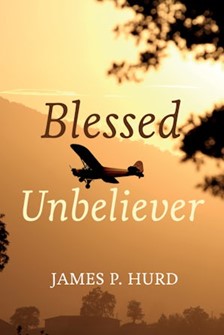
Christ-follower, bush pilot, teacher, writer, speaker. New book of stories and essays---planned for late 2026. Other books available on Amazon, etc.: Blessed Unbeliever (a coming-of-age novel), Wingspread: Of Faith and Flying (memoir), Horse-and-Buggy-Mennonites (documentary).

WINGSPREAD for October, 2023

A warm welcome to this month’s Ezine, offered to fellow travelers and especially to fellow writers. Enjoy. (Please forward and share this E-zine with others. Thank you.)

  • Writer’s Corner
  • New story
  • This month’s puzzler
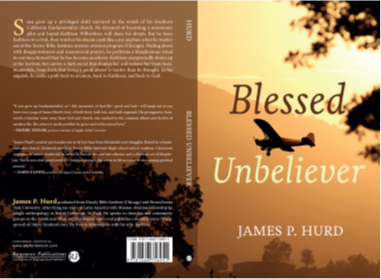
  • Blessed Unbeliever now available
  • Wingspread Ezine subscription information
  • Wisdom

Tip for writers: First, write for yourself. Are you satisfied? Trust yourself to tell the story you wish to tell with your own voice.

Word of the month: METAWRITING. Writing about your writing. Especially in nonfiction (and rarely in fiction), we have the Preface. Here, you tell the reader what you’re trying to do, how you are going to do it and why. Metawriting also may give you insight when you revise your writing.

Question for you: How do you know when you’re done writing a book? When you’re satisfied? When your editor/publisher is satisfied? You’re tired of the thing? Deadline? Cannot improve on it?

Are you serious about wanting to write? If so, try writing just a few lines each day (or each week) using the following prompts. Guaranteed to get the creative juices flowing.

Our writing must never be only goal-oriented—directed toward a published product. We must write for practice, for opening our creativity and (dare I say it?) just for fun.

Day 1: Write a story with no dialogue
Day 2: Take something usual and have it do something unusual
Day 3: Write a story that incorporates the color red
Day 4: Select a kitchen item; write from its perspective
Day 5: Write a story about a couple
Day 6: Write something in the absurdist style

Day 7: Write a discovery
Day 8: Write a one-sentence story
Day 9: Write about a surprise gone wrong
Day 10: Write about an animal
Day 11: Write about a holiday
Day 12: Write about a food you (or your character) hate
Day 13: Write about the weather

Day 14: Write about non-romantic love
Day 15: Write about someone who needed to take a deep breath
Day 16: Think about something boring; make it interesting
Day 17: Write a how-to in the second person
Day 18: Write someone’s online dating profile
Day 19: Write about an argument
Day 20: Write about an unopened letter

Day 21: Write about something that scares you
Day 22: Write in a form you normally wouldn’t
Day 23: Write something based on a random word
Day 24: Create a new myth
Day 25: Write about a cryptid (a mythological animal)
Day 26: Write about a piece of clothing
Day 27: Write something that makes you laugh
Day 28: Write a story with only dialogue

**Note: I know everybody understands the things I wonder about. So you could consider these a plaintive plea for sympathy and insight.

Why do some birds find their way from New York to Chile while I get lost three blocks from my home? (True story.) I’ve had trouble navigating all my life— missing exits on the freeway, getting lost on cross-country flights, even walking out of a downtown store and turning north instead of south. What’s up? Am I just not paying attention? Is it genetic?

At our apartment in Oak Crest we have a football-field-sized main hallway, 50 yards down each wing. I walk home down the hallway and burst unannounced into Larry and Julie’s apartment. “Hi, Larry and Julie! No, nothing; just dropping by.” Their door is the last door on the right in the east wing. My apartment door is the last door on the right in the west wing. Not only have I done this three times but I don’t know why, or how to avoid doing it next time. . . .

To read more, click here:  https://jimhurd.com/2023/10/04/navigating/

 Leave a comment on the website and share the site with others. Thanks.

(Adapted from Car Talk Puzzler archives)

There is in the English language, a seven-letter word that contains nine words without rearranging any of the letters.  So using pieces of the original word, without changing the placement of the letters, you can form nine words. What is the word?

So the original word has seven letters, but there are nine words buried in this seven-letter word. 

For example, the word ‘garbage’. This word contains these three words:

1. Garb

2. Bag

3. Age

And the word we are looking for is a seven-letter word that has nine words buried in it, including itself. There might even be more . . .

(Answer will appear in next month’s WINGSPREAD newsletter.)

Answer to last month’s puzzler: 

This one was very simple. Which of the following words does not belong, and why?

  • Mother
  • Father
  • Cousin
  • Uncle
  • Brother
  • Aunt

And the answer is: the word cousin does not belong. And why? Because it is the only word that does not describe the gender of the family member. Cousin can be either male or female. (Alternative answer: “Aunt” is the only one-syllable word.)

BLESSED UNBELIEVER novel

Blessed Unbeliever (paper or Kindle version) can be found at Wipf and Stock Publishers, Amazon https://a.co/d/9su5F3o or wherever good books are sold.

Subscribe free to this Ezine  

Click here https://jimhurd.com/home/  to subscribe to this WINGSPREAD Ezine, sent direct to your email inbox every month. You will receive a free article for subscribing. Please share this URL with interested friends, “like” it on Facebook, retweet on Twitter, etc.

If you wish to unsubscribe from this Wingspread Ezine, send an email to hurd@usfamily.net and put in the subject line: “unsubscribe.” (I won’t feel bad, promise!) Thanks.

BRITISH HUMOR IS DIFFERENT
These are classified ads, which were actually placed in U.K. Newspapers:   
FREE YORKSHIRE TERRIER.  
8 years old,
Hateful little bastard.
Bites!     
FREE PUPPIES
  
1/2 Cocker Spaniel, 1/2 sneaky neighbor’s dog.     
FREE PUPPIES.

Mother is a Kennel Club registered German Shepherd.
Father is a Super Dog, able to leap tall fences in a single bound.  
COWS, CALVES: NEVER BRED.
Also 1 gay bull for sale.  
JOINING NUDIST COLONY!
Must sell washer and dryer £100.    
WEDDING DRESS FOR  SALE .  
Worn once by mistake.
Call Stephanie.  
FOR  SALE BY OWNER.
Complete set of Encyclopedia Britannica, 45 volumes.
Excellent condition, £200 or best offer. No longer needed, got married, wife knows everything.     

Whoopsie

Oxymorons

Like other kinds of figurative language, oxymorons (or oxymora) are often found in literature. As shown by this list of awfully good examples, oxymorons are also part of our everyday speech. You’ll find common figures of speech, plus references to works of classic and pop culture.

  • absent presence (Sidney 1591)
  • alone together
  • awful good
  • beggarly riches (Donne 1624)
  • bittersweet
  • brisk vacancy (Ashbery 1975)
  • cheerful pessimist
  • civil war
  • clearly misunderstood
  • comfortable misery (Koontz 2001)
  • conspicuous absence
  • cool passion
  • crash landing
  • cruel kindness
  • darkness visible (Milton 1667)
  • deafening silence
  • deceptively honest
  • definite maybe
  • deliberate speed
  • devout atheist
  • dull roar
  • eloquent silence
  • even odds
  • exact estimate
  • extinct life
  • falsely true (Tennyson 1862)
  • festive tranquility
  • found missing
  • freezer burn
  • friendly takeover
  • genuine imitation
  • good grief
  • growing smaller
  • guest host
  • historical present
  • humane slaughter
  • icy hot
  • idiot savant
  • ill health
  • impossible solution
  • intense apathy
  • joyful sadness
  • jumbo shrimp
  • larger half
  • lascivious grace (Shakespeare 1609)
  • lead balloon
  • liquid marble (Jonson 1601)
  • living dead
  • living end
  • living sacrifices
  • loosely sealed
  • loud whisper
  • loyal opposition
  • magic realism
  • melancholy merriment (Byron 1819)
  • militant pacifist
  • minor miracle
  • negative growth
  • negative income
  • old news
  • one-man band
  • only choice
  • openly deceptive
  • open secret
  • original copy
  • overbearingly modest
  • paper tablecloth
  • paper towel
  • peaceful conquest
  • plastic glasses
  • plastic silverware
  • poor health
  • pretty ugly
  • properly ridiculous
  • random order
  • recorded live
  • resident alien
  • sad smile
  • same difference
  • scalding coolness (Hemingway 1940)
  • seriously funny
  • shrewd dumbness
  • silent scream
  • small crowd
  • soft rock
  • “The Sound of Silence” (Simon 1965)
  • static flow
  • steel wool
  • student teacher
  • “sweet sorrow” (Shakespeare 1595)
  • terribly good
  • theoretical experience
  • transparent night (Whitman 1865)
  • true fiction
  • unbiased opinion
  • unconscious awareness
  • upward fall
  • wise fool
  • working vacation

Navigating

Why do some birds find their way from New York to Chile while I can get lost three blocks away from my own home? (True story.) I’ve had trouble navigating all my life— missing exits on the freeway, getting lost on cross-country flights, even walking out of a downtown store and turning north instead of south. What’s up? Am I just not paying attention? Is it genetic?

Take driving. We’ve just visited Amish friends near the tiny town of Canton, Minnesota and are headed north and home. We’re on the proper road—US 52—but nothing looks familiar. Then Barbara points out the Iowa highway signs. We’re going south.

I have driven multiple times to our friends’ house in Roseville. But today I’m not sure: do I take Rice Street or Lexington? What’s the street you turn off on? They’re on the corner of—which streets? Embarrassing to use a GPS to navigate to a friend’s house you’ve been to so many times.

I feel like a failure when I have to use GPS. “Penelope” speaks in a British voice but if she’s sitting in London, how can she know about the secondary streets in Minneapolis-St. Paul, not to mention traffic backups and construction zones? She usually dazzles in her directions but in rare cases she leads us down rabbit trails. In the worst case, Penelope points us a different direction than the way I pretty much know. Furthermore, my wife-navigator is certain we’ve already passed our destination. I do not sleep with Penelope so of course, I defer to my wife, do a U-turn, and get lost. Penelope gets ticked and goes silent.

Have you ever been on foot in a large city, crossed the street to enter a store and walked up a couple stories? Then you come down, exit, and walk away in the wrong direction? Anybody? Anybody? I’ve done that multiple times.

I always go to the same ENT doctor. But each time I have to verify: is the office building near Unity hospital or is it near Mercy? Which floor? The nurse leads me through a labyrinth of antiseptic-smelling hallways to the consultation room. But when I leave she needs to hold my moist hand to get me back to the lobby. Then when I walk out, I’m forced to use the panic button on my smart key to search for the honking car.

At our apartment in Oak Crest we have a football-field-sized main hallway, 50 yards down each wing. I walk home down the hallway and burst unannounced into Larry and Julie’s apartment. “Hi, Larry and Julie! No, nothing; just dropping by.” Their door is the last door on the right in the east wing. My apartment door is the last door on the right in the west wing. Not only have I done this three times but I don’t know why, or how to avoid it next time.

I have frustrating dreams about walking at night, lost in the rain. Or I’m walking in a vast city and recognize no landmarks. Or I’m late, heading to teach my college class but have forgotten my pants, or my notes, or haven’t prepared anything. Forgotten where the classroom is. Even forgotten where the bathrooms are.

I’m flying a twin-engine Cessna 310 from Amarillo to Kansas City. I don’t have instrument charts so I’m forced to fly visual below a rainy cloud layer. I’m too low to receive navigation signals so I follow the compass, aiming far ahead, trying to correct for the wind. Roads, rivers, railroad lines, small towns and fields flash by so fast and close I can almost smell the corn but I can’t identify anything. Finally I spot a water tower and circle it to read the name of the town and identify it on my air chart.

I’m flying in Venezuela and break out of the rainy clouds over the Orinoco river—second only in size to the Amazon. But I’m not sure if my destination is upriver or downriver and I’m low on fuel, flying over the broccoli of the vast jungle where airstrips are spaced out an hour or two apart.

Or take flying out of Anoka Airport, Minneapolis. This day I ask Jeremy to fly with me to Princeton, only fifteen minutes north. We can park there and walk over to the Hi-Way Inn for breakfast. (I call it the $100 breakfast.) The restaurant lies on US 169, a major highway; can’t miss it. But we fly right past Princeton and have to circle back. I warn Jeremy, “Don’t tell anybody.”

Anxious dreams. I’m flying at high speed along city streets below the building tops. Or I have landed and am taxiing through a grove of pine trees at night on a rainy, muddy track. Don’t know how to taxi back to the airstrip.

What’s going on? Years ago I only failed one portion of my flight program—navigation. I’ve worked really hard but have no evidence I’ve made much improvement so I pay extra attention when I fly cross-country.

Do I suffer from some genetic defect or something? Or is there some golden key that will perfect my navigational skills? I doubt it.

So when my wife asks me, “Do you know where we’re going?” I just say, “No, but I figure if I get in the general area we can just drive around honking and someone will find us and tell us where to go.” She rolls her eyes and stares straight ahead, mute.

Wingspread Ezine for September, 2023

Please forward and share this E-zine with others. Thank you.

  • Blessed Unbeliever now available in Australia!
  • Writer’s Corner
  • New story
  • This month’s puzzler
  • Wingspread Ezine subscription information
  • Wisdom

BLESSED UNBELIEVER novel

The novel was written partly for people of nonfaith. I am happy some have read it and commented on it. I am thrilled that Koorong, largest Christian book publisher in Australia, will distribute Blessed Unbeliever.

Blessed Unbeliever (paper or Kindle version) can be found at Wipf and Stock Publishers, Amazon https://a.co/d/9su5F3o or wherever good books are sold.

Tip for writers: After finishing your rough draft, label each paragraph with an italicized word or phrase at the beginning of each paragraph. For example, Sally meets John. Use WORD “outline” mode and select “first line only.” You will see only the first lines of all your paragraphs, including your italicized labels. Easy now to see the structure of your piece, and to move paragraphs around to create a better flow.

Word of the month: SKIPLAGGING. Refers to air travel. You book a through flight with one stop in-between and you get off at the in-between stop. The airlines don’t like this because sometimes they lose money.

I asked which five books you would take if stranded on a desert island: I dunno, but here are my ideas of books and authors: Bible, Cadfael Chronicles by Ellis Peters, Henry Noewen, Charles Dickens, C.S. Lewis.

Really though—if you’re an atheist you need church as much as believers do! Behold, all the benefits of churchgoing—singing, making friends, potlucks, social service, moral guidance, coming of age rituals (e.g., confirmation, graduation), social intensification rituals (e.g., births, baptisms, weddings, funerals). You may find a loving, accountability group (e.g., Christian AA) that offers hope instead of despair. You will find a good job-seeker network. A support group for life crises. A place to get married or buried. A place that offers meaning to your life. You might even find free babysitting! You can have all these things without abandoning atheism because so much of church life does not demand any belief in the supernatural

Turns out that churchgoing is good for your health. A 2020 study published in the International Journal of Epidemiology reported that church attenders had a 26% reduced risk of dying and a 34% lower risk of heavy drinking. Church attendance was also associated with less anxiety, depression, hopelessness and loneliness. Church attenders lean toward healthy family and community behaviors. You’ll find good mentors who will hold you accountable and give you honest critique. If you’re older, just getting out of the house and doing something—anything—is good for you. If you’re younger, hey, it might be worth going just to make your parents happy! . . .To read more, click herehttps://jimhurd.com/2023/08/31/churched-atheists/   Leave a comment on the website and share with others. Thanks.

Adapted from Car Talk Puzzler archives

Here is a list of six words.

  • Mother
  • Father
  • Cousin
  • Uncle
  • Brother
  • Aunt

Which one of these words does not belong, and why?
 

(Answer will appear in next month’s WINGSPREAD newsletter.)

Answer to last month’s puzzler: 

Remember that a man’s son asked about hitting 160 miles per hour in both the Mustang and the BMW. How did the man know that the BMW would not hit that speed, and that the Mustang would?

Because when he looked down at the speedometer, he also looked at the tachometer.  Both of these cars redline at about 6000 RPM. So, at 60 miles an hour which he was traveling at that time, the BMW was doing 3100 RPMs. And he knew that at 120 miles an hour, it would be beyond the redline and incapable of doing 160 miles an hour. 

And the Mustang he was driving at 60 miles an hour was doing less than 2000 RPM. It was running around 1750 at 60 miles per hour. So at that point, he knew that this car could possibly get to 160 without redlining. 

Subscribe free to this Ezine  

Click here https://jimhurd.com/home/ to subscribe to this WINGSPREAD ezine, sent direct to your email inbox, every month. You will receive a free article for subscribing. Please share this URL with interested friends, “like” it on Facebook, retweet on Twitter, etc.

If you wish to unsubscribe from this Wingspread Ezine, send an email to hurd@usfamily.net and put in the subject line: “unsubscribe.” (I won’t feel bad; promise!) Thanks.

How many of these 21st century words do you know?

  • Particularity
  • Intersectionality
  • BLM
  • Cancel culture
  • Othering
  • Rewilding
  • Phubbing
  • Skiplagging
  • Social Media acronyms
    • ICYMI
    • IMHO
    • LOL, LMAO, LMFAO, ROFL, IJBOL
    • FOMO
    • GOAT
    • YOLO

You knew somebody would think of this sooner or later . . .

While there are many, here is one person’s list of the Top 20 Yogi-isms*:
  1. “When you come to a fork in the road…. take it.”
  2. “You can observe a lot by just watching.”
  3. “It ain’t over till it’s over.”
  4. “We made too many wrong mistakes.”
  5. “No one goes there nowadays, it’s too crowded.”
  6. “I always thought the record would stand until it was broken.”
  7. “Love is the most important thing in the world, but baseball is pretty good, too.”
  8. “In theory there is no difference between theory and practice. In practice there is.”
  9. “Pair up in threes.”
  10. “You’ve got to be very careful if you don’t know where you are going, because you might not get there.”
  11. “The future ain’t what it used to be.”
  12. “I usually take a two-hour nap from 1 to 4.”
  13. “If the world was perfect, it wouldn’t be.”
  14. “You don’t have to swing hard to hit a home run. If you got the timing, it’ll go.”
  15. “Ninety percent of the game is half mental.”
  16. “Never answer an anonymous letter.”
  17. “Why buy good luggage? You only use it when you travel.”
  18. “Take it with a grin of salt.”
  19. “It gets late early out here.”
  20. “I never said most of the things I said.”

*Yogi Berra played catcher for 18 seasons with the New York Yankees.

Happy reading and writing!

Churched Atheists

Understandably, atheists don’t go to church. Church communities demand a huge time commitment and heavy emotional labor. They exert subtle and sometimes not-so-subtle pressure to change, to believe, to confess. And, what with the statistical decline nationwide in Christian belief and church attendance, fewer people even notice or care if atheists are absent.

Really though, if you’re an atheist you need church as much as believers do! Behold, all the benefits of churchgoing—singing, making friends, potlucks, social service, moral guidance, coming of age rituals (e.g., confirmation, graduation), social intensification rituals (e.g., births, baptisms, weddings, funerals). You may find a loving, accountability group (e.g., Christian AA) that offers hope instead of despair. You will find a good job-seeker network. A support group for life crises. A place to get married or buried. A place that offers meaning to your life. You might even find free babysitting! You can have all these things without abandoning atheism because so much of church life does not demand any belief in the supernatural

Turns out that churchgoing is good for your health. A 2020 study published in the International Journal of Epidemiology reported that church attenders had a 26% reduced risk of dying and a 34% lower risk of heavy drinking. Church attendance was also associated with less anxiety, depression, hopelessness and loneliness. Church attenders lean toward healthy family and community behaviors. You’ll find good mentors who will hold you accountable and give you honest critique. If you’re older, just getting out of the house and doing something—anything—is good for you. If you’re younger, hey, it might be worth going just to make your parents happy!

And the food! Go to “men’s fellowships” or ladies’ teas. Even some Bible studies are partly an elaborate excuse to eat good food. You run into older “church basement ladies” who are great cooks and you won’t find better potlucks anywhere. You can drink free coffee every Sunday with no hangovers or regrets.

Much church music is great music that people of all faiths or nonfaiths enjoy. Some sermons are masterpieces of homiletics, persuasive argument and great rhetoric—it’s ok to get inspired, even if you don’t buy the teachings. You may satisfy your need for the fine arts even if you don’t share the beliefs—singing, sculptures, paintings, images, creeds, holy books.

You might get free travel. Church people take “mission trips” to U.S. and foreign destinations and the congregation sometimes springs for the cost. There are often no explicit belief requirements or litmus tests for these trips (although there may be some behavioral requirements).

You’ll be shocked by the broad palette of church activities—basketball, book clubs, service groups, breakfast gatherings—none of which demand any religious commitment. And what a great place to meet someone who might become your good friend—or spouse!

You’ll learn about charitable causes to support. You’ll learn how to better deal with needy people, the poor or mentally challenged. You will become part of a fellowship that will support you in your dire need: health, family or marriage breakdown, social conflicts, economic collapse.

A multigenerational congregation will give you a chance to interact with people of different ages. If you pick a multiethnic church, even better. (But beware of over-zealous people who take their faith way too seriously and tend to have more rigid lifestyle expectations.)

You’ll be amazed at how rarely any churchgoer quizzes you on your own beliefs. Shocked at how infrequently anyone buttonholes you to contribute money to the church. Know that many other attenders do not share core church beliefs and may never contribute any money.

However, you must be on guard against the pitfalls. You might feel like a hypocrite—presenting yourself as someone you’re not. But take heart; many churchgoers feel the same way. They’re convinced others are much better Christians than themselves. They keep silent about their doubts and tend to mask their more juicy lifestyle habits. You’re in good company!

Another danger—your atheist friends might feel passed by or ignored, might mock and criticize you, might call you a hypocrite. You need to assure them you’re not a “seeker.”

At church you dare not trumpet your own beliefs nor criticize the beliefs of others (however crazy they might seem to you). You may need to hide your true beliefs, mask some of your more interesting habits. But surprise! I’ve found that people get way more upset over my politics than they ever do over my doctrinal beliefs. So, be careful.

Beware of ramped-up demands—asking your opinion about a Bible passage, inviting you to volunteer on a committee or to participate in a prayer meeting. Even with coffee and donuts it’s tedious to circle for an hour with people who think they’re talking to someone invisible . People might even seek you out for spiritual advice—awkward.

It’s rare, but church leadership might push you to become a member. This might require a litmus test that would demand that you lie about your beliefs and about certain delicious parts of your ungodly lifestyle. But in my experience, they let almost anybody slide through.

But we haven’t mentioned the greatest threat. You might like church. The food, camaraderie, physical and emotional support, entertainment, uplift and inspiration may tempt you to question your most deeply-held non-beliefs. As C.S. Lewis warns, you can’t be too careful. You run into these temptations at every turn.

Be strong. Resist. If not, you, like C.S. Lewis, might get sucked kicking and screaming into that 2,000-year-old fellowship of diverse, broken, hurting, annoying and amazing people who are on the road to a Christ encounter.

WINGSPREAD Ezine for August, 2023


Spreading your wings in a perplexing world

August 2023                                                    James P. Hurd

Please forward and share this E-zine with others. Thank you.

  • Blessed Unbeliever now available in Australia!
  • Writer’s Corner
  • New story
  • This month’s puzzler
  • Wingspread Ezine subscription information
  • Wisdom

I am thrilled that Koorong, largest Christian book publisher in Australia, will distribute Blessed Unbeliever.  

Blessed Unbeliever (paper or Kindle version) can be found at Wipf and Stock Publishers, Amazon https://a.co/d/9su5F3o or wherever good books are sold.

Tip for writers: Always have at least two projects going. That way, if you get stumped or bored, you can switch to your other project awhile.

Word of the Month:  LAYOUT: This is everything that is done after your manuscript is finished, revised and edited and before it is published. Things like type font, paragraphing, margins, headings, front and back matter, cover design, back cover endorsements, chapter numbering and headings, and a host of other decisions. Really—it’s a big deal—you might wish to get it done professionally.

Book of the month: TRINITY, Leon Uris. 1976. 749 pages. A sloggy but powerful historical novel about the English/Irish, Protestant/Catholic, North/South conflicts. Requires patience, but it’s worth it. Colonization, famine, war. The tragedy of Ireland.

Question for you: If you were stranded on a desert island and could have only five books, which would you have? I’ll list these books in next month’s WINGSPREAD.

You can’t tell Texas is coming but the mountains and mesas of New Mexico gradually morph into undulating plains as we enter the Panhandle. When we pass the vast ranches and the horse-headed oil donkeys, I wonder, Does the Panhandle produce anything besides oil and cattle? Bold, proud, independent, self-made Texas. She doesn’t even seem to notice we’ve come.

We finally arrive at Uncle John’s ranch, drive through the gate with the cast-iron brand “Derrick Ranch” overhead and park in front of the brick rambler. . . .

To read more, click here:  https://jimhurd.com/2023/07/28/searching-for-mr-texas/  Leave a comment on the website and share with others. Thanks.

(Adapted from Car Talk Puzzler archives)

A very long time ago, back in the day, I was test driving a BMW with a five-speed manual transmission. I had my son Andrew along with me at the time. He was about 12 years old or so. We were heading to Toys-R-Us, or something. We are driving along on the highway. 

So there we are, and he looks over at the speedometer and says, “Gee Daddy, will this thing really go 160 miles per hour?” He always asks this question when we are test driving a car. 

I looked down at the speedometer and the dashboard and then I said, “No, it won’t.”

A week later, he and I were again test driving a car. And this time, we were driving in a Mustang with a five-speed manual transmission. And like always, he looks over and says, “Gee Daddy, will this car do 160? Because that’s what the speedometer says?”

So, I look down at the dashboard and then I say, “Yes, this one will.”

So, the puzzler is, how did I know that?

(Answer will appear in next month’s WINGSPREAD newsletter.)

Answer to last month’s puzzler: 

Recall: It was a beautiful sunny summer afternoon in 1958. And I was driving my new car. I stopped at a stoplight, and a pedestrian noticed I had stopped. 

Then he stepped off the sidewalk and walked right into the front right fender of my car. 

What happened here?

Well, it was 1958. And the car I was driving was a brand new VW Bug. And as we all know, the VW Bugs had the engine in the back, and the trunk space in the front. 

And the pedestrian was blind. So, he was used to hearing the engine in the front of the car. He heard mine, assumed the car was a few feet back from where it was, and he walked right into my car. 

This would not happen these days, for sure. 

Click here https://jimhurd.com/home/  to subscribe to this WINGSPREAD Ezine, sent direct to your email inbox, every month. You will receive a free article for subscribing. Please share this URL with interested friends, “like” it on Facebook, retweet on Twitter, etc.

If you wish to unsubscribe from this Wingspread Ezine, send an email to hurd@usfamily.net and put in the subject line: “unsubscribe.” (I won’t feel bad, promise!) Thanks.

Relationships move at the speed of trust.

Where do bad rainbows go?
Prism. It’s a light sentence, and gives them time to reflect.
(This story is enlightening.)

Minnesota Bible verses:

  1. It is what it is.
  2. What goes around comes around.
  3. It’s all good.
  4. Whatever

Things I learned getting old . . .

1. When one door closes and another door opens, you are probably in prison.

2. To me, “drink responsibly” means don’t spill it.

3. Age 60 might be the new 40, but 9:00 pm is the new midnight.

4. It’s the start of a brand new day, and I’m off like a herd of turtles.

5. The older I get, the earlier it gets late.

6. When I say, “The other day,” I could be referring to any time between yesterday and 15 years ago.

7. I remember being able to get up without making sound effects.

8. I had my patience tested. I’m negative.

9. Remember, if you lose a sock in the dryer, it comes back as a Tupperware lid that doesn’t fit any of your containers.

10. If you’re sitting in public and a stranger takes the seat next to you, just stare straight ahead and say, “Did you bring the money?”

11. When you ask me what I am doing today, and I say “nothing,” it does not mean I am free. It means I am doing nothing and wish to continue doing it.

12. I finally got eight hours of sleep. It took me three days, but whatever.

13. I run like the winded.

14. I hate when a couple argues in public, and I missed the beginning and don’t know whose side I’m on.

15. When someone asks what I did over the weekend, I squint and ask, “Why, what did you hear?”

16. When you do squats, are your knees supposed to sound like a goat chewing on an aluminum can stuffed with celery?

17. I don’t mean to interrupt people. I just randomly remember things and get really excited.

18. When I ask for directions, please don’t use words like “east.”

19. Don’t bother walking a mile in my shoes. That would be boring. Spend 30 seconds in my head. That’ll freak you right out.

20. Sometimes, someone unexpected comes into your life out of nowhere, makes your heart race, and changes you forever. We call those people cops.

21. My luck is like a bald guy who just won a comb.”

-source unknown.

Searching for Mr. Texas

(adapted from Wingspread: A Memoir of Faith and Flying by James P. Hurd)

The sun has riz, the sun has set, and we is still in Texas yet.

My Uncle John from Amarillo, Texas wasn’t a Fundamentalist. Actually, he wasn’t named John, he wasn’t my uncle, and he wasn’t originally from Texas. I thought I knew him when I was a child, but trying to understand him took up most of my adult life. Recently I quizzed my brother and sisters, scanned through old photographs, Googled his name and searched for information about the Texas Panhandle, all trying to find out who he was. A long search.

John’s real name was Clien John Fowlston but he didn’t like Clien so he always went by John. He was born in Dubuque, Iowa and only later moved to Texas. He was nephew to my grandmother Loretta (he called her “Aunt Ret”).

I wonder about John’s brief first marriage—he never talked about it. But I remember his second wife, Syble—a tall woman, her silver-gray hairbun held tight with a black comb. Texas bred, she had a clear complexion and beautiful, soulful eyes that oozed Texas upper-class grace. Reserved but easy to talk to, she exercised a civilizing influence on John. “Johnny, why don’t you change your shirt?” or, “Johnny, why do you give presents to one child and not to all of them?” or, “Johnny, don’t shout.”

We always anticipate Uncle John and Aunt Syble’s driving up to our house in a Cadillac or Lincoln. (He isn’t burdened with a conservationist conscience. He says, “I always try to buy the car that uses the most gasoline.”) John brings each of us things, like a big Eisenhower silver dollar or ten dollars “to spend on whatever you want.” He brings me a tennis racket (a sport I will enjoy into my sixties). Our family of seven never goes out to eat except when Uncle John takes us to Mrs. Knott’s Chicken Restaurant at Knott’s Berry Farm, an amazing world of tastes and smells.

Uncle John stands six-foot-two and has pale skin and disheveled white hair. His Texas hat complements his gravelly voice. He wears cowboy boots (no spurs) and a belt with a silver buckle around his ample middle, the epitome of a prosperous Texan cattleman. He holds his lips somewhere between a smile and a grimace and when he laughs he says, “Keeesh, keeesh.” He’s loud and Horatio Alger optimistic. He intimidates.

In California John seems exotic . He walks with too much swagger, talks too loudly and is too conservative, even for Dick Nixon’s Orange County. He’s an uneducated millionaire and seems puzzled that other people are not wealthy. He boasts, “After I left fifth grade, I learned everything else that I needed to know by myself.”

But, like the panda bear or the Komodo dragon, one can best understand John in his native habitat—Dumas, Texas. He sits at his massive desk on the fifth floor of the Amarillo building where a sign on his desk reads, “C. J. Fowlston, Investment Counselor.”

I remember preparing to travel to Dumas, our longest family vacation. Long before first light we leave Orange, California in our light-green Ford station wagon packed with all our food for the trip (we don’t do restaurants) and with “gospel bomb” tracts wrapped in red cellophane which we will throw at pedestrians. We join historic Highway 66 near San Bernardino and follow it all the way—Barstow, Needles, Flagstaff, Winslow. We cross the Mojave Desert in the cool of the morning before the burning sun rises. Mother first knew the great Mojave as a small child, when Grandfather drove her and his whole family from South Dakota to California in his new Model T. Their constant quest for water dominated his trip journal. Today the Mojave still challenges us, especially Mother. A canvas water bag hangs on the front bumper and Mother drapes a water-soaked cloth in the passenger window to help with the heat. At night we pull into a miserable little motel in Gallup, New Mexico. The screens are ripped and the floors uneven. But Mother bursts into tears when she finds out how much it costs. Dad packs us up and moves on to a humbler motel.

It takes forever to get to Texas. We roll through Gallup, Albuquerque, Tucumcari and finally into Amarillo. In 1857, Ned Beale used camels to map out this route along the old Santa Fe Trail. The 1880s railroad line followed the Beale Wagon Road and eventually so did Route 66, America’s “Main Street.” Just thirty years before our Texas trip, haggard dust bowl survivors trekked westward along this same highway, traveling in wheezing, radiator-boiling cars piled high with all their belongings. In California I went to elementary school with their kids—we called them “Okies and Arkies.” They wore overalls and smelled your crotch when someone farted. We didn’t like them.

You can’t tell Texas is coming but the mountains and mesas of New Mexico gradually morph into undulating plains as we enter the Panhandle. When we pass the vast ranches and the horse-headed oil donkeys, I wonder, Does the Panhandle produce anything besides oil and cattle? Bold, proud, independent, self-made Texas. She doesn’t even seem to notice we’ve come.

We finally arrive at Uncle John’s ranch, drive through the gate with the cast-iron brand “Derrick Ranch” overhead and park in front of the brick rambler. John and Syble emerge with a warm welcome and soon we’re sipping sweet tea in their living room. A photo hangs on the wall—it’s John and Syble in Egypt, astride camels, with the pyramids in the background. But the heart of the house is behind. A massive wooden door, carved in Taos, New Mexico, opens into a huge rec room with knotty pine walls. A sign hangs over the bar—”No drinking before 5:00 p.m.” Mother doesn’t approve of Uncle John’s drinking. Windows on all sides give a view of the vast, watered cornfields. I can see cows stretching their necks over the fence.

Uncle John introduces me to Texas racism. He boasts, “There isn’t a n— in all of Potter County.” Amarillo is scrubbed clean of African Americans and most Mexicans, people that John tars with the same brush. He once asked my brother-in-law who worked at United Airlines, “Do any n—s or ch—s work there?” Rich replied, “Well, some black people and Chinese people work there.” One time my friend Dave and I were traveling Route 66 from Chicago to California, and after driving way too long without sleep, we stopped to see Uncle John in Amarillo. He immediately delivered his ultimate insult—“You California drivers are worse than Mexican drivers.” Before he would talk to us, he installed us in an Amarillo motel and demanded that we sleep.

Today, John and Syble take our family to fish and swim at Conchas Dam near Tucumcari. We squeeze slices of white bread into little doughballs and plunge the hook into them, hoping to catch some tiny bluegill for Syble to fry up. John seems to want all of us to have a good time. He walks around the dock in swim trunks tied over his pear-shaped body. He’s bare-chested, with drooping dugs and white chest hair. He has a giant appetite, especially for beef and pork, and in later years will suffer from the gout.

Back at the ranch, John maintains four thousand head of polled Hereford cattle that are destined to feed the hungry maws of the likes of McDonald’s and Burger King. The cows come right up to the fence where I can feel their warm breath. I see John out in the field holding my little sister’s hand while she stands atop a huge bull. He lets us ride his cow ponies, one of which runs away with my sister Mary. Mine takes a sharp turn, but I don’t—I fly off and thud to the ground. When I use his .22 to shoot at groundhogs and rabbits, I don’t hit anything so I switch to a shotgun. In the barn we play on the hay bales and dive into the grain.

One evening John invites dozens of booted cattlemen to eat huge beefburgers that he personally grills in the backyard. He warns, “If the insides aren’t bright red, it’s ruined.” He takes us to the gas and oil museum and points out a sign along a rural road that says, “First Oil Strike in Texas.” Then we drive out north of Dumas to the Amarillo Country Club. I don’t see any people of color, except for the waitstaff.

Mother tries to witness to Uncle John. He attends church sporadically, but he isn’t saved. For our family, being saved was like being pregnant—you either are or you aren’t. Most people we know aren’t. We Fundamentalists don’t smoke, drink or go to the movies. (I will later go to my first movie at age twenty-two.) We suspect Uncle John is Episcopal, not out of spiritual hunger but because of his social status. He says, “Those Fundamentalist radio preachers are all crooks!” Our family frequently prays he will get saved.

Uncle John may have been intelligent but the smartest thing he did was arranging to be born at exactly the right time—1901. The twentieth century gave us automobiles, airplanes, factories and two World Wars, all dependent on massive doses of petroleum. In 1918 the Amarillo Oil Company sunk the “No. 1 Masterson” in the lime, granite and dolomite sediments of the Texas Panhandle. It was soon producing ten million cubic feet of natural gas daily and became the forerunner of the greatest gas field in the world.

Perfect timing for John. When John turned fifteen, his family had left Dubuque, Iowa, for Tulsa to work in the nascent oil fields. Oil lust grew and the oil and gas industry revved up to satisfy the appetites of thousands of automobiles and later thousands of warplanes. After ten years in Tulsa and a detour to work the oil fields in Venezuela, John moved to Amarillo to work in the Panhandle fields and rode the oil gusher to the top floor of one of Amarillo’s office buildings where he became a successful investment counselor. I once sat in his office and heard him say on the phone: “The uranium mine seems good? Okay—buy a hundred shares.”

When we finally depart, Uncle John presents us with a plain white, fat envelope. “Don’t open this until the New Mexico border,” he orders. What’s in the envelope? We speed to the border, pull over to the side of the road, open it, and find enough cash to finance most of our trip. John has scrawled on a piece of paper, “Stay in a good motel. Buy a good Mexican dinner in Santa Fe. Detour up to Taos to see the three-story adobe Indian village.” We obey.

Later, when I am a student in Chicago, Uncle John frequently sends me pages of the Amarillo Globe-Times by third-class mail, underlined, annotated and then rolled up and taped. He always encloses a handwritten letter so he doesn’t have to pay first-class postage. Even when he types his letters I can hardly read them because of their elliptical sentences, missing characters, sparse punctuation and hurried scrawl. I try to decipher them and send a postcard back.

After I am married, I remember telephoning Uncle John to tell him that Barbara and I are adopting our first child (Kimberly) from Costa Rica. I can almost feel him stiffen.

“Are you gonna get a white one?”

“No. I think we’re gonna get a brown one.”

“What’s wrong with a white one?”

“Nothing, but we like variety.”

“Well, the rest of the world doesn’t!”

Yet when we visit him in his old age he warmly receives us, along with our two adopted children from Colombia. He takes us to a rib joint and put us up in a motel. He drives us out to the ranch (but not to the country club). This is the last time I see Uncle John.

John gave us great gifts. A long time ago, he moved my uncles’ coffins. Mother’s brother Calvin died from the fever on their South Dakota homestead in the winter of 1917 when he was two and his older brother, Jamie, nine, died two months later. Grandpa put their coffins in a snow bank and then in the spring after the frost left the ground, buried them in Bonita Springs. Later, Uncle John exhumed the coffins and moved them to Hopkinton, Iowa, near the graves of others in the family. It was a touching act and one of the first stories I heard about Uncle John.

Recently I call Joyce Perkins in Amarillo, a kind woman who for over thirty years has faithfully administered the C. J. and Syble Fowlston Trust. She tells me, “The trust still provides money to Cal Farley’s Ranch for Boys near Amarillo. Their motto is ‘a shirttail to hang onto.’ And, because of John’s interest in The Lawrence Welk Show, I send some money every month to KACV-TV, our local PBS station.”

So, who is Uncle John? Is he “Mr. Texas,” a self-taught and self-made man of the world, a loud, opinionated, rich oil- and cattleman with only a fifth-grade education who rose to be a millionaire? Is he a racist, politically somewhere to the right of Rush Limbaugh? He’s all of these. Yet I remember with gratitude his steady interest in our family, his monthly stipends to us while later we were missionaries in Latin America and especially remember his warm welcome for us at Derrick Ranch. Uncle John, peace to your memory.

WINGSPREAD for July, 2023


Spreading your wings in a perplexing world
July 2023                                                    James P. Hurd

Please forward and share this Ezine with others. Thank you.

Contents

  • Blessed Unbeliever available
  • Writer’s Corner
  • New story
  • This month’s puzzler
  • Wingspread Ezine subscription information
  • Wisdom

BLESSED UNBELIEVER 

Sean McIntosh lives in a California world of Fundamentalist certainty—until his world unravels. He fails to make sense of losing his girlfriend and losing his dream of becoming a missionary pilot. And he’s shaken by contradictions and mistakes he finds in the Bible. His missionary zeal morphs into religious doubt. His despair leads him to commit a blasphemous act and declare himself an atheist—all this while he’s attending Torrey Bible Institute! But Grace pursues.

Blessed Unbeliever (paper or Kindle version) can be found at Wipf and Stock Publishers, Amazon https://a.co/d/9su5F3o or wherever good books are sold.

Writer’s Corner

Tip for writers: Whether writing fiction or nonfiction, try writing in the first-person present tense. Instead of “Sean walked downtown,” write “I am walking downtown.” Makes the action more immediate, personal. It’s harder to write this way, but worth trying.

Word of the Month:  PROBLEMATIZE. I use this word to refer to questioning a convention. Instead of agreeing with the majority, raise questions, challenge conventional statements. This energizes the reader—even if they disagree with you.

Book of the month: HEBRIDEAN ALTARS by Alistair Maclean. A marvelous collection of stories, prayers, poems and saying from the people of the Scottish Hebrides Islands over the centuries. Good for prayer and meditation.

Question for you: Have you written a short story or poem? Send it to me and I may post it on my Wingspread blog.

New story: World Over the Wall

I visualize my Southern California childhood, filled with snowless winters, hot summers and throat-burning Los Angeles smog that dissipates only when the dry Santana winds blow in from the desert. I see myself lying on our backyard grass under our wooden windmill clothesline, gazing up at the clouds and dreaming childish dreams—dreams that Mother feeds. When I tell Mother I’m bored, she says, “Read King Arthur and the Knights of the Round Table,” or “Let’s play cards.” Our Fundamentalist church frowns on playing with regular “Euchre deck” cards, so we play Authors, where each suit has a picture of an author and each card is one of the author’s books . . .

To read more, click here:  https://wordpress.com/post/jimhurd.com/3518

(Leave a comment on the website and share with others. Thanks.)

This month’s puzzler

Adapted from Car Talk Puzzler archives

It was a beautiful sunny summer afternoon in 1958. And I was driving my new car.

I came to an intersection and stopped, and there on the sidewalk stood a pedestrian waiting to cross the street. He noticed that I had stopped.

I remained where I was at the intersection. He stepped off the sidewalk and walked right into the right front fender of my car.

Explain the reason for this curious behavior. 

(Answer in next month’s Wingspread ezine.)

Answer to last month’s puzzler: 

The question was, what is the capital of Liberia and why was the capital given that name?

In the early 1800s, many white people in the United States became concerned over the existence of freed slaves in their country. Some slave owners believed that the existence of freed slaves increased discontent among those still in slavery. Other white people objected to the integration of the black freed slaves into this society. So in 1816, a group of white Americans established the American Colonization Society, ACS, and what the society did was to return free black people to their home continent, Africa. 

So the ACS bought land on the west coast of Africa and started a settlement. They named it Liberia. 

And the capital of Liberia was named Monrovia, after the then President, James Monroe. 

Subscribe free to this Ezine  

Click here https://jimhurd.com/home/  to subscribe to this WINGSPREAD ezine, sent direct to your email inbox, every month. You will receive a free article for subscribing. Please share this URL with interested friends, “like” it on Facebook, retweet on Twitter, etc.

If you wish to unsubscribe from this Wingspread Ezine, send an email to hurd@usfamily.net and put in the subject line: “unsubscribe.” (I won’t feel bad, promise!) Thanks.

Wisdom

An elderly couple found themselves fighting all the time so they made an appointment with a marriage counselor. Because it seemed serious, the counselor asked to meet with each of them separately.

Alone, the wife confessed, “I don’t know. We’ve been married for almost 50 years, but the last few years all we do is argue; we can never agree on anything.”

“So what are you going to do?”

“It’s so bad. I’ve given up. I’m praying that God will take one of us home. . . And when he does, I’m going to go live with my sister.”

Socks that go missing in the laundry come back as Tupperware lids.

Fight like the third monkey on the ramp to Noah’s ark.  Mike Huckabee

The purpose of a writer is to keep civilization from destroying itself. ― Albert Camus

 USER: The word computer professionals use . . .
when they mean idiot.

As soon as the hospital put me in one of those little gowns . . .
I knew the end was in sight.

It is better to live one day as a lion . . .
than 100 years as a sheep.

The lion shall lie down with the lamb . . .
but the lamb won’t get much sleep.

Bigamy is having one wife too many . . .
Monogamy is the same thing.

I have Van Gogh’s ear for music.

The World Over the Wall

How do you like to go up in a swing,
Up in the air so blue?
Oh, I do think it the pleasantest thing
Ever a child can do!
Up in the air and over the wall,
Till I can see so wide,
Rivers and trees and cattle and all
Over the countryside—
Till I look down on the garden green,
Down on the roof so brown—
Up in the air I go flying again,
Up in the air and down!
Robert Louis Stevenson, “The Swing”

While my father taught me to love all modern speed machines, Mother taught me to love reading. A stay-at-home mom (an unexceptional choice in the 1940s), she reared five children in our Cambridge Street home in the orange grove. She created time to read stories to us from the green Thornton W. Burgess books— “Chatterer the Red Squirrel,” “Bobby White,” “Old Man Coyote.” She read from his Mother West Wind “Why” Stories—”The Adventures of Danny Meadow Mouse” and “Why Peter Rabbit Cannot Fold His Hands.” It seems Peter was once able to fold them, but Mother West Wind took away this ability because he was lazy. “I like these stories,” Mother said, “because they all end happy” [except for Timmy Trout, who disobeyed his mother, got hooked and landed in a frying pan]. I consumed these stories first from her lips and then from my own reading.

I visualize my Southern California childhood, filled with snowless winters, hot summers, and throat-burning Los Angeles smog that dissipates only when the dry Santana winds blow in from the desert. I see myself lying on our backyard grass under our wooden windmill clothesline, gazing up at the clouds and dreaming childish dreams—dreams that Mother feeds. When I tell Mother I’m bored, she says, “Read King Arthur and the Knights of the Round Table,” or “Let’s play cards.” Our Fundamentalist church frowns on playing with regular “Euchre deck” cards, so we play Authors, where each suit has a picture of an author and each card is one of the author’s books, such as Louisa May Alcott (Little Women, Eight Cousins) or Robert Louis Stevenson (Treasure Island, A Child’s Garden of Verses). When I call for a card, Mother always insists that I name the author and book title. I learn to love these books long before I read them.

I carry this love of writers and writing into Mrs. Brennan’s first grade class, where I remember the smell of her paper—unlined, manila colored, with tiny flecks of embedded wood pulp—on which we use our #2 pencils to create letters that represent sounds. Mrs. Brennan believes passionately in two things—phonetics and flashcards. She teaches us to read, not by recognizing words, but by sounding out letters. She holds up a card with an “A” on it and the whole class says, “Ahh, ahh.” When the card has a “B,” we say, “Buh, buh.” When she shows us the “Ph” card, she touches her fingertips together and moves her forearm forward and back imitating a long neck and says, “Remember the goose, class.” We all hiss, “Fff, fff,” and then wipe the saliva off our desks.

She reads to us out of oversize Dick and Jane books, with Dick, Jane, little Sally and their dog, Spot. “Dick, Dick, see Jane.” “Jump, Spot, jump, jump.” I think, I don’t know anybody who talks like that. Why do they keep repeating themselves? Yet the stories burn word-symbols into my brain.

When we graduate to our Friends and Neighbors book in second grade, I discover a new universe—the East. Here, all the white children live in tidy houses under huge oak and maple trees and no one is poor. No bullies in this neighborhood—all the kids are friendly. My California neighborhood is different. The Mexicans speak Spanish to each other, bullies (white ones) meet me after school and beat me up, and many of us live in houses where the paint peels from the siding and where the kitchen linoleum shows worn, black spots. In the East, happy boys in knickers sled down snowy hills as squirrels scramble up nearby maple trees. In Orange I never see knickers, squirrels, snow banks or sleds, though Dad assures me that when he was growing up in Minnesota he himself had worn knickers. I still remember that “Friends and Neighbors” town—I imagine I’ve searched for it my whole life.

In third grade I can’t wait for Mrs. Surowick to read to us about Pinky and Blacky, two roguish cats who share great adventures wandering around a museum late at night. I never suspect that these wonderful stories are teaching us world history and the love of reading.

About that same time I discover Robert Louis Stevenson’s “The Swing” (above). He has me at the swing. I long for the world over the wall—distant, unknown and far from the groves of Orange, my hometown.

At twelve I get pimples, a crackly voice, body hair and something else—a black-leather King James Bible that I carry to church like a stubby fifth limb. Mother considers the King James Version (KJV) a lifeboat that will bear me through adolescence, protect me from the fierce fires of a godless world, lead me into a blessed adulthood, and finally to heaven. Approved by King James in 1611, the KJV guided the faithful at the time of the Pilgrims. I smell the leather, finger the onionskin pages, and bury myself in it like a wood tick. The Bible looms large at home. When I say, “Mom; I’m bored,” she responds, “Memorize Bible verses.” The Bible introduces me not only to faith but also to great literature. Later, when I read Shakespeare, I am surprised to find a King James English familiar to me.

I soon learn to speak KJV, but not always with understanding—too many strange words and stranger ideas. Fortunately, Cyrus Ingerson Scofield’s notes come to the rescue, notes that seem clearer than the text itself. He outlines the Tribulation, the Millennium and the seven Dispensations—a complete panorama of salvation history—candy for the mind. These notes answer life’s big questions—where did I come from, what does it all mean, where am I going, who is God, and what does He require? (In those days, God was always a “He,” and was always capitalized.) Early on, these answers form my view of the world.

At our Silver Acres Church Pastor Cantrell preaches from the same Scofield Bible and I become a junior expert in the text. I don’t understand all the King James words—mandrakes, begot, shew (I pronounce it “shoe”)—but, like the Pledge of Allegiance that I learned in first grade, these words gather meaning as I mature. I read for prizes. My Sunday school teacher, Mr. Hayden, sets tiny airplanes on tracks running across a map of the world. I read the most, advance my plane the farthest and eventually win a matching pen and pencil set.

I learn Christianity from my pastor, from other men who preach at summer camps and from faithful women who teach in Daily Vacation Bible School, all of them Bible-wise. They mesmerize me with their stories about God, sin, salvation and especially about the End Times, which holds the promise of heaven or the threat of hellfire. To gain the first and escape the second, I walk down the aisle each time a visiting preacher comes to town with his big white tent and sawdust floor. Besides, I want their little red book—a free Gospel of John with important verses underlined. In all these ways the Bible teaches me the English language, forges my reading habits, shapes my beliefs. The Bible also introduces me to history and geography as well as to human greatness and frailty.

Reading gives me a passport to far countries, introduces me to historic figures, lets me witness great events and dazzles me with strange ideas. Reading fires my curiosity to think, to dream, to venture out into the world. Later, when I travel to genuine eastern “Friends and Neighbors” towns, I stomp in the snow and marvel at the squirrels (but never see a boy in knickers). I pilot a plane over distant lands and see the world over the wall that Stevenson helped me dream about.

But Mother read to me first.

WINGSPREAD Ezine for June, 2023


Spreading your wings in a perplexing world

June 2023                                              James P. Hurd

Please freely forward and share this E-zine with others. Thank you.

Contents

  • Blessed Unbeliever published!
  • Writer’s Corner
  • New story
  • This month’s puzzler
  • Wingspread Ezine subscription information
  • Wisdom

New Novel: BLESSED UNBELIEVER 


I am happy for the people and libraries that have secured their copy of Blessed Unbeliever.

Sean McIntosh lives in a California world of Fundamentalist certainty—until his whole world unravels. He loses his girlfriend and loses his dream of becoming a missionary pilot. And he’s shaken by contradictions and mistakes he finds in the Bible. His missionary zeal languishes, then morphs into religious doubt as he sinks into unbelief and commits a blasphemous act after declaring himself an atheist—all the while at Torrey Bible Institute! But Grace pursues.

Blessed Unbeliever (paper or Kindle version) can be found at Wipf and Stock Publishers, Amazon https://a.co/d/9su5F3o  or wherever good books are sold.

Writer’s Corner

Tips for writers: “WRITE WHAT YOU KNOW.” Much better when writing fiction to “mine” you own life: places you’ve been (e.g., Amsterdam), experiences you’ve had (e.g., caught in a hurricane), people you knew (e.g., a bully or a teacher or a boss). Fictionalize this raw material for your own writing. Drill down to the details—this will draw your reader into your fictional world.

Word of the Month:  BRICOLAGE. A woven fabric or a mosaic of many different items fashioned into a new whole. One thinks of a tapestry or a mobile. Each detail is a piece of your puzzle that will create a beautiful, surprising, coherent whole.

Book of the month: C.S. Lewis, Mere Christianity. The best apology for Christianity that I’ve seen. C.S. Lewis, most known for his Narnia Tales (beginning with The Lion, the Witch, and the Wardrobe), was also a brilliant apologist.

Question from last month: Who is the most interesting fictional character you’ve ever read about? I like Cadfael, a twelfth-century Benedictine monk from Ellis Peters’ “Cadfael Chronicles” series. Smart crime sleuth, socially fluent, compassionate, spiritually deep, he is a Crusader who later took the Benedictine cowl and became a monk in Shrewsbury, England.

A new GPS for writers

New story: Crafting Gripping Dialogue

Elmore Leonard famously said that you should find all the parts of your writing that people tend to skim over—then delete them! But your readers will never skim over dialogue.

Why dialogue? Use dialogue to make the scene more immediate, vivid, in-the-moment. Use dialogue to reveal character, rather than having the narrator do it. Use dialogue to describe a scene—through the eyes of a character. Use dialogue to reveal conflict. Use it to reveal attributes of your characters—regional or ethnic identity, personality, temperament. Use it to reveal the thoughts of your character.

How to write compelling dialogue? Good dialogue never is a word-by-word transcription of the spoken word. But it needs to read as if it is. It should never seem contrived, made up. It should always be believable. How to do that? . . .  To read more, click here:  https://jimhurd.com/2023/05/31/crafting-gripping-dialogue/

(Leave a comment on the website and share with others. Thanks.)

This month’s puzzler

(Adapted from Car Talk Puzzler archives)

No Googling or websurfing to answer this one! This is a short historic puzzler. 

What is the capital of Liberia and why was the capital given that name?

 Good luck!

(Answer in next month’s Wingspread ezine.)

Last month’s puzzler: 

What is this sequence, and how would you complete it?

  • Juliet.
  • Kilo.
  • Lima.
  • Mike.
  • November.

Answer: These are letters in theInternational phonetic alphabet. It continues: Oscar, Papa, Quebec, Romeo, Sierra . . . Pilots use these to make a call number explicit, for example: “YVT-STP” becomes “Yankee Victor Tango — Sierra Tango Papa.”

Subscribe free to this Ezine  

Click here https://jimhurd.com/home/  to subscribe to this WINGSPREAD ezine, sent direct to your email inbox, every month. You will receive a free article for subscribing. Please share this URL with interested friends, “like” it on Facebook, retweet on Twitter, etc.

If you wish to unsubscribe from this Wingspread Ezine, send an email to hurd@usfamily.net and put in the subject line: “unsubscribe.” (I won’t feel bad, promise!) Thanks.

Wisdom 

My wife asked me to help prepare our 4-year-old for his first day at school….
….So I stole his lunch.

Whenever it rains, my wife just stands at the window looking sad….
….Do you think I should let her in?

If anyone knows how to fix broken hinges….
….My door is always open.

There’s nothing like a brisk fall morning….
….To keep me in bed till noon.

There’s no excuse for laziness….
….But if you find one, let me know.

What did the drunk driver die of?….
….Texting.

Where do you take someone who’s been injured in a peek-a-boo accident?….
….To the I.C.U.

Doctor: I’m sorry, I had to remove your colon….
Me Why

Did you know that before the crowbar was invented….
….Crows had to drink alone, at home.

Instant gratification….
….Takes too long.

I admit that I live in the past….
….But only because the housing is so much cheaper.

If you are not yelling at your kids….
….You are not spending enough time with them.

Only in America …….do drugstores

make the sick walk all the way to the back of the store to get their

prescriptions while healthy people can buy cigarettes at the

front.

___________________________________

Only in America …….do people order

double cheeseburgers, large fries, and a diet coke.

___________________________________

Only in America ……do banks leave

vault doors open and then chain the pens to the

counters.

___________________________________

Only in America ……do we leave cars worth

thousands of dollars in the driveway and put our useless junk in the garage.

___________________________________

Only in America ………..do we buy hot dogs

in packages of ten and buns in packages of eight.

___________________________________

Only in America …….do they have

drive-up ATM machines with Braille lettering.

___________________________________

EVER WONDER ….

Why the sun lightens our hair, but darkens our skin?

___________________________________

Why can’t women put

on mascara with their mouth closed?

___________________________________

Why don’t you ever see the headline: ‘Psychic Wins Lottery’?

Crafting Gripping Dialogue

Elmore Leonard famously said that you should find all the parts of your writing that people tend to skim over—then delete them! But your readers will never skim over dialogue.

Why dialogue? Use dialogue to make the scene more immediate, vivid, in-the-moment. Use dialogue to reveal character, rather than having the narrator do it. Use dialogue to describe a scene—through the eyes of a character. Use dialogue to reveal conflict. Use it to reveal attributes of your characters—regional or ethnic identity, personality, temperament. Use it to reveal the thoughts of your character.

How to write compelling dialogue? Good dialogue never is a word-by-word transcription of the spoken word. But it needs to read as if it is. It should never seem contrived, made up. It should always be believable. How to do that?

Use oblique dialogue. Dialogue should not be predictable: “How are you?” “I’m fine.” Rather,

“Why did you come late to the party?”

“I was hoping to see you here! When did you arrive”

“I wasn’t even going to come, but I’m glad I did.”

Note that the speakers do not immediately or directly answer questions.

Use tone in your dialogue. Formal or informal? Contractions and shorter words indicate a more informal speech. It’s less organized; it jumps around more.

Use conflict dialogue. Readers will not be patient with dialogue that merely reflects good manners. Even close friends or spouses have occasional conflicts. Add conflict and disagreement to your dialogue.

Use ethnic dialogue. Rather than tedious, forced artificial spellings of special words, sparingly choose a few words or phrases. Enough to give just a hint of regionalism. “Californier” to indicate a Boston accent. Use “y’all” to indicate a southern dialect. Or “acts” to reveal an African-American pronunciation of “ask.” Use special regional constructs: “They been,” “they be,” “they was,” “he were.”

Use internal dialogue. How represent the thoughts of a character? If you describe the thought, no special treatment is needed. But if you are “quoting” the thoughts you have several alternatives:

  • Use quote marks around the thoughts: “I’m in trouble,” he thought.
  • Put the thoughts in italics. I’m in trouble, he thought.
  • Do neither: I’m in trouble, he thought. -or- He wondered, Did Sally know what her mother had done?

I do not recommend the first. My editors prefer the second. I prefer the third, but it is a little harder to do.

Punctuation in dialogue? Just a few rules:

  • Should always open and close quote marks.
  • Punctuation goes inside of, not outside of, the quote marks.
  • A new speaker should always have a new paragraph.

You can take a ho hum piece and add vivid dialogue—your readers will love it.